Buckingham Canal restoration in WRMP29: hydraulic design notes for engineers
Reviewed by Joe Ashwell
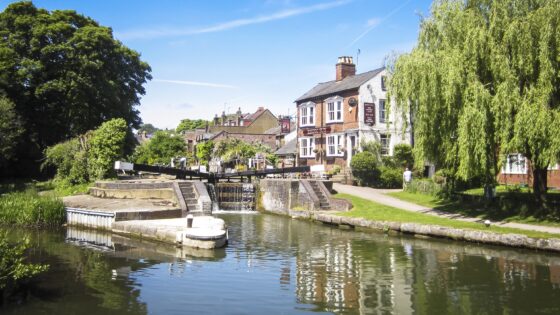
First reported on New Civil Engineer
30 Second Briefing
Members of Buckingham Canal Society are urging government agencies and Anglian Water to embed canal restoration into the Water Resources Management Plan 2029 (WRMP29), alongside large new reservoirs, transfer mains and treatment upgrades. They argue that historic waterways such as the Buckingham Canal can act as strategic water transfer corridors, seasonal storage and flood attenuation assets, supporting drought resilience and peak-flow management. For civil and water engineers, this would mean assessing canal embankments, lock structures and bed linings for modern hydraulic loads, leakage performance and integration with existing abstraction and discharge regimes.
Technical Brief
- Any WRMP29 inclusion would trigger long-term asset management planning for canal embankments, weirs, culverts and lock structures.
- Historic canal geometry could constrain transfer capacities, requiring localised widening, dredging or bypass channels at pinch points.
- Governance-wise, engineers would have to interface with both navigation/restoration bodies and statutory water resource planners.
- Similar WRMP processes in other regions could open funding routes for canal stabilisation, lining upgrades and flow control structures.
Our Take
In our coverage, community‑led groups like the Buckingham Canal Society tend to gain influence when they can show their schemes reduce future capex on conventional grey water infrastructure, which is likely to be a key argument if they want WRMP29 to treat canal restoration as a cost‑effective resilience measure rather than a heritage or amenity project.
Prepared by collating external sources, AI-assisted tools, and Geomechanics.io’s proprietary mining database, then reviewed for technical accuracy & edited by our geotechnical team.
Related Articles


Related Industries & Products
Construction
Quality control software for construction companies with material testing, batch tracking, and compliance management.
CMRR-io
Streamline coal mine roof stability assessments with our cloud-based CMRR software featuring automated calculations, multi-scenario analysis, and collaborative workflows.
HYDROGEO-io
Comprehensive hydrogeological testing platform for managing, analysing, and reporting on packer tests, lugeon values, and hydraulic conductivity assessments.
GEODB-io
Centralised geotechnical data management solution for storing, accessing, and analysing all your site investigation and material testing data.