Northern Graphite’s Lac des Iles halt: reliability and pit schedule notes for engineers
Reviewed by Joe Ashwell
First reported on MINING.com
30 Second Briefing
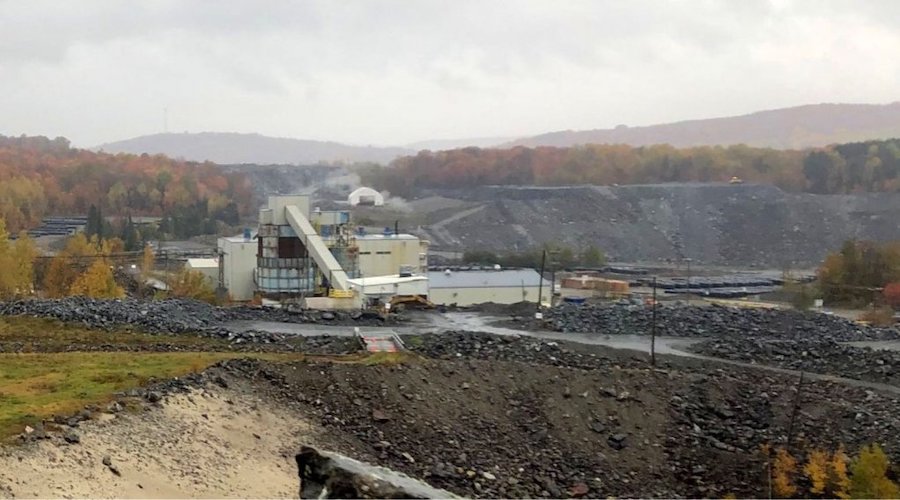
Northern Graphite has halted mining and milling at its Lac des Iles operation in Quebec after a mill bearing failure, using the four- to six-week replacement window to pull forward January maintenance tied to a new pit development. The 35-year-old mine, North America’s only graphite producer, currently outputs about 15,000 tonnes of concentrate annually with installed capacity of 25,000 tonnes, and is advancing a Phase 1 pit expansion supported by C$6.22 million in federal funding. Mining has already reached the permitted 209 m elevation, and inadvertent blasting slightly below this level has paused pit operations pending impact checks and a minor permit amendment, risking a two- to three-month production gap before the new pit starts, targeted for Q2 2026.
Technical Brief
- Mill shutdown is driven by a critical bearing failure on a long-lead component, with a stated replacement window of ~4–6 weeks, forcing a full halt to both mining and milling at Lac des Iles.
- Northern Graphite is using the outage to pull forward January maintenance tied to the new pit transition, consolidating into a single shutdown to avoid duplicated start–stop cycles and associated restart risks.
- The 35‑year‑old Lac des Iles operation, 150 km northwest of Montreal, is currently producing ~15,000 t/y of graphite concentrate against an installed capacity of ~25,000 t/y.
- Phase 1 pit expansion is underpinned by a January 2024 resource of 3.3 Mt indicated at 6.4% Cg (~213,000 t contained Cg) plus 1.4 Mt inferred at 7.4% Cg (~106,000 t contained Cg), with pre‑stripping already in progress.
- Federal funding of C$6.22 million, covering 75% of Phase 1 expansion costs as an interest‑free repayable contribution, has been critical to keeping the mine operating and advancing the new pit towards first production targeted for Q2 2026.
Our Take
With the Canadian government covering 75% of Phase 1 expansion costs at Lac des Iles, any unplanned downtime now effectively erodes the schedule float on a publicly backed, repayable funding package, which tends to tighten scrutiny on both maintenance planning and disclosure.
The indicated and inferred graphite resources at Lac des Iles (3.3 Mt @ 6.4% Cg and 1.4 Mt @ 7.4% Cg) suggest a relatively high-grade feedstock, so the immediate operational risk from the bearing failure is less about ore quality and more about Northern Graphite’s ability to maintain continuous supply into downstream graphite and potential Novelis/Ford-linked value chains.
A potential 2–3 month production gap between the current and expanded pit, combined with a 4–6 week equipment replacement window, means even modest slippage could stack into a longer interruption than the mine’s 35-year operating history is accustomed to, which helps explain the sharp C$28 million market-cap reaction despite the small absolute share price move.
Prepared by collating external sources, AI-assisted tools, and Geomechanics.io’s proprietary mining database, then reviewed for technical accuracy & edited by our geotechnical team.
Related Articles
Related Industries & Products
Mining
Geotechnical software solutions for mining operations including CMRR analysis, hydrogeological testing, and data management.
CMRR-io
Streamline coal mine roof stability assessments with our cloud-based CMRR software featuring automated calculations, multi-scenario analysis, and collaborative workflows.
HYDROGEO-io
Comprehensive hydrogeological testing platform for managing, analysing, and reporting on packer tests, lugeon values, and hydraulic conductivity assessments.
GEODB-io
Centralised geotechnical data management solution for storing, accessing, and analysing all your site investigation and material testing data.