Geomechanics.io

  • Free Tools
Sign UpLog In

Geomechanics.io

Geomechanics, Streamlined.

© 2026 Geomechanics.io. All rights reserved.

Geomechanics.io

CMRR-ioGEODB-ioHYDROGEO-ioQCDB-ioFree Tools & CalculatorsBlogLatest Industry News

Industries

MiningConstructionTunnelling

Company

Terms of UsePrivacy PolicyLinkedIn
    AllGeotechnicalMiningInfrastructureMaterialsHazardsEnvironmentalSoftwarePolicy
    Projects
    Sustainability

    Fortescue’s Pilbara wind project: microgrid design lessons for mine planners

    January 19, 2026|

    Reviewed by Joe Ashwell

    Fortescue’s Pilbara wind project: microgrid design lessons for mine planners

    First reported on Australian Mining

    30 Second Briefing

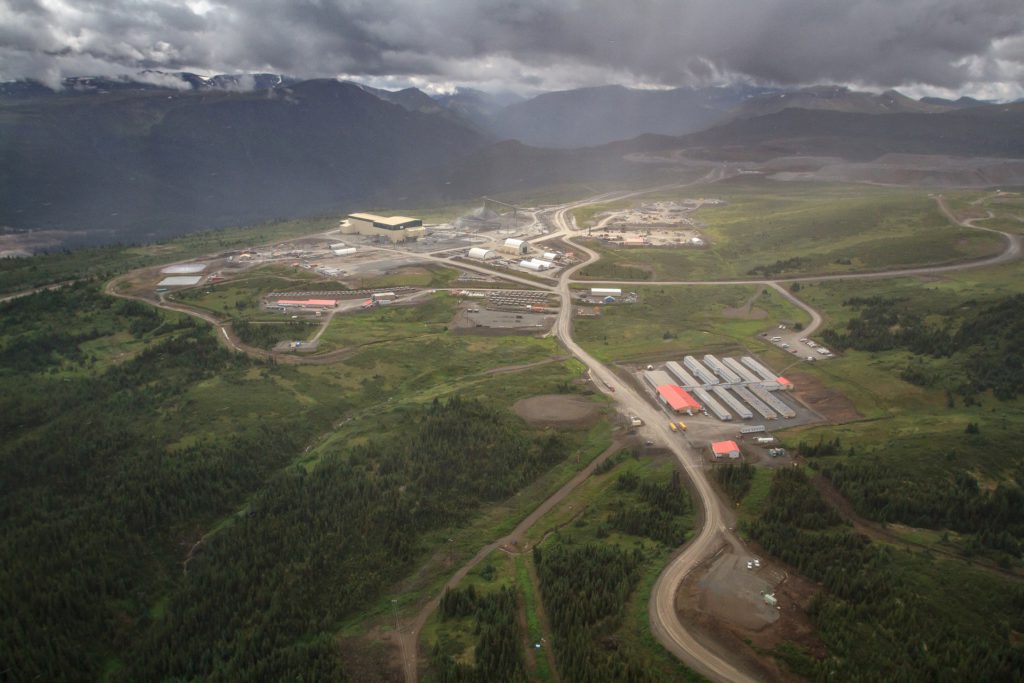
    Construction is underway on Fortescue’s Nullagine wind project in Western Australia’s Pilbara, a key element of its plan to eliminate fossil diesel from its mining operations and reach net zero Scope 1 and 2 emissions by 2030. The project will integrate large-scale wind generation with existing Pilbara Energy Connect infrastructure, which already links multiple iron ore mines via a high-voltage transmission network and gas/solar assets. For mine planners and electrical engineers, the move signals accelerating design requirements for grid‑stabilising renewables, storage, and load management on remote, heavy-industry microgrids.

    Technical Brief

    • Wind farm will connect into Fortescue’s existing Pilbara Energy Connect high-voltage transmission network.

    Our Take

    Fortescue’s Nullagine wind project in the Pilbara lines up with its recent acquisition of US-based Zitara, signalling that any large-scale renewables build in Australia is likely to be paired with advanced battery intelligence and on-site control for firming mine power.

    Across the 654 Mining stories in our database, relatively few Pilbara items combine ‘Projects’ and ‘Sustainability’ tags, so this development positions Fortescue as one of the more aggressive movers on decarbonising iron-ore operations in that region.

    The Civmec contracts with Fortescue reported in early 2026 suggest a strong local EPC and maintenance ecosystem in Western Australia, which should reduce execution risk and schedule slippage for infrastructure-heavy assets like the Nullagine wind project in the Pilbara.

    Geotechnical Software for Modern Teams

    Centralise site data, logs, and lab results with GEODB-io, CMRR-io, and HYDROGEO-io.

    No credit card required.

    • Save and export unlimited calculations
    • Advanced data visualisation
    • Generate professional PDF reports
    • Cloud storage for all your projects

    Prepared by collating external sources, AI-assisted tools, and Geomechanics.io’s proprietary mining database, then reviewed for technical accuracy & edited by our geotechnical team.

    Related Articles

    Mining
    about 4 hours ago

    Hancock–Ma’aden Saudi JV: Nabita Ad-Duwayhi licences and drilling lens for mine planners

    Midana Exploration (Hancock Prospecting) and Saudi Arabian Mining Company (Ma'aden) have formally received five Round 9 exploration licences in the Nabita Ad-Duwayhi gold belt at the Future Minerals Forum in Riyadh on 14 January 2026, cementing their Saudi joint venture. The licences cover greenfield gold targets in a known mineralised corridor, signalling a pipeline of drilling, resource definition and geometallurgical testwork in the Arabian Shield under Saudi Arabia’s new mining code.

    Mining
    about 5 hours ago

    Weba Chute Systems and plant bottlenecks: design lessons for process engineers

    Weba Chute Systems is being brought in by OEMs, EPCM contractors and mine operators to fix process flow bottlenecks arising when new or upgraded screens and crushers are integrated into existing circuits. The company applies custom-engineered transfer chutes, designed around site-specific ore characteristics and throughput, to stabilise material flow, reduce impact and spillage, and limit unplanned stoppages. For plant engineers, the trend signals growing recognition that chute geometry and lining design can be the critical constraint on circuit capacity rather than the primary crusher or screen.

    Mining
    about 5 hours ago

    Sandvik Rock Processing in West Africa: uptime and liner wear insights for mine teams

    Sandvik Rock Processing is expanding technical support for its crushing and screening solutions across West Africa, covering stationary crushers, screens and feeders as well as mobile crushers and screens. The company is targeting both greenfield and brownfield gold and iron ore operations that rely on high-throughput primary and secondary crushing trains, where uptime and liner wear management are critical. Stronger in-region service and spares availability is likely to reduce lead times for major components and support more aggressive production schedules in remote sites.

    Related Industries & Products

    Mining

    Geotechnical software solutions for mining operations including CMRR analysis, hydrogeological testing, and data management.

    Construction

    Quality control software for construction companies with material testing, batch tracking, and compliance management.

    CMRR-io

    Streamline coal mine roof stability assessments with our cloud-based CMRR software featuring automated calculations, multi-scenario analysis, and collaborative workflows.

    HYDROGEO-io

    Comprehensive hydrogeological testing platform for managing, analysing, and reporting on packer tests, lugeon values, and hydraulic conductivity assessments.

    GEODB-io

    Centralised geotechnical data management solution for storing, accessing, and analysing all your site investigation and material testing data.