Geomechanics, Streamlined.
© 2026 Geomechanics.io. All rights reserved.
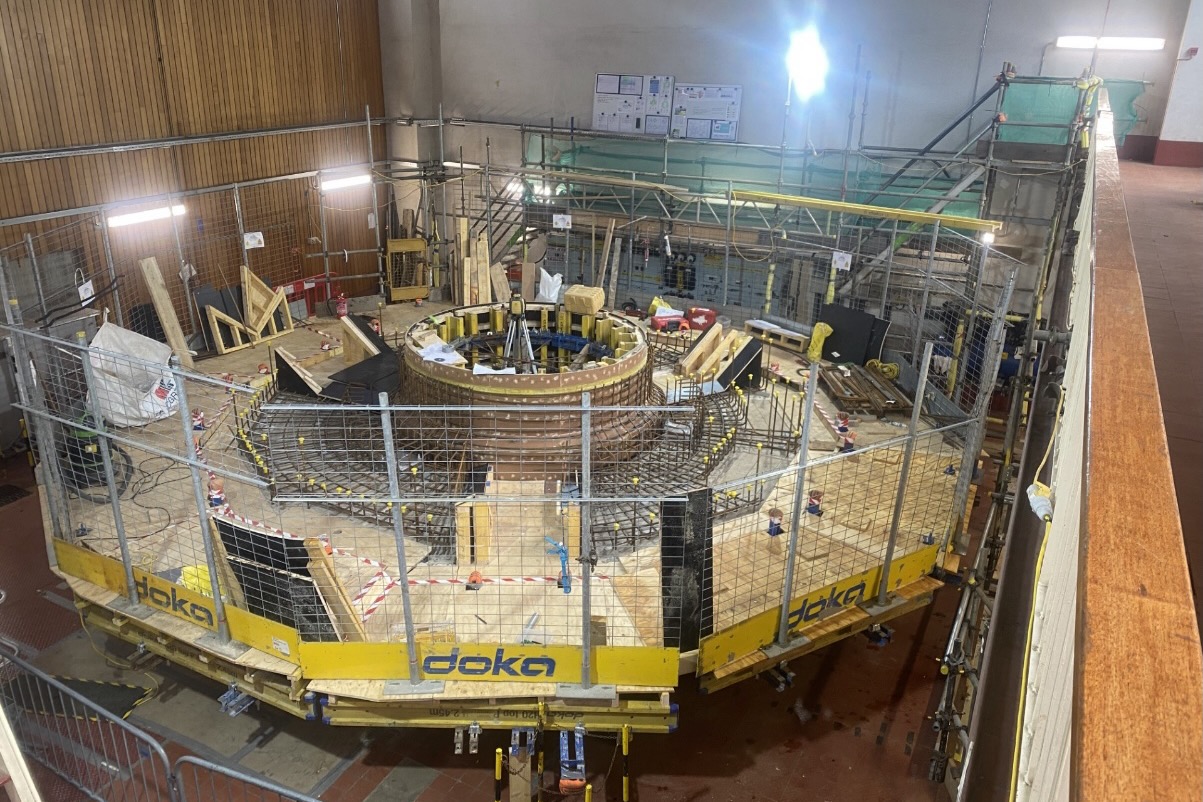
Doka’s Radius Top 50 timber-beam formwork has been used by TRS Formwork to construct a 12‑sided plinth with complex corbels and angles at SSE Renewables’ Lochay Hydro Power Station in Perthshire, which generates about 170GWh annually. A 3D-led design enabled Doka engineers to calculate precise radii and angles, develop a bespoke connecting plate for a WS10 formwork ring, and pre-assemble components off-site for final in situ adjustment to existing concrete. The approach cut cycle times to meet a 12‑week programme, improved material efficiency and kept the station operational during refurbishment.
Rider Levett Bucknall has appointed Matt Buntine as head of London and Europe project and programme management, drawing on his previous role as managing director at Lendlease Consulting (now Bovis). Buntine has led programmes across alternative energy, rail, aviation, heritage, commercial and education, and previously ran Lendlease’s European sustainability function, driving its Mission Zero strategy. He has overseen transformation and open-market sale processes while retaining major clients such as TfL, Network Rail, the Houses of Parliament, Chelsea Football Club and leading London museums, and is a chartered engineer with the Institute of Engineers Australia.
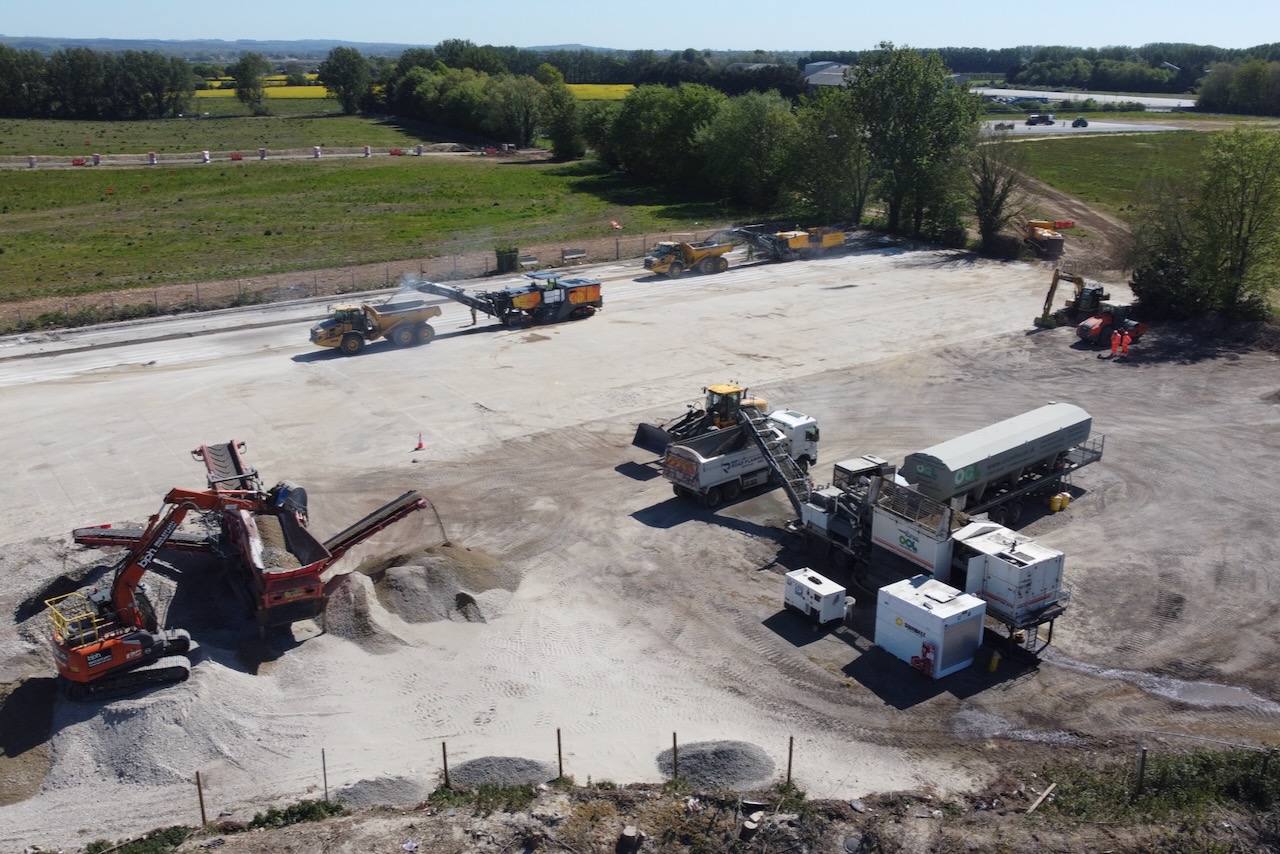
Holcim UK subsidiary OCL Regeneration is dismantling the 250mm-thick concrete runway at Ford Airfield, West Sussex, and reprocessing it on-site for roads and foundations in Vistry’s 1,500-home Fordham development. A 6,000m² compound has already been stabilised in situ and surfaced using milled runway concrete mixed with cement and water to form Cement Bound Granular Material, supporting mobile plant and stockpiles. Subsequent phases will involve specialist treatment of hazardous asphalt base layers and production of Type 1 recycled aggregate and capping for the main spine road.
Brian Uy, Sydney-based 105th President of the Institution of Structural Engineers, is centring his term on structural efficiency and embodied carbon, technical competency and research, and professional registration. His inaugural address, “Structural engineering: past, present and future”, stresses rigorous fundamentals alongside innovation in areas such as low‑carbon materials and advanced analysis. For practitioners, this signals stronger emphasis on quantified embodied carbon in design, tighter competence expectations, and closer linkage between research outputs and codified practice.
The British Geological Survey is advancing a national geotechnical data service to collate UK ground investigation records into a single, standardised digital platform for project teams. By aggregating borehole logs, in situ test results and laboratory data from multiple legacy sources, the system aims to give designers earlier visibility of variable strata, groundwater conditions and historical contamination. For geotechnical and civil engineers, this could reduce duplicate site investigations, refine ground models at concept stage and improve risk pricing for foundations, earthworks and underground structures.
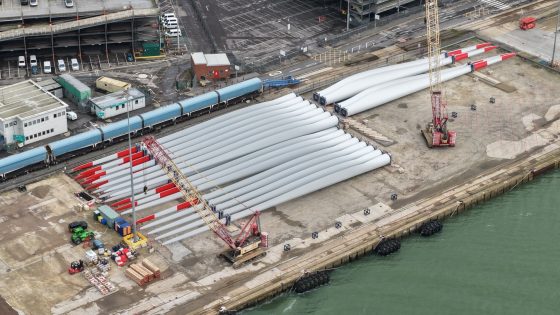
Port of Southampton is expanding its partnership with Vestas to handle larger volumes of offshore wind components, reinforcing its role as a key hub in the UK’s renewable energy logistics. The collaboration focuses on port-side storage, heavy-lift handling and transport of oversized turbine blades, nacelles and towers, requiring specialised quayside cranage and strengthened laydown areas. For civil and port engineers, this signals continued demand for upgraded pavements, marshalling yards and deep-water berths capable of supporting high axle loads and complex heavy-lift operations.
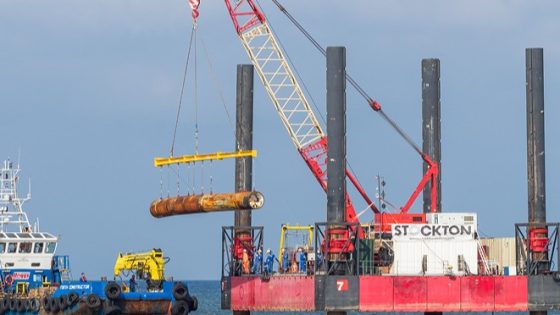
Stockton Group managing director explains a major strategic restructure that integrates design, construction and asset management teams from project inception, aiming to stay embedded through the full lifecycle of large UK infrastructure schemes. The model pushes contractors to engage at RIBA Stages 1–2 rather than post-planning, aligning geotechnical investigations, value engineering and constructability reviews before key cost and risk decisions are locked in. For civil and ground engineering practitioners, this signals more early-stage partnering frameworks and longer-term performance-based contracts rather than traditional build-only appointments.
Sandvik’s battery-electric surface concept drill, which recently completed 17.5 km of drilling in 542 operating hours at Boliden’s Kevitsa open pit in Finland, is now heading for field trials at Lloyds Metals operations in India. The rig is designed for down-the-hole (DTH) production drilling with hole diameters up to 229 mm, targeting typical surface bench applications currently dominated by diesel units. For mine planners and maintenance teams, the trial will give real-world data on energy consumption, duty cycles and potential reductions in fuel logistics and local emissions.
Martin Engineering has acquired Australian conveyor specialist ConveyorTech Pty Ltd (CVT), adding CVT’s proprietary belt cleaners and conveyor components to its global bulk material handling portfolio. The deal significantly broadens Martin’s range of primary and secondary belt scrapers, wear liners and sealing systems for high-capacity mining and materials processing conveyors. For operators, the combined catalogue should simplify standardisation of conveyor hardware across sites and give more options to address carryback, spillage and dust control on long overland and plant conveyors.
ICE has endorsed the Competition and Markets Authority’s recommendations from its market study into UK road and rail infrastructure, signalling professional backing for changes to how major highways and rail projects are procured and governed. The CMA review examined competition, delivery models and regulatory oversight across strategic roads and the national rail network, aiming to reduce cost pressures and improve long-term asset performance. ICE’s support increases pressure on government and clients such as National Highways and Network Rail to adjust frameworks for framework contracts, alliancing and supply-chain access.
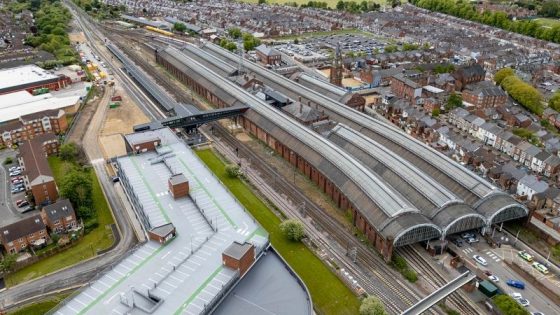
Darlington station has reopened after a £140M expansion adding two new platforms and a 50t steel footbridge on the East Coast Main Line. The upgrade includes new track layouts and signalling to segregate local and long-distance services, increasing capacity through the Darlington bottleneck. For civil and rail engineers, the works signal continued investment in major corridor pinch points, with complex staging required to install the bridge and commission additional platforms while maintaining main line operations.
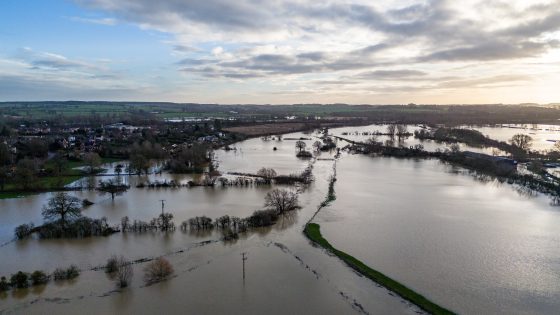
The Institution of Civil Engineers is launching a new policy programme to examine how to increase investment in adapting UK infrastructure to climate change, and is seeking detailed input from its membership. The initiative will focus on practical incentives for resilience upgrades across assets such as flood defences, transport corridors and energy networks, where design lives of 60–120 years clash with rapidly shifting rainfall, temperature and coastal erosion patterns. For practitioners, this signals potential changes to funding models, appraisal methods and performance standards for climate‑resilient geotechnical and civil works.
The Construction Leadership Council (CLC) is working with the Institution of Civil Engineers (ICE) to coordinate industry-wide action on net zero, building safety and productivity across UK infrastructure and construction. Through joint task groups and themed workstreams, the ICE contributes technical input on areas such as carbon measurement, modern methods of construction and digital design, feeding practitioner experience into CLC policy and guidance. For engineers, this linkage means that site data, design practice and lessons from major projects can more directly shape government-backed standards, funding priorities and procurement models.
A proposal to install photovoltaic arrays on greyfield sites rather than productive farmland has taken the top prize in the Institution of Civil Engineers’ CityZen Awards student competition. The winning concept targets underused urban land and car parks for solar deployment, aiming to preserve agricultural soils while increasing local renewable generation capacity. For civil and infrastructure engineers, the idea reinforces planning and site-selection strategies that prioritise brownfield and greyfield assets over greenfield loss.
The Institution of Civil Engineers has revised and modernised its Code of Professional Conduct to tighten expectations on ethical behaviour, competence and accountability for members and registrants. The refreshed code is expected to place greater emphasis on managing safety risks, transparent decision-making on major infrastructure projects, and responsible use of emerging tools such as digital twins and AI-based design optimisation. Firms will need to review internal procedures, training and project governance to ensure alignment with the updated professional and regulatory obligations.
More than 80% of built environment professionals surveyed rate collaboration as critical to successful project delivery, yet 70% of organisations still use traditional contract frameworks such as lump-sum and design–bid–build. The research points to limited adoption of NEC-style collaborative contracts, early contractor involvement and integrated project teams, despite widespread recognition of their value in managing programme risk and interfaces. For engineers, this gap suggests continued exposure to claims-heavy delivery models, fragmented design–construction feedback, and slower uptake of digital coordination tools like common data environments.
Midway through 2026, the Institution of Civil Engineers is moving to formalise its next phase of work after a first half-year focused on asset maintenance, ethics, intelligence and stewardship across the profession. Trustees are steering efforts towards more data‑driven asset management, with emphasis on whole‑life performance of critical infrastructure and clearer ethical frameworks for use of digital tools and automation. For practitioners, this signals tighter expectations on maintenance strategies, evidence‑based decision‑making and governance around intelligent infrastructure systems.
Long-term infrastructure planning is being reframed around sustained uncertainty driven by geopolitical tension, climate change and rapid digital and artificial intelligence disruption. For civil engineers, this means stress-testing assets and programmes against volatile energy prices, more frequent extreme-weather events and cyber-physical risks to critical systems such as smart grids and digitally controlled transport corridors. The piece points to the need for adaptive investment pipelines, scenario-based design and governance that can cope with non-linear shocks rather than relying on static 30–50 year masterplans.
National Grid’s Distribution System Operator has released a Strategic Roadmap detailing how it will meet RIIO-ED2 commitments while preparing distribution networks for a “smarter, more flexible energy system”. The plan focuses on integrating higher volumes of distributed generation and electric vehicle charging, using tools such as active network management, flexible connection agreements and enhanced data visibility at 11kV and LV levels. For civil and electrical engineers, this signals more connection-driven reinforcement, targeted substation upgrades and closer coordination between network design, streetworks and local energy projects through to 2028.
Exploration momentum is building across Australia as Auravelle Metals, Terrain Minerals and Amara Minerals push gold and antimony projects forward via reverse circulation (RC) drilling, technical studies and early-stage resource work. Terrain is advancing its Lightning gold project towards a maiden resource while also running new RC drilling campaigns at Nuckulla Hill to test extensions to known mineralisation. Amara is reporting growing confidence in a deepening antimony system at Lauriston, signalling potential for larger-scale, higher-grade underground targets.
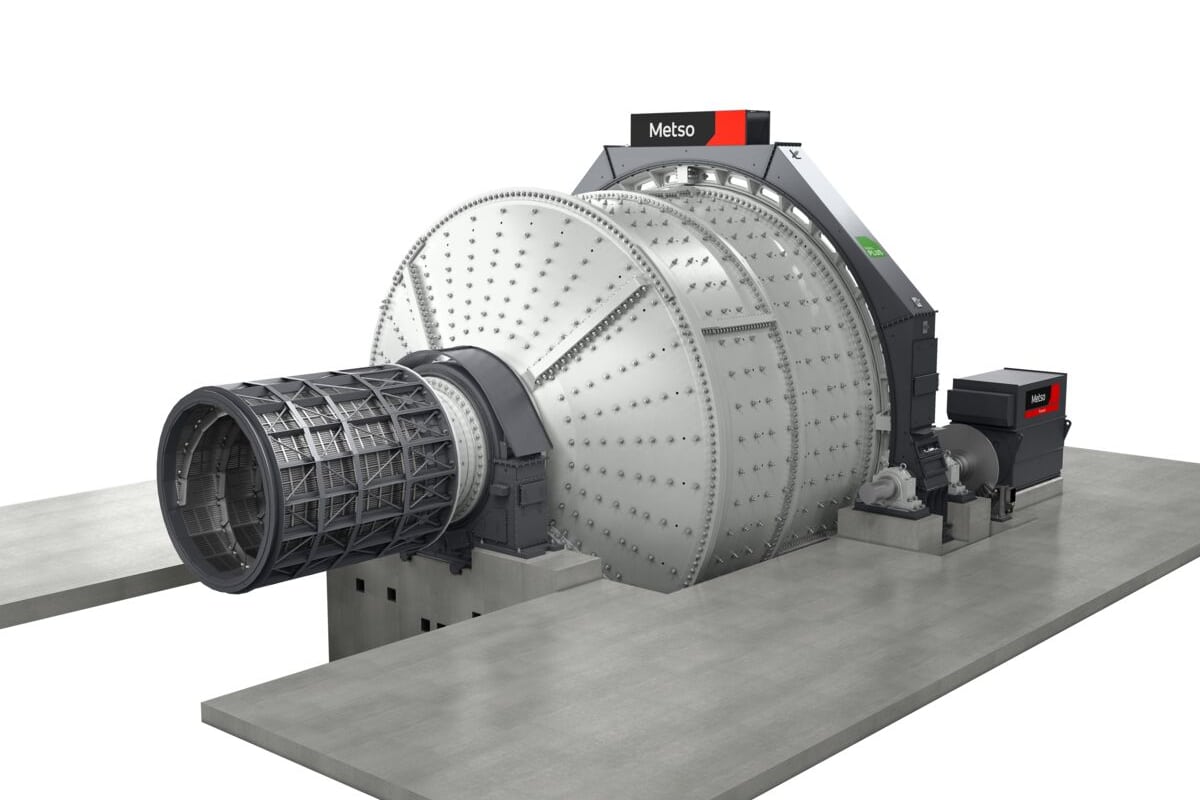
Metso has secured orders worth over €10 million to supply two Premier horizontal grinding mills to Emerald Resources’ Dingo Range Gold Project in Western Australia and Memot Gold Project in Cambodia, booked in Metso’s Minerals segment Q2 2026. The package includes a 12 ft x 18 ft, 1.6 MW Premier ball mill for Dingo Range and a 15 ft x 22 ft, 3 MW Premier SAG mill for Memot, both with Metso’s gear-driven technology. The mills are designed for gold ore grinding circuits, with Metso providing engineering support and spare parts to optimise throughput and availability.
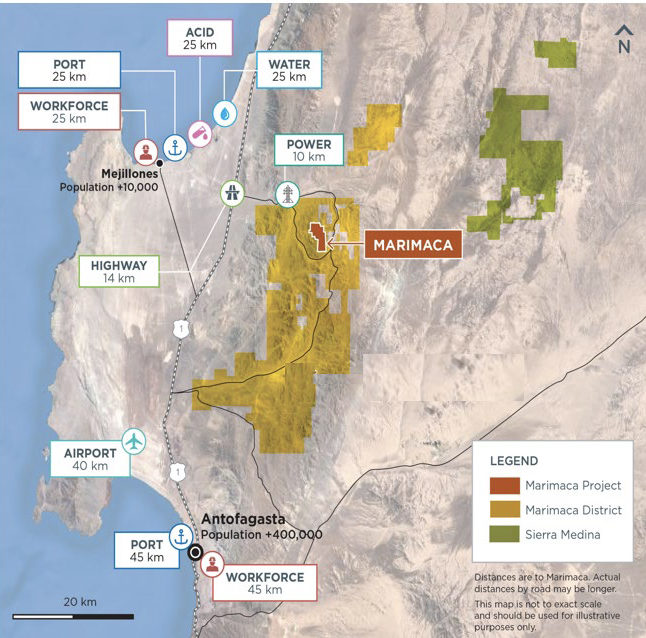
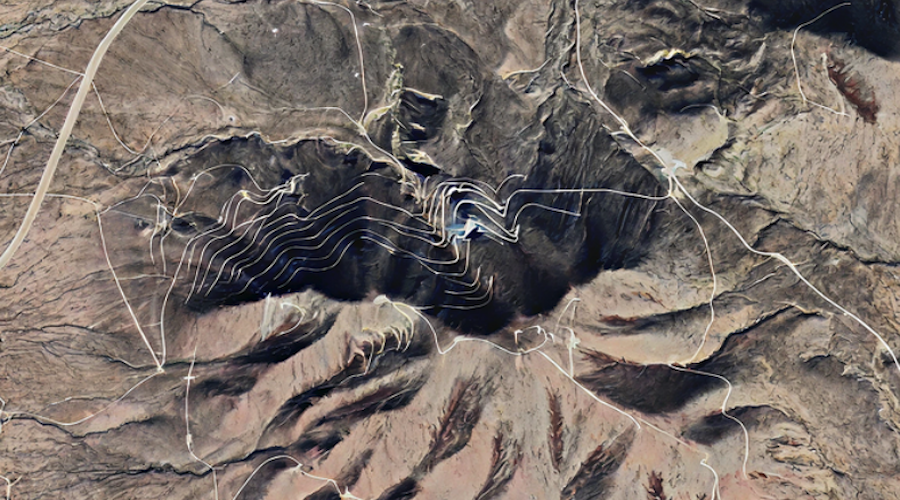
Marimaca Copper is insulating its $587 million Marimaca oxide heap-leach project in northern Chile from sulphuric acid price spikes by buying and planning to relocate the second-hand Dos Amigos acid plant from Mejillones, 25 km away, acquired for $2.5 million versus an estimated $50–70 million for a new installation. The 13-year SX-EW operation is designed to produce 50,000 t/y of copper cathode from 178.6 Mt at 0.42% Cu, with a post-tax NPV of $709 million and 31% IRR at $4.30/lb. Parallel drilling at the nearby Pampa Medina target is returning long sulphide intercepts such as 424 m at 0.58% Cu and 2.2 g/t Ag from 424 m, indicating stacked oxide–sulphide potential beyond the starter oxide phase.
USA Rare Earth has been selected by the US Department of Energy for up to $19.3 million in funding under the Critical Materials Innovation, Efficiency and Alternatives programme to build a pilot-scale rare earth separations facility, within a $50.5 million project backed by $31.2 million in non-DOE capital. The company is pursuing a fully integrated rare earths and magnet supply chain, adding UK-based Less Common Metals in 2025 and a 12.5% stake in French processor Carester SAS in April, alongside a proposed $1.6 billion US Department of Commerce package. A separate $2.8 billion acquisition of Brazil’s Serra Verde and its Pela Ema mine, which could supply about half of ex-China heavy rare earth output by 2027, is under antitrust review in Brazil and includes a 15-year US offtake for Nd, Pr, Dy and Tb.
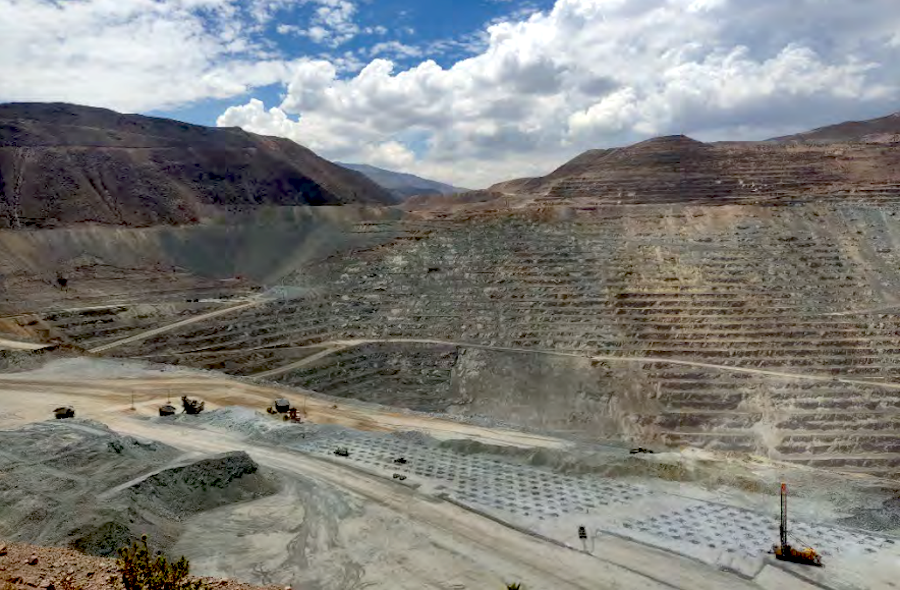
Southern Copper will spend $318.6 million over 17 months to overhaul the Cuajone mine in Peru’s Moquegua region, adding a new filter press at the concentrator, a dedicated electrical substation and control room, and relocating part of the freshwater pipeline. The programme also prepares 25.3 hectares for additional leaching and upgrades the sewer network, aiming to sustain roughly 163,000 tonnes per year of fine copper output as ore grades decline. Parallel $79 million works at Toquepala include a desliming unit, new tailings thickeners and seepage controls, building on Copper Mark and GISTM-compliant tailings management.