BS 7671 battery update: design, safety and EV-ready notes for contractors
Reviewed by Tom Sullivan
First reported on The Construction Index
30 Second Briefing
BS 7671 has been updated with a new chapter on stationary secondary batteries, setting design and installation requirements for power conversion equipment, bidirectional and hybrid inverters, and protective devices capable of handling two‑way energy flow for vehicle‑to‑home and vehicle‑to‑grid use. The amendment also tightens rules on battery siting, ventilation and fire‑risk mitigation, and introduces new sections on Power over Ethernet for LED lighting and small appliances, and earthing for ICT equipment, alongside revised guidance for medical locations. The ECA has issued parallel guidance and events to help contractors interpret Amendment 4 and maintain compliant low‑carbon and EV‑ready installations.
Technical Brief
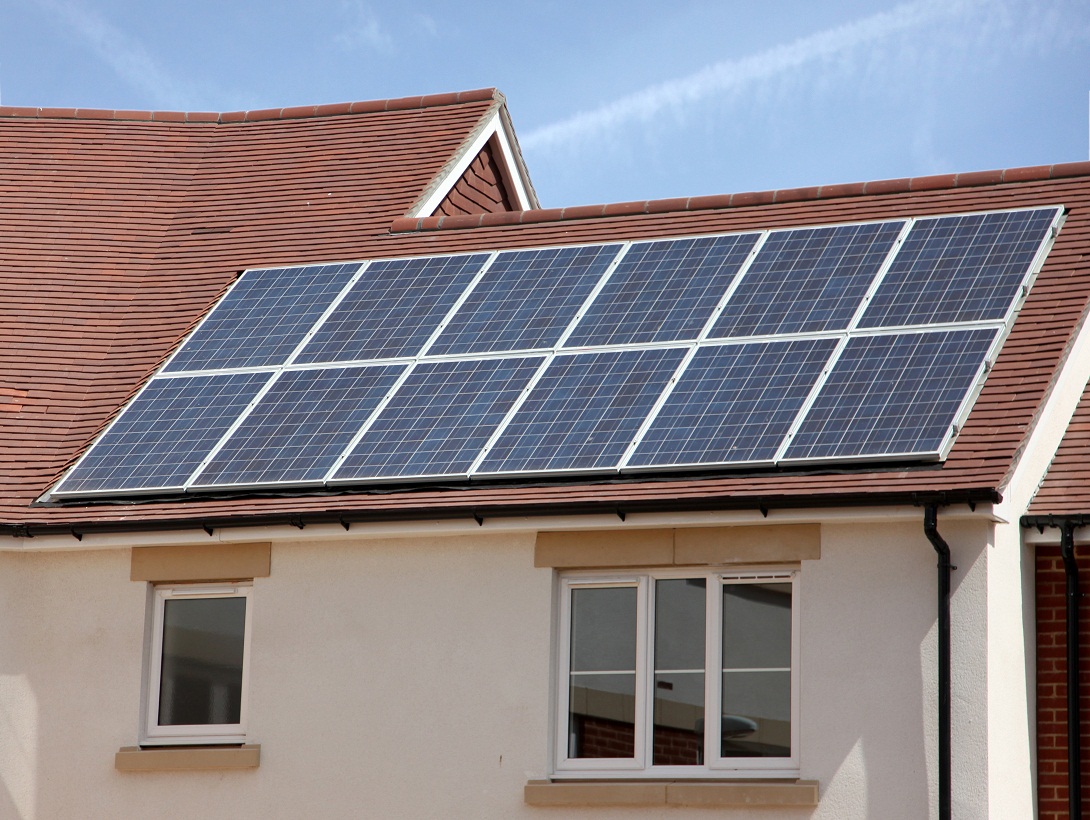
- New BS 7671 chapter explicitly targets stationary secondary batteries used with or without domestic solar PV.
- Requirements now integrate battery system design with associated power conversion equipment as a single coordinated installation.
- Bidirectional and hybrid inverter behaviour must be matched to protective device characteristics under both import and export fault conditions.
- Battery siting rules address enclosure selection, separation from occupied spaces and routes for emergency access.
- Ventilation provisions consider normal off‑gassing and abnormal thermal events to limit explosive or toxic atmospheres.
- Fire‑risk mitigation guidance links battery layout, cable routing and isolation points to fire‑fighting intervention strategies.
- Revised medical location section focuses on preventing dangerous loss of power to life‑support and critical monitoring circuits.
Our Take
BSI’s role in both BS 7671 and the recent PAS 2080:2023 certification for Laing O’Rourke signals that UK decarbonisation and safety frameworks are increasingly being anchored in formal, auditable standards rather than project-by-project guidance.
Within our 163 Policy stories, there are relatively few UK-focused pieces that combine Safety and Sustainability tags, so explicit BS 7671 battery guidance is likely to become a key reference point for contractors looking to document compliance on low‑carbon electrical installations.
For electrical contractors represented by the ECA, tighter BS 7671 battery provisions will probably influence design liability and insurance expectations on UK projects, especially where on-site storage is tied to whole‑life carbon commitments under schemes aligned with PAS 2080.
Prepared by collating external sources, AI-assisted tools, and Geomechanics.io’s proprietary mining database, then reviewed for technical accuracy & edited by our geotechnical team.
Related Articles



Related Industries & Products
Mining
Geotechnical software solutions for mining operations including CMRR analysis, hydrogeological testing, and data management.
CMRR-io
Streamline coal mine roof stability assessments with our cloud-based CMRR software featuring automated calculations, multi-scenario analysis, and collaborative workflows.
HYDROGEO-io
Comprehensive hydrogeological testing platform for managing, analysing, and reporting on packer tests, lugeon values, and hydraulic conductivity assessments.
GEODB-io
Centralised geotechnical data management solution for storing, accessing, and analysing all your site investigation and material testing data.