Geomechanics, Streamlined.
© 2026 Geomechanics.io. All rights reserved.
Dennis Boehm has received the Wallace Hayward Baker Award from the Deep Foundations Institute for more than three decades of work on deep foundations, starting with Hayward Baker (now Keller) in 1990. He is recognised as an expert in both wet and dry soil mixing, applying these methods on complex ground improvement and deep foundation projects across North America. For practitioners, his work reinforces the role of soil mixing in controlling settlement and improving bearing capacity where conventional piling or mass excavation is impractical.
Sydvaranger Drift AS, GRANGEX AB’s wholly owned subsidiary, has signed a mining services agreement with Finnish contractor E. Hartikainen Oy to support the restart of the Sydvaranger open-pit iron ore mine at Kirkenes in northern Norway. Hartikainen, founded in 1965 and active across the Nordic region, will bring large-scale open-pit mining and earthworks capability to the brownfield operation. The deal signals mobilisation of experienced Nordic mining fleets and operators for near-term pre-stripping, haulage and pit rehabilitation planning at the idled site.
Cheshire East Council has approved Balfour Beatty for the £53.8m main construction phase of the 1.6‑mile (2.5km) Middlewich eastern bypass, with site works due to start in spring 2026 and opening targeted for spring 2028. The single carriageway will link Pochin Way to the A533 Booth Lane, incorporating new bridges over the Sandbach–Northwich railway line and the Trent and Mersey Canal plus a combined cycleway/footway. The £107.67m scheme, backed by a capped £48m Department for Transport contribution, is intended to ease A54/A533 junction congestion and unlock up to 1,950 homes and employment land.
Bids are open for Fusion21’s fourth national grounds maintenance framework, valued at up to £85m over four years and covering hard and soft landscaping, including tree works, hedge and shrub management, cleaning and waste handling for public sector estates. The framework, confirmed as compliant with the Procurement Act 2023, offers flexible call-off options such as direct award, which may streamline contracting for local authorities, housing providers and NHS trusts managing large external assets. Submissions close at 12:00 on Wednesday 4 March 2026 via fusion21.co.uk/tenders.
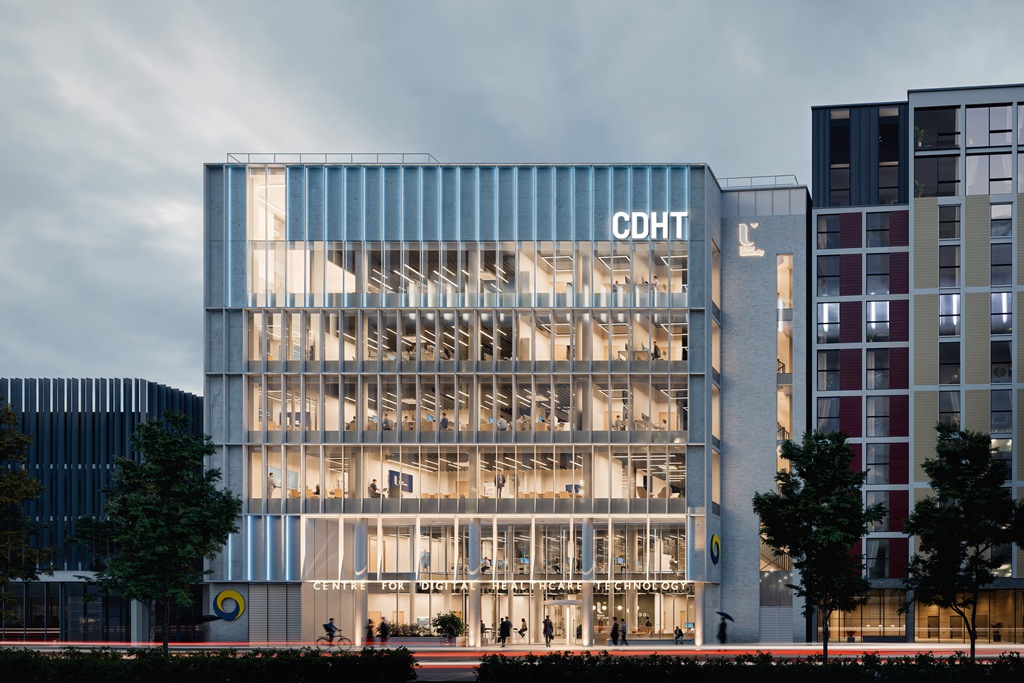
Planning approval has been granted for Ulster University’s six-storey Centre for Digital Healthcare Technology on Frederick Street, Belfast, replacing the recently demolished Northland House on a site cleared by B Small Contractors. The £18m main construction contract sits within an overall £42m project to deliver laboratories, office space, communal areas and public realm works, designed by Todd Architects with Arup and Turner & Townsend. The building targets BREEAM Excellent using low-energy systems, climate-resilient materials, roof-mounted solar PV and a green roof terrace.
MPs on the House of Commons public accounts committee have urged ministers to refer the Energy Company Obligation (ECO) insulation scandal to the Serious Fraud Office after the National Audit Office found 98% of external and 29% of internal wall insulation installed by mid‑January 2025 was defective. Ofgem has so far identified fraudulent installations worth 1.75% of scheme value, but PAC members believe actual fraud is far higher, citing systemic failure across DESNZ, TrustMark and UKAS, and a fragmented quality-assurance regime. The committee warns that the new Warm Homes Plan, expected to scale up measures such as solar PV and further retrofit, must be backed by far tighter technical oversight and accountability to avoid repeating these failures.
Thames Water has opened a £5.7bn tender for the White Horse Reservoir near Abingdon, a 150‑billion‑litre strategic storage scheme intended to supply Oxfordshire, Wiltshire, Hampshire and London and deliver up to 120 million litres per day to Southern Water during drought via the planned Thames to Southern Transfer pipeline. Procured under the Specified Infrastructure Project Regulations, the main works contractor and separate infrastructure provider will follow the Thames Tideway Tunnel model, with a new Ofwat‑licensed entity financing and delivering the asset. Requests to participate are due by 24 April 2026, with water deployment targeted from 2040 and around 1,800 construction jobs forecast.
HBC Construction has secured a £7.2m design-and-build contract from Network Rail for a 15,000 sq ft timber-frame maintenance delivery unit at the Blast Lane depot in Sheffield, following its Barnetby MDU project in north Lincolnshire. The building is designed to be net zero in operation, incorporating heat recovery ventilation, smart lighting and controls, an enlarged rooftop solar PV array, upgraded fabric and water management systems, and is expected to save about 850 tonnes CO₂e over 20 years. A more than 25% footprint reduction, standardised structural grid and simplified form enable off-site construction, lower material use and improved operational efficiency, with completion due in 2027.
Ivanhoe Atlantic is pivoting to a US IPO after securing a $1.8 billion, 25‑year deal to rehabilitate and use Liberia’s rail network for exporting iron ore from its Kon Kweni project in Guinea via the “Liberty corridor”, with first shipments targeted for 2027. Kon Kweni’s initial phase is designed for 2–5 Mtpa at about 66.5% Fe, with a planned ramp‑up to 30 Mtpa requiring roughly $850 million in additional export infrastructure. Over the concession life, the company expects to pay Liberia about $1.4 billion in rail user fees and $600 million in other taxes and charges.
Sigma Lithium’s share price jumped up to 17% to about $14.50 in New York, after the company announced an additional sale of 100,000 tonnes of high-purity lithium fines at current market prices and rejected Brazilian media reports of an “operational injunction” at Grota do Cirilo as fake, short-seller-driven claims. Management said remobilisation at the Minas Gerais site is on track to finish this month, with the existing plant rated at 270,000 tonnes per year of lithium oxide concentrate (about 38,000–40,000 tonnes LCE). A second plant under construction is planned to double that capacity.
Eurasian Resources Group is committing more than US$1 billion to its Kazakhstan mining and metallurgical assets, funding a 2‑million‑tonnes‑per‑year hot briquetted iron plant, a new iron ore pellet plant and an 80 MW ferroalloy gas utilisation power station at the Aktobe ferroalloys complex. The programme also covers a 7.5‑million‑tonnes‑per‑year chromium mine, modernisation of the Aksu power station, and upgrades at the Pavlodar alumina plant, including vertical calcination kilns, filtration units and recovery of 15 tonnes per year of gallium. Kazakhstan will gain first domestic production of HBI and gallium, strengthening ERG’s integrated ferrous and critical metals value chain.
Copper jumped as much as 3.3% on the LME to $13,173.50/t, closing in on this month’s record near $13,400/t, as traders reacted to long-term supply concerns despite looser nearby spreads from increased deliveries into US and Asian warehouses. Mining investor Robert Friedland warned that with annual consumption at 30 Mt and only 4 Mt recycled, maintaining 3% global GDP growth would require mining in the next 18 years as much copper as in the past 10,000 years. The US has now listed copper as a critical mineral and is reviewing potential tariffs through mid‑2026, adding policy risk to project planning and offtake strategies.
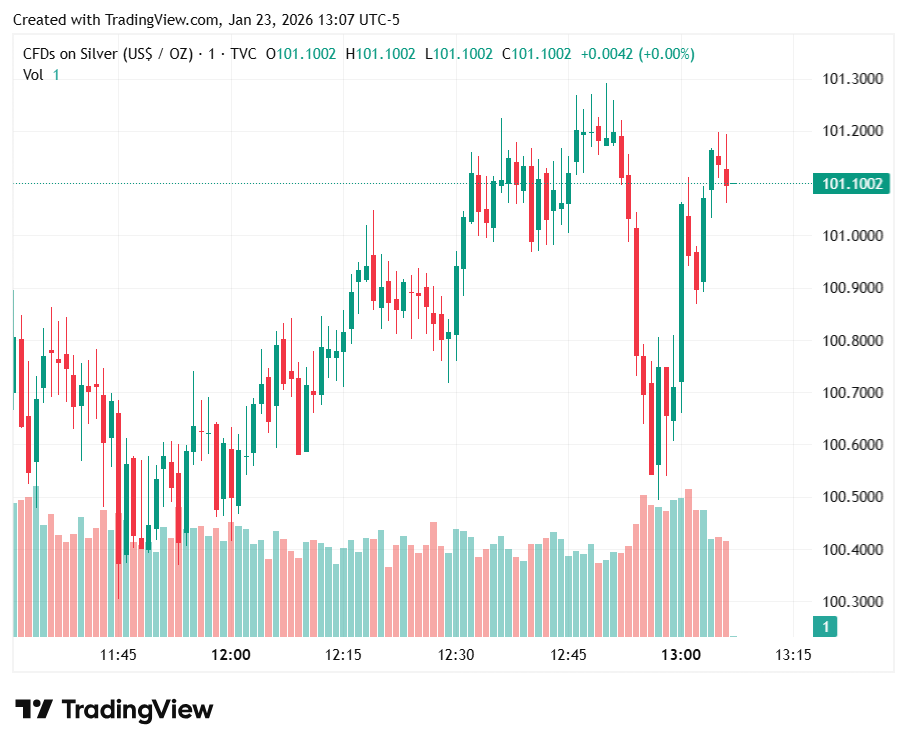
Silver broke through $100/oz for the first time, touching $101.22 in New York after starting the week below $90, driven by safe‑haven flows following a US‑Europe rift and heavy retail buying in China and Western markets. Traders are also pricing in potential US tariffs on silver‑intensive solar components and a looming structural supply deficit, pushing year‑to‑date gains above 25% after the metal more than doubled in 2025. Gold hit a record $4,987.69/oz, up nearly 14% in 2026 after a 40% rise in 2025, with Goldman Sachs now targeting $5,400 by year‑end.
Hancock Prospecting and Saudi state miner Maaden have formed a joint venture to run exploration, development, mining, sales and marketing across licensed areas in Saudi Arabia, including five new exploration licences in the Nabita Ad-Duwayhi Gold-Belt. The partnership, announced alongside Round 9 licence awards at the Future Minerals Forum in Riyadh on 14 January, aims to accelerate discovery and project delivery under the Kingdom’s Vision 2030 pro-mining framework. Hancock brings large-project experience from Australia’s A$10 billion Roy iron ore project, while Maaden targets rapid build-out of a regional mineral hub and local talent pipeline.
America’s near-total reliance on China for critical minerals – including 90% of global rare earth magnets, all ultrapure dysprosium and samarium for defence uses – is framed by NOIA president Erik Milito as a direct national security risk. Milito backs President Trump’s “Unleashing America’s Offshore Critical Minerals and Resources” executive order to fast-track offshore exploration, arguing that polymetallic nodules and shallow-water deposits could supply nickel, cobalt, manganese and copper at multi-generational scale. He points to decades of US sediment dredging and modern offshore robotics, monitoring and containment as evidence that well-regulated seabed mining can be run with controlled environmental impacts.
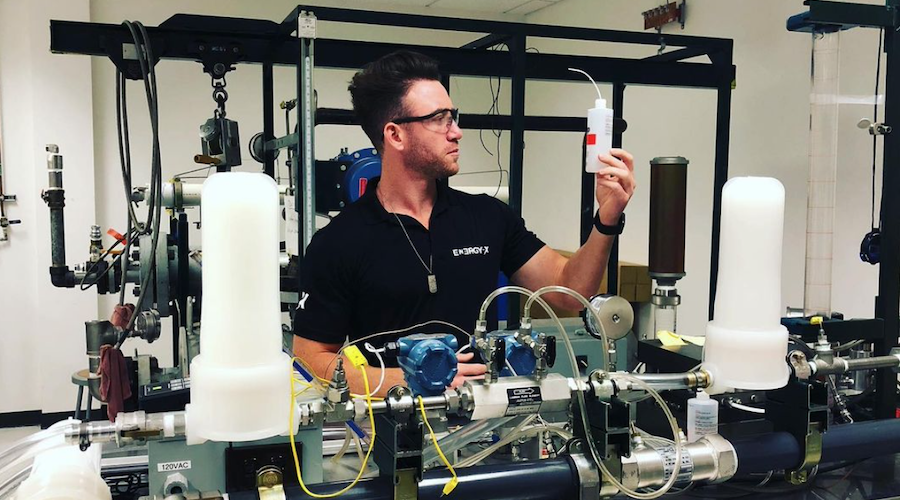
Energy Exploration Technologies (EnergyX) has launched its NUKE-it platform to produce nuclear-grade lithium isotopes, targeting 15% enriched Lithium-6 for tokamak fusion and 99.999% pure Lithium-7 for thorium molten salt fission reactors. Building on its GET-Lit DLE extraction and refining suite, the company is tying isotope production to its Lonestar Lithium project in the Smackover formation, where it now controls 47,500 acres of lithium-rich brine after a US$26 million land deal. Uranium and thorium materials from upper Smackover limestone reservoirs in Arkansas and Louisiana are planned as follow-on products.
UK housebuilding targets and a relaunched new town policy are colliding with AMP8, which already commits water companies to a sharp increase in capital works on ageing mains, treatment works and storm overflows. Contractors and consultants face concurrent demands for new trunk mains, service reservoirs and wastewater treatment capacity for large greenfield sites while also delivering AMP8 resilience, leakage and river water quality schemes. The squeeze on design, construction and commissioning resources is pushing interest in standardised treatment plant modules, offsite fabrication and long-term alliancing to keep programmes buildable.
DIPS (Data Integration using Projected Stereonets) is being positioned as the new standard for stereonet-based orientation analysis, building on more than 30 years of use in geotechnical engineering. The software supports detailed structural mapping workflows, allowing engineers to import large orientation datasets and analyse joint sets, foliation, and discontinuity patterns directly on stereonets. For slope stability, underground excavation design, and rock mass characterisation, it enables consistent kinematic checks and data integration across projects, reducing manual plotting and interpretation time.
CIMIC Group subsidiaries Sedgman and Leighton Asia have secured separate contracts from Hindustan Zinc Limited to help deliver India’s first zinc tailings recycling facility at the Rampura Agucha Mine in Rajasthan. Sedgman will focus on process plant and tailings treatment infrastructure, while Leighton Asia will provide project delivery and construction services for the brownfield site. The project signals large-scale reprocessing of legacy zinc tailings at one of the world’s largest zinc operations, with implications for paste backfill design, tailings storage stability and metal recovery circuits.
USA Rare Earth Inc has appointed Fluor Corp and WSP Global Inc as EPCM partners to advance the definitive feasibility study for its Round Top rare earth project in Texas, targeting heavy rare earths and critical magnet materials. The mandate covers process plant, mine infrastructure and associated large-scale infrastructure delivery, drawing on Fluor’s mining and processing design capability and WSP’s experience in complex project execution. For geotechnical and civil teams, early EPCM involvement signals imminent definition of pit design, waste storage, haul roads and water management concepts ahead of permitting and financing.
Emerson has released the latest version of its AspenTech Aspen Mtell® Asset Performance Management platform, adding AI-driven failure prediction on top of foundational asset health monitoring for process and mining operations. The update is designed to let operators move from simple condition-based alerts to scalable, model-based prognostics that can detect emerging equipment degradation and predict time-to-failure across critical assets such as mills, crushers and pumps. For mine operators, the key impact is earlier intervention windows, fewer unplanned shutdowns and more stable throughput without major changes to existing control systems.
Exploration activity across Australia this week includes Argent Minerals reporting high-grade silver intercepts at its Kempfield project in New South Wales, with mineralisation extending along strike from existing volcanogenic massive sulphide-style resources. Kalamazoo Resources advanced drilling at its gold targets in the Pilbara and Central Victorian Goldfields, focusing on structurally controlled lodes near historic workings and testing down-dip extensions below old stopes. Adelong Gold continued resource-definition work at the Adelong project in NSW, targeting shear-hosted quartz veins to upgrade JORC classifications and refine pit and underground designs.
Lundin Mining shares fell 10.8% to C$32.72 after the company cut 2026 guidance to 310,000–335,000 tonnes of copper and 134,000–149,000 oz of gold, citing lower underground mining rates at the Candelaria operation in Chile. Caserones delivered a record >15,000 tonnes of copper in December and 132,881 tonnes for 2025, while Candelaria produced 145,471 tonnes, supported by higher mill throughput on softer ore. Lundin is maintaining elevated capex, with 2026 sustaining spend of $550 million and expansionary capex of $445 million, as it targets ~500,000 t/y copper via brownfield expansions and Vicuña district projects.
LGMG Peru has started 2026 with orders for 226 units of mining trucks and excavators now operating or being delivered across Peruvian mine sites, positioning the Chinese OEM as one of the country’s main heavy equipment suppliers. The scale of the fleet signals growing acceptance of LGMG’s large-capacity haul trucks and hydraulic excavators in hard‑rock open pits, where competition from established brands is intense. For mine operators, the move widens options for fleet renewal strategies, parts sourcing, and maintenance planning in a tight equipment market.