Geomechanics, Streamlined.
© 2026 Geomechanics.io. All rights reserved.
JCHX, the Chinese global mining contractor, has signed a five-year global strategic cooperation agreement with mining equipment major Epiroc at JCHX’s Beijing headquarters on 16 June. The deal is expected to centre on Epiroc’s underground drilling, loading and haulage fleets and digital automation platforms being deployed across JCHX’s international contract mining projects. For engineers, the agreement signals closer standardisation of OEM equipment, spares and data systems across JCHX-operated mines, which could simplify fleet maintenance strategies and interoperability planning.
Rising commodity prices are pushing lower‑grade material back into mine plans, forcing operators to rely on tighter, more defensible assay data as projects run closer to economic cut‑off grades. With narrower margins for analytical uncertainty, small shifts in laboratory results now materially affect resource models, reserve classification and pit optimisation. This raises the stakes on lab QA/QC, sample preparation protocols and inter‑lab variability, directly influencing project viability decisions across exploration and feasibility studies.
Hillhead 2026 will run from 23–25 June at Hillhead Quarry, Buxton, hosting 620 exhibitors and, for the first time, all 15 of the world’s largest heavy construction OEMs, with full-scale excavators, wheel loaders, crushing, screening and materials processing plant on show. Live demonstrations will span the Quarry Face, East and Registration areas, including curated Quarry Face demos and scheduled runs in Crusher Alley, giving engineers rare side‑by‑side comparisons of equipment performance in a working quarry. Visitors can pre‑plan routes and supplier meetings using a free digital Show Guide and an AI-based planning tool powered by Exhibitly.
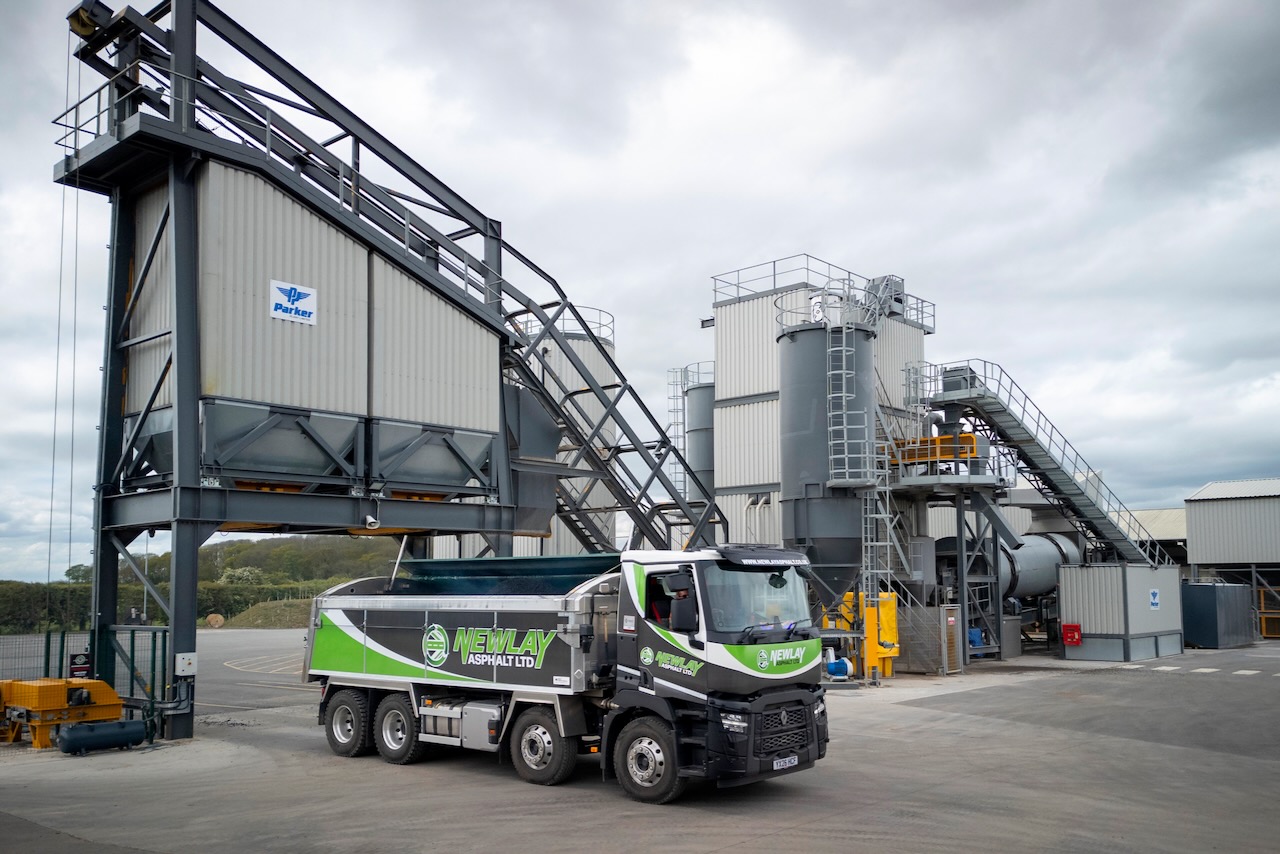
Newlay Asphalt has doubled its fleet with eight new 32-tonne Renault Trucks C 430 8x4s, following 11 similar units added last year, to support a second asphalt plant at Brandesburton alongside its Dewsbury facility. The trucks, all identically specified with PPG Fabrications alloy insulated tipper bodies, three rear asphalt chutes, onboard weighing and overhead hazard detection, handle both inbound aggregates and outbound asphalt within a typical 50-mile radius. Each vehicle carries camera coverage on all sides, side radar, lane departure warning, intelligent speed assistance, tyre pressure monitoring and Renault’s Optifleet telematics via a 4G gateway for tracking, fuel and driver-performance management.
Beaver Bridges has opened Forge 44 in Irlam, Manchester, more than doubling its previous production space and adding a dedicated trial erection area where full bridge spans can be assembled and client-inspected before delivery. The facility’s layout is designed to increase throughput for larger, more complex steel bridge projects while reducing on-site installation risk and rework. Immediate access to the M60/M62 motorway network is intended to cut transport times for long bridge components and improve nationwide and international project logistics.
Gentoo is launching a £47.7m capital programme to upgrade more than 2,800 social homes across Sunderland, appointing RE:GEN Group, Esh Construction, PHS, Bell Group and Isoler as delivery partners. Works are expected to focus on fabric and services improvements typical of large-scale housing refurbishments, such as external envelope repairs, insulation upgrades, heating and electrical renewals and internal modernisation. Contractors will need to manage access and phasing across occupied properties, with implications for sequencing intrusive works, temporary services and quality control on repetitive retrofit tasks.
Fulcrum Group has created a head of pre-construction delivery role, promoting Michelle Lane to integrate project coordination, planning and street works management into a single pre-construction team across its Sheffield and Bury St Edmunds operations. Lane brings senior experience in traffic management, local authority liaison and utility infrastructure planning, and currently chairs Pillar 4 Technology, Data & Innovation for HAUC (UK) Vision 2030, influencing UK street works standards. The restructure is intended to cut handovers, increase visibility across the project lifecycle and support more complex multi-utility infrastructure schemes.
Yoo Capital’s £1bn Camden Film Quarter scheme has secured a resolution to grant from Camden Council for a masterplan by SPPARC featuring 11 new film sound stages. The mixed-use regeneration will also deliver 485 homes, with 50% designated as affordable, in partnership with housing provider Places for People. The scale of studio infrastructure and residential density will drive complex urban logistics, construction phasing and service coordination on a constrained inner-London site.
Reds10 has taken a strategic shareholding in Mad About Facades (MAF), a nine-strong specialist façade and cladding contractor with up to 30 site operatives delivering design, manufacture and installation across defence, education and residential projects. MAF’s portfolio includes Single Living Accommodation blocks for the Ministry of Defence and school schemes at Thomas Telford School and Connaught SEND School, where it supplied full façade packages. Bringing façade design and delivery in-house supports Reds10’s fully integrated offsite model, tightening programme control and coordination on complex modular builds across the UK.
Man Group has secured £362m in investor commitments for its third community housing vehicle, Man RI CoHo 3, targeting delivery of energy‑efficient affordable homes across England. Capital will be directed to new-build schemes designed to meet higher thermal performance standards and lower operational energy demand, which may drive uptake of modern methods of construction and fabric‑first design. For civil and housing engineers, the fund signals continued institutional appetite for low‑carbon residential infrastructure and long-term, income-backed development pipelines.
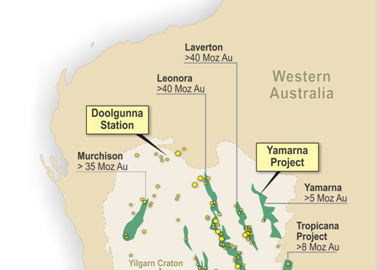
Drilling at Ausgold’s Katanning gold project in Western Australia has returned thick, high‑grade intercepts including 26m at 3.03g/t, 10m at 3.78g/t and 9m at similar grades, boosting confidence in the planned early years of production. Step‑out and infill holes are expanding known mineralisation across multiple deposits within the KGP and pointing to extensions beyond the current resource envelope. For mine planners and geotechs, the results suggest scope to optimise early pit shells, scheduling and geotechnical domains around thicker, higher‑grade zones.
Sunshine Metals has begun a 2079 line-kilometre helicopter-borne magnetic and radiometric survey over its Sybil gold project in north-east Queensland, the first detailed airborne dataset acquired across the tenure. The programme covers key prospects Francis Creek, Francis Creek East, Blue Range and Quartz Ridge, targeting structural and lithological controls on gold mineralisation that have been poorly constrained by existing mapping. New high-resolution magnetics and radiometrics are expected to refine drill targeting, upgrade prospect-scale geological models and de-risk follow-up ground geophysics.
Aeris Resources is set to acquire 100 per cent of Peel Mining after Peel shareholders overwhelmingly approved a scheme of arrangement and a concurrent demerger of gold-focused Spectre Metals. The deal consolidates Aeris’ copper position around its Tritton operation in the Cobar Basin of New South Wales, adding Peel’s nearby exploration and development assets into a single regional portfolio. For geotechnical and mine planners, the combined ground package enables more integrated resource modelling, shared underground and surface infrastructure, and potentially longer-life scheduling across multiple copper deposits.
Drilling at AIC Mines’ Jolly Shoot, the first planned mining zone at the Jericho copper deposit in north‑west Queensland, is returning high‑grade copper, gold and silver intercepts that management say are “exceeding all our expectations”. Successive strong assays are expanding the interpreted mineralised envelope and could justify changes to the initial mine plan, including potential extensions to the planned underground development and revised stoping layouts. For geotechs and mine planners, the evolving geometry and grade distribution will drive updates to geotechnical domains, ground support designs and early production scheduling.
Tega has launched its DynaPrime combination liner system for 28–42ft SAG, AG and primary ball mills, targeting reduced downtime where lost production is measured in millions of dollars per mill. The design integrates lighter, modular components to speed relining and uses engineered wear packages tailored to impact and abrasion zones, aiming to extend liner life while maintaining charge trajectory. For operators, the key gains are faster mill re-starts and more predictable maintenance windows on large grinding circuits.
Transport Accident Commission’s Split-Second film competition in Victoria is using short films by emerging filmmakers to target high road trauma rates among young drivers, focusing on speeding, distraction and impaired driving. The TAC, established in 1987 as a no-fault insurer, now funds these campaigns alongside infrastructure and enforcement programs, using cinema, social media and outdoor screens to reach high‑risk cohorts. For road and transport engineers, the initiative supports behavioural change to complement physical safety treatments such as wire-rope barriers, safer intersections and speed management.
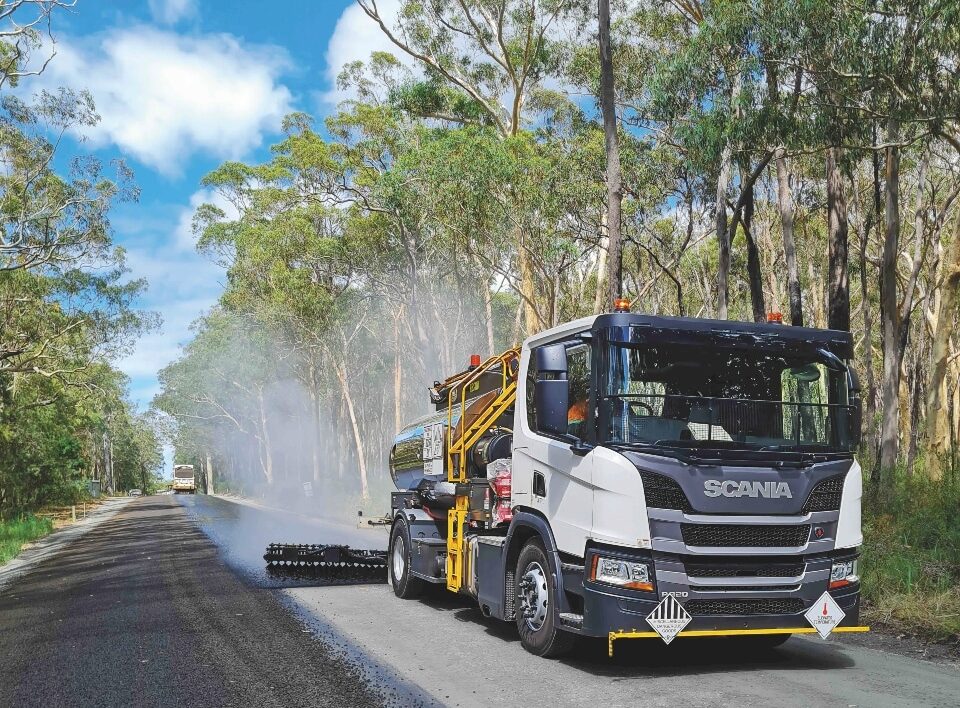
Matthews Brothers Engineering has developed a new bitumen spraying control system designed to work with modern automatic truck transmissions after major OEMs began phasing out traditional manual gearboxes. The bespoke system integrates with electronic drivetrains to maintain accurate spray rates and cut-off control at variable speeds, addressing issues such as inconsistent application when cruise control or torque management intervenes. For road contractors and plant engineers, this preserves calibrated spray performance on new fleets without relying on legacy mechanical PTO and gearbox arrangements.
Senior figures from UK civil engineering, infrastructure, construction, water, energy and transport have received King’s Birthday Honours, signalling government recognition of major project delivery and sector leadership. Recipients include leaders involved in complex rail and highway upgrades, strategic water resilience schemes and grid-scale energy infrastructure, where long-term asset performance and whole-life cost management are central. The awards are likely to strengthen the voice of practising engineers in policy discussions on net zero, infrastructure funding and climate adaptation standards.
Rail workers narrowly avoided being struck by a train after Network Rail mistakenly blocked the wrong tunnel during preparations for engineering works, the Rail Accident Investigation Branch (RAIB) reports. Three workers were exposed on a live line because possession limits and isolation arrangements did not match the intended worksite, leaving the actual tunnel open to traffic. RAIB is examining how planning documentation, line blockage procedures and verification checks failed, with likely implications for safe system of work packs and digital mapping of complex tunnel layouts.
Rolls-Royce SMR has been chosen by Swedish developer Videberg Kraft, 80% owned by Vattenfall, to deliver Sweden’s first three small modular reactors. The UK-designed SMR is based on a factory-fabricated, pressurised water reactor unit sized for grid-scale baseload generation, enabling modular civil works, repeatable nuclear island design and reduced on-site construction time compared with conventional large reactors. The decision signals upcoming demand for nuclear-grade civil engineering, including deep excavations, heavy reinforced concrete foundations and high-spec containment structures in Nordic ground and climate conditions.
Streetlight foundation design in North America is shifting from legacy Allowable Stress Design (ASD) based on AASHTO Standard Specifications to Load and Resistance Factor Design (LRFD) per the AASHTO LRFD Specifications, with direct implications for drilled shafts, spread footings, and direct-embedded poles. The comparison focuses on how LRFD treats wind load combinations, resistance factors for soil and concrete, and serviceability checks for deflection and vibration versus traditional ASD safety factors. Geotechnical engineers are urged to align pole foundation design with current LRFD bridge and sign structure practice to maintain consistency in load factors, geotechnical resistance, and documentation.
ROXON Oy has secured a major contract to design, manufacture and install 60 conveyors for LKAB’s new iron ore sorting plant at Malmberget in northern Sweden. The plant forms part of a roughly €550 million (SEK 6 billion) investment programme by LKAB to upgrade processing infrastructure and sorting capacity at the site. Conveyor design choices, layout and installation sequencing will be critical for handling high-tonnage iron ore streams in Arctic conditions and integrating with existing crushing and screening circuits.
Epiroc is opening a new facility in Thunder Bay, Ontario, positioning service teams closer to underground and surface mining operations across north-western Ontario and adjacent Manitoba. The site will provide local support for Epiroc drill rigs, loaders, and rock reinforcement equipment, reducing response times for maintenance, parts supply, and on-site troubleshooting. For mine operators, the move signals more reliable OEM backing for high-availability fleets in a region dominated by hard-rock gold and base metal operations.
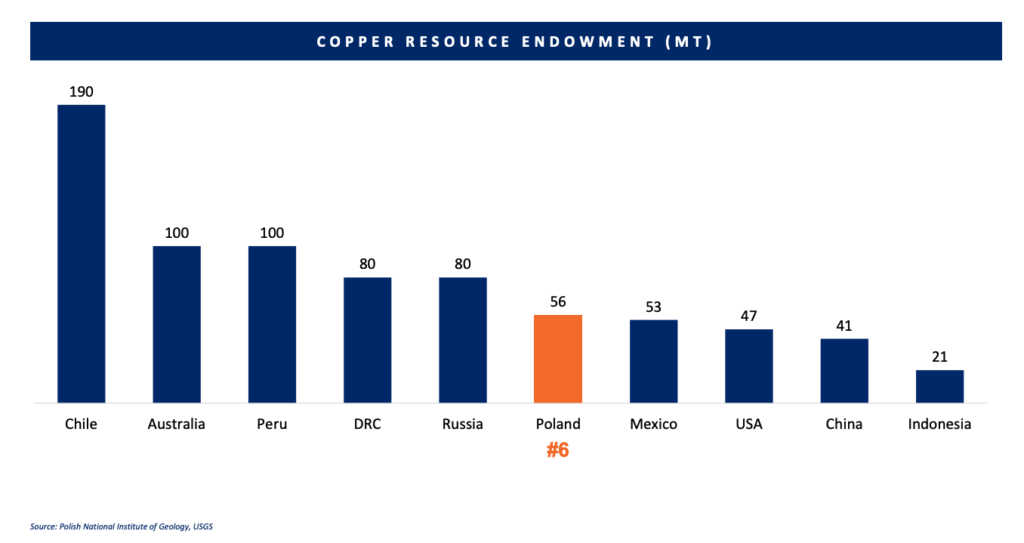
Poland is backing a C$6.4 billion mine buildout by Lumina Metals near KGHM Polska Miedź’s existing operations, with the Nowa Sól project (120 sq. km, 604 Mt at 1.24% Cu and 38 g/t Ag, 51,000 m drilled) projected to deliver 390,000 t/y copper-equivalent in its first decade, roughly matching KGHM’s current Polish output. Lumina’s April IPO raised C$406.2 million and its Warsaw listing jumped up to 46%, while a letter of intent with KGHM covers future concentrate supply. CEO Jordan Pandoff warns Poland’s copper tax regime still needs further reform to make new greenfield projects competitive.