Narrow Water Bridge construction: methodology shifts and risk notes for engineers
Reviewed by Tom Sullivan
First reported on New Civil Engineer
30 Second Briefing
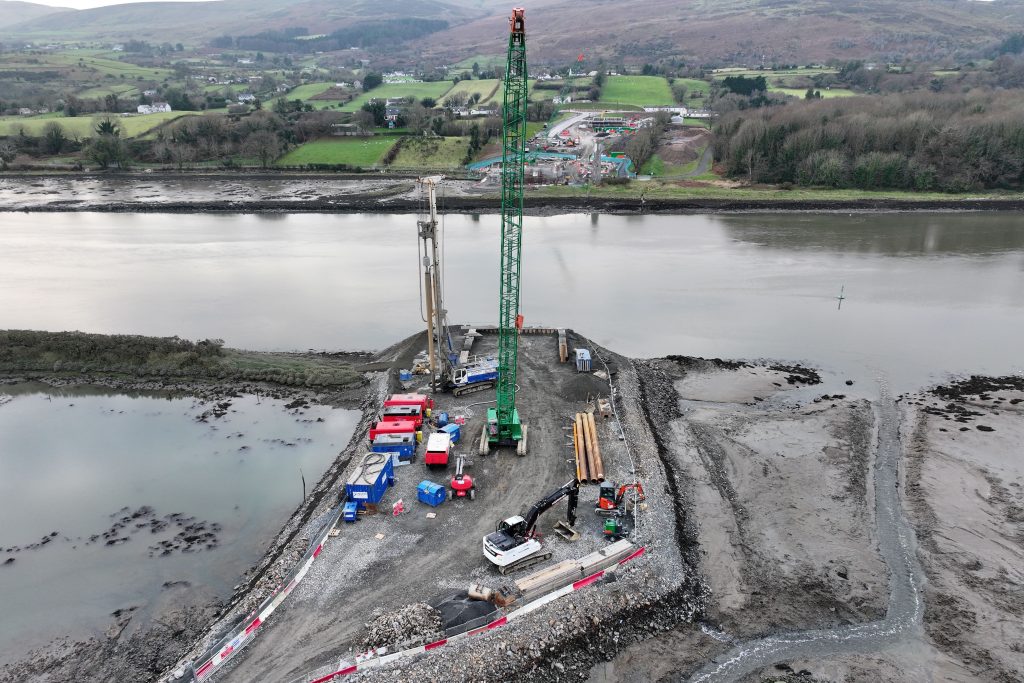
Construction of the Narrow Water Bridge between County Louth and County Down finally began in May 2024, delivering a 280m cable-stayed structure with a 138m main span and 50m navigation clearance across Carlingford Lough. Design changes since the earlier cancelled scheme include a single-pylon layout, revised piling strategy in soft alluvial deposits, and offsite fabrication of the steel/concrete composite deck to cut marine works. The updated methodology reduces in-channel construction time, simplifies temporary works in a strong-tidal estuary, and tightens programme and cost risk for the cross-border project.
Technical Brief
- Approach viaducts and abutments are conventional reinforced concrete, founded on piles outside the main channel.
- Environmental conditions impose seasonal constraints on in-channel works to protect designated habitats and fisheries.
- Methodology changes reduced the number of marine plant mobilisation cycles, cutting programme risk and standby costs.
Prepared by collating external sources, AI-assisted tools, and Geomechanics.io’s proprietary mining database, then reviewed for technical accuracy & edited by our geotechnical team.


