Geomechanics, Streamlined.
© 2026 Geomechanics.io. All rights reserved.
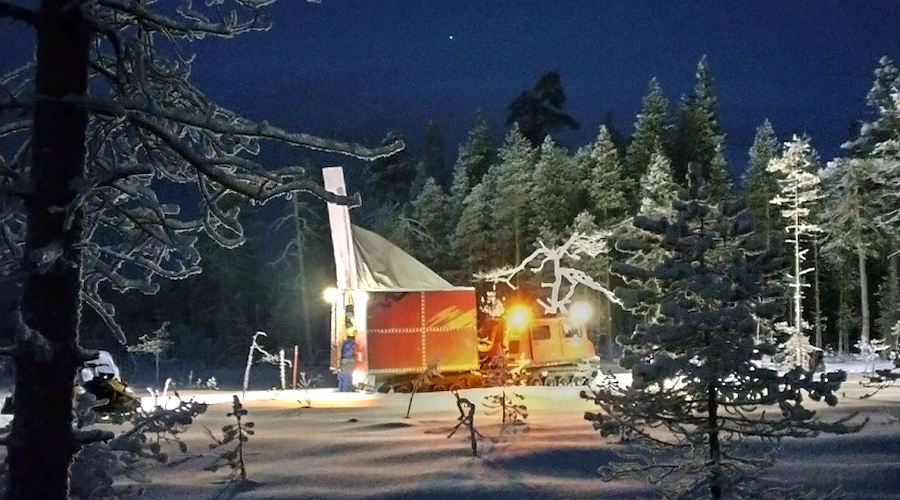
Goldsky Resources has closed its acquisition of Agnico Eagle’s 55% stake in the Barsele gold project in Västerbottens Län, Sweden, giving it 100% ownership of the 2.15‑million‑oz resource (mostly inferred) and transferring existing Orex Minerals royalty obligations. Agnico received $20 million in cash, about 75.51 million Goldsky shares at C$2.64 and a 2% net smelter return royalty, ending up with roughly 32% of Goldsky and investor rights for top‑up. Goldsky plans a US$25 million drilling campaign in 2026, described as one of the largest ever on the Barsele licence.
American Ocean Minerals has completed its three‑week Expedition 7 in the Cook Islands’ EEZ, using the 196‑foot research vessel Anuanua Moana to survey 53 sites and collect 60 box cores, 62 multicores and 4,059 physical samples over Moana Minerals’ EL3 polymetallic nodule licence. The campaign integrates sediment physico‑chemistry, macrofaunal and meiofaunal counts, foraminiferal studies, eDNA, bathymetry and water‑column biomass data to define baseline ecological conditions and resource variability. Results will feed directly into Moana Minerals’ Environmental Impact Statement due H1 2027 and a pre‑feasibility study targeted for H2 2026.
REalloys is raising US$100 million via a securities purchase agreement to fund a vertically integrated mine-to-magnet rare earth supply chain centred on its Hoidas Lake project in Saskatchewan and downstream magnet manufacturing in Euclid, Ohio. The company is partnering with the Saskatchewan Research Council to scale heavy rare earth separation, refining and metallisation, and has a 15-year offtake for concentrates from Critical Metals’ Tanbreez project in Greenland. Bloomberg reports REalloys may also build a rare earth separation plant at the US Army’s Tooele Army Depot in Utah, pending government approval.
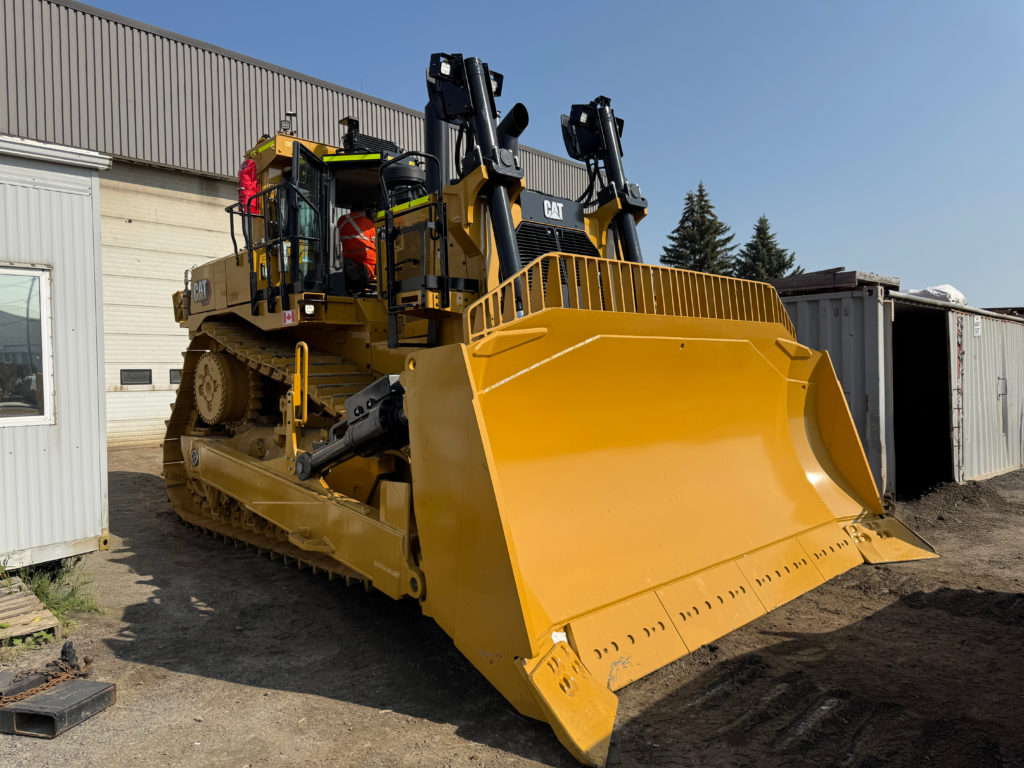
RCT – Powered by Epiroc – has deployed its agnostic AutoNav Tele system on two CAT D10 dozers and a CAT 992 wheel loader to support the restart of a historic Canadian nickel mine transitioning from underground to open pit operations above legacy voids. Operators now work from an AutoNav Cabin with ergonomic seating and temperature control, critical in -20°C conditions and reducing exposure to potential surface instability. RCT also engineered site communications for extreme weather and a Geofence Zone with crest detection to prevent machines crossing the dam edge, and trained mine staff for on-site autonomy.
Norway’s Nussir copper-silver-gold project in Hammerfest Municipality has moved forward with Blue Moon Metals Inc awarding an EPC contract for the processing plant and securing Norwegian Environment Agency approval of its Waste Management Plan. The regulatory sign-off includes an updated discharge permit, clearing a key hurdle for subsea tailings disposal previously contested in Norway. These steps materially de-risk project execution, allowing detailed plant design, procurement and construction planning to proceed on a defined permitting basis.
Hancock Prospecting has committed an initial $50 million, with an option to lift this to $100 million by 2026, to fund Lumitron’s commercial roll-out of its HyperVIEW Very High Energy Electron (VHEE) beam and advanced X-ray platforms for mining and other sectors. The VHEE-based systems aim to deliver very high-energy, high-flux X-ray beams capable of penetrating dense ore and equipment, enabling non-destructive imaging of large volumes. For miners, this points to future deployment of high-resolution bulk ore characterisation, in-situ grade control and structural inspection tools at industrial scale.
FUCHS Lubricants is promoting SOLCENIC GM 20, an MSHA-approved HFAE fire-resistant hydraulic fluid formulated for longwall coal mining roof-support systems. The water-in-oil emulsion is designed for hydraulic roof supports that stabilise the longwall face, targeting consistent performance under high-pressure, high-cycle loading where ignition risk from conventional mineral oils is critical. For mine operators and OEMs, the key implications are compatibility with existing HFAE systems, reduced fire load in gate roads and maingate stations, and support for stricter underground safety regimes.
Multotec has supplied a customised suite of high-performance spiral concentrators to the Thaba JV chromite and PGM project in South Africa’s Limpopo province, providing an integrated gravity separation circuit tailored to the ore’s specific mineralogy. The solution is engineered to boost chromite and PGM recovery while tightening product grade control, with spiral configurations selected to allow rapid reconfiguration between different feed conditions and product specs. For plant designers and metallurgists, the key point is the emphasis on modular, flexible spiral layouts to sustain long-term performance as ore characteristics change.
Cemex and Berlin-based startup sensmore are digitising operations at the 770-year-old Rüdersdorf limestone quarry in Germany using AI-based loading and haulage optimisation. On-board edge devices and radar sensors on wheel loaders and haul trucks feed real-time data into sensmore’s optimisation engine, which recommends bucket fill levels, truck–loader pairing and haul speeds. Early results show reduced idle times and more consistent crusher feed, signalling practical pathways to retrofit AI-driven dispatch and loading control into existing European quarry fleets without full autonomy.
Antofagasta plans to lift copper output by 30% by 2030, Executive Chairman and CEO Iván Arriagada told delegates at the World Mining Congress 2026, positioning the Chilean producer to meet surging critical minerals demand from the energy transition. The growth will come from brownfield expansions across its existing operations rather than new greenfield projects, implying higher stripping ratios, additional concentrator capacity and incremental tailings and water management upgrades. For engineers, the strategy signals sustained demand for large-scale pit optimisation, process debottlenecking and infrastructure life-extension work in northern Chile.
A $7.3 million contract has been awarded to local contractor DAC Enterprises to upgrade the four-way intersection of Warrego and Kaczinsky Roads on the Stuart Highway, north of Tennant Creek in the Northern Territory. Works will focus on reconfiguring the junction geometry and pavement to improve traffic flow and heavy-vehicle movements on this key north–south freight corridor. For designers and contractors, the job signals continued Federal–NT funding into regional highway upgrades, with scope for improved drainage, shoulder widening and safety barrier installations in expansive soil conditions.
Marlborough Highways has resurfaced three live streets for Barnet Council in six days using Holcim SuperLow asphalt and ACLA, a carbon-negative aggregate alternative from Low Carbon Materials, as part of the borough’s BarNET ZERO programme. ACLA was incorporated in the binder course to cut embodied carbon while maintaining carriageway performance, supported by electric rollers, electric disc cutters and electric vans on a 100% renewable tariff, with HVO-powered plant used where electrification was not viable. The scheme cut the estimated carbon footprint from 62.34t CO₂e to as low as 4.49t CO₂e, with most savings coming from material selection rather than plant changes.
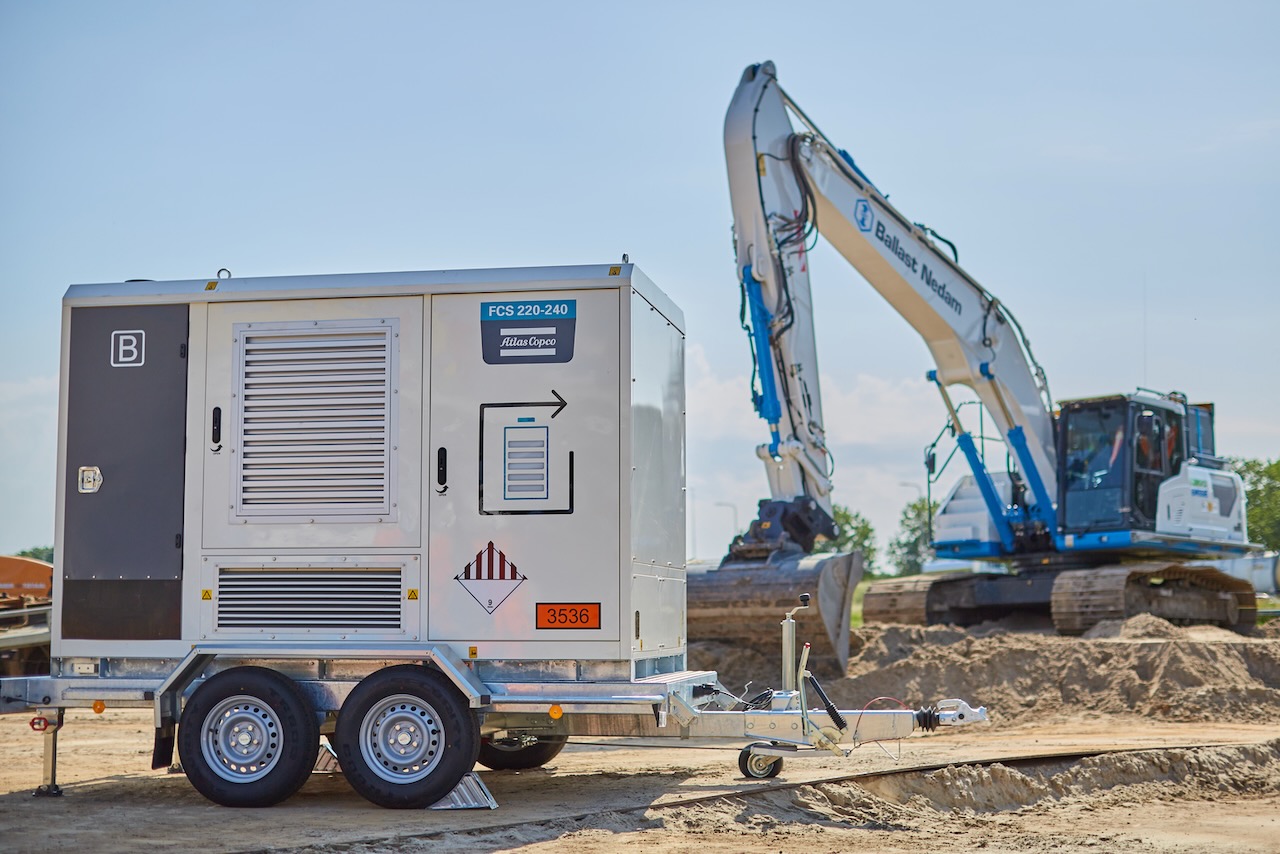
Atlas Copco has launched the towable FCS 220-240 mobile rapid charging station, delivering 232kWh with over 220 kW DC and 50 kW AC outputs in a 3.5‑tonne, IP55-rated unit for excavators, loaders, trucks and other site equipment. Customer trials report up to five extra operating hours from one hour of charging, with multiple connectors for simultaneous charging and Dynamic Load Management to balance EV demand with up to 50 kW of auxiliary site loads. Charge-to-recharge capability, RFID-based multi-level access control, OCPP support and remote monitoring target rental fleets and remote or grid-constrained worksites.
Overton Electrical Services has been appointed to deliver mechanical and electrical works for Vodafone retail outlets as they rebrand to VodafoneThree following the planned 2025 merger. The nationwide programme covers electrical power and lighting, HVAC, structured data cabling and fire alarm installations, with each store receiving a bespoke fit-out to suit local operational and technical constraints. For contractors and building services engineers, the roll-out signals sustained demand for fast-track, multi-site retail M&E upgrades with tight phasing and live-trading interfaces.
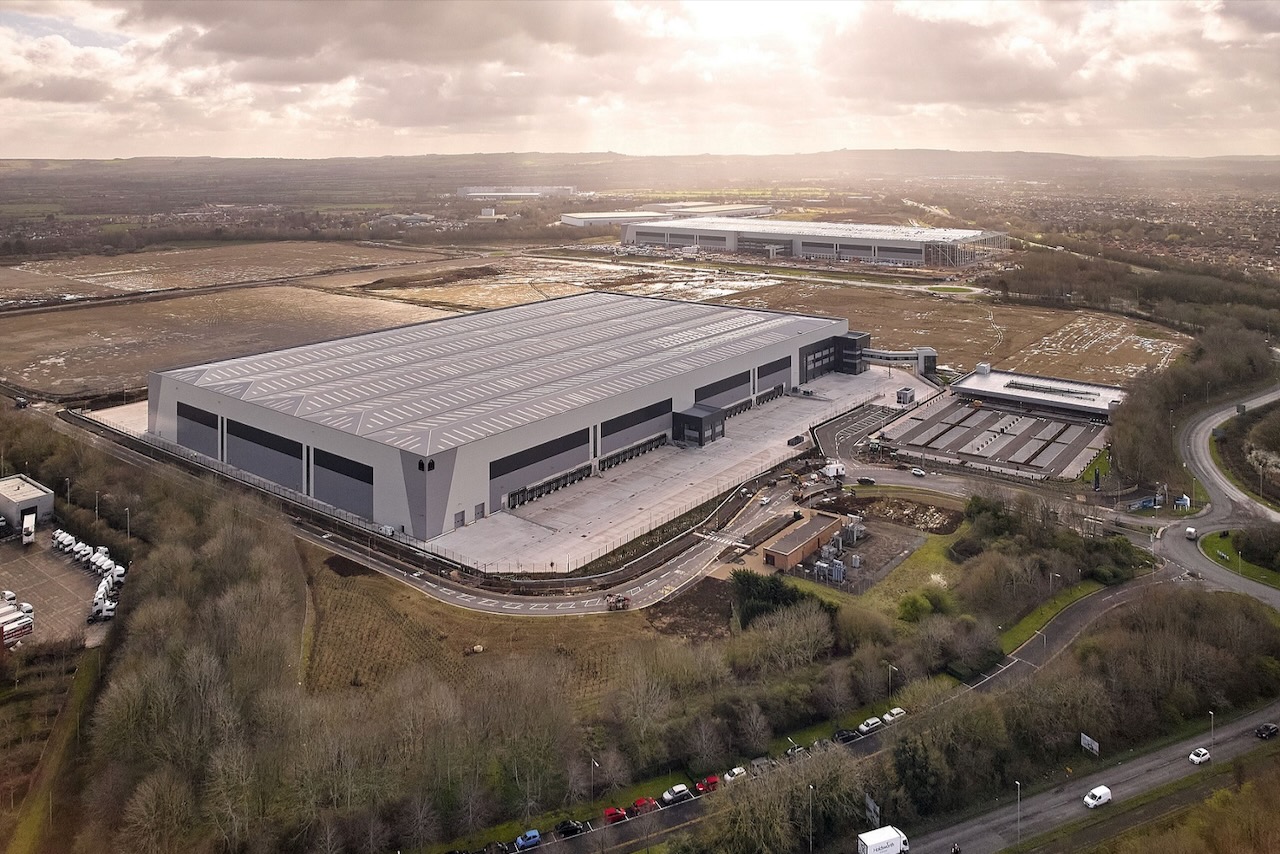
McLaren Construction (Midlands and North) has completed the 545,000 sq ft Panattoni Park Swindon logistics scheme on the former Honda site in a 39‑week programme, using early supply chain engagement on steel frame and cladding to hold schedule. Sustainability measures included cement replacement in concrete, recycled steel, precast walling, lift cores and stair units, plus a cut‑and‑fill earthworks balance to reuse excavated material and segregated smart waste management. The project scored 43/45 under the Considerate Constructors Scheme, supported seven trade apprentices and delivered high-spec logistics space with premium office fit-out.
Tungsten Properties has secured £19m from a UK family office and appointed Magrock Construction as main contractor for Tungsten Park Filton, a 4.55-acre industrial estate fronting the A38 near Junction 16 of the M5 and Junction 20 of the M4. The scheme will deliver five Grade A mid-box units from 10,200 sq ft to 30,000 sq ft with first-floor offices, generous yard depths and high power provision to relieve Bristol’s constrained mid-box supply. Design targets include BREEAM ‘Excellent’, EPC A, rooftop PV, EV charging, SuDS features and extensive landscaping.
Robertson Construction has begun building a £750m national supercomputer facility at the University of Edinburgh, funded by UK Research and Innovation to host the UK’s next-generation high‑performance computing system. The project will require substantial power and cooling infrastructure, including high‑capacity electrical supply, dense server hall fit‑out and advanced mechanical services, placing tight tolerances on structural vibration control and floor loading. Civil and building engineers will need to integrate resilience measures for continuous 24/7 operation, including redundancy in power distribution, chilled water networks and data‑centre‑grade fire protection.
Equipal has secured £1.25m in equity and £15m in forward flow funding from Altum Capital Management to expand its point-of-sale plant and equipment finance platform. The proprietary system, already embedded with more than 75 UK vendors including crane and industrial equipment suppliers, automates asset finance decisions for purchases up to £250,000, replacing manual, email-based workflows. Equipal reports a 1.26% default rate, zero credit losses so far, and a 69% repeat-usage rate, signalling growing contractor acceptance of fully digital plant finance.
Paebbl has launched Rebond 300, a near‑white, carbon negative cement alternative with a footprint of -149kg CO2 per tonne that can replace up to 30% of conventional cement in standard mixes. The SCM-based binder delivers up to 40% reduction in embodied carbon at typical replacement ratios, a 10x improvement over Paebbl’s first‑generation material, while remaining compatible with existing ready‑mix and precast workflows. The Rebond Series is formulated to work across a family of silicate minerals and uses lower clinker process temperatures, reducing heat demand and permanently storing CO2.
BCIS’s civil engineering tender price index panel estimates tender prices are up 2% year-on-year in Q2 2026, but warns that rising bid-preparation costs are making contractors more selective. Higher internal design, pricing and compliance workloads are lengthening pre-construction stages and reducing the number of bids per scheme, particularly on complex infrastructure packages. Clients may need to adjust procurement timetables, rebalance risk allocation and budget for longer lead times to secure competition on major groundworks and civils contracts.
Two battery-electric Cat 793 XE Early Learner haul trucks have entered mine-site demonstration in Western Australia’s Pilbara under a three-way decarbonisation partnership between BHP, Rio Tinto and Caterpillar. The trucks, trialled at BHP’s Jimblebar iron ore operation after three months of on-site testing, are being assessed for duty cycles, energy consumption and compatibility with existing haul profiles. Results will inform future fleet transition strategies, charging infrastructure design and power demand planning for large-scale Pilbara operations.
Ramelius Resources has secured Environmental Protection Authority confirmation that its Roe gold project in Western Australia can proceed under the standard Part V works approval and licensing pathway, avoiding a formal EPA environmental impact assessment. The ruling covers planned open-pit mining and associated processing infrastructure east of Kalgoorlie, with environmental regulation to be managed through works approvals and operating licences rather than a full Public Environmental Review. For mine planners and environmental teams, this signals lower approvals risk and a potentially shorter permitting schedule, but ongoing compliance obligations under Part V conditions.
New University of Sydney modelling of 3D plate tectonics and deep Earth flow fields explains why some ancient continental margins host large sedimentary copper systems while others with similar stratigraphy are barren. Led by Professor Dietmar Müller’s EarthByte Group and published in Nature Communications, the work links copper endowment to long-lived mantle upwellings, crustal thinning patterns and basin-scale fluid pathways rather than local geology alone. For explorers, the framework offers a way to rank frontier basins and re-evaluate “failed” provinces using geodynamic criteria.
Tivan has secured a US$50 million financing package in key terms with Sumitomo Corporation and existing partner ETFS Capital to restart the long-idled Molyhil tungsten project in the Northern Territory. The deal includes a potential long-term offtake arrangement with Sumitomo, giving price and volume certainty for tungsten concentrate from the open-pit operation. Tivan is also formalising community partnerships with the Central Land Council and Traditional Owners, a critical step for approvals, land access and future expansion drilling around the Molyhil deposit.