PDAC: Canada’s ‘fastest G20’ mine permits pledge – key takeaways for project teams
Reviewed by Tom Sullivan
First reported on MINING.com
30 Second Briefing
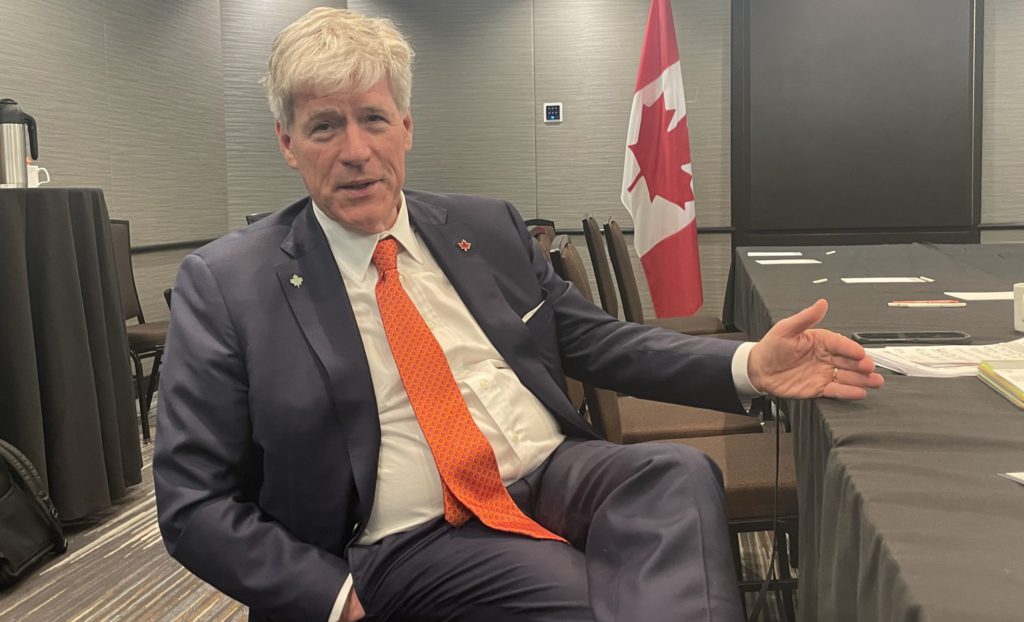
Canada’s Energy and Natural Resources Minister Tim Hodgson says the new Major Projects Office will deliver “conditions documents” for major mines within two years of referral, aiming to make Canada the fastest G20 jurisdiction on permitting while coordinating “one project, one review” across federal and provincial regulators. Priority files include Foran Mining’s McIlvenna Bay copper project in Saskatchewan, Canada Nickel’s planned build in Ontario, Northcliff’s tungsten project in New Brunswick, Nouveau Monde Graphite in Quebec, and the Red Chris expansion in B.C. backed by Newmont and Imperial Metals. Ottawa has also launched a C$1.5‑billion First and Last Mile infrastructure fund, earmarking C$115 million for five mine‑to‑market links, and is planning a C$2‑billion sovereign fund with potential equity stakes in critical mineral projects.
Technical Brief
- Major Projects Office commits to issuing mine “conditions documents” within 24 months of referral.
- Hodgson cites 26 federal mining-related deals closed in October and 30 by early March.
- Government pegs supported project value at about C$18 billion across critical mineral and base metal assets.
- Vale’s Thompson nickel complex transaction includes Canada Growth Fund capital to sustain and expand operations in Manitoba.
- McIlvenna Bay copper project is scheduled to transition from permitting to first production as early as next year.
- Canada Nickel’s Ontario build is expected to require roughly two years of construction post‑FID.
- Regulatory “de‑pancaking” is intended to consolidate overlapping federal–provincial reviews into a single, predictable permitting sequence.
Our Take
Canada-focused Policy items in our database that mention critical minerals and copper increasingly pair permitting reform with targeted funding, and the C$1.5 billion First and Last Mile infrastructure fund plus the C$2 billion sovereign vehicle signal that Ottawa is trying to de-risk both approvals and enabling infrastructure in tandem.
With Nutrien and Mosaic controlling about 90% of potash and phosphate fertiliser capacity referenced here, any acceleration of Canadian project permitting for critical minerals and base metals could contrast sharply with the more concentrated, oligopolistic structure on the fertiliser side of the sector.
The Rubaya mine landslide fatality figures in this piece sit alongside several safety‑tagged items in our Policy coverage, underscoring that faster permitting in Canada will likely be scrutinised against international tailings and slope‑stability failures rather than just domestic ESG narratives.
Prepared by collating external sources, AI-assisted tools, and Geomechanics.io’s proprietary mining database, then reviewed for technical accuracy & edited by our geotechnical team.
Related Articles


Related Industries & Products
Mining
Geotechnical software solutions for mining operations including CMRR analysis, hydrogeological testing, and data management.
Construction
Quality control software for construction companies with material testing, batch tracking, and compliance management.
CMRR-io
Streamline coal mine roof stability assessments with our cloud-based CMRR software featuring automated calculations, multi-scenario analysis, and collaborative workflows.
HYDROGEO-io
Comprehensive hydrogeological testing platform for managing, analysing, and reporting on packer tests, lugeon values, and hydraulic conductivity assessments.
GEODB-io
Centralised geotechnical data management solution for storing, accessing, and analysing all your site investigation and material testing data.