Geomechanics, Streamlined.
© 2026 Geomechanics.io. All rights reserved.
Energy Transition Minerals has secured Xunta de Galicia approval to transfer the Section C concession for the 282-hectare Penouta tin-tantalum-niobium mine, giving it control of more than 76 million tonnes of NI 43-101 measured and indicated resources and the existing €28 million open-pit, plant and infrastructure. The company plans to restart production using the current processing plant tailored to Penouta ore and has signed an offtake memorandum of understanding with commodity trader Traxys for concentrate sales. Penouta would become the EU’s only primary tantalum and niobium source, directly supporting Critical Raw Materials Act supply-diversification targets.
Cameco has temporarily suspended mining at the Cigar Lake uranium mine in northern Saskatchewan after a sulfuric acid plant failure forced shutdown of Orano’s McClean Lake mill, which normally processes the ore. The McClean Lake facility, 70 km northeast of Cigar Lake and one of the world’s largest uranium plants with 24 million lb/year concentrate capacity, is expected to restart in about two weeks, with Orano seeking interim acid supply. Cameco, which has produced 174.5 million lb of yellowcake from Cigar Lake since 2014, says its 2026 output guidance remains unchanged unless delays extend.
GreenMet is launching a $150 million critical minerals processing hub in Rupert, West Virginia, designed as a hub-and-spoke network with Greenbrier County as the central plant handling coal tailings from across the state. Partners Flash Metals USA, AmForge Corporation and Greenbrier Smokeless Coal Company plan to recover rare earth elements from “mid-vol” coking coal tailings and feedstock secured via offtake agreements from Greenland, the Woodstock manganese project in New Brunswick and Cameroon. The privately financed project, coordinated with the White House, has attracted a further $10 billion in capital commitments and is expected to create about 250 jobs.
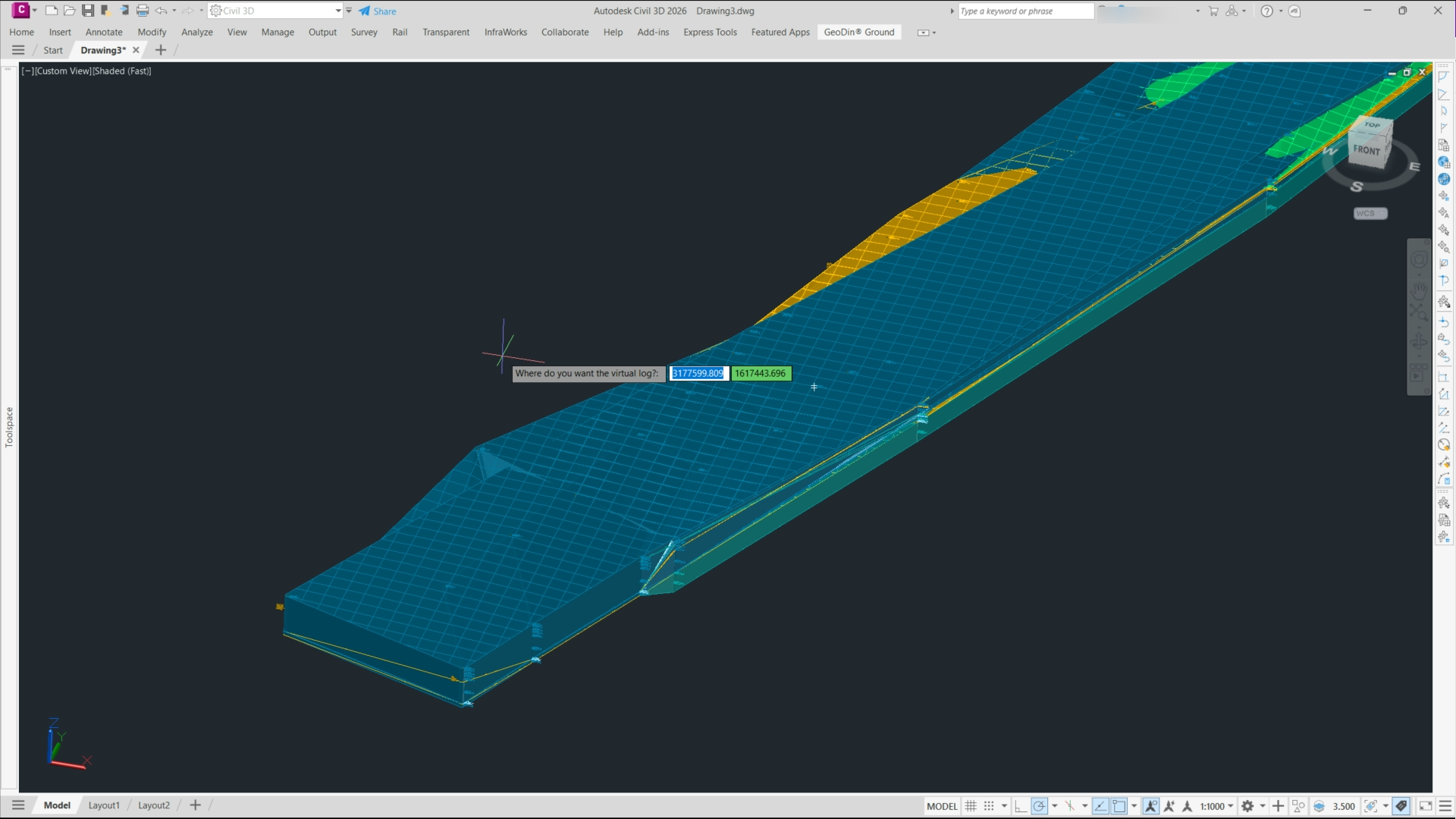
GeoDin Ground, a free Autodesk Civil 3D plug-in, replaces manual borehole imports by directly linking Civil 3D models to GeoDin® geotechnical databases and AGS/Excel borehole logs. The tool generates dynamic 3D subsurface models, including stratigraphy, groundwater levels and geotechnical layers, that update automatically as borehole data change. For designers, this means borehole positions, interpreted soil horizons and material properties are embedded in corridors, alignments and earthworks, reducing data re-entry and improving consistency between geotechnical interpretation and Civil 3D design.
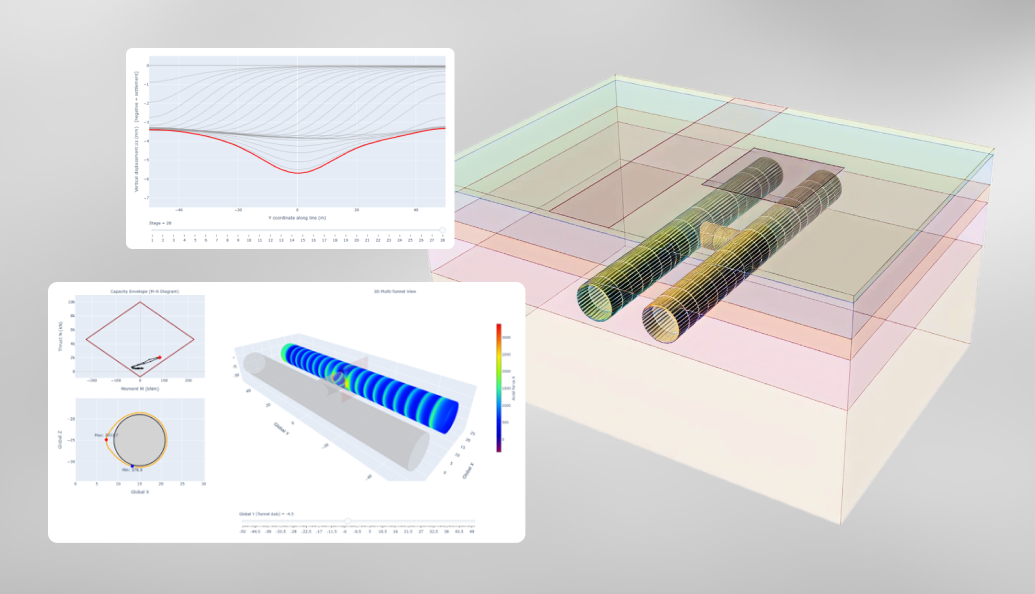
Scripting in RS3 now lets tunnel designers automatically extract lining forces, moments, and displacements at every section along a 3D model, instead of manually interrogating individual cross-sections. Users can generate full lining design envelopes, export results to spreadsheets or custom reports, and rapidly iterate on reinforcement or segment thickness without re-running the finite element analysis. For geotechnical teams, this shifts effort from repetitive post-processing to checking design assumptions, load cases, and ground–structure interaction behaviour across the entire tunnel.
Aramine and sensmore are deploying an autonomous Aramine L140B loader into underground production at Cemex’s Rüdersdorf limestone quarry in Germany, converting the existing Aramac L140B platform into a fully automated LHD system for real-world operating conditions. The project targets safer, more efficient underground extraction as Europe pushes to secure critical raw materials, using autonomy to remove operators from the face and standardise loading cycles. Engineers should watch for data on cycle times, utilisation and maintenance behaviour versus manually operated LHDs in similar limestone headings.
Diesel and lubricant price volatility is pushing mines towards tighter consumption control using integrated sensors, software and fleet-wide monitoring systems. TotalEnergies’ Optimizer platform is profiled as a fully integrated electricity, fuel and lubricant manager, combining tank-level sensors, equipment telematics and site SCADA links to track real-time use and losses. For mine operators, the focus is shifting from simple fuel accounting to granular energy intensity metrics per tonne moved and automated alerts on abnormal consumption, directly affecting haulage planning and maintenance scheduling.
CIMIC Group has bought the remaining stake in Thiess Group for A$1.18 billion, regaining 100% ownership after selling 50% into a joint venture with funds advised by Elliott Advisors in 2020 and then progressively buying back additional interests. The deal consolidates one of the world’s largest contract miners under a single balance sheet, giving CIMIC full control over Thiess’ open-pit and underground portfolios across coal, metals and minerals. For mine owners, it signals a more integrated offering on life-of-mine contracts, fleet renewal and decarbonisation initiatives.
Myriota has added terrestrial cellular connectivity to its HyperPulse 5G non-terrestrial (satellite) network and AssetHawk tracker, creating a hybrid IoT system that roams automatically between cell coverage and zero-cell remote areas. The AssetHawk device now uses both 5G NTN links and ground-based networks for continuous tracking of mobile plant, trailers and containers across mine sites and long-haul routes. For operators, this reduces blind spots in fleet and asset visibility without needing separate satellite-only or cellular-only hardware.
Sandvik Rock Processing has completed its upgraded jaw crusher range, creating a unified line aimed at safer maintenance, simpler operation and consistent performance across hard rock and quarry applications. The portfolio now standardises design, controls and wear parts to a Sandvik-wide specification, giving mines and quarries common interfaces and procedures from primary to secondary crushing. For engineers, this means easier fleet integration, streamlined spares management and more predictable crusher behaviour across different sites and ore types.
The 2026 Bulk Handling Expo, Australia’s only dedicated bulk solids handling exhibition and conference, will return as a biennial event amid what the International Cargo Handling Co-ordination Association calls a critical period for supply chains and heavy industry. Running since 2022, the expo brings together designers and operators of conveyors, silos, shiploaders and stockyard systems with equipment OEMs and automation providers. For geotechnical, civil and materials engineers, it offers direct access to advances in bulk terminal design, dust and spillage control, and high-throughput loading infrastructure.
Sydney motorists face toll increases from today across multiple key corridors, including the Hills M2, NorthConnex, Westlink M7, M5 South-West, Lane Cove Tunnel, Military Road E-Ramp, Cross City Tunnel and Eastern Distributor, as advised by Transport for NSW. Higher per‑trip costs on these privately operated motorways will alter traffic assignment on parallel arterials such as the Pacific Highway and Parramatta Road, with likely shifts in peak-hour volumes and heavy vehicle routing. Asset managers and planners may need to revisit network models, pavement wear assumptions and future widening or ramp metering strategies.
South Australia’s $15.4 billion Torrens to Darlington (T2D) project has entered delivery, with Tunnel Boring Machine “Mary” starting excavation of the first 4.5‑kilometre southern tunnel from Clovelly Park to Glandore in Adelaide. The twin road tunnels will remove one of the last major surface bottlenecks on the North‑South Corridor, shifting long‑distance traffic underground and freeing surface corridors for local access. Geotechnical teams now move from investigation to active control of ground behaviour, settlement and groundwater as full‑scale tunnelling ramps up.
Roads & Infrastructure Magazine has flagged an upcoming infrastructure feature with no project details yet released, signalling that key specifications such as route length, pavement design, bridge spans or traffic capacity are still to be confirmed. For geotechnical and civil contractors, this means forward planning must wait until formal documentation clarifies ground conditions, earthworks volumes and structural requirements. Keep an eye on the Roads & Infrastructure announcements page, as early release of cross-sections, design standards and staging plans will directly affect tendering strategies and resourcing.
Weir has secured a first-quarter 2026 order from Lloyds Metals and Energy to supply 14 GEHO TZPM 2000 positive displacement pumps for the second phase of a large-scale iron ore slurry pipeline in India. The GEHO PD units will be fitted with GLORES control technology, purpose-built for high-pressure, long-distance slurry transport where pipeline friction losses and wear are critical design constraints. For mine planners and process engineers, the deal signals continued confidence in long-distance slurry transport over rail or road for bulk iron ore movement.
Mobile fire suppression systems on mining fleets rely on control panels that continuously monitor cylinder pressure, detection line integrity and power supply status rather than just the visible cylinders, nozzles and hoses. Muster’s latest panels integrate self-diagnostics, event logging and real-time fault alarms to the operator cabin or remote control room, reducing the risk of undetected isolation valves, discharged cylinders or damaged detection circuits. For engineers, correct panel specification, wiring protection and environmental sealing are now as critical as agent selection and nozzle layout in achieving reliable suppression performance.
Alcoa will acquire South32’s interests in a portfolio of bauxite, alumina and aluminium operations in a cash-and-stock deal valued at about $5.9 billion, plus a contingent value right of up to an undisclosed amount. The transaction consolidates upstream assets across mining, refining and smelting, giving Alcoa greater control over bauxite supply and alumina feedstock for its global smelter network. For mine planners and process engineers, the enlarged portfolio signals potential changes to bauxite reserve scheduling, refinery throughput strategies and long-term offtake arrangements.
Mining engines operating in coal dust clouds with near-zero visibility face rapid wear as fine, abrasive coal particles bypass inadequate air filtration and damage turbochargers, injectors and cylinder liners. Donaldson engineers argue that reliability teams must move beyond time-based filter changes to condition-based strategies using restriction gauges, high-efficiency media and correctly sized housings tailored to specific duty cycles. Poorly specified or late filter replacement can cut engine life dramatically, drive unplanned rebuilds and increase whole-of-life costs for large haul trucks and loaders.
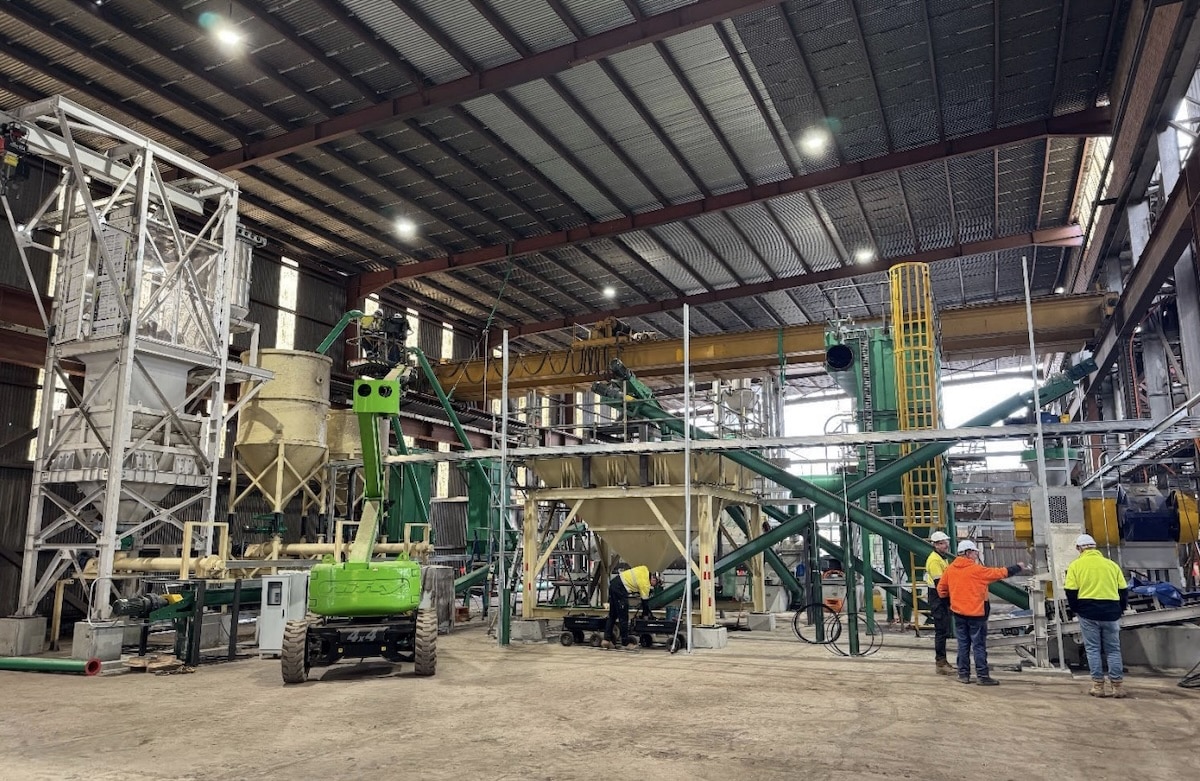
Latrobe Magnesium has reached 33 per cent completion on Phase 1B of its Stage 1 demonstration plant in Victoria, targeting first magnesium metal production in the second half of 2026. Structural, mechanical and piping (SMP) works are advancing, with major steelwork, equipment installation and pipe-rack construction already underway. The Latrobe Valley project is designed to process brown coal fly ash into magnesium, offering a potential low-cost, lower-CO₂ alternative to conventional dolomite or magnesite-based production for alloy and automotive supply chains.
Dandara has secured planning permission for 252 fully electric homes on a former industrial site in Bristol’s Fishponds, forming part of Bristol City Council’s Atlas Place Masterplan and including one to four-bedroom houses and apartments. The scheme incorporates an orbital cycle route linking directly to the Bristol and Bath Railway Path, more than 150 new trees, and play areas, with construction due to start later this summer and first occupations targeted for 2027. Dandara will contribute about £430,000 to local highway and public transport upgrades, and 100% of demolition material has been recycled, with some reused on site.
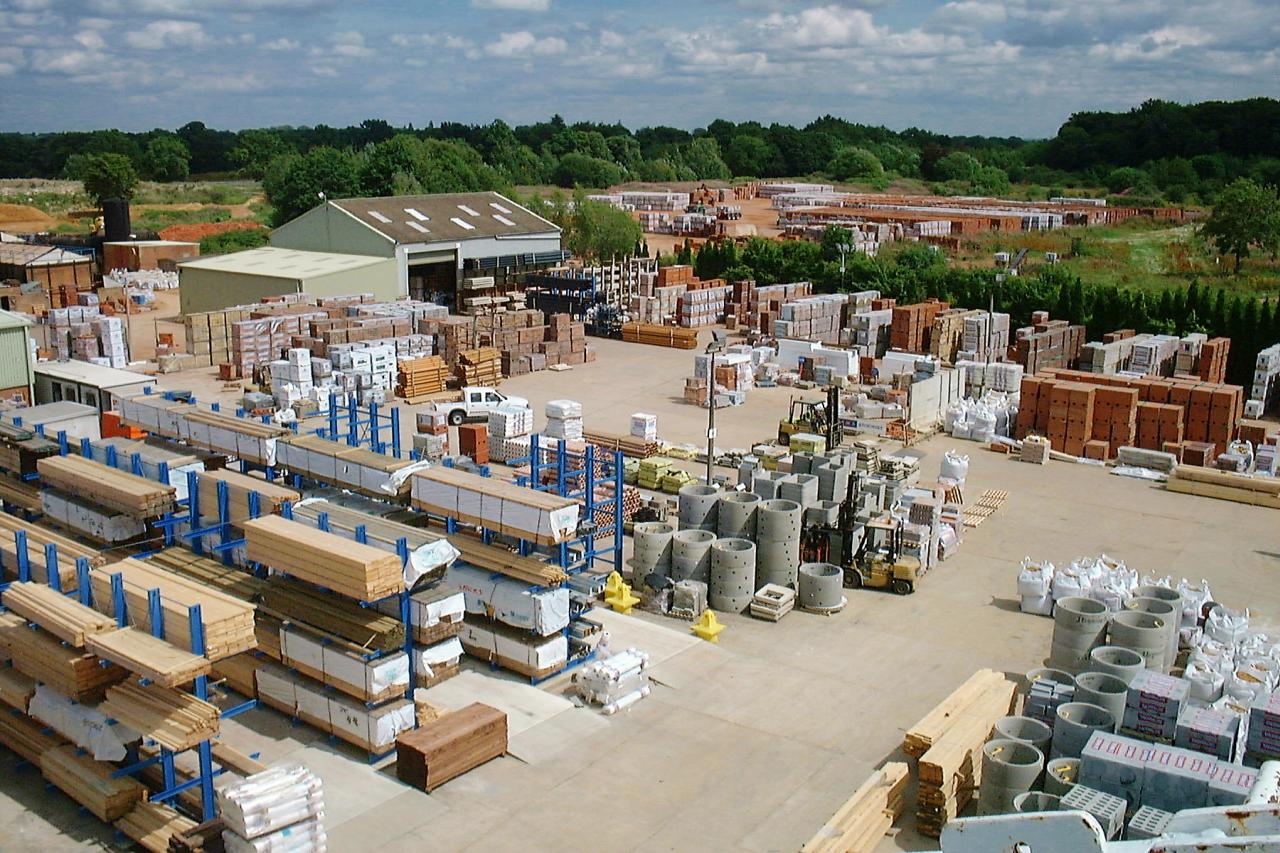
Builders Merchants Building Index data show April 2026 like-for-like value sales down 0.6% year-on-year, with volumes off 3.5% and prices up 3%, as Renewables & Water Saving fell 6.6% and Heavy Building Materials 1.9%, while Services grew 7%. Over February–April, volumes dropped 7.1% against a 4.7% price rise, and 12‑month like-for-like values to April were 0.7% lower. MRA Research notes Q1 new home registrations down 6% and 762 UK property-related insolvencies so far in 2026, more than 60% above last year.
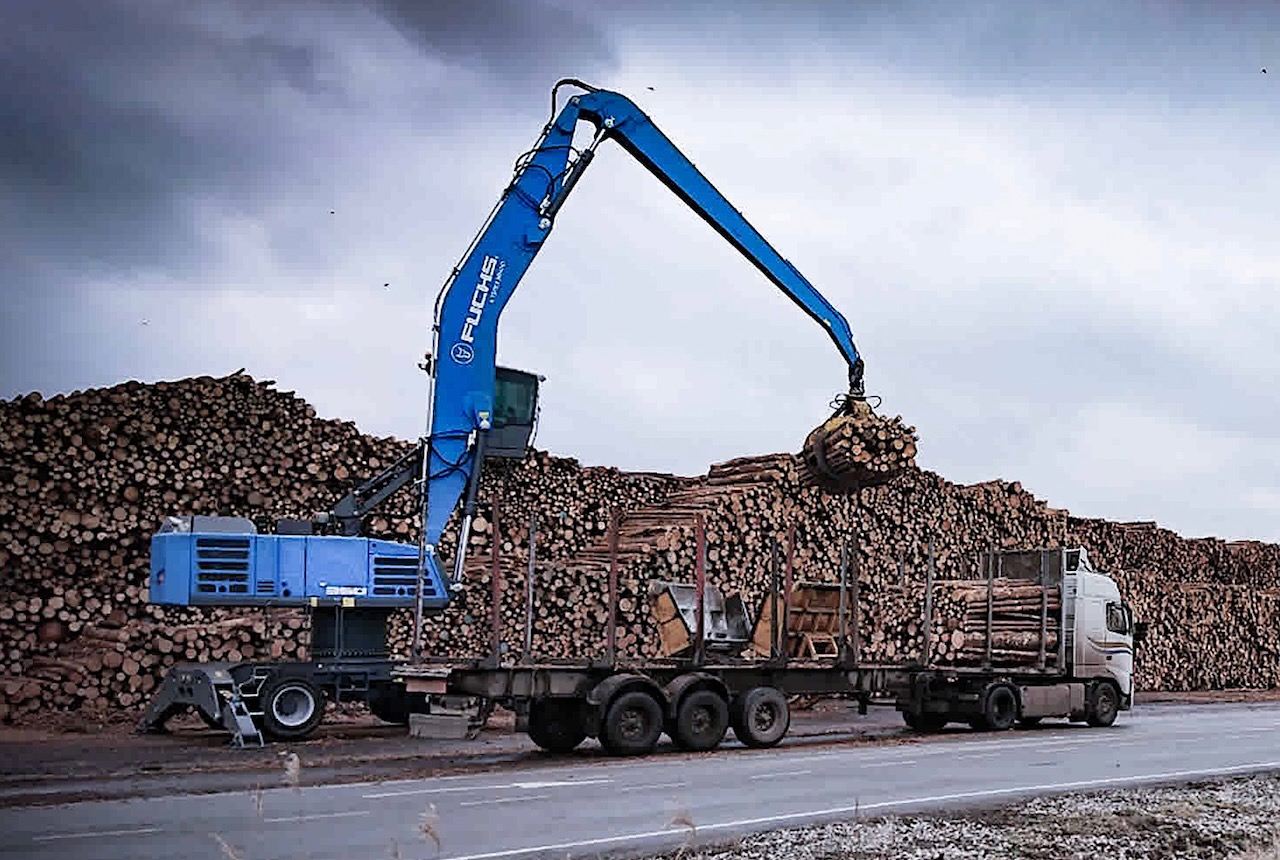
McHale Plant Sales has taken over distribution of Terex Fuchs material handlers for both the Republic of Ireland and Northern Ireland from Blue Equipment Ireland, in a deal that transfers Blue’s dedicated Fuchs team into McHale. The move ties an established Fuchs customer base and product line of scrap and port handlers into McHale’s nationwide depot network, technical resources and aftersales operation. For contractors and recycling operators, the key change is a single, larger support organisation for machine supply, servicing and parts, with continuity from the existing personnel.
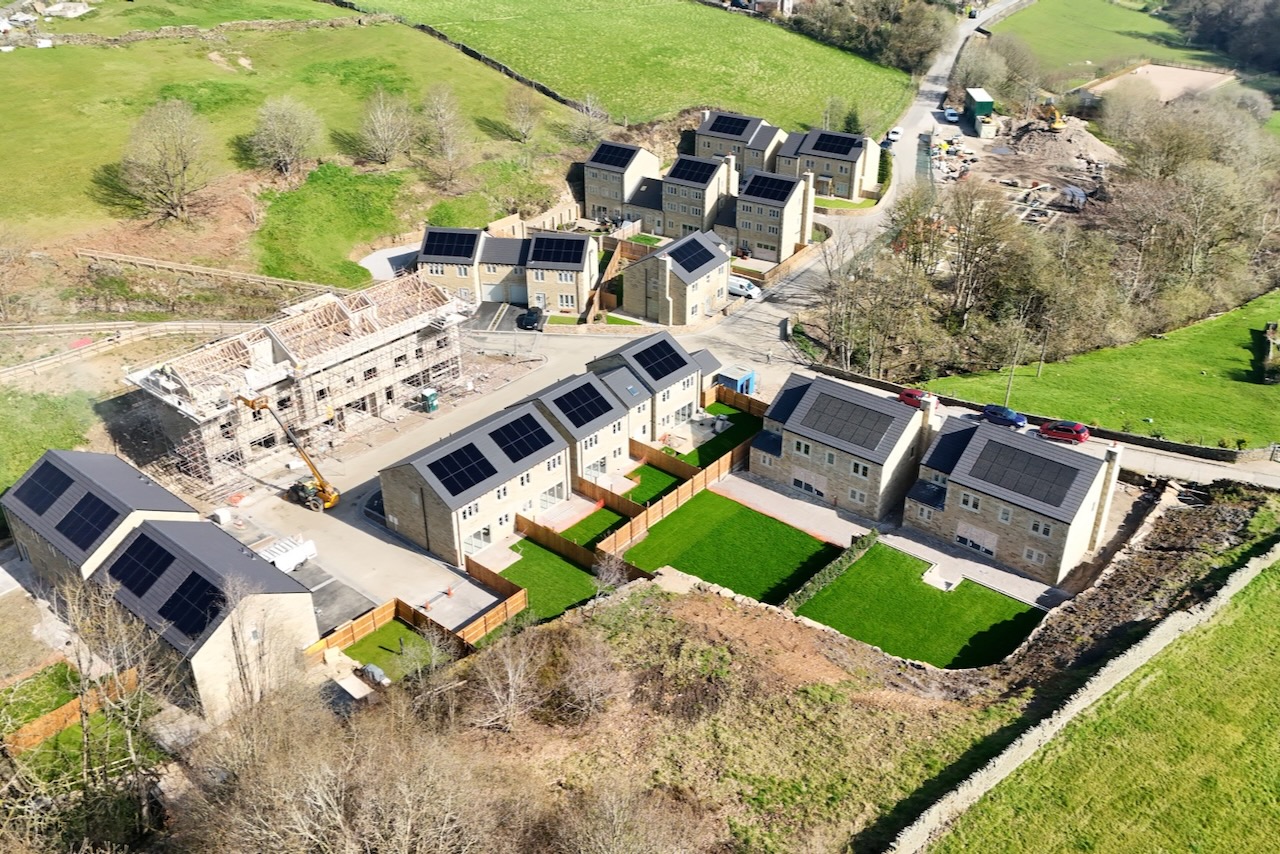
Dudleys Consulting Engineers has engineered the redevelopment of the historic Royd Edge Mills dyeworks near Huddersfield into 30 homes by tackling complex brownfield conditions including buried basements, wheelhouses, engine rooms, chimneys and steep bedrock. The firm designed a mixed foundation strategy of shallow trench, deep trench and piles tied into existing adopted drainage, while reconfiguring the landscape to relocate and cut back a former mill pond, removing leak risk and avoiding a high retaining wall. This approach increased garden areas, reduced off-site material waste and enabled new woodland walkways integrating the scheme with surrounding terrain.
Lawyers Geradin Partners and Hausfeld have filed a collective action at the UK Competition Appeal Tribunal against major housebuilders on behalf of campaigner Mark McLaren and around 700,000 homebuyers who purchased since October 2015. The claim alleges coordinated behaviour in the new-build housing market, potentially affecting pricing and contract terms for large volumes of post-2015 stock. Developers, consultants and lenders involved in residential schemes may face closer scrutiny of sales practices, reservation agreements and information disclosure on build quality and defects.