Lower Thames Crossing early works: geotechnical design notes for tunnel engineers
Reviewed by Joe Ashwell
First reported on New Civil Engineer
30 Second Briefing
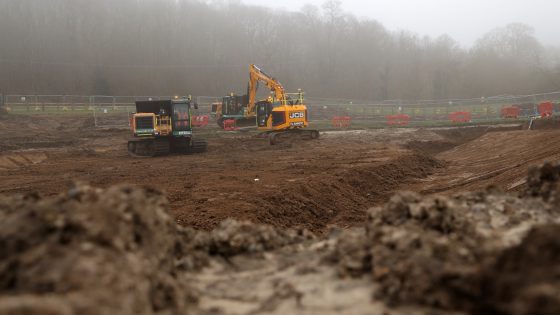
Early works have started on National Highways’ Lower Thames Crossing, with archaeologists, ecologists and engineers mobilised across Essex and Kent ahead of main tunnelling works scheduled for 2028. Site investigations, environmental surveys and enabling works are being used to refine the alignment and construction methodology for the twin‑bore road tunnel beneath the Thames, planned as a key additional link to the Dartford Crossing. Geotechnical data from these early phases will drive detailed design of tunnel approaches, cuttings, and associated highway structures.
Technical Brief
- Archaeological teams are opening trial trenches to map heritage constraints before heavy civils mobilisation.
- Ecologists are undertaking species translocation and habitat fencing to lock in protected-species mitigation early.
- Utility surveys and trial pits are being used to confirm depths and alignments of major buried services.
- Ground access tracks and temporary haul routes are being formed to separate construction traffic from public roads.
- Site drainage and silt-control measures are being installed to manage runoff from early compounds and access works.
- Early engagement with local authorities is targeting traffic management plans for future heavy plant and spoil movements.
Our Take
Among the 708 Infrastructure stories in our database, relatively few involve UK highway megaprojects with a tunnelling start pushed as far out as 2028, signalling how long-lead enabling works and consents are now baked into programme assumptions for schemes like the Lower Thames Crossing in Essex and Kent.
Projects tagged for both ‘Projects’ and ‘Sustainability’ often face tighter carbon and biodiversity constraints in the UK, so early works on the Lower Thames Crossing are likely to lock in decisions on spoil management, low‑carbon materials and habitat mitigation that will be hard to change once tunnelling begins.
For major UK crossings in our coverage, early ground and utilities packages frequently become the critical path rather than the tunnelling itself, suggesting contractors on the Lower Thames Crossing will need strong interface management between enabling works and the 2028 tunnel mobilisation to avoid schedule creep.
Prepared by collating external sources, AI-assisted tools, and Geomechanics.io’s proprietary mining database, then reviewed for technical accuracy & edited by our geotechnical team.
Related Articles


Related Industries & Products
Construction
Quality control software for construction companies with material testing, batch tracking, and compliance management.
Tunnelling
Specialised solutions for tunnelling projects including grout mix design, hydrogeological analysis, and quality control.
QCDB-io
Comprehensive quality control database for manufacturing, tunnelling, and civil construction with UCS testing, PSD analysis, and grout mix design management.
HYDROGEO-io
Comprehensive hydrogeological testing platform for managing, analysing, and reporting on packer tests, lugeon values, and hydraulic conductivity assessments.
GEODB-io
Centralised geotechnical data management solution for storing, accessing, and analysing all your site investigation and material testing data.