Geomechanics, Streamlined.
© 2026 Geomechanics.io. All rights reserved.
Quantum Consult has appointed Chris Campbell as a director, bringing him in from Skanska UK after 16 years rising from project engineer to regional operations manager and business development and preconstruction director at Cementation, its specialist ground engineering division. Campbell has worked on major schemes including Crossrail’s Elizabeth Line and the £140m Humber Gas Pipeline Tunnel, plus a wide portfolio of UK commercial and residential projects. A fellow of both the ICE and CIArb with an LLM in construction law and dispute resolution, he is expected to strengthen Quantum’s capability on distressed-project claims and contract strategy.
Haulotte has doubled its warranty on all genuine MEWP spare parts to two years for purchases from 31 January 2026, applying globally regardless of fleet size, application or sector. The policy, branded under its ‘Drive Confidence’ approach, is aimed at reducing lifecycle costs by covering components such as hydraulic, structural and electronic parts for longer periods, supporting higher machine uptime and more predictable maintenance planning. For fleet owners and rental houses, the extended cover directly affects total cost of ownership models and risk allocation in long-term hire or service contracts.
Volvo Construction Equipment used London Climate Action Week to present a 12‑week central London trial with Transport for London and FM Conway, where electric compact machines matched diesel performance while cutting tailpipe emissions to zero and reducing site noise. Speakers including Karin Svensson of Volvo Group and representatives from TfL and Charge Fairy stressed that around 5,000 diesel compact machines in London emit pollution comparable to more than 100,000 diesel cars, exploiting weaker standards for small engines. Participants agreed the main barrier is scaling deployment, supported by mobile charging and clearer market incentives.
Finnish floating construction specialist Bluet has partnered with River Cycleway Europe to deploy modular, tide-adaptive floating active travel routes in constrained urban waterfronts, initially targeting pilot and feasibility projects in Ireland. The River Cycleway system is fully removable, requires no piling or dredging, and integrates clean energy generation within the floating structure to support decarbonised cycling and pedestrian corridors. By occupying underused river and lakeshore areas, the platforms allow cities to extend active mobility networks with minimal disruption to existing roads while accommodating fluctuating water levels.
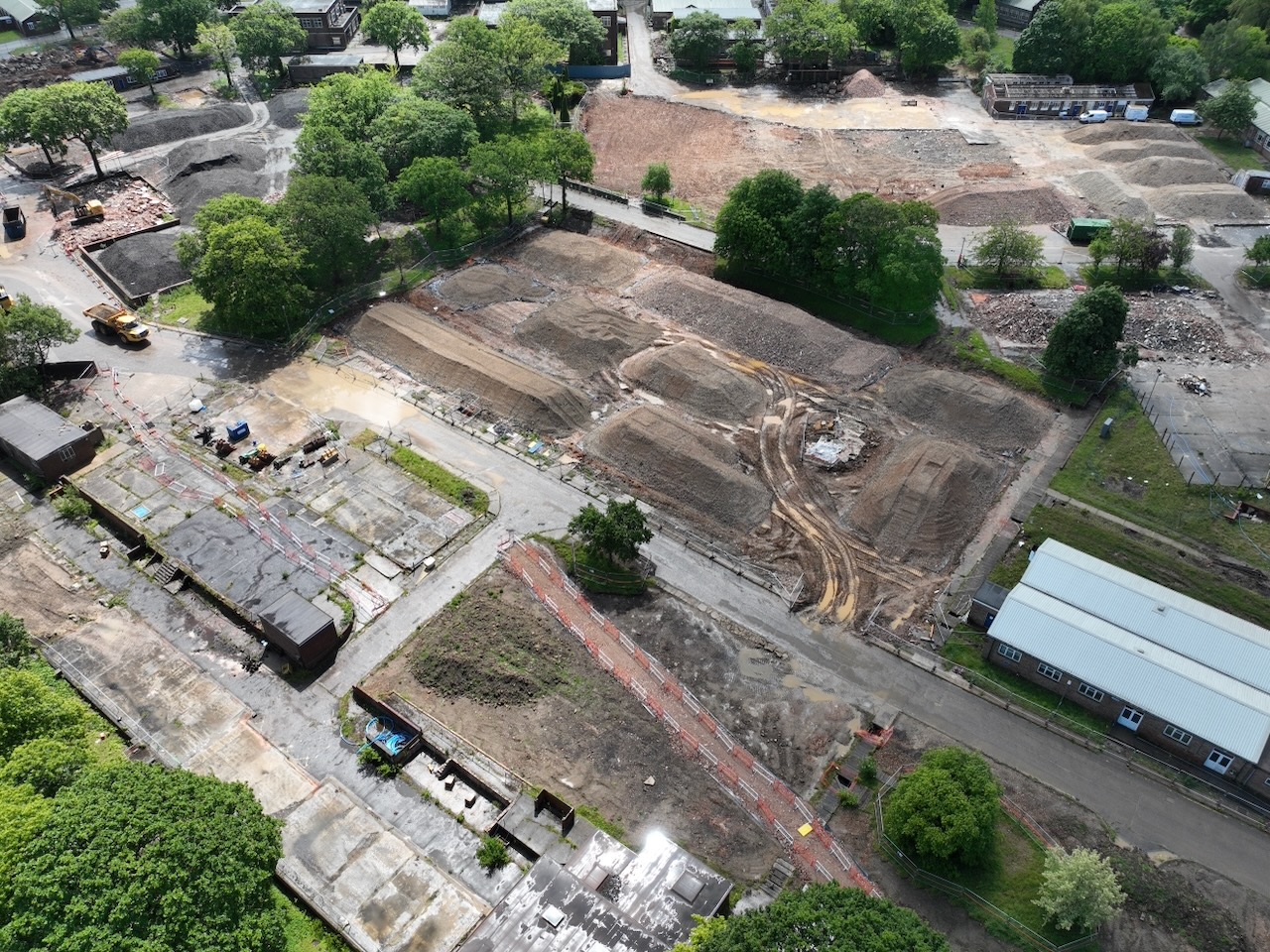
RSK is mobilising a 14‑business, 16‑discipline team for Barratt David Wilson Homes Kent’s 635‑home brownfield redevelopment at the 70‑hectare former Fort Halstead defence research site, with 18 hectares earmarked for development including a primary school and commercial units. Soilfix is delivering demolition and enabling works under an approved materials management plan targeting reuse of about 48,000 m³ of soil in enabling and a further ~80,000 m³ during construction, while retaining a scheduled ancient monument and some 1,600 trees of ancient semi‑natural woodland. Pre‑demolition ground investigation completed in December 2024 combined non‑intrusive geophysics with intrusive works at over 300 locations (c.25 m borehole spacing), supported by GIS to refine foundation and remediation design and cut over‑excavation and waste.
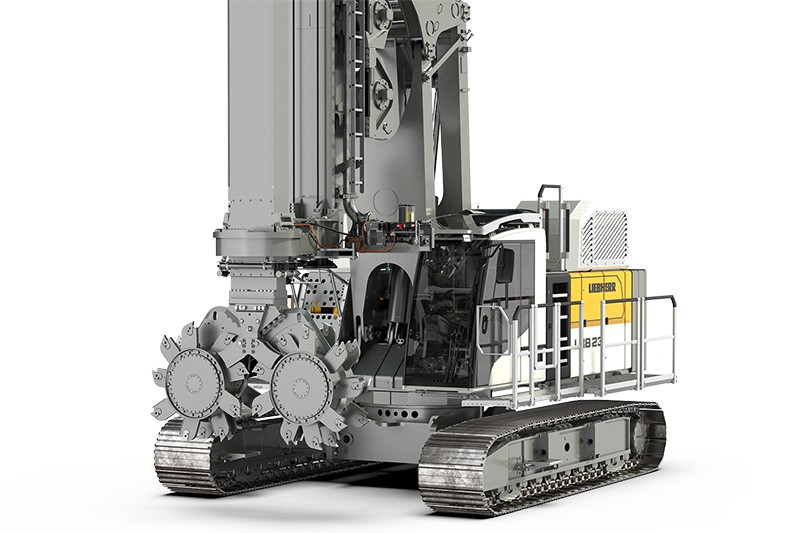
Liebherr’s Nenzing plant marked its 50th anniversary with the launch of three foundation and extraction machines: a new dragline, a rope-suspended leader equipped with a hydraulic hammer, and a mixing cutter. The dragline targets bulk earthmoving and overburden removal, while the rope-suspended leader is configured for driven piles and sheet piles where hydraulic hammers are preferred over diesel units. The mixing cutter is aimed at deep soil mixing and cutter soil mixing applications, signalling further mechanisation of ground improvement and retaining wall construction.
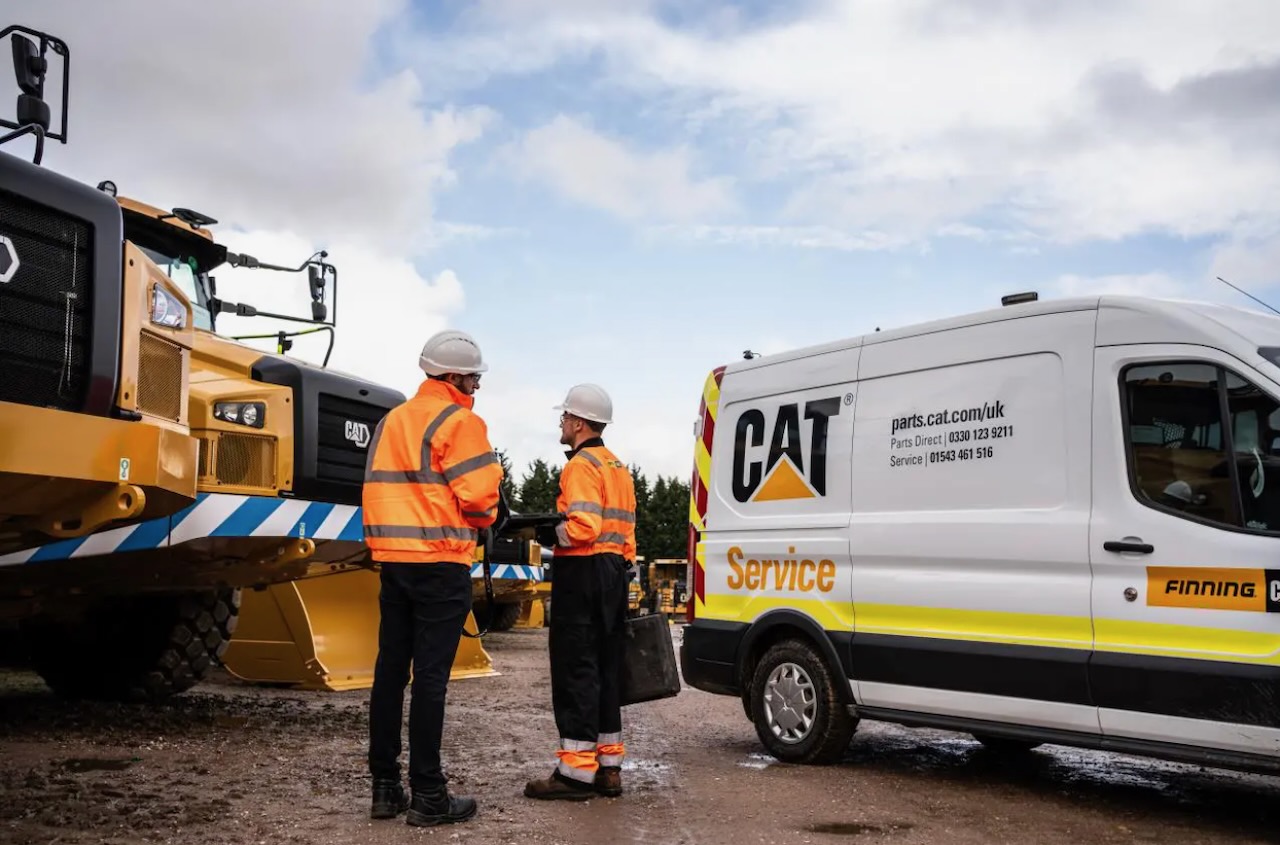
Finning UK & Ireland has invested in Instagrid portable battery power stations to give field service engineers off‑grid electric power when working on customer equipment without a mains connection. The compact, high-output battery units are intended to replace petrol and diesel generators for tasks such as on-site diagnostics, light fabrication and component replacement on remote construction, quarrying and plant sites. For asset owners, the shift to portable battery systems reduces local emissions and noise at workfaces while maintaining electrical tool capability in locations where temporary supplies or generators are impractical.
The Public Accounts Committee warns there is a “clear risk” that the Northern Powerhouse Rail programme cannot be delivered within the government’s £45bn funding cap. MPs question whether the current scope of new high‑speed links between Liverpool, Manchester, Leeds and other northern cities is compatible with the Treasury’s limit, given inflation, complex tunnelling and major junction upgrades. The committee presses the Department for Transport and Network Rail for firmer cost estimates, staged delivery options and clarity on which route sections may be scaled back or deferred.
HS2 has lost its Court of Appeal challenge over planning changes linked to the Bromford Tunnel extension at Water Orton, after North Warwickshire Borough Council overturned an earlier High Court ruling by Justice Dove. The dispute centres on modifications to the HS2 alignment and associated works in North Warwickshire, which required revised planning controls and local consent mechanisms. The judgment reinforces local planning authorities’ leverage over design changes to major linear infrastructure, with potential implications for programme risk, land acquisition strategy and construction phasing on remaining HS2 works.
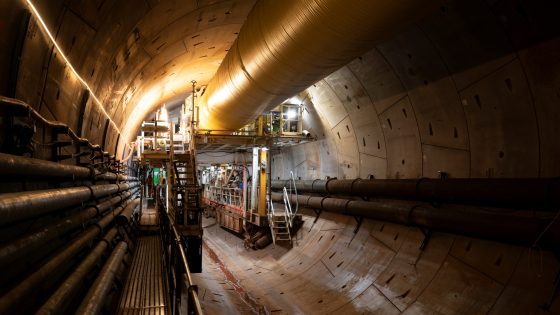
National Highways has begun procurement of an estimated £60M owner controlled insurance programme (OCIP) for construction of the Lower Thames Crossing, the proposed new road tunnel under the Thames linking Kent and Essex. Centralising construction all-risks and third-party liability cover under an OCIP is intended to standardise risk allocation across multiple main works contracts on the multi-billion-pound scheme. Contractors will need to align their own project insurance strategies, particularly for tunnelling, deep foundations and major earthworks, with the OCIP’s scope and exclusions.
The National Energy System Operator (Neso) has released an updated assessment of UK electricity transmission needs for the 2030s, signalling further reinforcement of the 400kV backbone and new high‑capacity corridors to connect offshore wind and nuclear to demand centres. The plan points to more high‑voltage direct current (HVDC) links, additional subsea cables and major onshore reinforcements, with routing and consenting constraints likely to drive extensive undergrounding and substation expansion. Grid planners, civil designers and geotechnical teams should expect sustained demand for large‑scale foundations, cable tunnels and coastal landing works beyond 2030.
BHP has lodged its CCLE project with Chile’s Environmental Impact Assessment System (SEIA), seeking to reopen the Cerro Colorado copper mine for a further 20 years through expanded mining facilities and a new water supply system. The plan centres on improving and enlarging existing plant and infrastructure while replacing current water sources with a dedicated supply scheme to support long‑term sulphide ore processing. Geotechnical and water management design will be critical, given the mine’s high‑altitude, arid location in northern Chile and Chilean regulatory scrutiny of groundwater and surface water impacts.
FAMUR has adapted its R-150 roadheader for underground calcite mining in Italy, testing two cutting head gearbox variants, the FRG132 and higher-torque FRG160B, alongside multiple cutting pick configurations. The trials, conducted for calcium carbonate operations, focused on matching cutting power and pick design to relatively low-strength but abrasive calcite seams and associated host rock. Outcomes will influence gearbox selection, pick layout and wear-part strategy for European industrial mineral mines seeking mechanised excavation in narrower headings.
Major UK and international contractors, consultants and infrastructure owners have reshaped their senior leadership benches in June 2026, with new appointments across project delivery, digital engineering and major programmes. Key moves span tier-one civils contractors, multidisciplinary design consultancies and client-side organisations overseeing rail, highways and water frameworks, signalling shifts in who will steer upcoming NEC and alliancing contracts. For geotechnical and civil specialists, these changes will influence bid strategies, preferred technical standards and risk appetite on large design-and-build and PPP schemes entering procurement in late 2026–27.
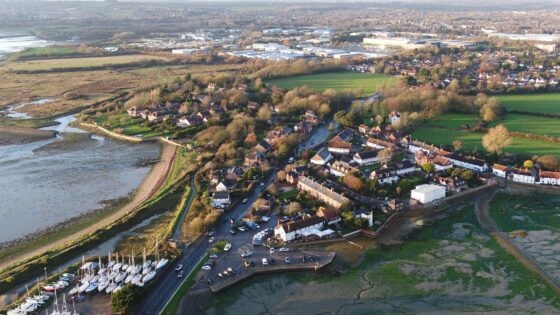
Havant Borough Council has unanimously approved the Langstone Coastal Scheme, a flood resilience project along roughly 1km of low-lying Hampshire coastline exposed to wave overtopping and tidal surge. The consent allows detailed design of new coastal defences, expected to combine raised seawalls, local ground raising and upgraded revetments to protect residential frontages, the A3023 access route to Hayling Island and adjacent utilities. For geotechnical and civil teams, key tasks will include foundation design in soft coastal soils, tie-in to existing structures and constructability within a tidally constrained working corridor.
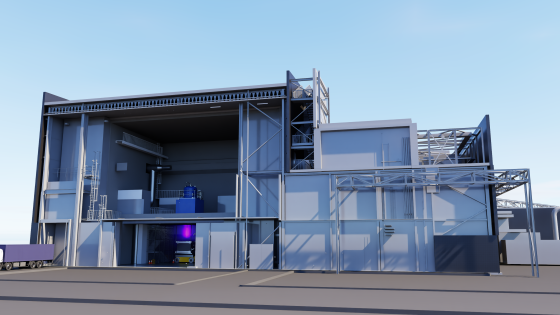
Commonwealth Fusion Systems has become the first international partner in the UK Atomic Energy Authority’s Lithium Breeding Tritium Innovation (Librti) programme at Culham, supporting development of tritium-breeding technologies for future fusion power plants. The collaboration will focus on testing lithium-based breeder materials and component designs under fusion-relevant conditions to optimise tritium production and recovery. For civil and materials engineers, the work points to future design requirements for breeder blankets, cooling circuits and radiation-resistant structural materials in commercial fusion infrastructure.
Quality issues in the manufacture of Sizewell C’s reactor pressure vessels have been identified by the Office for Nuclear Regulation during a recent inspection, with more non-conformances reported than for the equivalent Hinkley Point C components. The findings relate to fabrication of the large forged steel RPV shells, which must meet stringent fracture toughness, weld integrity and dimensional tolerance requirements for EPR reactors. ONR scrutiny of welding procedures, heat treatment records and material traceability signals tighter oversight of nuclear-grade pressure boundary components before site installation.
The UK government has set out a Clean Power Action Plan roadmap to almost triple installed solar capacity to 47GW by 2030, with a major push on rooftop systems rather than only large ground-mounted farms. The strategy leans on widespread deployment on commercial and industrial roofs, public buildings and new housing, reducing pressure on greenfield land and grid connections for utility-scale sites. For civil and building engineers, this signals stronger demand for structural assessments, roof load checks, fixing systems and integration with building services at scale.
Construction recorded the highest number of worker fatalities in Britain in 2025/26, according to new Health and Safety Executive (HSE) figures on work-related deaths. Although absolute numbers are not yet broken down publicly by sub-sector, the data place construction ahead of manufacturing, agriculture and waste, continuing a long-term pattern of disproportionate risk. The figures will sharpen scrutiny of temporary works design, work-at-height controls and plant–people interface management on sites, particularly for SMEs and subcontractor-heavy projects.
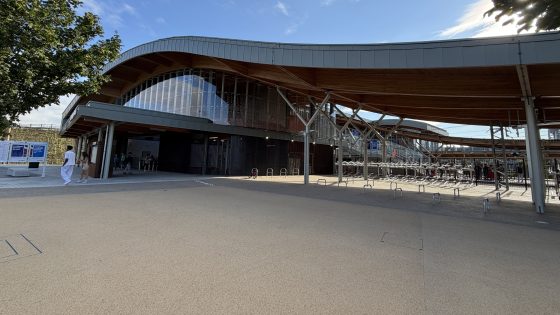
Arcadis has completed the Cambridge South railway station, described as a landmark net zero carbon facility serving the Cambridge Biomedical Campus and the southern approach to the city. The station’s design is reported to target net zero operational carbon through all-electric systems and on-site renewables, with embodied carbon reduced via low-carbon materials and optimised structural solutions. For civil and rail engineers, the project signals Network Rail’s growing expectation that new stations integrate whole-life carbon accounting alongside conventional performance and capacity criteria.
Collaborative mine planning is presented as a system linking life-of-mine strategy, medium-term scheduling and weekly execution through shared data, clear decision rights and structured feedback loops. The approach stresses that long-horizon pit or stope designs must be continuously informed by short-interval control data, such as weekly production variances, equipment performance and geotechnical or grade reconciliation. For engineers, the message is that planning tools alone are insufficient without disciplined cross-functional workflows connecting mine planning, operations, geology and maintenance in near real time.
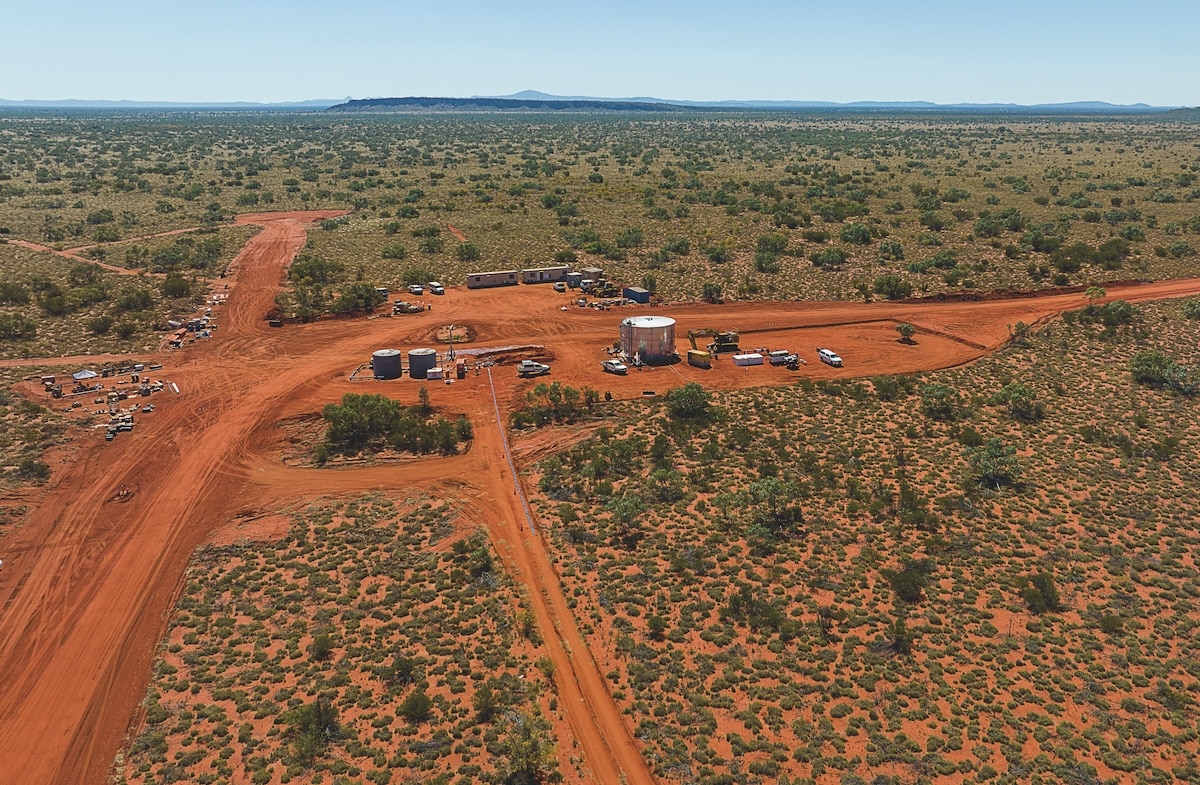
India’s push to build a domestic rare earth magnet supply chain has led Arafura Rare Earths’ Nolans project in the Northern Territory to secure a binding term sheet to supply up to 500 tonnes per annum of neodymium‑praseodymium (NdPr) oxide to an emerging Indian magnet manufacturer. The agreement expands Nolans’ international offtake portfolio as the project moves towards construction of its integrated mine and processing plant. For project engineers, the deal strengthens revenue certainty for NdPr production, supporting financing and schedule confidence for long‑lead process and materials handling infrastructure.
EY’s Net Zero Centre report “Risk and resilience: Rethinking Australia’s critical materials advantage in a disorderly world” urges Australia to move beyond being a raw ore exporter and secure a larger share of midstream processing for lithium, rare earths and other critical materials. The report flags geopolitical tensions and highly concentrated processing capacity – particularly in China – as key supply risks, and calls for targeted policy, finance and permitting reforms. For miners and processors, it signals stronger scrutiny of offtake security, downstream integration and project resilience in investment decisions.
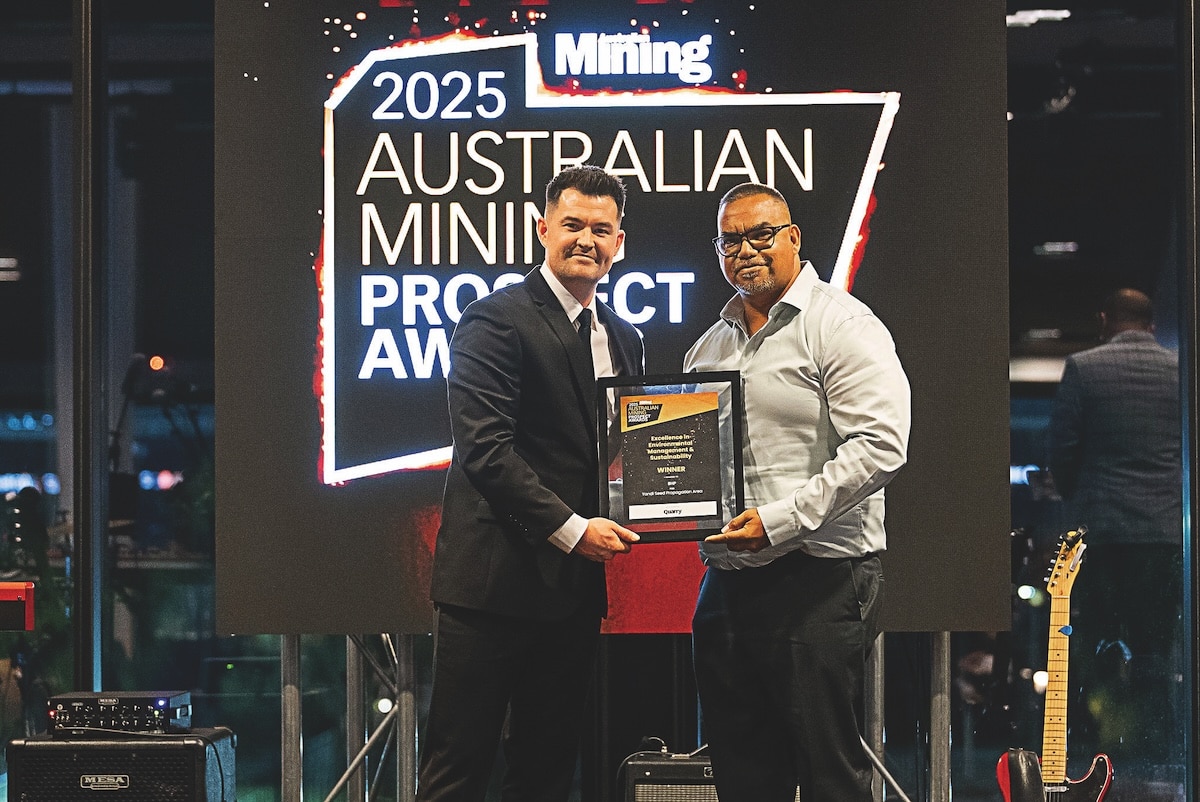
The 2026 Australian Mining Prospect Awards will recognise engineers, safety advocates, contractors, operators and emerging leaders driving projects across Australia’s iron ore, coal, gold and critical minerals sectors. Categories span mine safety, environmental management, productivity innovation and community engagement, with nominations expected from both Tier 1 operators and mid-tier contractors. For geotechnical and mining professionals, the awards signal where industry is investing effort in new technologies, risk management practices and project delivery models that are likely to shape future standards and procurement expectations.