Geomechanics, Streamlined.
© 2026 Geomechanics.io. All rights reserved.
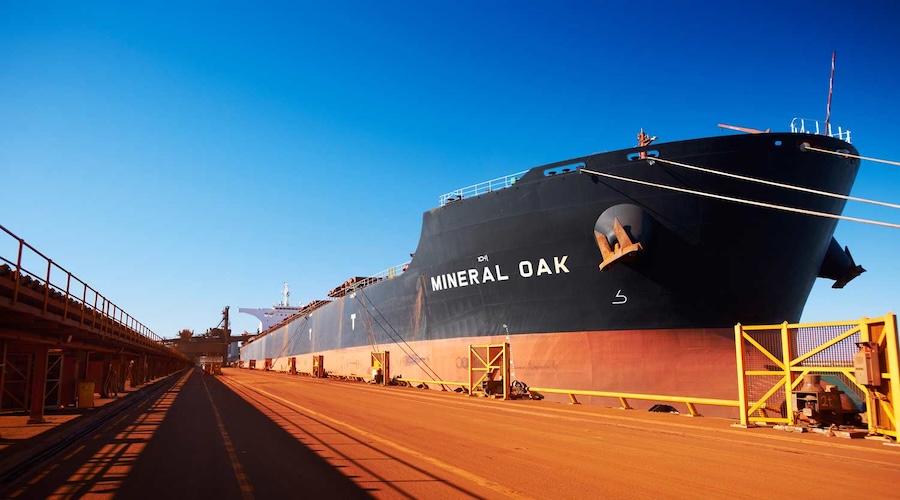
UMS United Mining Supply and Renault Trucks have marked a decade of collaboration in Guinea’s bauxite sector, where UMS now operates around 350 Renault haul and logistics trucks in high-abrasion, high-dust conditions. The partnership couples heavy-duty fleet supply with tailored services such as on-site maintenance, driver training and operational support to keep vehicles running on long mine-to-port haul routes. For mine operators, the model shows how integrated OEM–logistics contracts can stabilise haulage capacity and availability in remote West African operations.
BCI Minerals has commissioned a 1,500 t/h salt harvester for the Mardie salt and potash project in Western Australia, built through a collaboration led by Loadquip and Camco. The machine is engineered for continuous harvesting across large crystalliser ponds, integrating high-capacity materials handling with corrosion-resistant components tailored to marine salt conditions. For mining engineers, the project signals growing scope for locally engineered, heavy-duty mobile plant customised to hypersaline, abrasive environments rather than relying solely on imported, generic bulk materials equipment.
A London Borough of Hammersmith & Fulham report confirms there is “no financial option” to proceed with the £300M full restoration of the Grade II* listed Hammersmith Bridge for motor traffic, effectively shelving plans to return vehicles to the 19th‑century suspension structure. The council’s position leaves only lower‑cost stabilisation and limited‑load solutions on the table, with the bridge currently restricted to pedestrians and cyclists. For bridge and materials engineers, this signals prolonged life‑extension under constrained funding rather than full strengthening or deck replacement.
UK shadow energy minister Claire Coutinho has accused the National Energy System Operator (Neso) of structuring its governance to avoid keeping an “audit trail or records” of how key grid operational decisions are made. She argues that the current framework for Neso’s real-time balancing and constraint management on the electricity transmission system lacks transparent documentation of why specific dispatch or curtailment actions are taken. For grid planners, system modellers and civil engineers delivering network reinforcements, the dispute raises concerns over traceability of operational assumptions feeding into capacity upgrades and resilience design.
A public and stakeholder consultation has opened on major upgrade proposals for Birmingham’s railways, centred on increasing capacity through Birmingham New Street, Snow Hill and Moor Street and improving regional connectivity. Network Rail and local partners are seeking views on new or remodelled track layouts, additional platforms and junction improvements to relieve existing bottlenecks on key corridors into the city. Geotechnical and civil inputs are likely to focus on works in a constrained urban rail environment, including asset interfaces with existing viaducts, tunnels and retaining structures.
Surging AI infrastructure demand, particularly hyperscale data centres with 100MW‑class power and high‑density liquid‑cooled racks, is squeezing global construction capacity, Turner & Townsend warns in its latest market report. Contractors in key hubs such as Dublin, Frankfurt and northern Virginia are reporting labour bottlenecks in M&E trades, specialist fit‑out and high‑voltage grid connection works, driving up tender prices and elongating programmes. The report signals tougher competition for skilled resource on other complex projects, from hospitals to rail systems, that rely on similar electrical, cooling and structural expertise.
The British Geological Survey has launched a four‑year ground investigation of the River Tweed catchment to characterise groundwater behaviour and its interaction with river levels for improved flood forecasting. Work will include installing new monitoring boreholes, logging groundwater heads and flow paths, and integrating hydrogeological data with existing river‑gauge and rainfall records across the cross‑border catchment. Findings are expected to refine flood models used by local authorities and infrastructure owners, particularly for groundwater‑dominated flood events and prolonged saturation of transport and drainage assets.
Welsh Government ministers have begun formal negotiations with Westminster to secure a larger, ringfenced share of GB rail capital funding and a pathway to full devolution of rail powers. Deputy minister for transport Lee Waters is seeking control over infrastructure and operations on the Wales & Borders network, including long‑term funding decisions currently made by the Department for Transport and HM Treasury. For civil engineers, any settlement could reshape priorities for renewals, electrification and resilience upgrades across key Welsh corridors such as the South Wales Main Line and Valley Lines.
Hundreds of BHP workers at Port Hedland, responsible for port and maintenance operations, plan the hub’s first major strike in decades on 16 July, with 160–200 employees set to stop work for eight hours from 14:00 to 22:00. The action targets a new four-year enterprise agreement and threatens disruption at a facility moving about $150 million of iron ore per day, with analysts estimating roughly $80 million in BHP revenue at risk. While a single stoppage is expected to have little impact on global iron ore prices given high Chinese inventories, prolonged action could tighten Australian supply under Australia’s post‑2022 pro‑union labour regime.
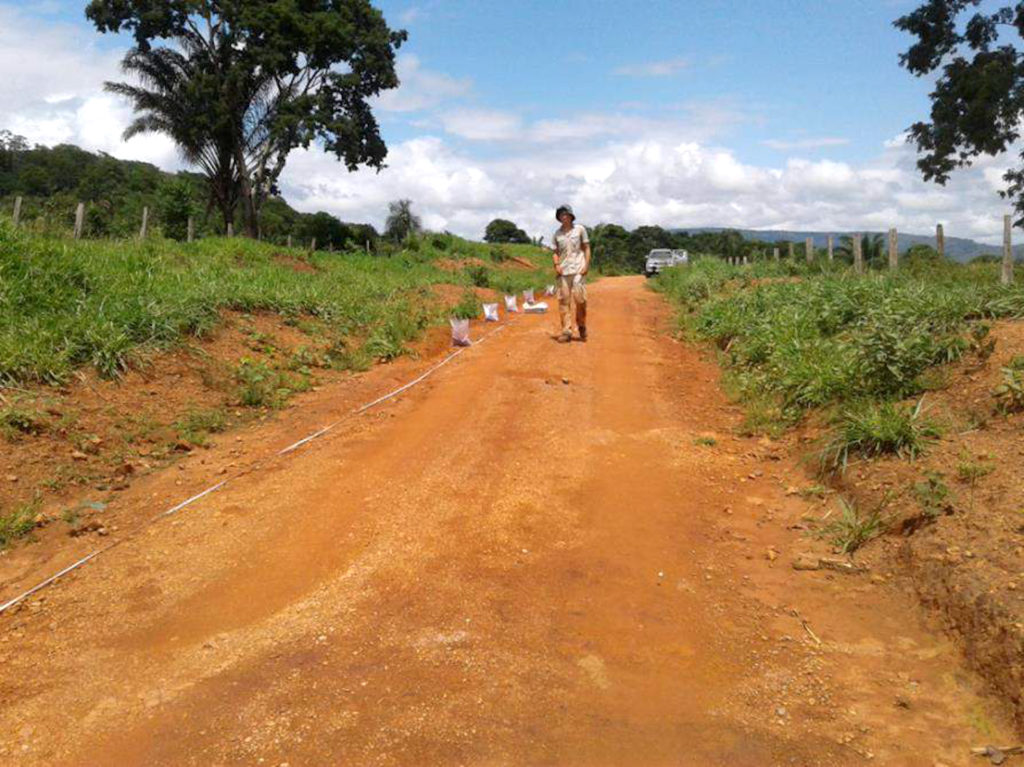
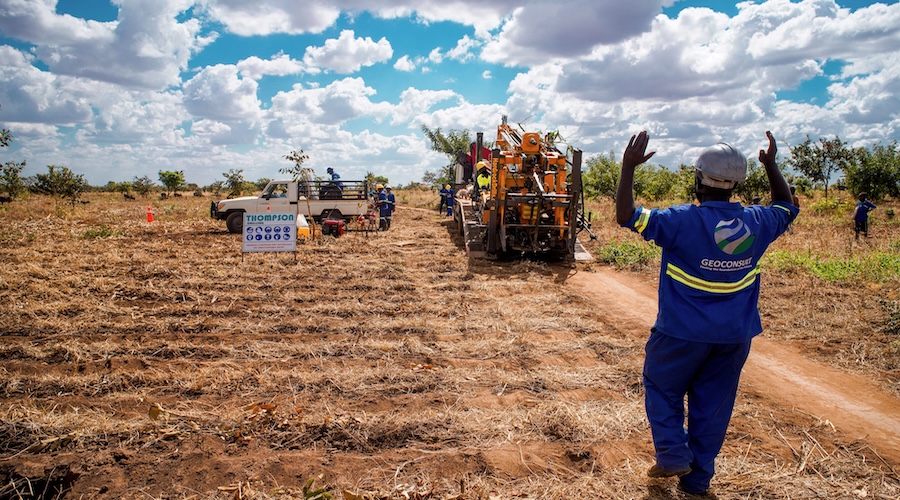
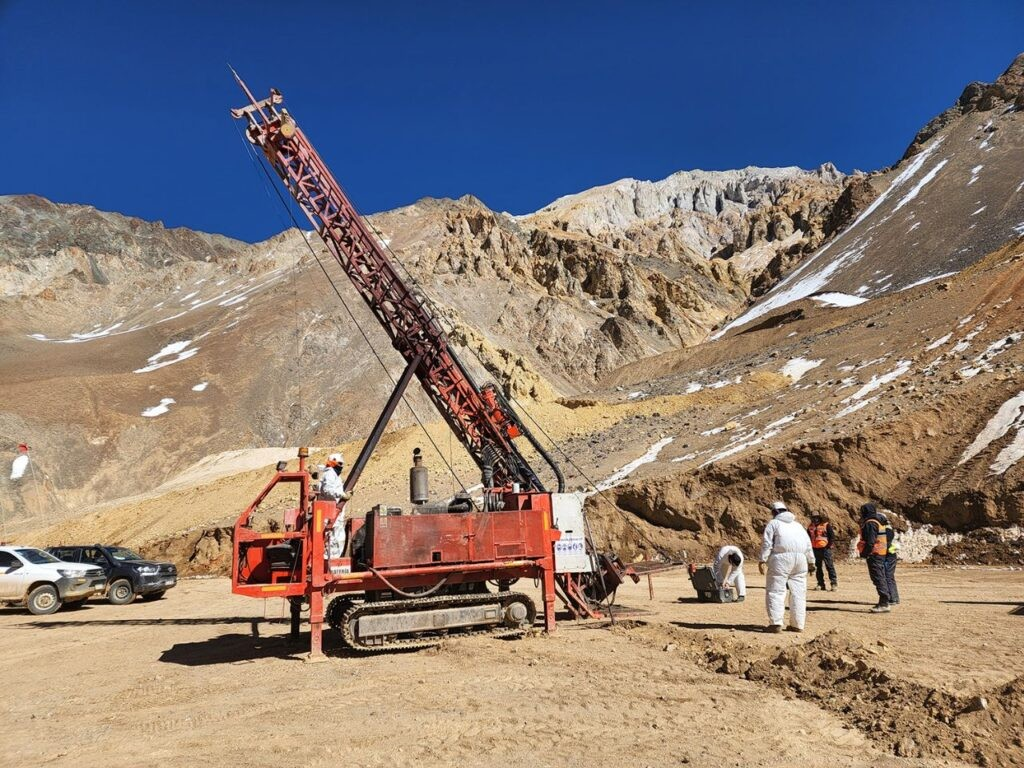
Lara Exploration has seven rigs turning in a 14,000-metre campaign at the Planalto copper-gold project in Brazil’s Carajás belt, testing whether an 8-million-tonne-per-year open pit producing 36,000 tonnes copper annually can justify a post-tax NPV rising from US$378 million to a January spot-price case of US$1.2 billion. The PEA outlines an 18-year operation yielding 560,000 tonnes copper and 111,000 oz. gold, fed by 47.7 million indicated tonnes at 0.53% Cu plus 154 million inferred tonnes at 0.36% Cu, producing 120,000 tonnes per year of 28% Cu, arsenic-free chalcopyrite concentrate. Proximity to PA-160, high-tension power within 4 km, cleared ranch land and nearby mining towns, plus Atalaya Mining’s US$13.5-million equity stake, position Planalto as a potential build-and-sell candidate once resources are upgraded and Pará state permitting advances.
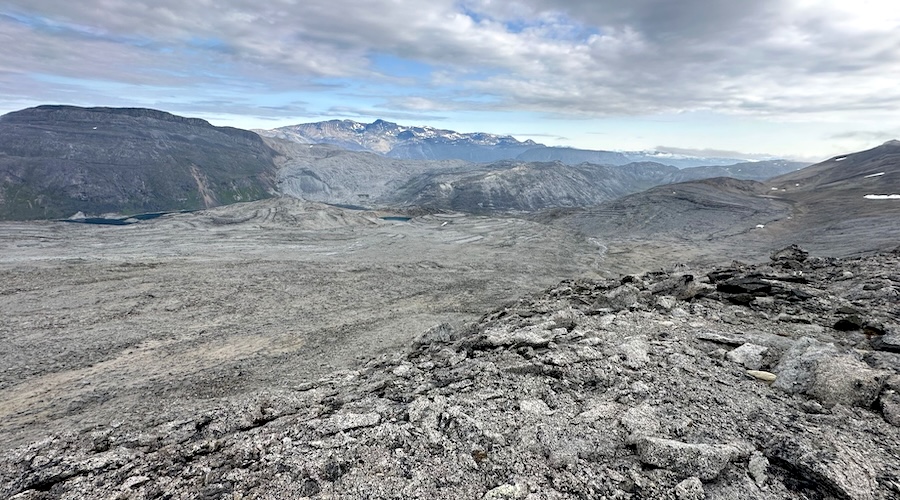
Critical Metals has begun a strategic review that could see it sell, spin off or partner non-core assets to accelerate its Tanbreez heavy rare earth project at Killavaat Alannguat in southern Greenland, hiring Clear Street and White & Case LLP to run the process. Tanbreez, fully acquired in April, carries a preliminary economic assessment value of about $3 billion on a 4.7‑billion‑tonne resource across two deposits and already has offtake agreements for roughly 75% of future output. Up to $120 million in US EXIM financing is in place, with first ore targeted for late 2028 or early 2029.
Rio Tinto has stepped back from becoming operator of Sovereign Metals’ Kasiya rutile-graphite project in Malawi, leaving Sovereign with full control of what is described as one of the world’s largest undeveloped natural rutile and graphite deposits. Sovereign keeps Rio’s $60 million investment while Rio’s rights to market over 40% of future production, plus its consent and pre-emption rights, will lapse. The junior now plans to convert offtake MoUs with Mitsui & Co. and Traxys North America into binding deals and is working with the IFC on development financing, while Rio remains its largest shareholder at 18.2%.
Smaller royalty firms Ecora Royalties and Empress Royalty are using higher metals prices and demand for non-dilutive mine finance to close the valuation gap with larger peers, with Ecora doubling first-quarter portfolio contribution to $12.3 million and Empress more than tripling revenue to $9.1 million. Ecora is pivoting from its Kestrel steelmaking coal royalty towards copper and cobalt, targeting coal-free status after 2030 and potential copper exposure rising to nearly 20 million lb per year as development-stage assets mature. Empress, with four producing gold and silver royalties across Mexico, Peru, South Africa and Mozambique, expects revenue to grow from $17 million to about $30 million this year, but remains highly exposed to performance at Luca’s Tahuehueto mine and lumpy deliveries such as a 200-oz Galaxy catch-up.
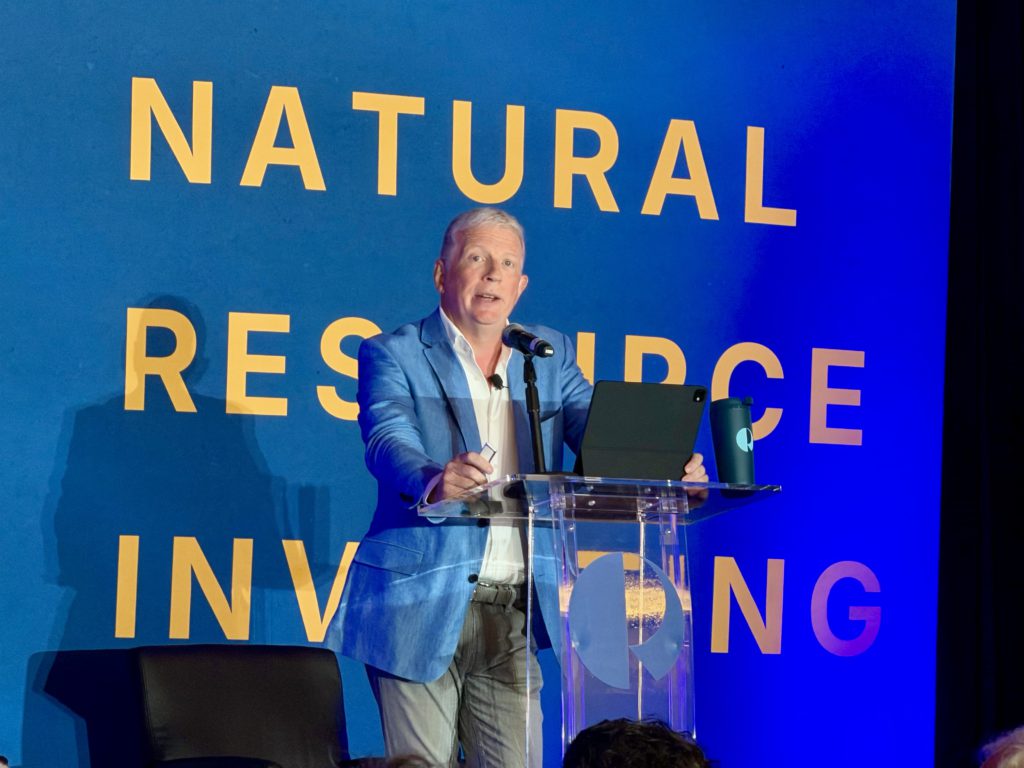
Gold is being cast as the “apex predator” of a debt‑heavy financial system as central banks hold 27% of global reserves in bullion versus 22% in US Treasuries and continue annual purchases in the 800–1,000 tonne range. Speakers Grant Williams and Nomi Prins told the Rule Symposium that trust is shifting to assets governments cannot print, while commodity markets enter a “lockout” phase where control of processing, sulphuric acid supply, stockpiles and trade routes matters more than headline prices. China’s dominance in rare earth separation and its new export controls on MP Materials and USA Rare Earth, alongside US$400 million in US Department of Defense funding for Mountain Pass, signal that jurisdictional security and midstream capacity will heavily influence valuations of gold and critical mineral projects.
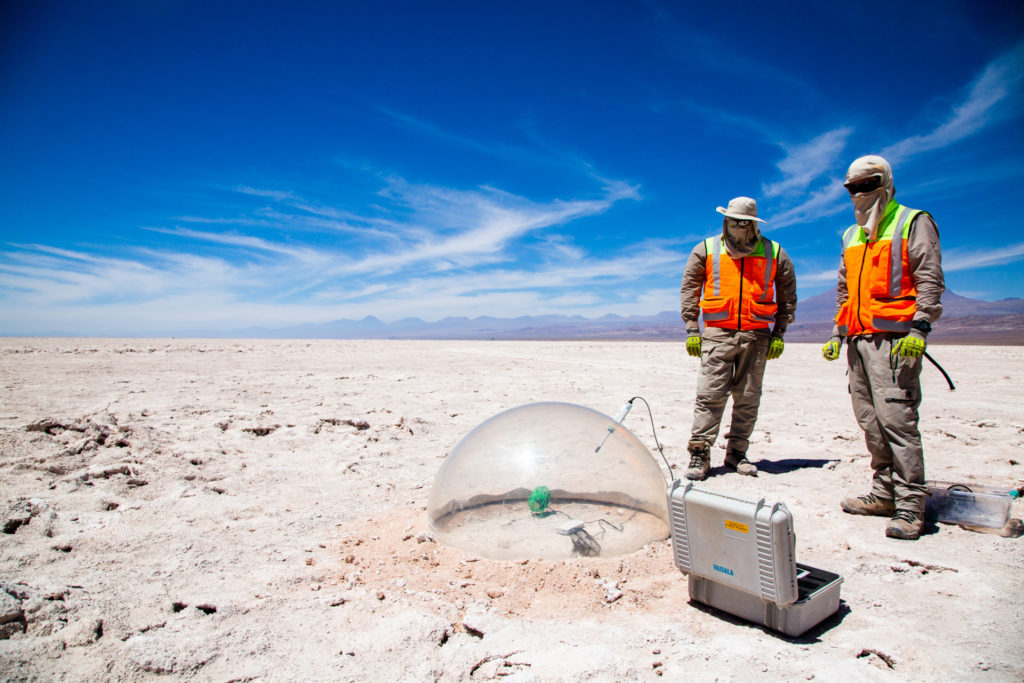
Chile’s lithium export revenue reached $3.2 billion in January–June 2026, nearly triple the first half of 2025 and already 34.4% above all lithium exports recorded in 2025, driven mainly by lithium carbonate with additional volumes of sulphates and hydroxide. The country, which currently has only two lithium producers, SQM and Albemarle, is pursuing state partnerships and private projects to expand capacity, including Albemarle’s testing of direct lithium extraction technologies. Overall mining exports rose 20.4% to $36.9 billion, with copper exports up 11.5% year-on-year to $30.2 billion, accounting for just over half of Chile’s total exports.
Copper-gold-silver assays from NGEx Minerals’ Lunahuasi project in northern Argentina have extended the high-grade Jupiter zone and expanded Saturn, with headline hole DPDH077 at Jupiter cutting 10 metres from 89 metres depth grading 0.88% copper, 3.14 g/t gold and 12.2 g/t silver, including 7.6 metres at 18.84% copper, 5.54 g/t gold and 336.7 g/t silver. Saturn results include DPDH069 with 135 metres at 1.18% copper, 0.81 g/t gold and 27.2 g/t silver from 437 metres, and DPDH072 with 34 metres at 1.43% copper, 1.8 g/t gold and 40.2 g/t silver from 193 metres, suggesting a large, structurally controlled disseminated and stockwork system with multiple very high-grade veins and a possible new zone east of Saturn. The stage 4 programme totals 27,318 metres across 32 holes, with Jupiter now a priority for stage 5 targeting a potentially larger future resource, while NGEx’s TSX shares eased 2% to $23.96, valuing the company at $5.2 billion.
US Federal Reserve policy trapped by a near-$40 trillion US national debt, annual deficits approaching $3 trillion and interest costs heading toward $2 trillion will ultimately drive gold to $10,000/oz and silver to $200/oz, argues long-time dollar bear Peter Schiff. With gold already back above $4,100/oz after weaker June payrolls and silver recently testing the historic $50/oz resistance from 1980 and 2011, he expects $50 to become long-term support in a new silver bull market. Schiff anticipates mining equities will re-rate sharply as investors accept structurally higher metal prices and central banks keep shifting reserves from US dollars into gold.
Gold’s latest rally is turning bullion from a passive hedge into working collateral, with Q1 demand rising 2% to 1,231 tonnes but surging 74% in value to a record $193 billion as bar and coin demand climbed 42% to 474 tonnes and central banks bought 244 tonnes. Speakers at the Rule Symposium pointed to rising physical deliveries and withdrawals from COMEX and China’s continued buying and repatriation as evidence of a shift from paper to metal-based settlement. New lenders such as Battle Bank are formalising this by writing loans at up to 50% loan-to-value against stored bullion, potentially tightening the link between physical demand and mine finance even as juniors still struggle for equity.
EACON Group has listed on the Hong Kong Stock Exchange, raising about HK$2.3 billion (over US$293 million) in its IPO to fund expansion of its autonomous mining truck and haulage solutions. The Beijing-based company has spent eight years developing driverless haul trucks, fleet management systems and autonomous haulage retrofit kits for existing diesel fleets across large open-pit operations. Fresh capital is expected to accelerate deployment in Chinese coal and iron ore mines and support international roll-out, increasing options for OEM-agnostic autonomy in brownfield pits.
Canada Growth Fund Inc and Natural Resources Canada’s Canada Critical Minerals Accelerator have signed a Strategic Investment Agreement with Teck Resources to expand germanium, gallium and antimony production capacity at the Trail Operations smelting and refining complex in British Columbia. The funding will support process upgrades at one of the world’s largest fully integrated polymetallic smelters, which already handles complex concentrates and refinery intermediates. For metallurgists and process engineers, the move signals stronger backing for by-product recovery circuits and potential debottlenecking of critical mineral streams.
Hot blastholes and reactive ground conditions are emerging as a critical safety and performance issue in large-scale open pits, prompting BME and its General Manager of Technology and Innovation, Nishen Hariparsad, to advance specialised blasting solutions. The company is focusing on formulations and initiation systems that remain thermally stable in elevated hole temperatures and chemically compatible with sulphide-rich or carbonaceous strata, where conventional emulsions can prematurely react. For drill‑and‑blast engineers, this signals growing need for rigorous temperature logging, reactive ground testing and tighter controls on sleep times and loading sequences.
Valmet has completed the acquisition of Severn Group, bringing Severn’s severe service industrial valve portfolio into Valmet’s Flow Control business area to expand offerings for mining and metals process applications. Announced on 22 December 2025 and now closed, the deal covers all three Severn units, including high‑pressure and high‑temperature flow control solutions used on abrasive slurry, HPAL and high‑cycle isolation duties. For mine operators, this signals broader OEM support and a single-source option for critical valves in concentrators, hydrometallurgical plants and tailings systems.
Caprivi Solutions has released CapEx360® for Mining, a capital governance platform designed to manage multi-site, life-of-mine portfolios from initial business case and AFE approval through to execution and post-investment review. The system provides a single governed environment for tracking project execution, managing rolling forecasts and capturing actuals against budget across multiple assets. For mine owners, the tool targets tighter control of sustaining and growth capital, more consistent stage-gate decisions and improved visibility of capital performance over the full asset lifecycle.
Achilles has launched Achilles Risk Screening, a supplier risk capability aimed at giving mining and resources operators earlier visibility of exposure across multi-tier, global supply chains. The tool aggregates data on geographically dispersed vendors to flag disruption, compliance or ESG-related risks before contract award, enabling more targeted and cheaper mitigation than broad-brush prequalification. For mine owners and EPCM contractors relying on critical spares, explosives, reagents and OEM support, earlier risk signals can directly influence sourcing strategies, inventory buffers and contingency planning.