Geomechanics, Streamlined.
© 2026 Geomechanics.io. All rights reserved.
Chinese underground loader and truck supplier Qingdao Fambition Heavy Machinery has completed its 2,000th unit of underground mining equipment, an FL105+ upgraded flagship LHD. The FL105+ targets high-productivity stoping operations, building on Fambition’s established FL-series platform used in Chinese hard-rock mines. For mine planners and maintenance teams, the milestone signals growing large-scale manufacturing capacity from a domestic OEM, potentially widening sourcing options for LHD fleets alongside established Western and Japanese suppliers.
London’s 2022 heatwave pushed temperatures above 40°C for the first time, causing hundreds of heat-related deaths, widespread infrastructure damage and the London Fire Brigade’s busiest day since the Second World War. The Heat Ready London initiative responds with a city-wide adaptation plan focused on retrofitting buildings for passive cooling, upgrading rail and road assets vulnerable to thermal expansion, and expanding green and blue infrastructure. For civil and geotechnical engineers, the work signals tighter thermal design checks on pavements, track, foundations and drainage to cope with more frequent extreme heat events.
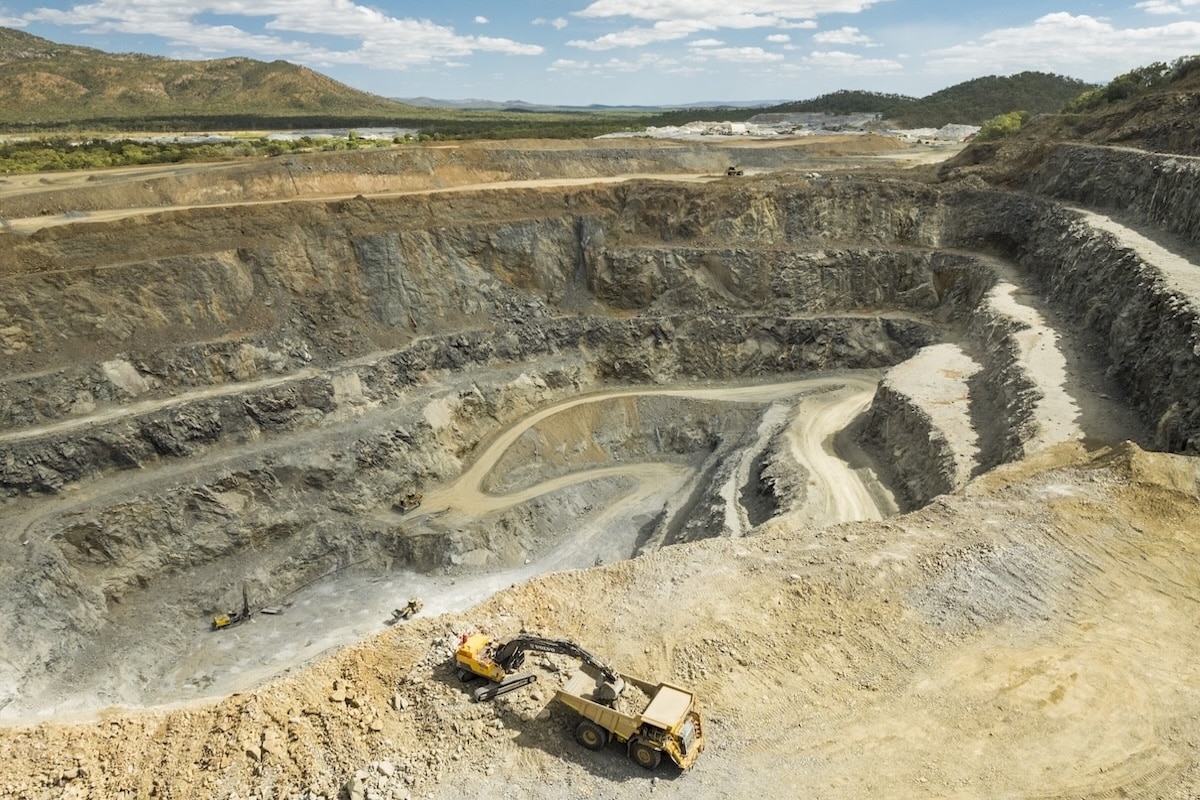
EQ Resources is set to expand its Mt Carbine tungsten district tenure in Far North Queensland from about 783km² to 1,136km² through agreements to acquire Australian Critical Minerals Pty Ltd and TTTP1 Pty Ltd. The deals add roughly 353km² of granted tenure and exploration applications in the Mareeba district, consolidating regional control around the existing open-pit and underground tungsten operations. For geologists and mine planners, the enlarged footprint materially increases scope for resource definition drilling, satellite deposit targeting and longer-term district-scale mine planning.
Fenix Resources shipped a record 1.299 million wet metric tonnes of iron ore in the June 2026 quarter from its integrated Mid West operations, a 33 per cent increase on the prior period. The company has lifted its full-year production outlook on the back of this performance, signalling sustained utilisation of its road–rail–port logistics chain centred on Geraldton. For contractors and service providers, the higher throughput points to continued demand for haulage, crushing and port handling capacity across Fenix’s operations.
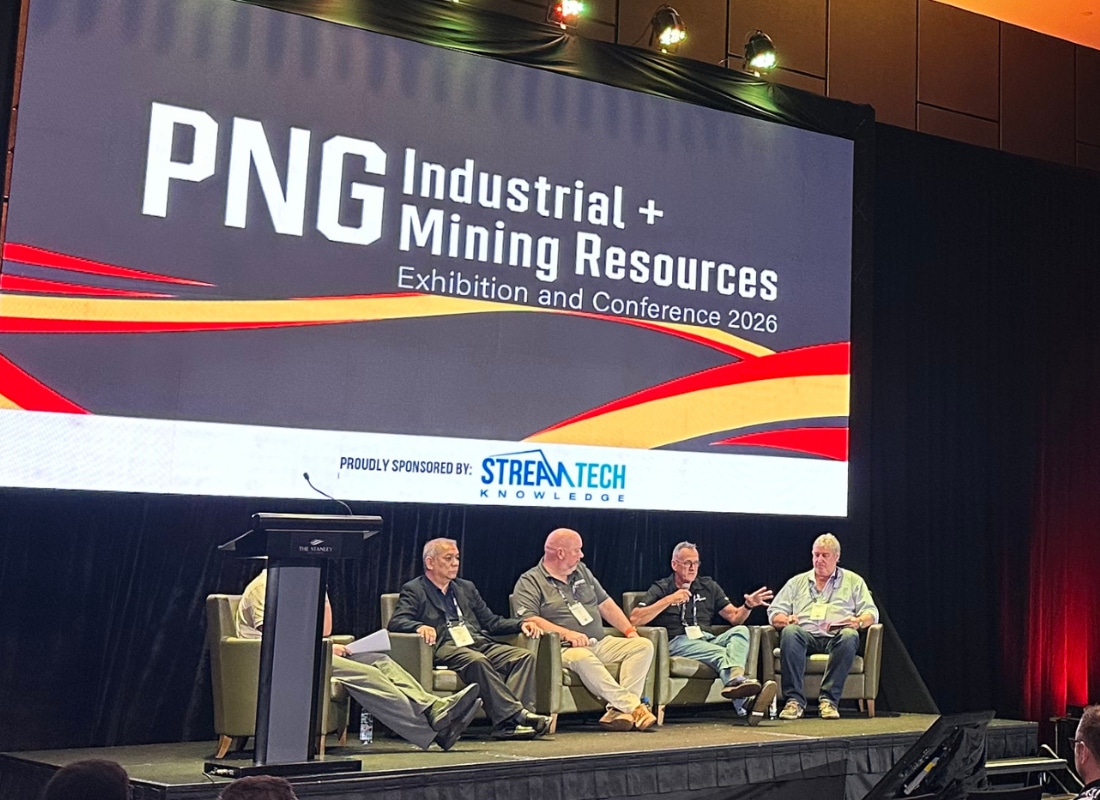
PNG Expo 2026 in Port Moresby drew more than 900 attendees, 100 exhibiting companies and 43 expert speakers from Papua New Guinea’s mining, resources and industrial sectors over two days. Exhibitors ranged from major miners to OEMs and service contractors, using the event to showcase new processing equipment, mine services and digital solutions tailored to PNG’s logistics and power constraints. The turnout signals continued project momentum in PNG, with suppliers positioning for upcoming brownfield expansions and greenfield feasibility work.
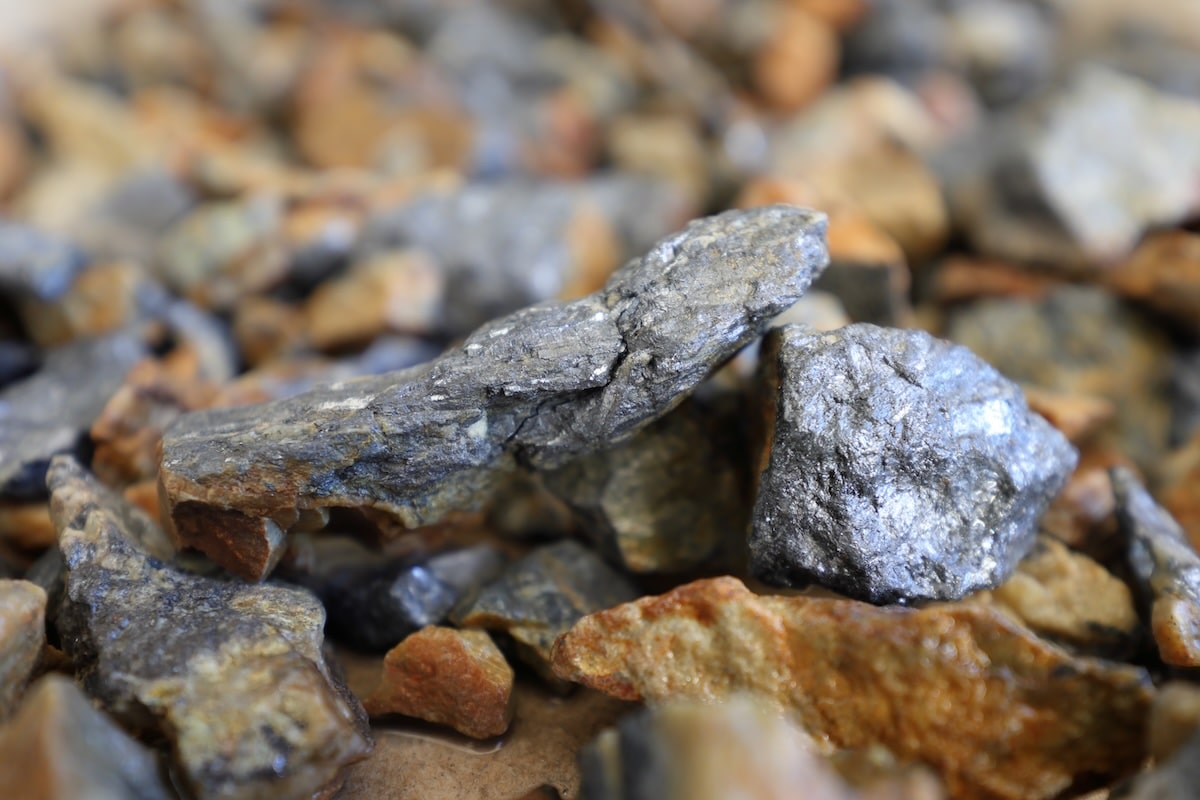
Drilling at Southern Cross Gold Consolidated’s Sunday Creek project in Victoria has intersected high‑grade antimony directly above the planned exploration decline at the Golden Dyke prospect, confirming shallow critical mineral potential in the upper epizonal system. Six recent holes targeted the upper structural levels where antimony is expected to concentrate, complementing existing gold mineralisation and supporting a combined gold–antimony development concept. For mine planners and geotechnical teams, shallow antimony zones above decline infrastructure may influence decline alignment, ground support design and sequencing of early development headings.
Brightstar Resources reports that ongoing diamond and reverse circulation drilling at its Sandstone gold project in Western Australia is confirming a large-scale gold camp with significant growth potential. The latest intercepts will feed into an updated Mineral Resource Estimate due within weeks, with a pre-feasibility study already scheduled to follow. For mine planners and geotechs, the emerging scale at Sandstone signals likely expansion drilling, pit optimisation work and geometallurgical characterisation across multiple lodes rather than a single-deposit development.
Making the UK’s public transport network fully accessible could enable 2.8M more disabled people to work, according to a new report from the Institution of Mechanical Engineers (IMechE). The report calls for systematic upgrades to stations, vehicles and interchanges, including step-free access, level boarding, compliant lifts and ramps, and consistent wayfinding across rail, bus and urban transit. For civil and transport engineers, this signals substantial retrofit demand on legacy assets, with design focus on vertical circulation, platform–train interface geometry and inclusive pedestrian flow capacity.
Great British Energy – Nuclear has opened a £1.08bn procurement for a delivery partner to support its small modular reactor (SMR) programme through to 2046, covering design, construction and long-term deployment. The framework is expected to span multiple SMR sites, requiring integration with existing grid infrastructure, nuclear-licensed sites and UK regulatory regimes such as ONR and the Environment Agency. Civil and geotechnical contractors should anticipate complex nuclear-grade foundations, seismic qualification and long-duration alliancing structures.
MPs have criticised National Grid’s £2.1M community benefits fund for the £1.1bn Sea Link electricity interconnector as so small it could be treated as a “rounding error” on the project budget. The Sea Link scheme, intended to reinforce transmission capacity between Suffolk and Kent and connect offshore wind to the grid, is expected to involve major onshore cabling works, substations and landfall infrastructure. The dispute signals growing political pressure for higher local compensation on large linear energy projects affecting coastal and rural communities.
AtkinsRéalis has secured a five‑year framework to continue as design partner for the civil works on the Sizewell C nuclear power station in Suffolk, extending its role on one of the UK’s largest current nuclear infrastructure schemes. The contract covers detailed civil and structural design for major nuclear island and balance‑of‑plant works, including heavy reinforced concrete structures, deep foundations and complex temporary works. For geotechnical and civil teams, this signals sustained demand for high‑spec nuclear‑grade design, long‑term resourcing and close integration with EDF’s delivery schedule.
Ageing UK bridge stock is pushing asset owners to prioritise repair and protection over costly replacement, driving renewed focus on how access engineering is planned and delivered. Engineers are re‑evaluating temporary works, under‑bridge inspection units and rope access strategies to reach soffits, bearings and hidden steelwork on complex spans without long closures. Better‑designed access solutions can cut possession times, reduce traffic management costs and enable more frequent inspections, directly affecting deterioration modelling and life‑extension decisions for critical crossings.
Balfour Beatty has committed £10M to Pi Labs’ fourth fund to secure early access to construction and infrastructure technologies targeting project delivery. The investment focuses on tools for digital design, site automation and data-driven project management that could affect how tier one contractors plan, monitor and execute major schemes. Civil and infrastructure engineers should expect increased trialling of start-up solutions on live projects, potentially accelerating adoption of AI-driven planning, sensor-based asset monitoring and offsite or modular construction workflows.
HS2 has completed its first cut-and-cover ‘green’ tunnel, the 880m Copthall tunnel near West Ruislip, designed to be buried and landscaped to blend with the surrounding terrain. The structure uses a shallow, covered box rather than a bored alignment, reducing surface severance and simplifying interfaces with existing utilities and local roads. For designers and contractors, the scheme signals HS2’s move into repeatable cut-and-cover elements, with implications for temporary works, groundwater control and long-term settlement performance along similar sections.
The government has issued a revised National Policy Statement for ports, published on 6 July, introducing a stronger presumption in favour of granting development consent orders (DCOs) for port projects. The update is expected to shorten examination and decision timelines for nationally significant infrastructure, particularly for deep-water berths, container terminals and associated road and rail links. Port sponsors and their geotechnical and civil teams can now place greater weight on NPS conformity in design development, environmental impact assessments and land-side ground engineering strategies.
Faster penalties of up to £500,000 per breach are being introduced so the Environment Agency can sanction water companies more quickly for pollution and other environmental offences on rivers and coastal waters. The regime forms part of the government’s wider overhaul of England’s water system, tightening enforcement around sewage discharges, abstraction limits and permit non-compliance. Asset managers and project teams should expect closer scrutiny of CSO performance, treatment works upgrades and network resilience, with reduced scope to rely on lengthy investigations before fines are imposed.
SANY Group has delivered its first two SY3000E electric mining excavators, each a 300 t class machine, to Indonesian coal miner and contractor Jhonlin Baratama, marking the model’s first overseas deployment. The cable-powered SY3000E is designed for ultra-large open-pit operations, pairing with 220–300 t class trucks and targeting lower unit energy consumption than equivalent diesel excavators. For mine planners and maintenance teams, the move signals growing availability of high-capacity electric primary loading fleets from Chinese OEMs in Southeast Asian coal pits.
Darma Henwa, via subsidiary PT DH Kontraktama Batubara, has secured a five‑year integrated mining services contract worth about IDR 22 trillion (US$56 million) from PT Sebuku Sejaka Coal at Pulau Laut, South Kalimantan, expanding its portfolio beyond long‑time client Bumi Resources. The scope covers overburden removal, coal extraction and haulage, plus mine infrastructure support, with Darma Henwa also signing a fleet deal for XCMG hybrid haul trucks to cut diesel use. For engineers, the move signals growing deployment of OEM hybrid trucks in Indonesian contract pits and potential shifts in mine haul road design and maintenance strategies.
Caterpillar has acquired Skycatch, a specialist in drone-based spatial data capture, processing and AI analysis for mine sites, following its recent purchase of mine planning and scheduling software provider RPMGlobal. The deal folds Skycatch’s high-resolution 3D mapping, volumetric stockpile measurement and pit progression monitoring tools into Caterpillar’s MineStar and autonomy ecosystem to optimise material movement. For geotechnical and operations teams, this signals tighter integration between survey data, short-interval control and fleet dispatch, with more automated reconciliation between design, as-built topography and production.
Caterpillar has acquired spatial data specialist Skycatch, adding drone-based 3D mapping and high-resolution terrain modelling to its mining technology stack for material movement optimisation. The deal, which follows Caterpillar’s purchase of RPMGlobal, extends digital capabilities from mine planning software into real-time site visualisation and volumetric analysis. For geotechs and mine planners, tighter integration of point-cloud data with fleet management should sharpen blast design, bench stability monitoring and short-interval control without adding survey cycle time.
De Beers has sharply cut official rough diamond prices at its July sales cycle and reduced its sightholder list from about 70 to roughly 45–50, abandoning a long-standing strategy of pricing 5%–50% above the secondary market. The Anglo American unit has also moved to one-line invoicing and altered box assortments, obscuring exact per-carat reductions while reallocating supply towards its strongest customers. The reset comes amid weak Chinese luxury demand, surging laboratory-grown output, increased rough supply from Angola and Anglo’s ongoing attempt to sell the business.
Creating integrated mining districts rather than standalone operations could unlock billions in additional value, with GEM Mining Consulting’s new District Potential Value Index (DPVI) ranking 49 districts from an initial 1,641 mines and projects on economic scale, shared infrastructure and long-term coordination. Top performers include the Altura-Pilgangoora lithium district in Australia, Chile’s Collahuasi-Quebrada Blanca and Andina-Los Bronces copper belts, Poland’s Lubin-Polkowice-Sieroszowice-Rudna copper district and Argentina’s Salar de Olaroz-Cauchari Olaroz lithium system. The work signals that water constraints, permitting risk and social conflict can outweigh geology, guiding where to prioritise acquisitions and regional infrastructure.
High-grade definition drilling at West Red Lake Gold Mines’ Madsen operation in northern Ontario is returning mine-plan–scale intercepts from the underground Austin 904 and 955 complexes, including 13.35 metres at 10.22 g/t gold (with 1.1 metres at 69.85 g/t) from Level 13 and 15 metres at 6.93 g/t from Level 12. The 904 Complex hosts a roughly 200 m × 200 m panel of previously unmined mineralisation expected to support larger stopes and more efficient extraction, targeting inclusion in the H1 2027 mine plan. Madsen, which reached commercial production in January and is forecast at 35,000–45,000 oz this year, will be incorporated with the Rowan project in a prefeasibility study due in H2 2026.
Canada’s federal government is poised to inject “hundreds of millions” of dollars into Teck Resources’ Trail metals facility in British Columbia to expand germanium output, with funding expected from Natural Resources Canada, the Canada Growth Fund and Export Development Canada. Teck already recovers germanium as a byproduct of zinc operations in Alaska and supplies all of Canada’s germanium dioxide exports to the US, where prices exceed US$6,000 per kg. The move follows China’s 2024 export restrictions on germanium and antimony and mirrors recent C$459 million federal debt support for Nouveau Monde Graphite’s Matawinie project.