CiDi Inc has signed cooperation agreements with E-Power and Zoomlion to develop integrated “intelligent + equipment + operation” smart mine systems, combining CiDi’s autonomous haulage and fleet management with Zoomlion’s heavy mining equipment and E-Power’s powertrain and electrification technologies. The partners will jointly design and adapt intelligent trucks and auxiliary equipment for specific mine conditions, including customised drive systems and control interfaces. Benchmark demonstration projects are planned to validate large-scale autonomous haulage, energy management, and coordinated dispatch in complex open-pit environments.
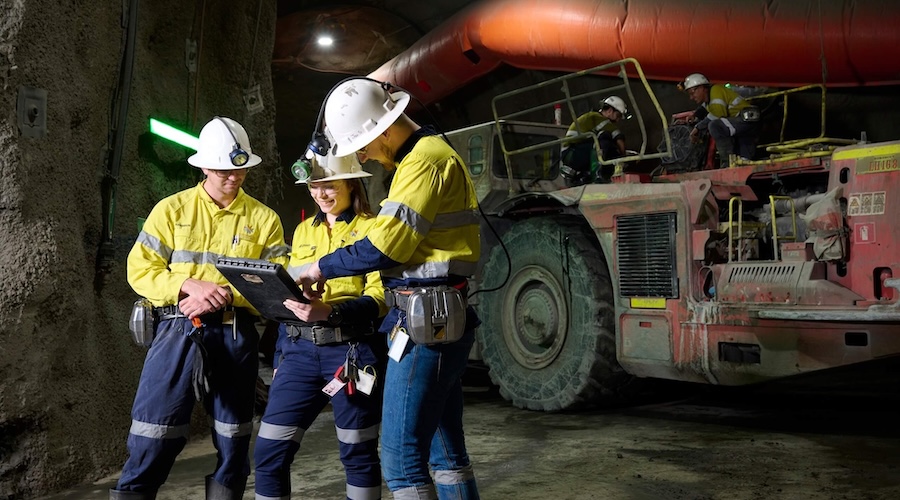
Mobilaris Industrial Solutions is deploying its Mobilaris Site real-time situational awareness platform at Björkdalsgruvan, one of Sweden’s most established underground gold mines near Skellefteå, to improve safety and coordination of daily operations. The system will integrate live location and status data from people, equipment and infrastructure across the mine, giving control room operators and supervisors a consolidated operational picture. For geotechnical and production teams, this should tighten control of access to active headings, blasting zones and critical infrastructure, and support faster response to incidents underground.
Vale has commissioned its first high‑tech, AI‑enabled iron ore processing plant at Conceição 2 in Itabira, around 100 km from Belo Horizonte, modernising an 84‑year‑old operating hub where the company was founded. The upgraded plant integrates previously separate process stages under a single data‑intelligence platform, using Artificial Intelligence to optimise ore processing parameters in real time. For mine planners and plant engineers, this signals a shift towards tightly integrated, sensor‑driven control of comminution and beneficiation circuits across Vale’s Brazilian operations.
Schneider Electric and Torngat Metals have signed a non-binding MoU to explore a strategic industrial partnership centred on the Strange Lake rare earth project in Nunavik, with associated processing and logistics infrastructure planned in Labrador. The collaboration targets a “resilient and responsible” rare earth value chain, pairing Schneider’s power, automation and digital systems with Torngat’s heavy rare earth resource. For engineers, the deal signals early integration of energy management, electrification and remote operations design into mine, concentrator and transport corridor planning.
Metso is expanding mineralogy capabilities at its Pori Research Center in Finland to support faster, data-driven decisions from early flowsheet design through to plant optimisation across the full minerals processing lifecycle. The investment focuses on advanced ore characterisation, integrating detailed mineralogical data with process modelling to refine comminution, flotation and dewatering strategies. For mine and plant engineers, this should tighten design parameters, reduce pilot-scale uncertainty and improve brownfield debottlenecking by linking mineral texture and liberation directly to circuit performance.
NVRO Metals Limited plans to acquire Northern Territories Resources Pty Ltd to create the NVRO Metals Hub, a critical minerals production platform in Australia’s Northern Territory. The hub will deploy the proprietary NVRO Process™ to treat local ore bodies, positioning the site as a centralised processing centre rather than a single-mine operation. For geometallurgy and project development teams, the move signals potential new processing capacity for critical minerals in the region, contingent on completion of the transaction and subsequent plant build-out.
Develop Global has approved final investment decisions for the Sulphur Springs copper–zinc–silver project in Western Australia and the Pioneer Dome lithium project after securing an approximately $570 million funding and offtake package with Trafigura. The package includes a $500 million loan facility, giving Develop Global full project funding coverage plus working capital to advance mine development, processing plants and associated infrastructure. For engineers, the deal signals firm backing for new base metal and lithium concentrator capacity in Australia under long-term offtake to a major global trader.
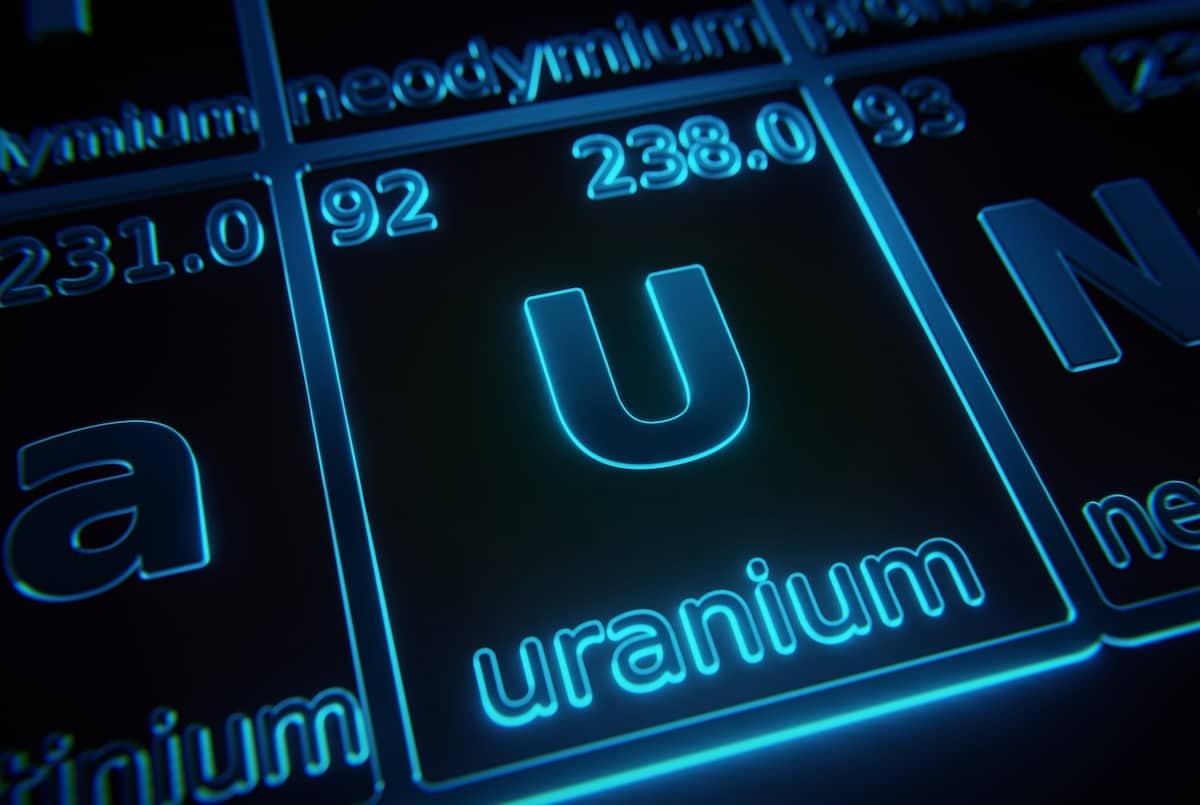
India’s rapid build-out of AI infrastructure and large-scale data centres, which demand continuous baseload power, is prompting expectations that Prime Minister Narendra Modi will seek higher uranium import volumes from Australia during a visit next month. Australia’s 2014 civil nuclear cooperation agreement with India allows uranium exports for safeguarded reactors, but actual shipments have remained minimal, leaving spare capacity at producers such as Olympic Dam and Ranger rehabilitation-constrained supply chains. Any long-term offtake deals would firm demand signals for Australian yellowcake and could influence mine-life planning, brownfield expansions and new project financing.
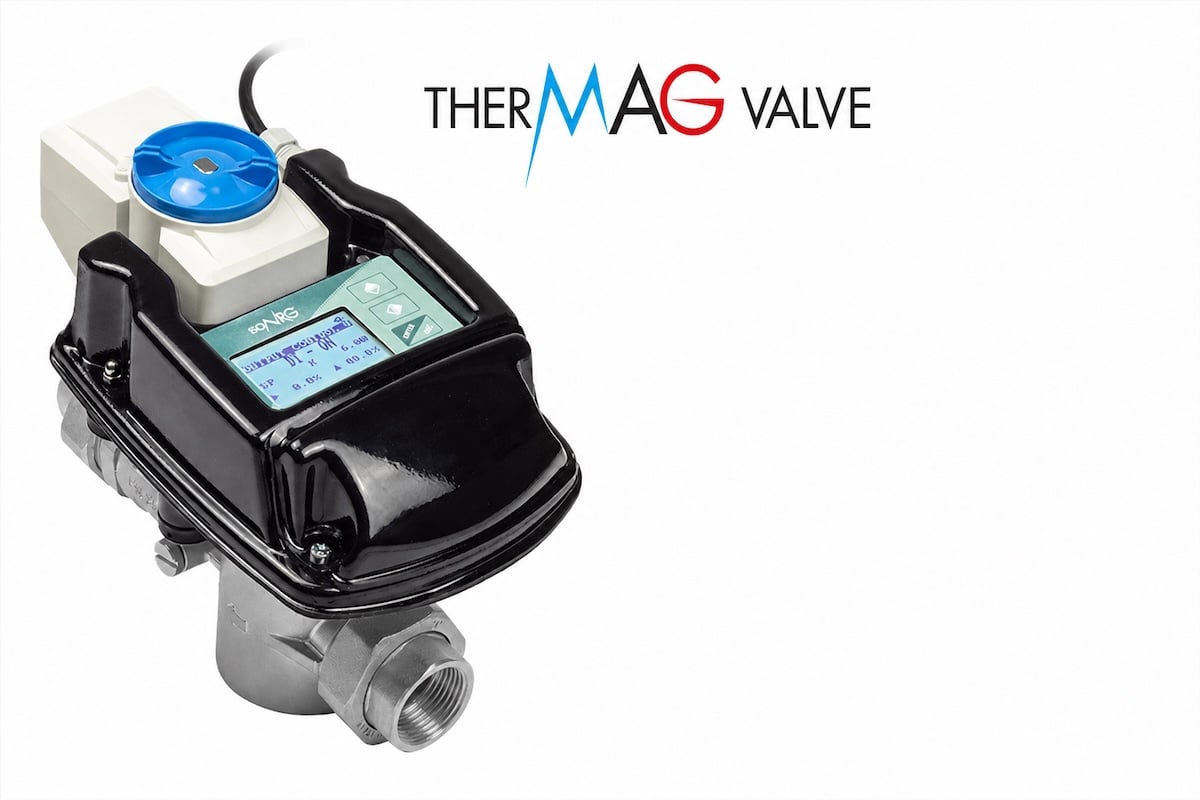
ISOIL has released the THERMAG VALVE – CS611, a two-way control valve integrating an electromagnetic thermal energy meter for precise monitoring of heating and cooling circuits in mining and industrial plants. The unit delivers real-time energy measurement and billing compliant with EN1434 and the MID 2014/32/EU directive, targeting both retrofit and new-build systems. For process and services engineers, the combined valve–meter design reduces separate instrumentation, simplifies balancing of thermal loads, and tightens accountability for energy use across distributed circuits.
Sodexo Australia has secured a five-year, >$100 million contract extension with Westgold Resources to provide integrated village services and industrial mine site cleaning across operations in Western Australia’s Goldfields and Murchison regions. The deal covers five remote accommodation villages, including the new Higginsville village, consolidating catering, facilities management and industrial cleaning under a single provider. For mine operators, the scale and duration of the contract signal continued outsourcing of non-core services to stabilise camp operations and labour support on geographically dispersed gold assets.
Northern Star Resources has rejected activist investor Elliott Investment Management’s push for a strategic review and potential sale, saying a process is ill‑timed while it addresses processing mill issues at Kalgoorlie and manages CEO Stuart Tonkin’s planned departure after nearly 10 years. Elliott, which has built an estimated 3–4% stake and previously drove BHP’s oil and gas spin‑off and a US$300 million buyback at Kinross, wants options such as selling lower‑margin, shorter‑life mines assessed. The board says prior takeover, merger and spin‑off proposals reviewed with investment banks did not meet its value expectations but will keep portfolio options under regular review.
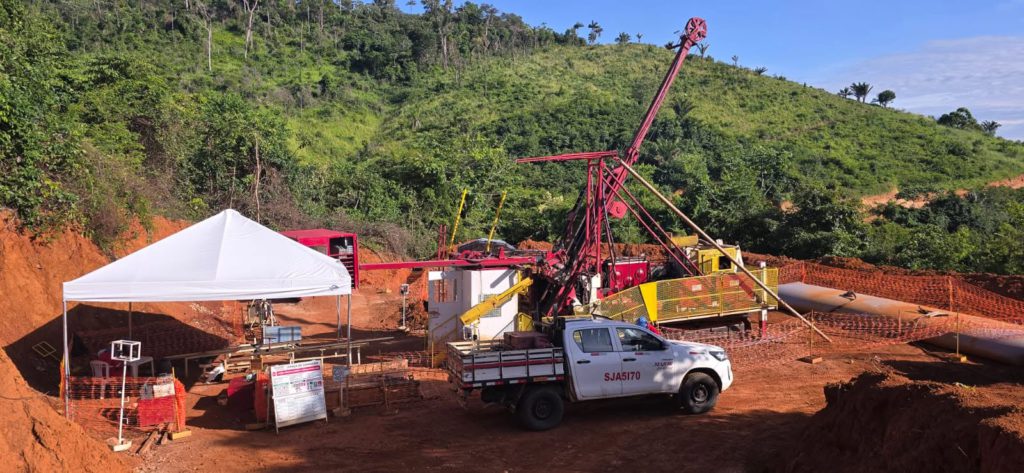
New drilling at Ero Copper’s Furnas polymetallic project in Pará, Brazil, has extended mineralisation up to 220 metres below and about 115 metres down dip beyond the current inferred resource, with hole FURN-DD-00357 returning 90 metres at 0.74% Cu, 0.5 g/t Au and 3.18 g/t Ag from 726 metres depth. The project’s February PEA outlines a 24-year mine life with average annual output of 52,000 tonnes Cu, 84,000 oz Au and 374,000 oz Ag, and Ero expects to complete earn-in spending under its Vale Base Metals agreement by year-end. Over 75,000 metres have now been drilled using 10 rigs, with the deposit remaining open at depth and along strike and a prefeasibility study targeted for 2027.
British Columbia’s Supreme Court has ordered the Environmental Assessment Office to reopen its “substantial start” decision for Seabridge Gold’s C$8.8 billion KSM project, giving the Tsetsaut Skii km Lax Ha Nation 90 days to file submissions over planned processing and tailings facilities in Treaty Creek Valley. The First Nation warns the tailings pond could reach about 52 storeys deep on its exclusive traditional territory, while Seabridge points to a 17-km access road, power foundations and extensive early works underpinning the original ruling. The decision threatens the validity of KSM’s 2014 environmental certificate, despite C$1.2 billion already spent on one of the world’s largest undeveloped gold-copper deposits.
Metals prices fell sharply in early London trading as renewed US strikes on Iran and expectations of further US rate hikes pushed gold down as much as 2.6% and silver about 1%, with base metals including aluminium and zinc also weaker. Losses eased after US core CPI rose less than expected, though headline inflation accelerated to 4.2%, keeping liquidity concerns elevated and pressuring risk assets, said Li Xuezhi of Chaos Ternary Futures. Longer term, analysts at BMI and Sprott cite central bank gold buying and China’s planned 2 trillion yuan data centre build-out as structural supports for bullion and copper demand to 2050.
Central Asia Metals increased January–May output to 5,141 tonnes of copper from the Kounrad dump-leach operation in Kazakhstan and 7,566 tonnes of zinc in concentrate from the Sasa mine in North Macedonia, while benefiting from average realised prices of $13,076/t for copper (up ~40%) and $3,299/t for zinc (up 19%). Historically low, now negative, lead treatment charges supported Sasa revenues despite slightly lower realised prices on 11,142 tonnes of lead concentrate. The group maintains 2026 guidance of 12,000–13,000 t Cu, 18,000–20,000 t Zn and 26,000–28,000 t Pb, and plans to acquire Cygnus Metals’ high-grade copper-gold project in Quebec.
Chile’s Sierra Gorda mine and BHP’s Spence operation have signed a memorandum of understanding to explore joint supply-chain and operating-process initiatives in the Sierra Gorda district, targeting economies of scale as both operations confront declining grades and reduced output. Spence is progressing a US$600 million concentrator expansion, including a new flotation circuit to manage ore variability, after producing 254,795 tonnes of fine copper in 2025. Sierra Gorda plans an SX-EW heap-leach project for about 30,000 tonnes of copper cathode per year over 10 years, alongside a US$400 million tailings facility upgrade and a potential US$700 million fourth grinding-line expansion.
A mass shooting that killed 12 people in the Cleveland settlement, about 6 km east of central Johannesburg, is intensifying scrutiny of violent illegal gold mining networks around the city. At least 10 gunmen reportedly moved through the informal settlement on Tuesday night, firing at multiple locations before fleeing in a white vehicle; 11 victims died on site and one later in hospital, with no arrests yet made. The area hosts extensive zama zama activity around abandoned workings, where rival groups contest residual gold, prompting recent army deployments and weapons seizures.
Schneider Electric and Torngat Metals have signed a non-binding MoU to develop an integrated rare earths value chain centred on the Strange Lake project in Nunavik, with supporting infrastructure in Labrador and a planned separation plant at Sept-Îles, Quebec. Strange Lake’s B-zone hosts indicated resources of 278.1 million tonnes at 0.93% TREO, 1.92% ZrO₂ and 0.18% Nb₂O₅, plus 214.4 million tonnes inferred at 0.85% TREO, notable for heavy rare earths dysprosium and terbium. The partnership will leverage Schneider’s electrification, automation and digital systems to design “next-generation” mining and processing operations.
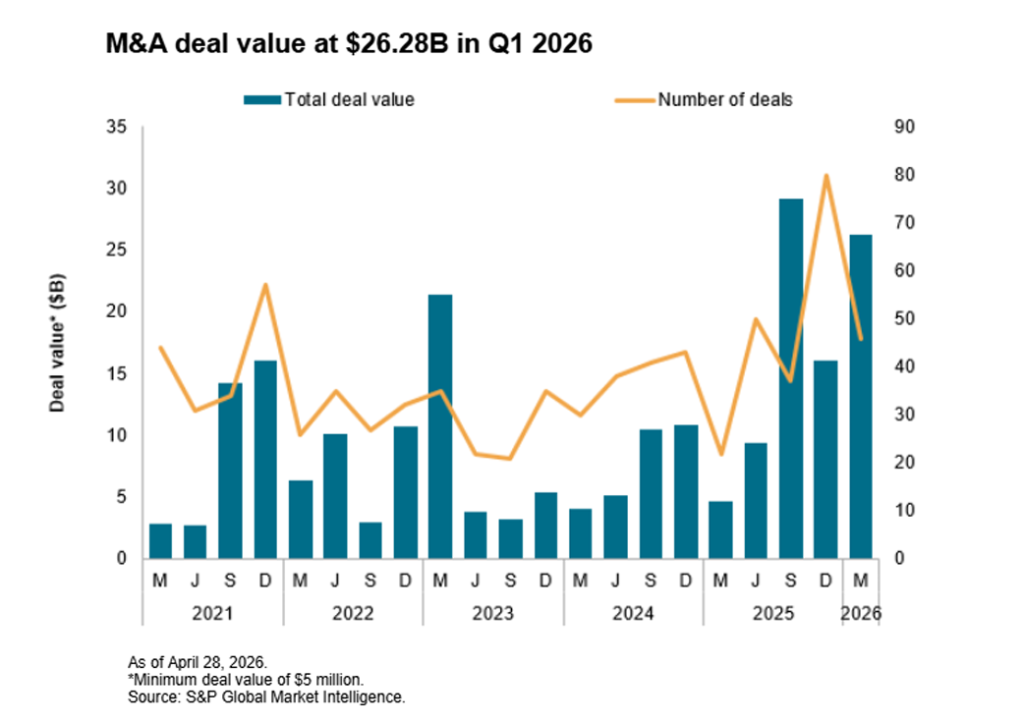
Global mining M&A in Q1 2026 reached US$26.28 billion, up 63% quarter-on-quarter and the second-highest quarterly value since 2013, driven by corporate-level deals such as the US$10 billion acquisition of BlueScope Steel after S&P Global began including steel transactions. Deal volume slumped to 46 transactions, roughly half the December quarter, with 30 company acquisitions versus 16 asset purchases as miners chase immediate scale and long-term supply. Asset deals totalled US$3.35 billion, 221% higher year-on-year, supported by the US$1 billion sale of the Çöpler gold mine in Turkey and continued focus on copper-gold targets.
MP Materials’ chief operating officer Michael Rosenthal has increased his stake in the NYSE-listed rare earth producer, buying 10,000 shares at US$54.30 each via his family trust, bringing his holding to 136,622 shares. The move comes as MP Materials, owner of the Mountain Pass mine in California – currently the only operating rare earths mine in the US – trades around US$53 per share with a market capitalisation of about US$9.5 billion. The stock has halved from its October peak of US$100.25 but is nearly double its level a year ago, supported by a US$400 million Department of Defense equity investment.
Weir has secured a multimillion‑dollar contract with a major Chinese non‑ferrous metals company to supply WARMAN® pumps for the Phase III expansion of a Xizang copper mine. The package comprises two WARMAN MCR® 450 cyclone feed pumps and nine WARMAN AHPP 20/18 tailings transfer pumps serving the grinding circuit and tailings system. For engineers, the deal signals continued preference for high‑capacity slurry and tailings pumping solutions in large‑scale Chinese copper concentrator expansions.
Bradken has expanded its MillSafe® range with a new MillSafe Worn Liner Removal System developed jointly with Russell Mineral Equipment (RME) to automate and control the extraction of worn mill liners during relining. The system integrates with RME’s existing relining technologies to handle liners remotely rather than relying on manual oxy-cutting and cranage close to the charge. For operators, the key gains are reduced exposure of crews inside large SAG and ball mills, shorter shutdown durations, and more predictable relining schedules.
GR Engineering Services has been named preferred EPC contractor by Venturex Sulphur Springs, a Develop Global subsidiary, for the 1.5 Mt/y Sulphur Springs copper-silver-zinc processing plant 144 km south-east of Port Hedland in Western Australia. The appointment follows Develop’s final investment decision on the project, clearing the way for detailed engineering, procurement and construction planning. Plant design and construction choices will be critical for handling polymetallic sulphide ore and managing remote-site logistics in the Pilbara environment.
Danfoss Scotland has validated its Dextreme Max digital hydraulic architecture on a 30 t battery-electric excavator, cutting power consumption by 35% under test conditions using a £4.29 million UK Government grant. The system replaces conventional valve-controlled hydraulics with digitally controlled flow and pressure management, reducing throttling losses and improving overall drivetrain efficiency. For mine operators, the results point to smaller or fewer battery packs for the same duty cycle, longer run time per charge, and lower heat rejection demands on cooling systems.
Geomechanics, Streamlined.
© 2026 Geomechanics.io. All rights reserved.