Schneider Electric–Torngat Metals rare earth MoU: project and process lens for engineers
Reviewed by Tom Sullivan
First reported on MINING.com
30 Second Briefing
Schneider Electric and Torngat Metals have signed a non-binding MoU to develop an integrated rare earths value chain centred on the Strange Lake project in Nunavik, with supporting infrastructure in Labrador and a planned separation plant at Sept-Îles, Quebec. Strange Lake’s B-zone hosts indicated resources of 278.1 million tonnes at 0.93% TREO, 1.92% ZrO₂ and 0.18% Nb₂O₅, plus 214.4 million tonnes inferred at 0.85% TREO, notable for heavy rare earths dysprosium and terbium. The partnership will leverage Schneider’s electrification, automation and digital systems to design “next-generation” mining and processing operations.
Technical Brief
- MoU is explicitly non-binding, so no committed capex, schedule or offtake volumes yet.
- Agreement scope spans upstream mining, midstream processing and downstream industrial integration as a single “360°” partnership.
- Schneider’s role focuses on electrification, plant automation and digital control systems for Strange Lake and downstream assets.
- Sustainable industrial design is called out, implying early-stage optimisation of energy use, emissions and water footprint.
- The separation facility is planned at Sept-Îles, tying rare earth processing into an existing deep-water port hub.
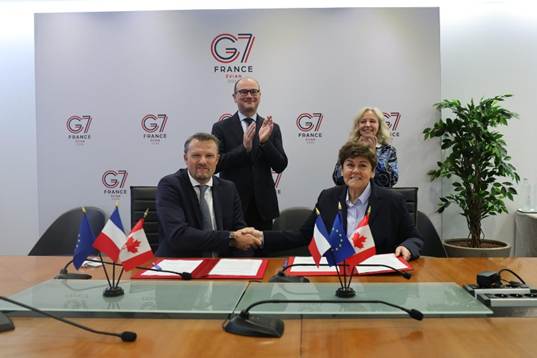
- MoU was signed in Paris alongside a G7-linked meeting on financing critical minerals supply chains.
- Partnership is framed around “trusted” and “resilient” supply, targeting permanent magnet demand in EV, wind and defence sectors.
Our Take
In our database, Strange Lake and Torngat Metals already feature in coverage of the Canadian Infrastructure Bank’s C$55 million bridge loan and potential C$500 million facility, so Schneider Electric’s offtake-linked role effectively joins a growing stack of quasi‑anchor counterparties that can help de‑risk project financing.
The earlier Strange Lake update flagged first production slipping to 2029–30, which means Schneider Electric’s MoU is likely being signed well ahead of FID and permitting (targeted for 2027), signalling that downstream OEMs are willing to secure heavy rare earth exposure at the resource‑definition stage rather than waiting for a construction decision.
Prepared by collating external sources, AI-assisted tools, and Geomechanics.io’s proprietary mining database, then reviewed for technical accuracy & edited by our geotechnical team.
Related Articles
Related Industries & Products
Mining
Geotechnical software solutions for mining operations including CMRR analysis, hydrogeological testing, and data management.
Construction
Quality control software for construction companies with material testing, batch tracking, and compliance management.
CMRR-io
Streamline coal mine roof stability assessments with our cloud-based CMRR software featuring automated calculations, multi-scenario analysis, and collaborative workflows.
HYDROGEO-io
Comprehensive hydrogeological testing platform for managing, analysing, and reporting on packer tests, lugeon values, and hydraulic conductivity assessments.
GEODB-io
Centralised geotechnical data management solution for storing, accessing, and analysing all your site investigation and material testing data.