Geomechanics, Streamlined.
© 2026 Geomechanics.io. All rights reserved.
CEA has secured distribution of SANY’s electric excavator range across Queensland, New South Wales, South Australia and Western Australia, signalling a broader push to deploy battery-powered plant on road and civil projects. Product Manager Phil Withell points to compact units such as the SY35E, which use SANY’s proprietary high‑energy‑density battery packs and integrated electric drive systems, as early adopters for urban and tunnel works. For contractors, the move raises practical questions around charging logistics, noise limits and emissions compliance on constrained infrastructure sites.
A new funding round of the Federal Government’s $200 million Safer Local Roads Infrastructure Program will open on 1 September to state and territory governments and local councils. The program targets current and emerging road infrastructure priorities, enabling works such as intersection upgrades, shoulder widening, pavement rehabilitation and safety treatments on local and regional networks. Civil and geotechnical teams should prepare shovel-ready designs and costings now to compete for allocations within the capped national envelope.
Tadano is expanding its Australian lifting offering for infrastructure and transport projects with a new crane product line backed by lifecycle-focused servicing and operator training. The company is positioning the crane as only one element of an integrated package that includes commissioning support, scheduled maintenance and compliance-based safety systems tailored to local road and bridge works. For contractors, the key shift is access to OEM-led training and support aimed at maximising crane uptime and safe utilisation over long project durations.
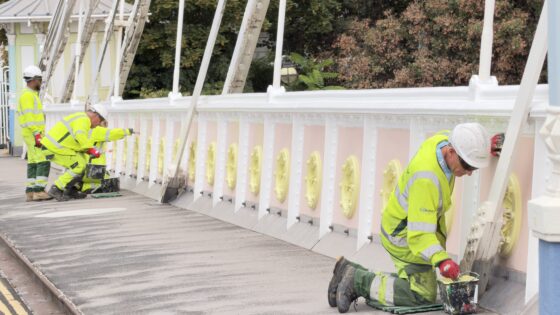
Albert Bridge in west London has been closed to road traffic for a programme of essential refurbishment that includes full repainting of its wrought-iron and steel structure. The Grade II* listed, 19th‑century suspension–cable‑stayed hybrid is undergoing complex repair work to address corrosion, protect critical tension members and connections, and extend fatigue life under modern traffic loading. For bridge and materials engineers, the project centres on surface preparation, coating system durability in a marine–urban environment, and maintaining structural integrity while preserving heritage detailing.
Repair of the Bridgewater Canal breach at Little Bollington has advanced to contractor procurement after completion of survey and design work on the failed embankment. Engineers have now defined the repair scope, likely including reconstruction of the canal lining, reinstatement of the earthworks profile and improved seepage control to prevent repeat overtopping or piping. Contractors will need to manage works adjacent to live water infrastructure and local transport routes, with temporary cofferdams, dewatering and staged reinstatement expected to be key construction risks.
Wirral Borough Council has let a four-year, £1.2bn (including VAT) multi-lot contractor framework covering construction, infrastructure and demolition works across the North West. The framework comprises 13 published lots, signalling a pipeline likely to include highways, structures and public realm schemes where bidders must demonstrate capability in complex groundworks, temporary works and brownfield remediation. Civil and geotechnical contractors should expect mini-competitions to demand robust cost control, programme certainty and early contractor involvement on design and build risk.
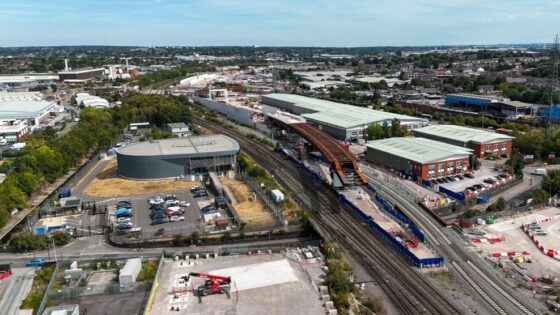
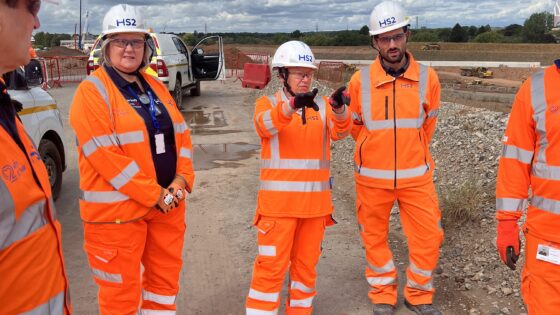
HS2 engineers have completed the first major launch of the Duddeston Junction Viaduct, pushing the steel and concrete structure over the live Birmingham–Derby main lines on the approach to Curzon Street station. The incremental launch was carried out during tightly timed possessions above multiple tracks, using temporary piers and sliding bearings to control alignment and minimise disruption to existing services. The viaduct will carry high-speed trains into the new city-centre terminus, imposing stringent tolerances on deck geometry, dynamic behaviour and clearances over the classic network.
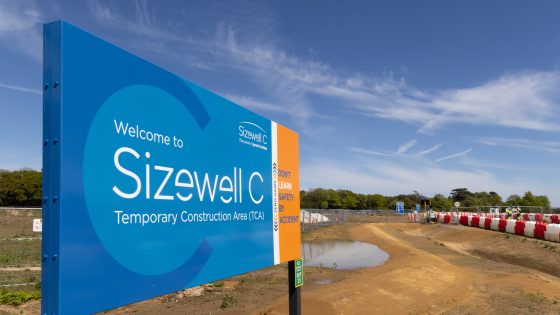
Sizewell C has appointed recruitment provider Rullion to run its early careers programme as the Suffolk nuclear project ramps up workforce planning for construction and commissioning. The partnership targets a long pipeline of apprentices, graduates and trainees across civil, mechanical, electrical and nuclear disciplines to support delivery of the twin EPR units and associated marine and civils works. For contractors and consultants, the move signals upcoming demand for site-ready junior engineers, technicians and project controllers familiar with nuclear-licensed site requirements and large-scale concrete and earthworks operations.
England’s 2026 hot, dry summer has pushed water companies to revisit large-scale seawater desalination, with schemes such as Thames Water’s previously shelved 150Ml/d Beckton plant back on the table. Developers face high capex, energy demand above 3kWh/m³ for reverse osmosis, and planning resistance over coastal intake/outfall structures and brine disposal. For civil and process engineers, the key constraints are grid connection capacity, integration with existing trunk mains and service reservoirs, and siting plants to avoid flood risk while remaining close to tidal water sources.
£28M in UK Government grants is being offered through a new competition for long-duration energy storage able to deliver electricity for at least 100 hours, targeting technologies beyond conventional lithium-ion. Funding is aimed at grid-scale systems that can support multi-day balancing of intermittent wind and solar, with an emphasis on demonstrators that can integrate into existing transmission and distribution infrastructure. Civil and geotechnical engineers should expect increased demand for sites, foundations, fire engineering and environmental permitting for large-footprint battery and alternative storage installations.
TechFest 2026 has named 185 finalists across 21 categories, recognising digital and technology-led advances in construction and civil engineering. Shortlisted entries span applications such as BIM-driven design workflows, sensor-based asset monitoring and AI-supported project controls on major infrastructure schemes. For practitioners, the awards signal where clients and contractors are currently investing in tools to manage programme risk, optimise whole-life performance and integrate data across design, construction and operations.
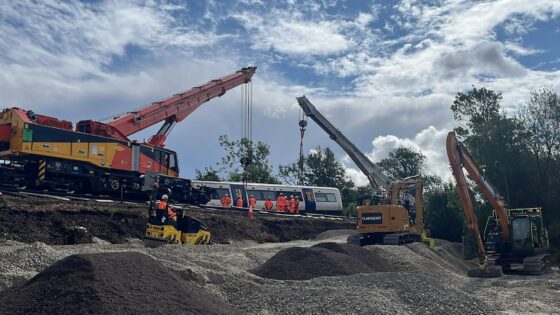
Rail services between Haywards Heath and Lewes will restart on Tuesday 1 September after Network Rail completed emergency repairs following last week’s passenger train derailment. The works are understood to have included track replacement and realignment on the affected section, plus inspections of ballast condition and signalling equipment to restore line speed and operational safety. Engineers will be alert to any residual geometry or subgrade issues, with early monitoring runs likely to check track behaviour under normal passenger loading.
Great British Energy – Nuclear (GBE-N) has set out an early works package for its new nuclear programme with an estimated contract value of £730M to £1.1bn, signalling a major pre-construction phase before main civil works. The scope is expected to cover site preparation, bulk earthworks, temporary works, utilities diversions and enabling infrastructure to de-risk later nuclear island construction. Contractors should anticipate complex ground engineering, stringent nuclear-grade quality control and long-lead procurement, with frameworks likely favouring teams experienced in large-scale UK nuclear and heavy industrial sites.
HS2 has agreed to introduce additional mitigation at a North Warwickshire construction site after residents complained of a foul odour from excavated material, worsened by recent high temperatures. Measures are expected to focus on improved stockpile management, faster removal of spoil and enhanced odour control around earthworks and temporary storage areas. Contractors on linear infrastructure schemes with large cut-and-fill operations may need to review spoil handling, covering strategies and monitoring during heatwaves to avoid similar community impacts.
Major works at the Henderson Road–Ferntree Gully Road intersection in Knoxfield are now complete, targeting congestion for the 40,000 vehicles using Ferntree Gully Road each day. Crews have delivered a new left‑turn slip lane from Henderson Road and associated signal and lane configuration changes to separate turning and through movements. The upgrade is expected to reduce queue lengths and conflict points at this high‑volume junction, with direct implications for pavement performance, signal timing plans and future traffic modelling on the surrounding arterial network.
Ridgway Rentals has added three of JCB’s new VM118D single-drum soil compactors, plus 220X tracked excavators and articulated booms, to its 400-strong JCB fleet via Gunn JCB, with the units immediately deployed on quarrying, waste, infrastructure and housebuilding projects. The 10+ tonne VM118D uses a 55 kW JCB 430 EU Stage V diesel engine that uniquely meets the standard without DEF, cutting fluid logistics, system complexity and maintenance for site teams. Ridgway cites strong utilisation of JCB compaction rollers and flexible JCB Finance structures as key drivers for the latest investment.
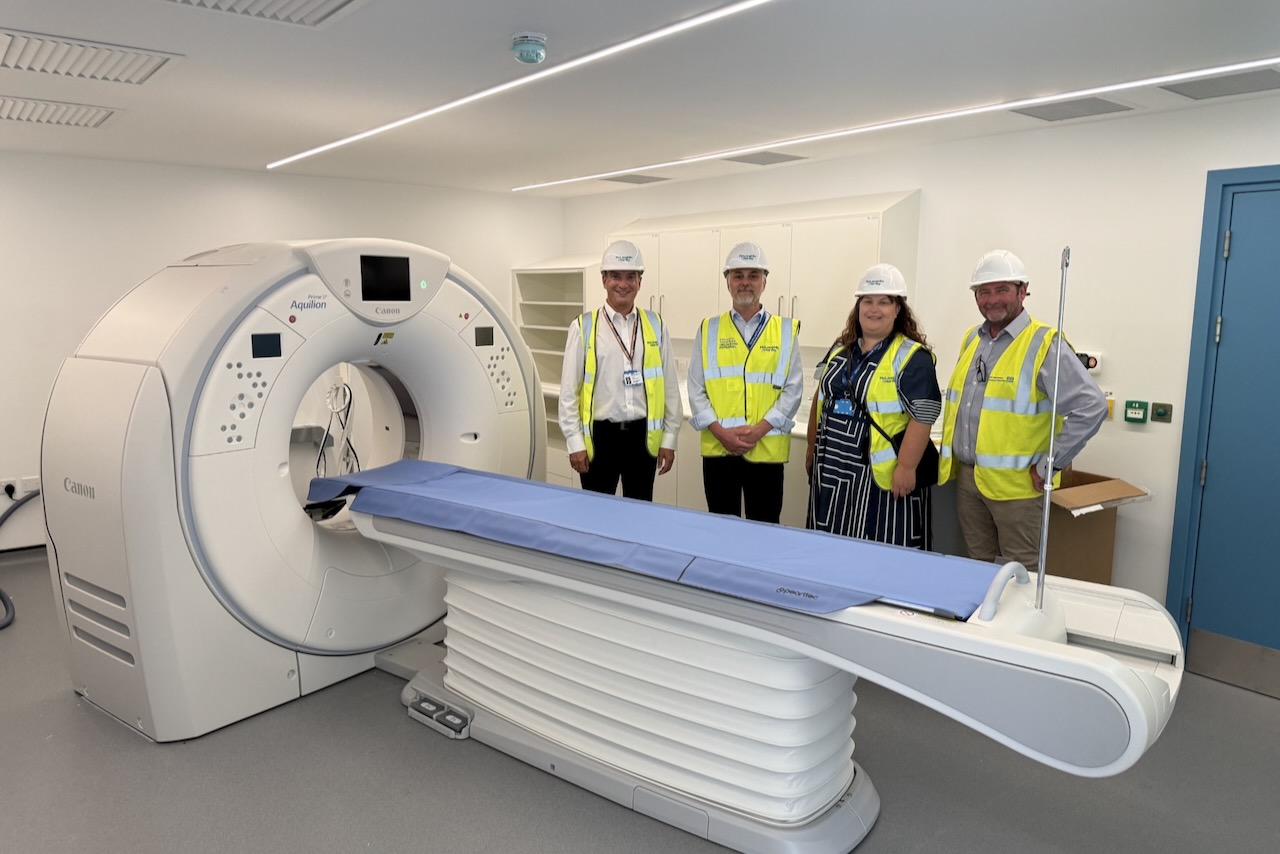
McLaughlin & Harvey has completed a new community diagnostic centre at Braintree Community Hospital for Mid and South Essex NHS Foundation Trust, designed to deliver around 75,000 additional diagnostic appointments in its first year. The facility will run seven days a week and support CT and MRI scans, ultrasound, phlebotomy, and heart and lung checks, with final fit-out and equipment installation due before first patients arrive in early September. Delivered through the Crown Commercial Services framework as part of a national, government-funded capacity programme, it signals continued demand for healthcare-focused building and MEP contractors.
HLM Architects has appointed Russell Geary as associate, emergency services lead, bringing over 10 years’ experience delivering classified, high-security police facilities for forces across England and Wales. Based in HLM’s Birmingham studio and registered with the ARB since 2011, Geary is known for trauma-informed custody and operational environments that balance secure containment with staff and detainee welfare. His role signals an expansion of HLM’s blue-light capability for complex, high-security public-sector projects across the UK, with emphasis on resilience and people-centred layouts.
Caddick Construction has appointed former Bowmer & Kirkland senior contracts manager Mark Lambkin as construction director for the East Midlands to expand its regional pipeline. Lambkin brings experience from high-rise residential schemes including Capital&Centric’s £60m Goods Yard build-to-rent project in Stoke-on-Trent and the £130m IQ Echo Street student accommodation tower in Manchester, covering full project lifecycles. A CIOB member familiar with Building Safety Act gateway approvals, he will work alongside recently appointed East Midlands regional managing director Paul Sykes to steer complex, compliance‑critical schemes.
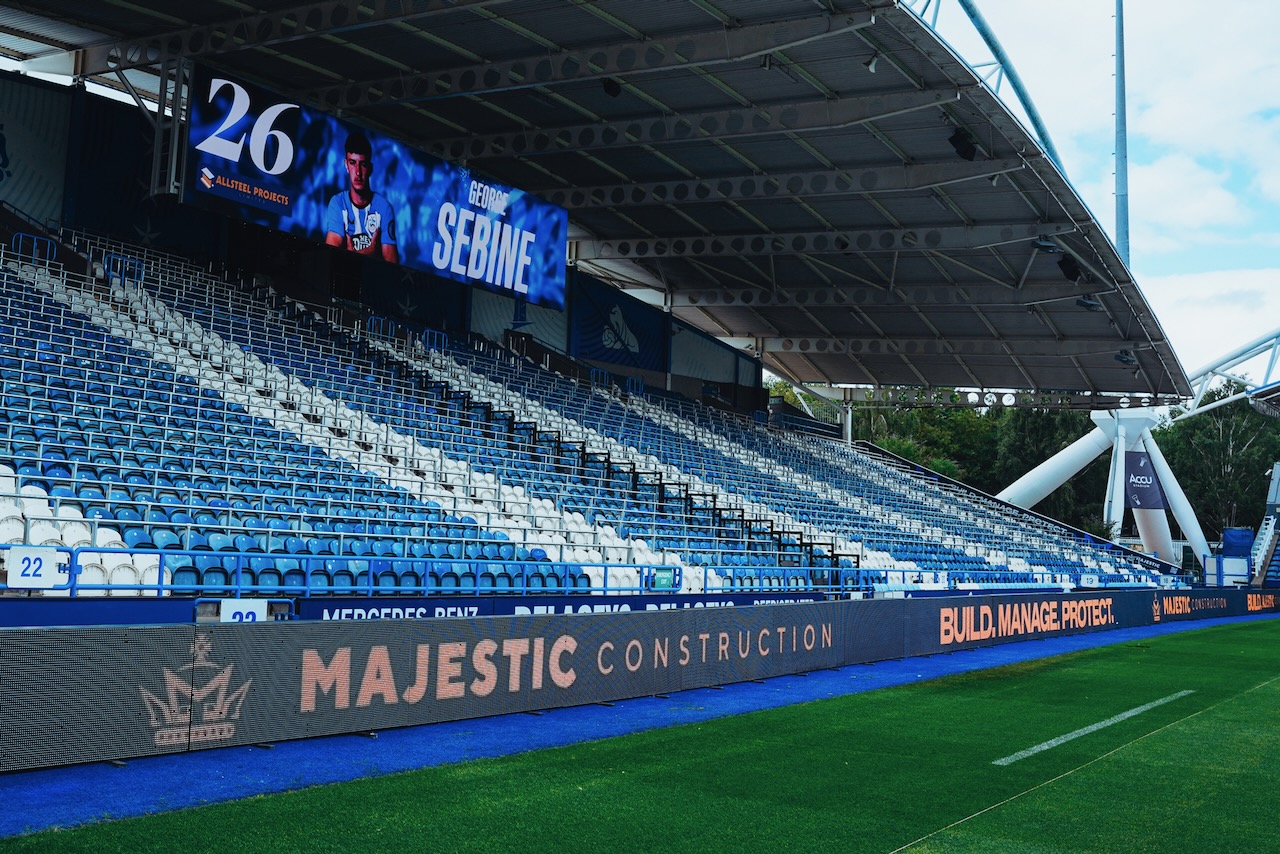
Majestic Construction has installed a new rail-seating safe standing system in the South Stand at Huddersfield Town’s Accu Stadium, using a single continuous rail barrier in front of existing seats with individually numbered standing positions to improve crowd control and reduce overcrowding risk. The contractor, now renewed as Huddersfield Town’s official construction partner under a new two-year agreement to at least the 2026/27 season, has previously delivered a new press area, additional directors’ seats, a large screen and fixed water stations. Huddersfield Town now joins six other EFL League One clubs adopting safe standing.
Hardies Chartered Surveyors has acquired Storrier & Donaldson Quantity Surveyors, bringing owner Robert Currie into Hardies’ Glasgow operation as a consultant partner alongside the Shepherd and Hardies team. Storrier & Donaldson adds more than 50 years of UK-wide cost management experience on hospital ward refurbishments, public libraries, golf courses, major capital frameworks and large commercial schemes, plus specialist work on historical and listed buildings. The deal materially strengthens Hardies’ quantity surveying capacity in Glasgow and the west of Scotland, particularly for complex, multi-funding conservation, refurbishment and new-build projects.
Blade Lifting and Logistics has placed a multi-unit order with Böcker UK for long, lightweight truck-mounted cranes, taking initial delivery of an AK 48 with a 3‑tonne capacity and 49‑metre boom. The AK 48 features a high-output hydraulic system enabling rapid self-assembly, hook speeds of up to 60 m/min and fast slewing/boom movements suited to tight urban and industrial sites. Further Böcker units are scheduled for delivery in 2026 and 2027, signalling a longer-term fleet shift towards compact, high-reach aluminium cranes for UK lifting projects.
Groundforce Shorco modular hydraulic props are being used by Lashi Contractors to support a 35m by 46m, up to 6m-deep basement excavation for a 61-apartment development for Callisto Homes in Chatham, formed within a secant-piled wall and concrete capping beam. To deal with the sloping site and stepped capping beam, Groundforce dispensed with a waling beam and instead cast corbels into the capping beam, installing six knee-braced MP50, MP150 and MP250 props, including 23m-long MP250s with 813mm-diameter tubes. With a Victorian property on shallow foundations immediately adjacent, three braces carry Senceive wireless load monitoring via 3G gateway, providing continuous load data and SMS alerts if preset thresholds are exceeded.
AtkinsRéalis and Igloo Vision have delivered a 360° immersive visualisation facility at Sellafield’s RAICo1 centre in West Cumbria, accommodating around ten users and integrating remotely operated robotics with live data streaming to plan nuclear decommissioning. The system lets teams virtually walk restricted-area routes using real-time imagery from robotic platforms, with Sellafield estimating up to a 40% reduction in time spent in hazardous environments. Linked with the Immersion Room at Hinton House, Cheshire, the setup creates a connected ecosystem for simulation-based planning, training and rapid response to emerging site conditions.