Bridgewater Canal breach repair: design and construction risks for engineers
Reviewed by Tom Sullivan
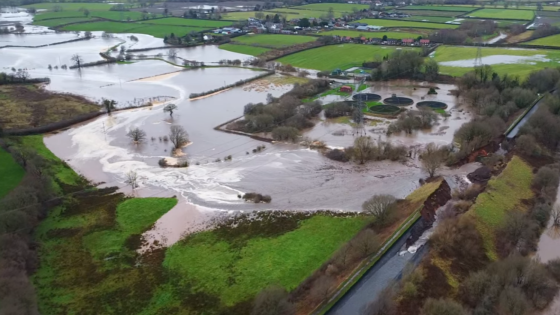
First reported on New Civil Engineer
30 Second Briefing
Repair of the Bridgewater Canal breach at Little Bollington has advanced to contractor procurement after completion of survey and design work on the failed embankment. Engineers have now defined the repair scope, likely including reconstruction of the canal lining, reinstatement of the earthworks profile and improved seepage control to prevent repeat overtopping or piping. Contractors will need to manage works adjacent to live water infrastructure and local transport routes, with temporary cofferdams, dewatering and staged reinstatement expected to be key construction risks.
Technical Brief
- Investigation would typically combine bathymetric survey, embankment geomorphology mapping and targeted boreholes with piezometer installation.
- Engineers will need continuous water-level and pore-pressure monitoring during works to detect renewed seepage or instability.
- Construction traffic and plant movements will require strict exclusion zones on weakened embankment crests and toes.
- Emergency response planning should include rapid evacuation routes, rescue equipment and man-overboard procedures for canal-side crews.
Our Take
Bridgewater Canal’s failure at Little Bollington sits within a relatively small subset of our 927 Infrastructure stories that are tagged simultaneously as Projects, Failure and Safety, signalling that lessons learned here are likely to be scrutinised for wider application to other UK waterway and embankment assets.
New Civil Engineer’s recent focus on the ‘data handover gap’ in BIM and asset management suggests that the Bridgewater Canal repair procurement could be an early test of how well digital records are captured and transferred for linear water infrastructure, not just for highways and bridges.
Given New Civil Engineer’s coverage of proposals like a National Bridge Retrofit Library, the Bridgewater Canal incident is the sort of failure case that could ultimately feed into shared retrofit and inspection guidance for ageing canal structures and embankments, particularly in semi-rural regions such as Little Bollington.
Prepared by collating external sources, AI-assisted tools, and Geomechanics.io’s proprietary mining database, then reviewed for technical accuracy & edited by our geotechnical team.
Related Articles


Related Industries & Products
Construction
Quality control software for construction companies with material testing, batch tracking, and compliance management.
Mining
Geotechnical software solutions for mining operations including CMRR analysis, hydrogeological testing, and data management.
QCDB-io
Comprehensive quality control database for manufacturing, tunnelling, and civil construction with UCS testing, PSD analysis, and grout mix design management.