Sizewell C–Rullion early careers deal: workforce signals for project teams
Reviewed by Joe Ashwell
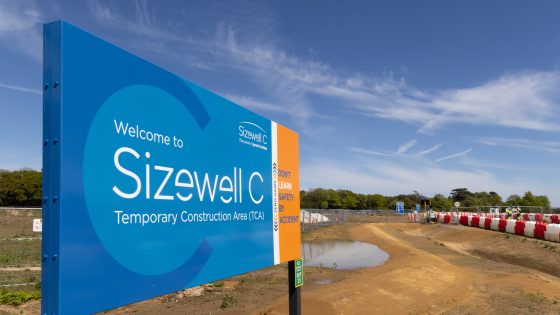
First reported on New Civil Engineer
30 Second Briefing
Sizewell C has appointed recruitment provider Rullion to run its early careers programme as the Suffolk nuclear project ramps up workforce planning for construction and commissioning. The partnership targets a long pipeline of apprentices, graduates and trainees across civil, mechanical, electrical and nuclear disciplines to support delivery of the twin EPR units and associated marine and civils works. For contractors and consultants, the move signals upcoming demand for site-ready junior engineers, technicians and project controllers familiar with nuclear-licensed site requirements and large-scale concrete and earthworks operations.
Technical Brief
- Workforce planning now needs to align with multi-year nuclear construction schedule, including civil, mechanical and commissioning peaks.
- Recruitment framework will need to interface with Tier 1 contractors’ own labour agreements and site induction regimes.
- For geotechnical and civils contractors, structured pipelines reduce reliance on transient agency labour during peak pour seasons.
Our Take
Sizewell C already features in multiple recent items in our database on major geotechnical and civil contracts, suggesting that early careers recruitment via Rullion is likely to feed directly into packages being delivered by firms such as Balfour Beatty Ground Engineering, VSL Systems (UK) and Bachy Soletanche.
With AtkinsRéalis holding a five-year framework for permanent civil works at Sizewell C, structured early careers pipelines give both the client and its tier 1 designers a clearer route to develop project-specific skills rather than relying on a tight external market for nuclear-experienced engineers.
Given the Public Accounts Committee’s scrutiny of Sizewell C’s cost and delivery risks, a formalised early careers strategy signals to government and regulators that the project is trying to de-risk labour availability and capability, which is often a hidden driver of schedule slippage on large UK infrastructure schemes.
Prepared by collating external sources, AI-assisted tools, and Geomechanics.io’s proprietary mining database, then reviewed for technical accuracy & edited by our geotechnical team.


