Geomechanics, Streamlined.
© 2026 Geomechanics.io. All rights reserved.
EDF has approved a two-year life extension for its Hartlepool and Heysham 1 advanced gas-cooled reactor stations, keeping both 1970s-vintage plants in operation until 2030 instead of closing in 2028. The decision secures several gigawatts of baseload capacity on the UK grid, deferring decommissioning and major dismantling works on the reactor pressure vessels, graphite cores and reinforced concrete biological shields. Civil and structural teams will need to manage ageing mechanisms in pre-stressed concrete, containment structures and cooling water systems under extended inspection and maintenance regimes.
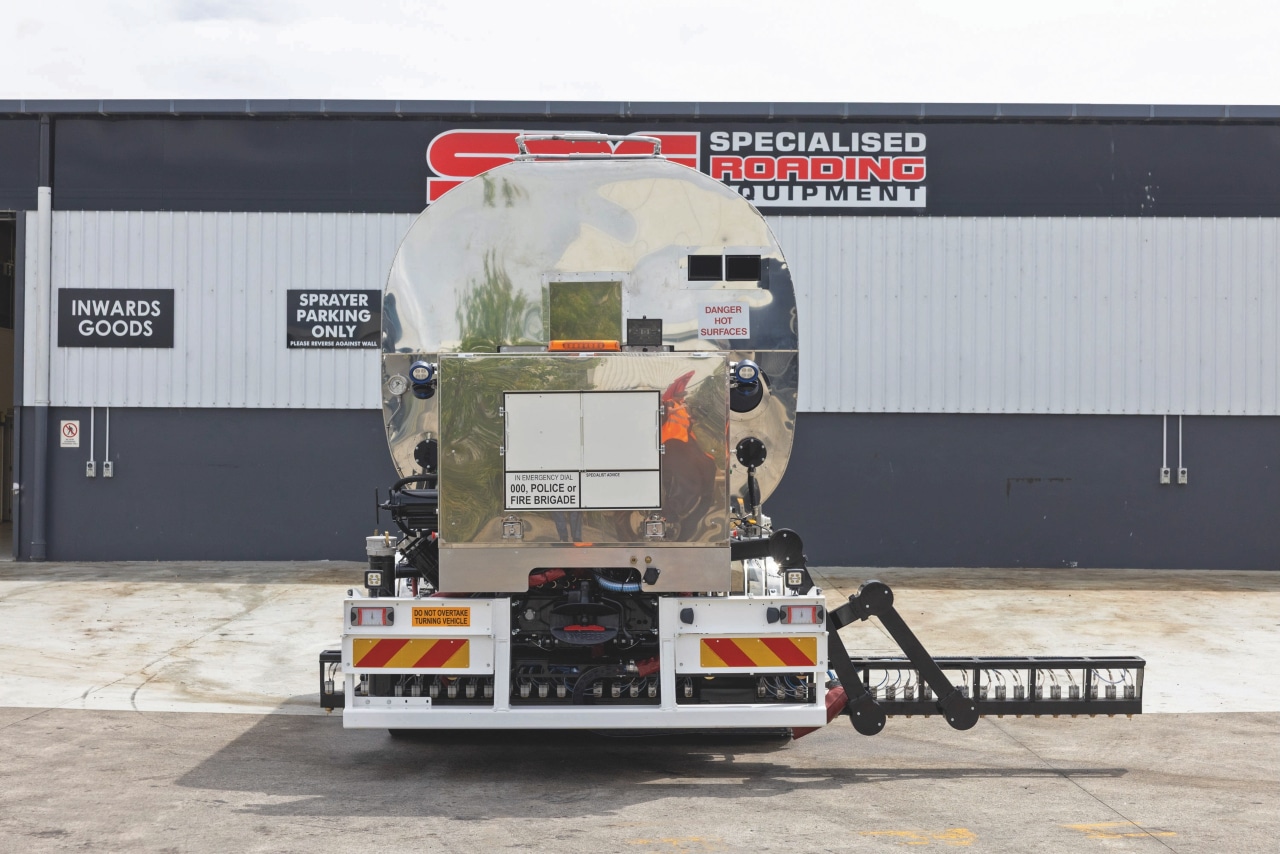
Specialised Roading Equipment is rolling out redesigned bitumen sprayers with remote-controlled spray bars, enclosed operator platforms and automated calibration to cut exposure to hot binders and live traffic. The New Zealand-based manufacturer is also running on-site training on safe spraying windows, nozzle selection and pressure–temperature control to reduce overspray and fume risk on high-speed corridors. For road contractors, the shift towards automation and operator separation has direct implications for traffic management layouts, plant selection and compliance with evolving spray seal safety standards.
Footballers and netballers across Victoria will wear blue arm bands this weekend as part of the Transport Accident Commission’s Road Safety Round, promoting safer driving behaviour and commemorating road fatalities across the state. Campaign ambassador and Hawthorn AFL forward Nick “the Wizard” Watson launched the initiative with AFL Victoria and TAC representatives, targeting community clubs that are heavily reliant on regional and peri-urban road networks. For transport and civil planners, the campaign keeps political and funding attention on high-risk local roads rather than only major arterials.
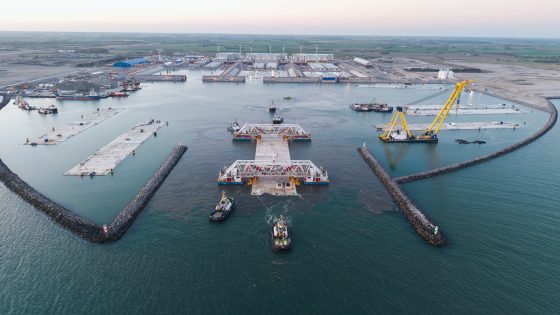
Immersion of the first of 89 tunnel elements for the Fehmarnbelt fixed link between Denmark and Germany was completed in May after a multi‑day marine operation, marking a key milestone for the 18km immersed tunnel. Project director Guy Taylor details how factory-style offsite production of standardised concrete elements and tightly sequenced immersion campaigns are being used to control programme and cost on what will be the world’s longest immersed road and rail tunnel.
Coastal and maritime engineering in the Middle East is shifting from headline megaprojects such as artificial islands and deepwater container terminals towards managing large portfolios of existing breakwaters, quay walls and navigation channels. Engineers are focusing on asset life extension under aggressive saline and thermal conditions, using tools such as long-term bathymetric monitoring, probabilistic wave and overtopping analysis, and upgraded armour units or corrosion-resistant reinforcement. The region’s experience with extreme design sea levels and rapid land reclamation is feeding back into guidance on whole-life performance, inspection regimes and retrofit strategies for more mature coastal markets.
Graham has completed a new bridge over the A10 in Cambridgeshire, providing a direct link between the Waterbeach New Town development and Cambridge city centre and removing a key severance point on the strategic route. The structure spans the dual carriageway to carry active travel and local traffic between the new settlement and existing urban area, reducing reliance on A10 junctions already operating near capacity. For designers and contractors, the scheme signals further A10 corridor upgrades tied to large-scale housing growth and associated junction, drainage and earthworks packages.
Bowmer + Kirkland has reached a key construction milestone at its Derbyshire headquarters, with chairman Jack Kirkland laying the final brick on one of the new office buildings in the multi-phase redevelopment. The scheme replaces legacy accommodation with modern office space designed to current UK building and energy standards, signalling a long-term commitment to the site as an operational hub. For contractors and consultants, the project suggests upcoming fit-out, services integration and external works packages as the campus build-out progresses.
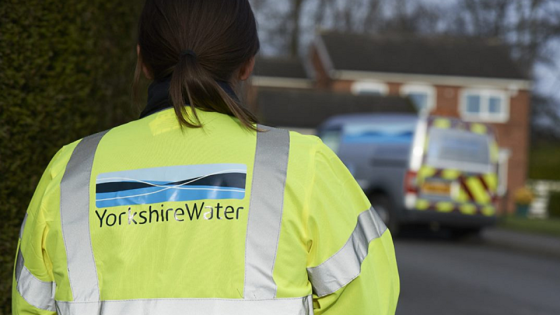
Yorkshire Water has set up an £80M multi-supplier framework for technical consultancy and design to support its AMP8 capital programme from 2025 to 2030, covering treatment works, trunk mains, sewers and resilience upgrades. The framework will be used to develop optioneering, outline and detailed designs for both above- and below-ground assets, including geotechnical assessments for new pipelines and structures, hydraulic modelling, and civil/MEICA integration. Consultants will be appointed on a call-off basis, giving early design input on schemes before construction procurement.
Galliford Try has secured a £47.5M contract from Thames Water to deliver the Camberley Sewage Treatment Works Flow Compliance project, upgrading a works previously criticised as a “cess-pit”. The scheme will focus on improving hydraulic capacity, process performance and resilience to meet tighter environmental permits and storm-flow compliance obligations. Civil and MEICA scope is expected to include new or uprated inlet works, flow control structures and treatment units, with construction staged to maintain full treatment during the upgrade.
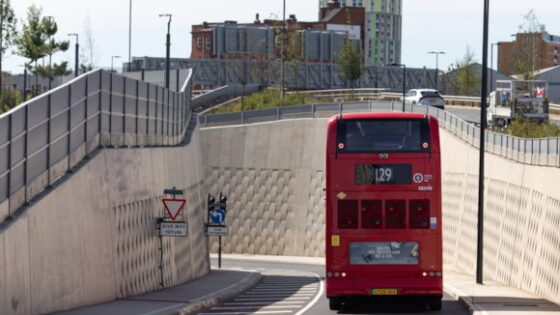
Peak journey times through the Silvertown and Blackwall tunnels have fallen by up to 58% in the first year since the 1.4km twin-bore Silvertown Tunnel opened in April 2025, according to TfL’s Silvertown & Blackwall Tunnels Monitoring Report. The new under-river crossing, carrying two lanes of traffic each way beneath the Thames between Silvertown and Greenwich Peninsula, has redistributed flows previously constrained at Blackwall. TfL reports more reliable peak travel times and reduced queuing on key approach corridors, with ongoing monitoring of traffic volumes, air quality and user charging impacts.
The London Borough of Ealing has awarded Preston-based consultants XAIS-PTS a £33M contract for road condition monitoring services under Lot 2 of its Highways and Transport Services Framework. The framework will cover systematic pavement condition surveys and asset data collection across the borough’s highway network, informing prioritisation of resurfacing, patching and structural maintenance. For geotechnical and pavement engineers, the deal signals sustained demand for high-resolution condition data to optimise lifecycle planning and justify capital works on urban carriageways and footways.
Barhale has completed Anglian Water’s first dedicated treatment plant to strip the toxic insecticide Cypermethrin from raw water before it enters the supply network, targeting a contaminant that is highly toxic to aquatic life at very low concentrations. The scheme introduces a bespoke process stream specifically configured for Cypermethrin removal, rather than relying on conventional granular activated carbon or standard pesticide treatment lines. For water engineers, the project signals a move towards contaminant-specific process trains as more persistent synthetic pesticides appear in catchments.
ProTX has launched the Arresta 100, claimed as the world’s first vehicle arrestor purpose-built for temporary static works, targeting the “missing middle” between cones/signs and full concrete barriers on short-duration sites. Designed for rapid deployment and removal around low-speed lane closures and shoulder works, the modular system is intended to physically stop errant vehicles rather than merely deflect them, addressing around 800 annual roadwork site crashes in Australia, including 18 fatalities and 245 serious injuries.
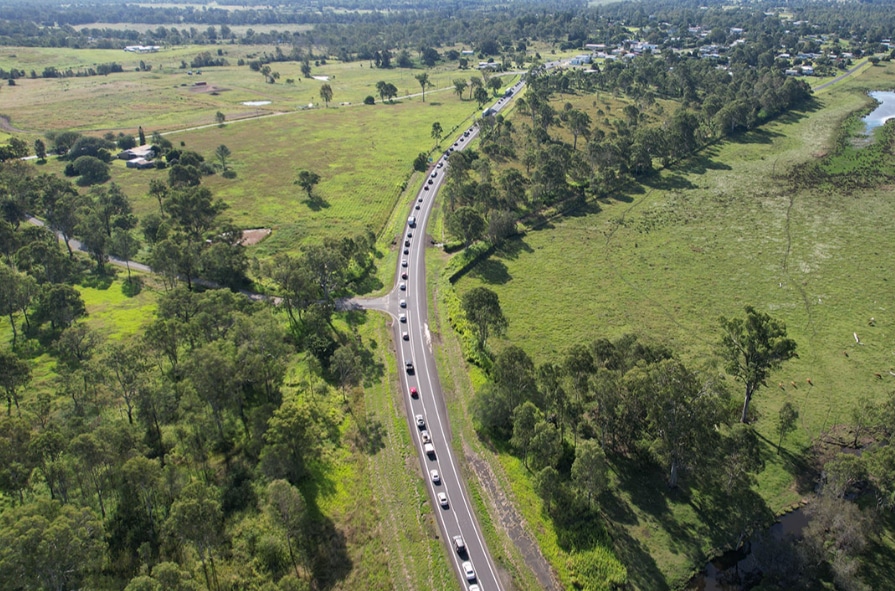
Procurement has begun for the main construction contract on Queensland’s Tiaro Bypass, an 8.5‑kilometre, four‑lane highway realignment east of Tiaro on the Bruce Highway north of Brisbane. The project will create a new divided carriageway section, removing through‑traffic from the existing town main street and improving continuity on this nationally significant freight and cyclone evacuation route. Geotechnical and civil design will need to address greenfield earthworks, floodplain behaviour and tie‑ins to existing Bruce Highway geometry and pavement structures.
A second tranche of 24 projects has secured funding under Western Australia’s Regional Road Safety Program after its scope was expanded to include local government roads. Works will target run-off and head-on crash risks through measures such as shoulder sealing, audio-tactile line marking and roadside hazard removal on regional routes managed by councils. For designers and asset managers, the funding signals continued priority for low-cost, network-wide safety treatments over isolated major upgrades, with implications for pavement widening, drainage adjustments and clear zone management.
The Games Independent Infrastructure and Coordination Authority has awarded BMD the early works contract for the new Brisbane Stadium, a key package ahead of the Brisbane 2032 Olympic and Paralympic Games. Scope includes bulk earthworks, erosion and sediment controls, and semi-permanent site infrastructure, setting geotechnical parameters and drainage behaviour before main construction. Contractors will need to manage sediment basins, staged cut-and-fill and temporary stormwater controls carefully, as these early levels and ground treatments will lock in foundation options and future stadium access geometry.
SurveyX (UK), a Yorkshire-based start up led by project manager Joe Walshaw with over 30 years’ survey and ground engineering experience, is launching a suite of underground investigation services for tunnels, utilities and drainage networks. The firm will combine topographical surveys, ground penetrating radar, utility tracing, CCTV inspections and 3D building scanning to capture precise spatial data, structural details and defect locations for repair or future use. SurveyX has already secured contracts in Kent and is targeting UK-wide coverage within two years, leveraging AI- and internet-enabled workflows to accelerate ground exploration and design planning.
Finning has completed a certified rebuild of a 2011 Cat D6T dozer for waste operator Enovert, stripping the 9,511‑hour machine to chassis and renewing the powertrain and hydraulics at its Cannock rebuild, repair and response centre. The work combined new and remanufactured components, including engine, transmission, torque converter, final drives, hydraulic pumps and motors, cylinders, hoses, main control valve, hydraulic tank, undercarriage, cab and wiring harness, plus full repaint. The dozer returns to landfill duty with a five‑year/8,000‑hour powertrain and hydraulics warranty, extending asset life at lower capex than a new unit.
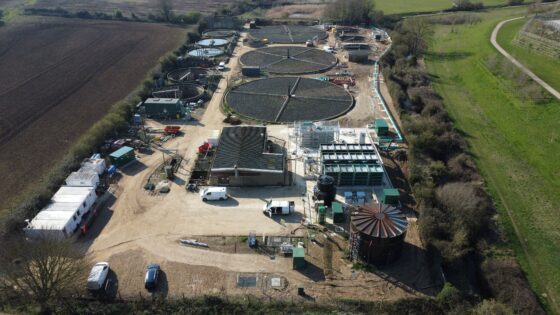
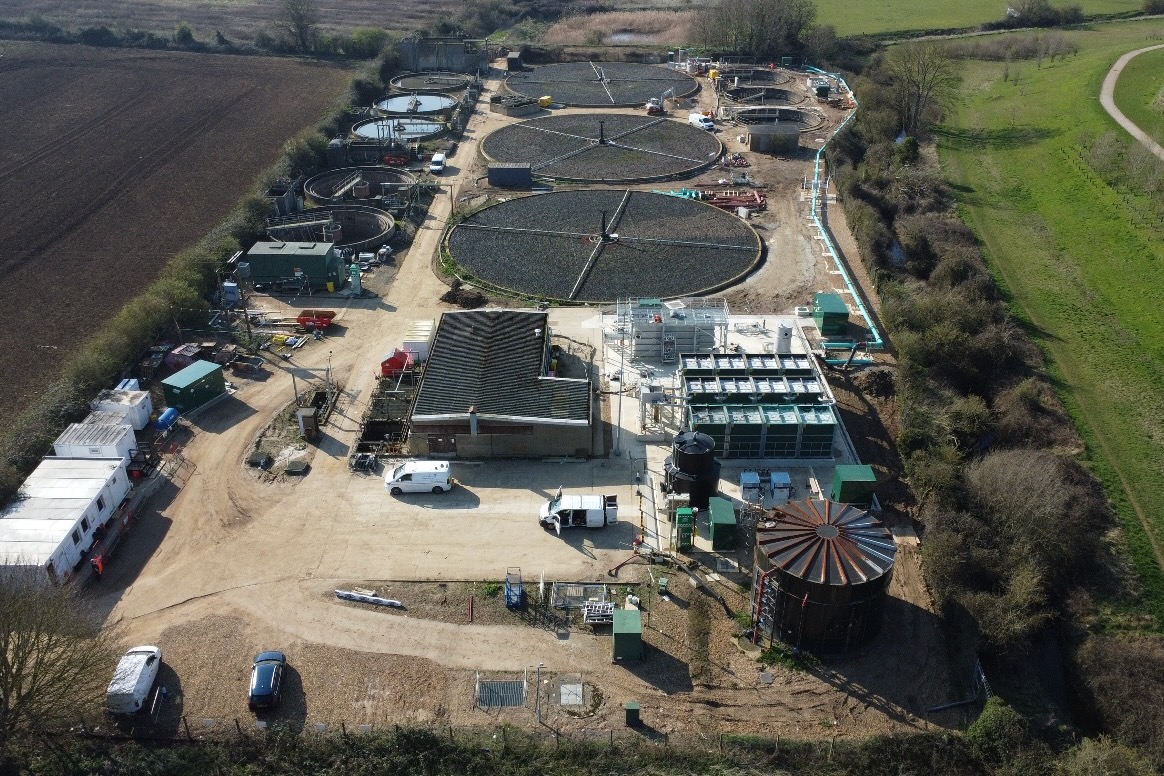
Barhale has delivered Anglian Water’s first tertiary treatment plant targeting the pesticide Cypermethrin at Raunds Water Recycling Centre near Wellingborough, as part of a £7.8M integrated upgrade. The process uses a purpose-designed cloth filter with ferric dosing, including a 30m³ storage tank and downstream dosing pumps, to strip Cypermethrin to very low concentrations. To meet the new 1.5mg/l ammonia consent, Barhale installed 12 modular nitrifying SAF units with dedicated blowers, a new MCC, an interstage pumping station, and new structural bases, pipework and maintenance access routes.
Graham has completed a 90m-long, 150t steel active travel bridge over the A10, linking Waterbeach New Town to Cambridge Science Park for pedestrians, cyclists and equestrians, commissioned by developer Urban&Civic. Appointed principal contractor in early 2025, Graham fabricated the structure off-site and installed it in modular sections to minimise closures on one of the region’s busiest roads. The bridge, opened by MP Charlotte Cane, ties into upgraded Mere Way, enabling a largely off-road 25-minute cycle to Cambridge city centre and forming part of a wider sustainable transport package.
Atlas Copco has updated its ECO Controller energy management system to improve the efficiency of job site battery energy storage systems when operating in hybrid setups. The controller now integrates with third-party generator controllers from DSE, CAT, Cummins, and ComAp, allowing coordinated load sharing and automated start/stop strategies. For temporary power on construction and infrastructure sites, this enables smaller generator sizing, reduced idling, and better utilisation of battery capacity without locking contractors into a single OEM.
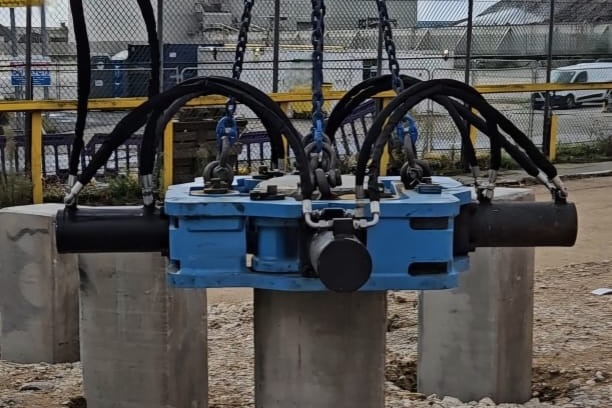
National Pile Croppers has launched the PC 400, a hydraulic cropper designed specifically for 300–400 mm pre-cast piles with four or more reinforcing bars, extending its range beyond traditional cast-in-place applications. The unit has already been deployed by Careys on a Holcim project, giving early site validation of its performance on heavily reinforced pre-cast sections. For contractors, the tool targets faster, more controlled pile head trimming on standard pre-cast sizes, reducing manual breaking and potential damage to reinforcement.
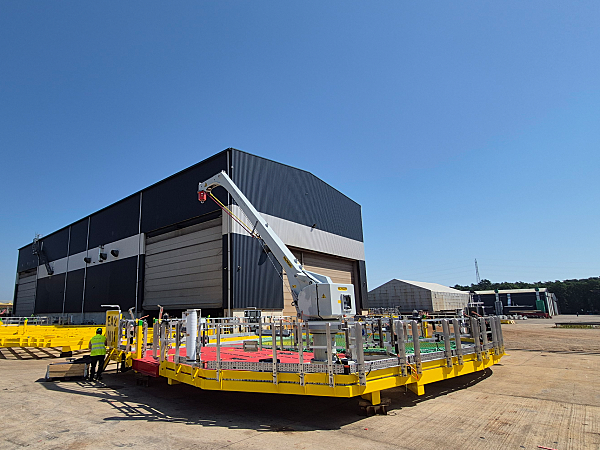
Smulders will fit Palfinger PF 160-5m marine davit cranes to 64 turbines under construction for ScottishPower Renewables’ 960 MW East Anglia Two offshore wind farm off the Suffolk coast, to handle materials and support maintenance on turbine platforms. The fabricator has already ordered 96 identical units for the adjacent East Anglia Three project, with the two farms together expected to power about 2.25 million homes. For offshore contractors, standardising crane types across both sites should simplify lifting procedures, spares, and lifecycle service planning.
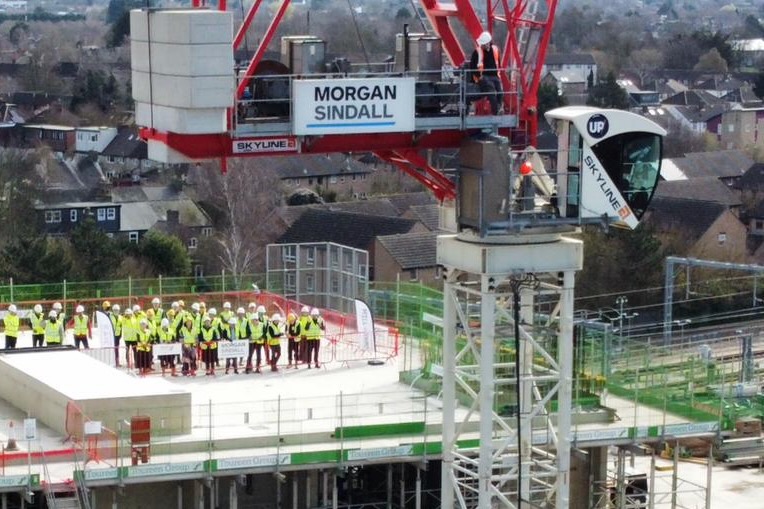
Morgan Sindall reported a 21% rise in adjusted pre-tax profit to £116.1m on first-half 2026 revenues up 8% to £2.562bn, driven primarily by its construction and fit-out divisions. Partnership housing revenue fell 14%, signalling softer demand or delayed schemes in that segment despite stronger commercial and public sector project pipelines. For contractors and consultants, the figures point to resilient UK building and interiors workloads, with more cautious conditions in mixed-tenure and affordable housing delivery.