Scape has issued the Tender Notice for its next-generation Construction Works and Services Framework, valued at £8bn over a four-year term for public sector building and infrastructure projects across the UK. The framework will appoint multiple principal contractors to deliver new-build, refurbishment and civil engineering works under standardised NEC-based contracts, with call-off projects expected to range from small capital schemes to major programmes. Bidders will need to evidence carbon reduction strategies and social value delivery, which will directly influence scoring alongside cost and programme capability.
Australia’s flexible pavement sector is ramping up new asphalt plants, regional depots and storage to avoid a repeat of March 2026, when shipping disruption left national bitumen supply at genuine risk. The Australian Flexible Pavement Association reports members have stabilised output by diversifying import terminals, expanding bulk bitumen tanks and upgrading high-capacity drum and batch plants across multiple states. For road owners and contractors, this added redundancy in binders, mixing and haulage capacity reduces programme risk on large resurfacing and rehabilitation contracts.
Peter Ali, Chief Executive Officer of Municipal Works Australia, outlines mounting challenges for councils in managing ageing local road pavements, kerb-and-channel drainage and ancillary transport assets under tightening operating and capital budgets. He stresses the need for closer collaboration between municipal asset managers, contractors and suppliers on whole‑of‑life pavement design, condition data, and targeted maintenance rather than default full‑depth reconstruction. An upcoming Municipal Works Australia event is flagged as a forum to share case studies on low‑cost rehabilitation techniques, improved asset management systems and procurement models that help councils deliver more network kilometres within fixed rate‑capped revenues.
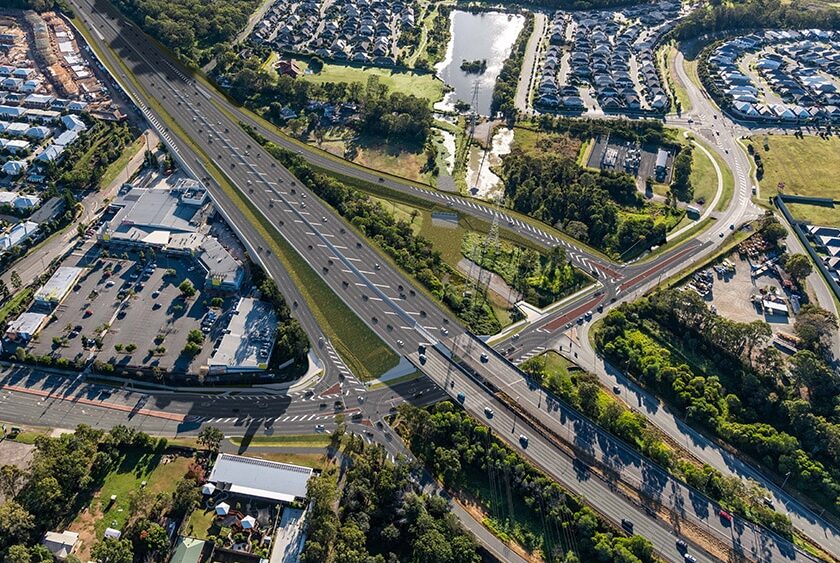
Works will soon begin on the Forest Road Intersection Upgrades in Trevallyn, targeting a key junction on the recently duplicated West Tamar Highway in northern Tasmania. The works form part of a broader program of targeted intersection and access improvements along the highway, which now carries dual carriageway traffic through several sections. For designers and contractors, the project signals continued investment in localised safety treatments and congestion reduction at nodes rather than major new greenfield corridors.
Upgrades are now complete on the Station Creek and Boyne River bridges on the Bruce Highway near Benaraby, south of Gladstone, under the joint Federal–Queensland programme to “fix the Bruce”. Works included critical concrete repairs and associated structural rehabilitation aimed at improving bridge safety and durability on this key freight and passenger corridor. For asset managers and bridge engineers, the milestone signals ongoing staged renewal of ageing concrete bridge stock on one of Queensland’s highest‑traffic highway sections.
Municipal Works Australia is launching LoGov 2026 in Queensland as a dedicated forum for council engineers, works managers and contractors responsible for road networks, drainage, parks and community facilities. The event will focus on practical issues such as whole‑of‑life asset management, plant and fleet optimisation, and maintaining ageing pavements and stormwater systems under constrained local government budgets. For geotechnical and civil practitioners, it signals a concentrated venue to compare maintenance strategies, materials choices and contracting models directly with neighbouring councils and key suppliers.
Mott MacDonald, with Arup and SMEC, has led a 30‑year Auckland Motorway Strategic Plan for Waka Kotahi NZ Transport Agency, creating a decision‑led framework that integrates transport modelling, operations, economics and stakeholder inputs into a single investment roadmap. The plan prioritises optimising the existing motorway network, targeted capacity increases and wider system improvements so roads, public transport and freight corridors operate as a coordinated system rather than relying on continual widening. For civil and transport engineers, this signals future funding favouring network optimisation, resilience and smaller, high‑impact upgrades over large greenfield expansions.
Tenders are being sought by the City of London for a £60m strip-out and renewal of MEP infrastructure at the Barbican Centre, covering multiple basement plant levels and public floors in the live arts venue. Works include removal of life-expired services, installation of new plant, complex distribution and containment, and staged isolation and shutdown of live building systems while interfacing with retained plant. Construction is scheduled from February 2027 to September 2029, with a possible extension to March 2030, and up to four bidders will be shortlisted from requests to participate submitted by 12 October.
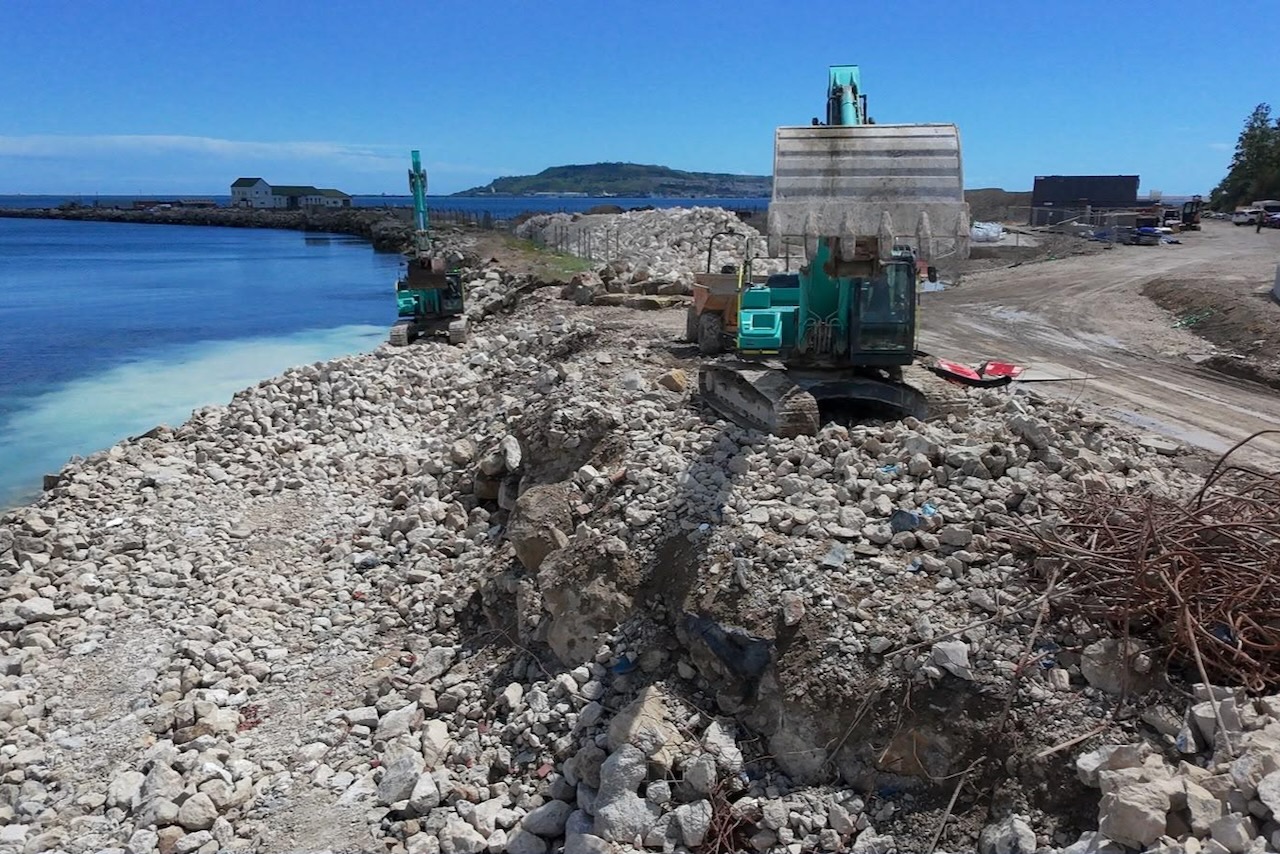
Holcim is supplying 12,000 tonnes of limestone armourstone from Torr Quarry to Juno MMXX’s £52m Sanctuary development in Weymouth, reinforcing sea defences on a former MoD coastal site that will host 141 new homes. The rock armour ranges from 45 mm stone to individual boulders over 10 tonnes, placed one-by-one by specialist contractors to form the sea defence wall. Logistics use JF Pearce’s converted shipping-container lorries to move the oversized rock from Somerset, as part of an £8m coastal defence package running from June to September 2026.
G&J Bircham has added two 2.6‑tonne Hyundai HX25Az mini excavators to its groundworks fleet via East Anglian dealer Tobin Plant, selecting the largest Hyundai minis that can still be towed behind a light commercial vehicle or pick‑up for rapid redeployment between housebuilding sites. The Norfolk contractor now runs almost entirely Hyundai, including five HX85A 8.5‑tonne excavators and two 13‑tonne machines, standardised with Strickland hydraulic quick hitches and bucket sets. Hyundai supplies the HX25Az with a three‑year warranty and larger, comfort‑focused cabs that operators prefer.
Bellway has started construction of 484 homes across three developments – Berry Hill Vale, Berry Hill Lea and Genesis at Berry Hill – within the Lindhurst neighbourhood on the edge of Mansfield, adding 314 private units and 170 affordable homes for rent or shared ownership. Berry Hill Vale and Berry Hill Lea are scheduled to open to buyers in the autumn, with Genesis at Berry Hill following early next year, forming the second phase after 146 earlier units at Berry Hill. The wider Lindhurst masterplan allows for up to 1,700 homes, a primary school, local centre and public open space, supported by Bellway’s new timber-frame facility in nearby Sutton-in-Ashfield.
SCAPE has opened procurement for a five-lot, £8bn construction framework spanning England, Wales and Northern Ireland, with three delivery partners to be appointed to each lot. Lot 1 and Lot 2 in England cover general construction and residential works respectively, each handling projects from small-scale schemes up to those exceeding £500m, with category values of £4bn and £2bn. Lot 3 in Wales is capped at projects over £150m within a £1bn total, while Northern Ireland’s Lots 4 and 5 split work at £15m project value, totalling £1bn.
E J McGovern Crane Hire used Pewag below-the-hook lifting gear, including a 20‑tonne load balancer supplied by Rope & Sling Specialists, to install a 7,000kg air source heat pump on a rooftop in Oxford. The lift required precise load equalisation and controlled rotation to position the large unit within tight rooftop tolerances without overloading connection points. The choice of a 20t balancer for a 7t load provides substantial safety margin and flexibility for similar heavy MEP rooftop installations.
Recycled glass panel homes have secured planning approval near Closeburn, Dumfries, allowing VASO Global to build four dwellings and a home-working space using off-site manufactured panels made entirely from recycled glass. The 60,000-square-feet Irongray Park facility will fabricate and flat-pack the structural panels for rapid on-site assembly, targeting low operational energy, high thermal comfort in both summer and winter, and affordable rents. Backed by South of Scotland Enterprise, Nith Valley Leaf Trust and South of Scotland Community Housing, the scheme serves as a full-scale demonstrator for VASO’s modular, low‑carbon housing system.
Railpen has secured planning consent for phase 2 of its High Wycombe X industrial and logistics park at Cressex Business Park, delivering about 145,000 sq ft across five units on a 360,000 sq ft site and targeting completion in Q2 2027. Booker has pre-let 47,300 sq ft and Activeon 25,600 sq ft, both on 20-year leases, signalling strong long-term demand for the scheme. The development is targeting BREEAM Excellent, EPC A+ and net zero carbon in construction, with a third 120,000 sq ft phase already submitted for planning.
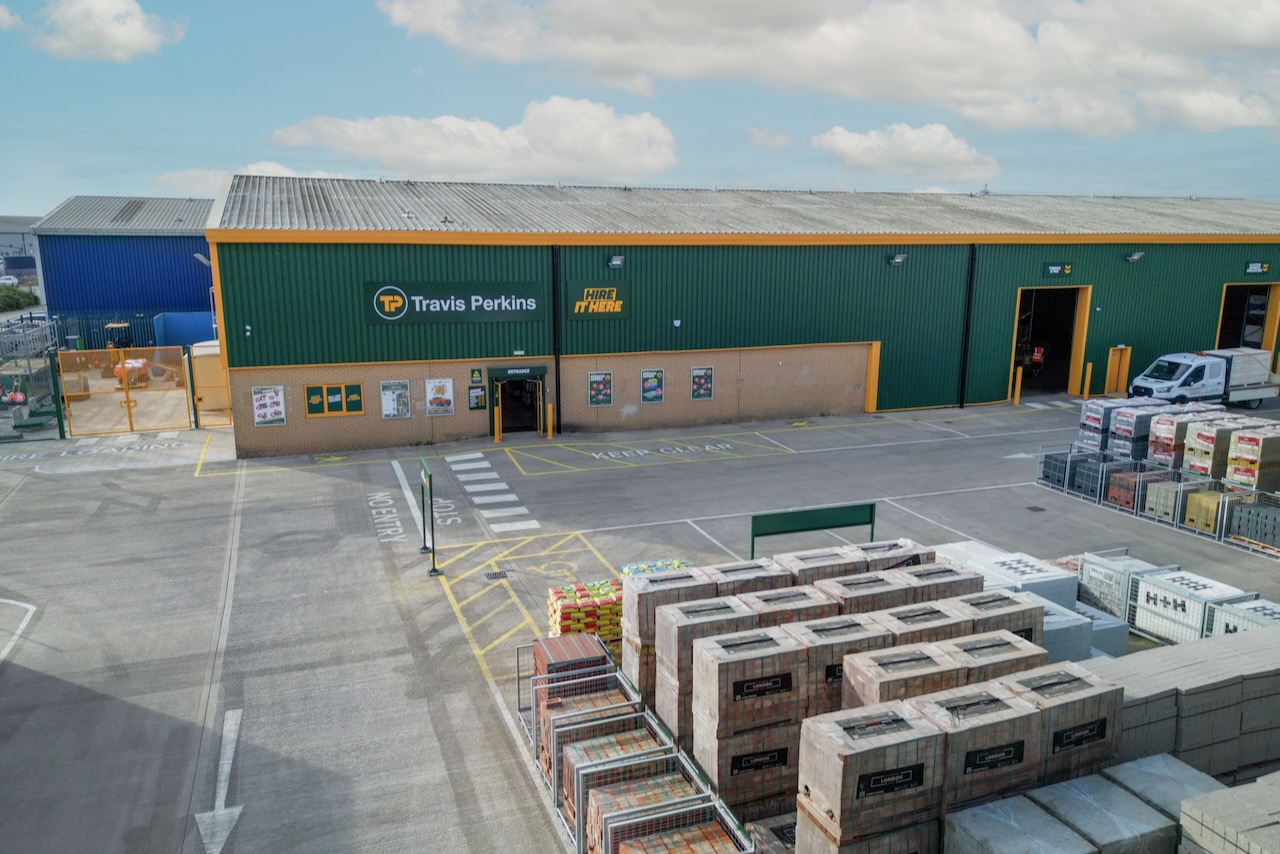
Travis Perkins has relocated its Corby branch to a 1.5‑acre, purpose-built site, adding six jobs to create a nine-strong team and significantly increasing on-site stock for core building materials and civils products. The branch now includes a Travis Perkins Hire facility for the first time in Corby, plugging into the company’s national network of more than 270 hire locations and giving local contractors same-day access to professional tools and equipment. Additional services include a brick library, landscaping display, estimating support, click-and-collect and next-day delivery across Northamptonshire.
Sunward has appointed Derbyshire-based EP Industries as its dealer for Derbyshire, Nottinghamshire, Lincolnshire and Yorkshire, covering mini, midi, large and wheeled excavators, compact track and skid steer loaders, wheel loaders, scissor lifts and mobile work platforms. Founded in 1988, EP Industries brings mobile plant experience across mining, quarrying and heavy industry, with in-house rail engineering, upgrades and testing, machining, welding, and mobile plant repair and maintenance. The firm holds SSIP Health & Safety Approval through PQS, which will reassure civils, rail, utilities and groundworks contractors on compliance and site risk management.
Luceco has appointed Dr Thorsten Müller as chief executive officer, effective 1 September, signalling a leadership shift at the UK-based lighting and electrification specialist. Müller previously served as divisional chief executive for safety at Halma and has held senior roles at ABB, Osram and Bosch, bringing experience in lighting, electrification and energy management technologies. His appointment suggests continued emphasis on product innovation and systems integration for LED lighting, controls and power distribution in building and infrastructure projects.
CJ Construction (Wales) is delivering its first direct commercial development at Mardon Park, Baglan, converting 1.37 acres of brownfield land within the Port Talbot Waterfront Enterprise Zone into more than 20,000 sq ft of speculative commercial space. Backed by a £2.35m package from the Development Bank of Wales, including a £1.37m grant and a £980,000 Wales Commercial Property Fund loan, the build is scheduled for roughly six months. Units are being designed for flexible occupation, either as a single large tenancy or subdivided for multiple smaller businesses, creating work for local subcontractors and suppliers.
Morgan Sindall has broken ground on the £23.6m Industrial Skills Hub (iSH) enterprise campus at Leconfield industrial estate in Cleator Moor, the first construction phase in a wider £50m regeneration programme for West Cumbria. Phase one will deliver two high-specification business units by the end of 2027, designed to host robotics, advanced manufacturing, engineering and digital technology firms linked to the Sellafield and Nuclear Decommissioning Authority supply chains. The Cumberland Council-led scheme, backed by Town Deal and Levelling Up funding, aims to concentrate industrial capability and skills development on a single campus site.
Approval has been granted for the Cambridge North Residential Quarter, delivering 425 blocwork-developed apartments (1–3 bedroom) on publicly owned brownfield land, forward funded by Grainger PLC under Network Rail’s Platform4 partnership. The next phase of Brookgate’s Cambridge North Masterplan, the scheme sits beside the existing 217-room hotel and commercial block housing Samsung, and is arranged around linear parks, pocket gardens and tree-lined streets. Designs prioritise pedestrian and cycle movement, leveraging direct rail links to Cambridge and London to suppress private car use.
Iranian state-linked hackers associated with the Islamic Revolutionary Guard Corps reportedly forced a “small” UK power station offline for four days, directly disrupting local electricity generation. The incident shows that even limited-capacity plants with industrial control systems can be disabled remotely, raising concerns over cyber‑hardening of SCADA, protection relays and remote access gateways across the UK grid. For civil and power engineers, it reinforces the need to integrate cyber‑security into plant design, grid interconnection studies and resilience planning, not just IT operations.
CrossCountry rail services have resumed after a power cut at its Birmingham control centre on Sunday 23 August shut down network-wide operations and caused “major disruption” to long-distance routes. The outage disabled central signalling oversight and traffic management functions, forcing widespread service suspensions and emergency timetabling. For rail and infrastructure engineers, the incident underlines the vulnerability of single control hubs and the need for resilient power supplies, redundant control systems and robust business continuity planning for integrated signalling and operations centres.
Queensland’s five‑year major projects pipeline, detailed in the QMCA’s 2025 report, is being reshaped by Queensland University of Technology research targeting two critical constraints: labour productivity and cost escalation across road, rail and water schemes. QUT teams are deploying digital twins for corridor planning, AI‑based earthworks optimisation and sensor‑equipped pavements to cut rework and improve construction staging on multi‑billion‑dollar highway upgrades. For contractors, the work points to tighter programme control, more reliable cost forecasts and earlier geotechnical risk detection on large brownfield expansions.
Geomechanics, Streamlined.
© 2026 Geomechanics.io. All rights reserved.