Desalination plant investment: design and grid constraints for UK engineers
Reviewed by Tom Sullivan
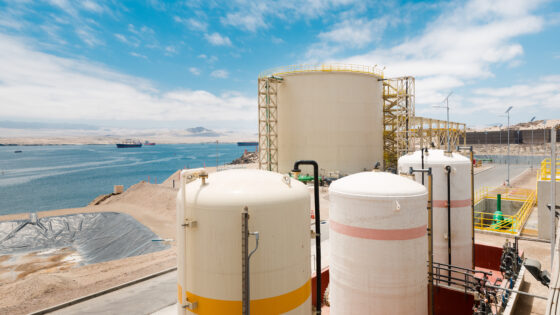
First reported on New Civil Engineer
30 Second Briefing
England’s 2026 hot, dry summer has pushed water companies to revisit large-scale seawater desalination, with schemes such as Thames Water’s previously shelved 150Ml/d Beckton plant back on the table. Developers face high capex, energy demand above 3kWh/m³ for reverse osmosis, and planning resistance over coastal intake/outfall structures and brine disposal. For civil and process engineers, the key constraints are grid connection capacity, integration with existing trunk mains and service reservoirs, and siting plants to avoid flood risk while remaining close to tidal water sources.
Technical Brief
- Environmental impact assessments are focusing on marine ecology impacts from intake screens, fish entrainment and brine density currents.
- Some utilities are evaluating co-location with power stations or energy-from-waste plants to use low‑grade waste heat.
- Planning risk is dominated by visual impact of large intake/outfall headworks and 24/7 plant noise envelopes.
Our Take
Within our 936 Infrastructure stories, relatively few focus on large-scale water supply resilience in England, so desalination sits alongside flood defence and wastewater upgrades as a niche but strategically important sub-theme for the United Kingdom.
New Civil Engineer’s recent coverage of BIM, CDEs and asset management platforms suggests that any new desalination plants in England will be expected to integrate tightly with digital asset management from day one, which can raise upfront development and procurement complexity even if it lowers lifecycle OPEX.
Prepared by collating external sources, AI-assisted tools, and Geomechanics.io’s proprietary mining database, then reviewed for technical accuracy & edited by our geotechnical team.
Related Articles


Related Industries & Products
Construction
Quality control software for construction companies with material testing, batch tracking, and compliance management.
CMRR-io
Streamline coal mine roof stability assessments with our cloud-based CMRR software featuring automated calculations, multi-scenario analysis, and collaborative workflows.
HYDROGEO-io
Comprehensive hydrogeological testing platform for managing, analysing, and reporting on packer tests, lugeon values, and hydraulic conductivity assessments.
GEODB-io
Centralised geotechnical data management solution for storing, accessing, and analysing all your site investigation and material testing data.