Majestic and Huddersfield safe standing: rail-seating design notes for engineers
Reviewed by Tom Sullivan
First reported on The Construction Index
30 Second Briefing
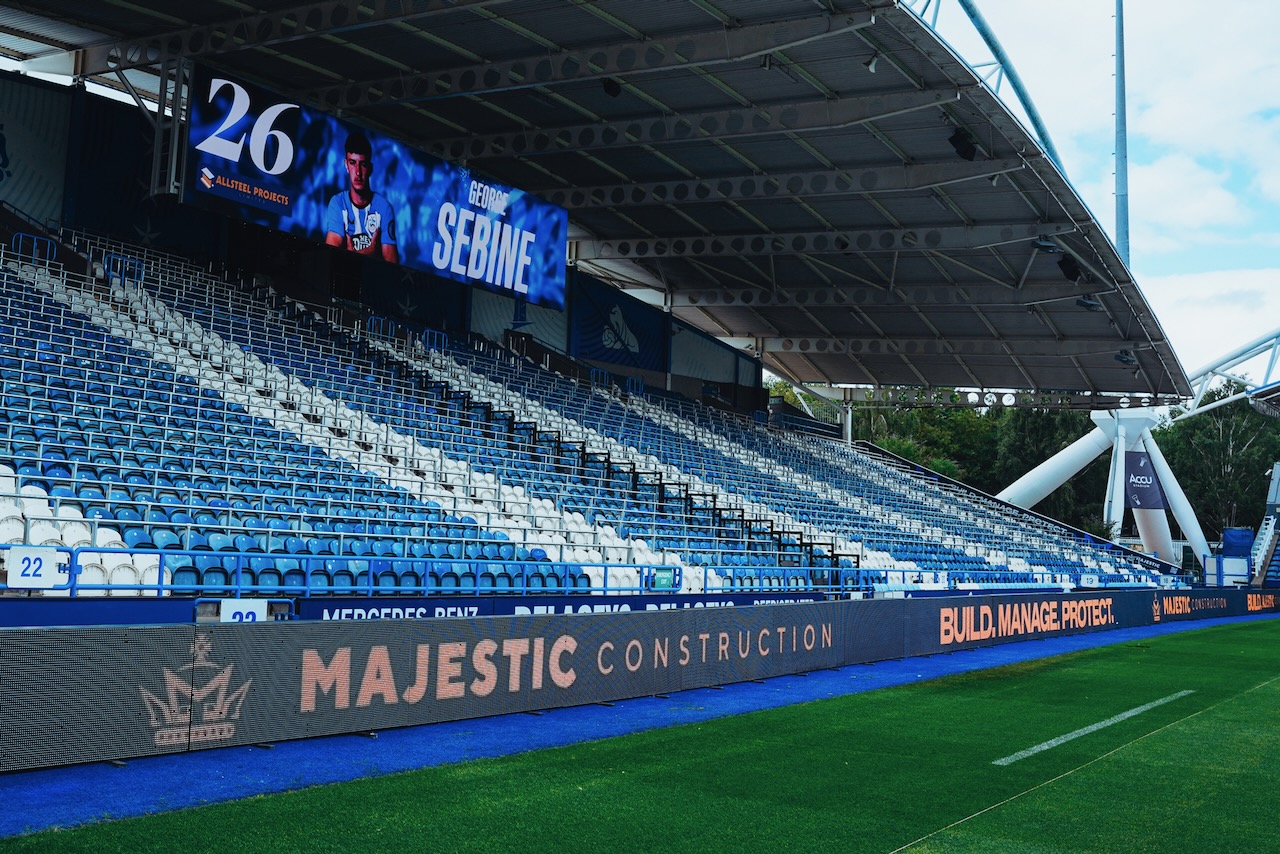
Majestic Construction has installed a new rail-seating safe standing system in the South Stand at Huddersfield Town’s Accu Stadium, using a single continuous rail barrier in front of existing seats with individually numbered standing positions to improve crowd control and reduce overcrowding risk. The contractor, now renewed as Huddersfield Town’s official construction partner under a new two-year agreement to at least the 2026/27 season, has previously delivered a new press area, additional directors’ seats, a large screen and fixed water stations. Huddersfield Town now joins six other EFL League One clubs adopting safe standing.
Technical Brief
- Rail barrier is installed as a single continuous element per row, avoiding weak points at seat divisions.
- Existing seating remains in place behind the barrier, implying minimal structural alteration to the South Stand tiers.
- Individually designated positions formalise standing locations, supporting stewarding plans and emergency egress calculations.
- Continuous rail configuration is explicitly aimed at mitigating overcrowding risk and improving lateral crowd control.
- Prior works – press area, directors’ seating, large screen, fixed water stations – show phased, multi-year stadium upgrade delivery.
Our Take
The reference to six other EFL League One clubs already using safe standing indicates Huddersfield Town FC is following an emerging safety baseline rather than leading it, which typically reduces design risk for contractors because product approvals, crowd-flow modelling and regulatory precedents are already established.
A partnership horizon running into the 2026/27 season gives Majestic Construction scope to phase South Stand and wider Accu Stadium works around match calendars, a pattern seen in other UK sports-venue projects where multi-season frameworks are used to minimise revenue disruption and compress on-site risk windows.
Prepared by collating external sources, AI-assisted tools, and Geomechanics.io’s proprietary mining database, then reviewed for technical accuracy & edited by our geotechnical team.


