Worsening wildfire seasons for mine operators: design and continuity lessons
Reviewed by Joe Ashwell
First reported on MINING.com
30 Second Briefing
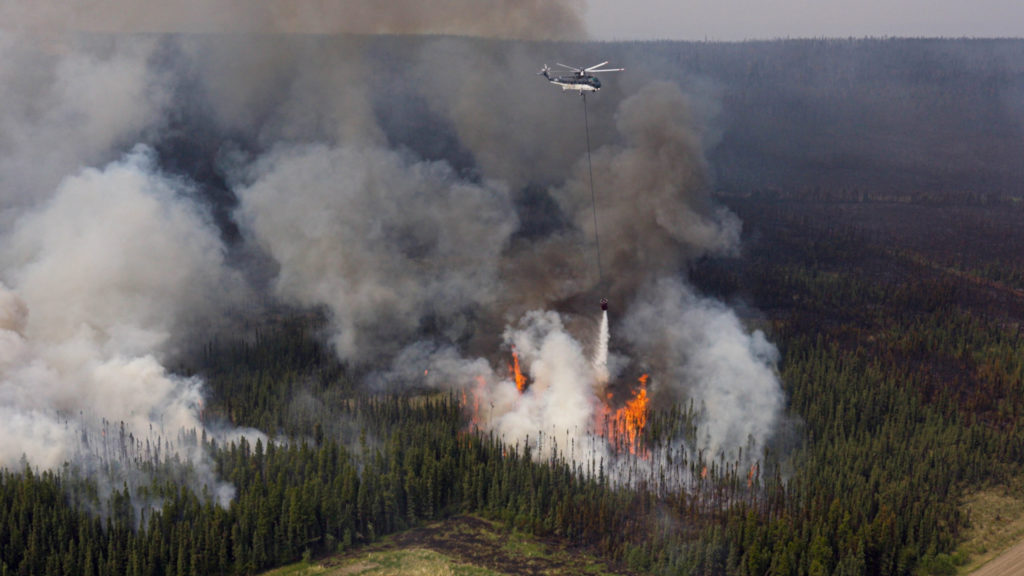
Wildfire seasons in Western Canada are intensifying, with 2023 seeing more than 2,240 fires burning 2.84 million hectares in B.C. and insured losses of $720 million in the Okanagan/Shuswap and $1.3 billion from the 2024 Jasper fire, forcing repeated evacuations at sites such as Artemis Gold’s Blackwater and Cameco’s Cigar Lake. Operators and insurers are now treating wildfire as a core business-interruption risk, driving investment in backup generation for long transmission corridors, detailed continuity planning, and stricter underwriting. Engineers are also redesigning mine layouts and buildings for fire, favouring sites on ridge tops, wider building separation, non-combustible steel roofing and use of natural and linear infrastructure firebreaks.
Technical Brief
- BC Wildfire Service flags Chilcotin, Cariboo and Thompson-Okanagan as priority risk regions.
- Teck’s Highland Valley Copper previously shut under an evacuation order due to wildfire risk.
- Artemis Gold’s Blackwater and Osisko Development’s Cariboo Gold both removed non-essential staff under regional wildfire evacuation directives.
- Cameco’s Cigar Lake uranium mine in northern Saskatchewan evacuated non-essential personnel due to wildfires.
- Long transmission lines to remote mines are identified as critical single points of failure during wildfires.
- BC Hydro mitigations include fire-retardant or fire-resistant steel-mesh wraps with heat-activated barriers on poles.
- Guidance advises siting facilities away from slopes and using simple, non-combustible steel roofs.
- Vegetation management around high-energy equipment during the driest periods is being scheduled using short-term fire probability forecasts.
- Climate-adaptation guidance and 30‑year climate-normal tools are informing mine infrastructure risk assessments.
Our Take
With British Columbia already prominent in our 39 Hazards stories, the wildfire exposure around assets like Highland Valley Copper and Blackwater sits on top of a parallel layer of legal and permitting uncertainty flagged in our DRIPA coverage for projects such as Record Ridge.
The scale of 2023–24 insured wildfire losses in the Okanagan, Shuswap and Jasper regions suggests operators like Teck Resources and Artemis Gold may soon face materially tighter insurance terms and higher premiums for coal, copper and gold assets in Western Canada, pushing more cost–benefit scrutiny on on-site fire-hardening investments.
Guidance on climate adaptation for mine infrastructure dating from 2020 now predates the extreme 2.84-million-hectare burn in B.C., implying that companies such as Cameco and Osisko Development may need to revisit design criteria for power, evacuation and tailings systems to reflect a higher baseline of fire frequency and smoke disruption risk.
Prepared by collating external sources, AI-assisted tools, and Geomechanics.io’s proprietary mining database, then reviewed for technical accuracy & edited by our geotechnical team.
Related Articles
Related Industries & Products
Mining
Geotechnical software solutions for mining operations including CMRR analysis, hydrogeological testing, and data management.
Construction
Quality control software for construction companies with material testing, batch tracking, and compliance management.
CMRR-io
Streamline coal mine roof stability assessments with our cloud-based CMRR software featuring automated calculations, multi-scenario analysis, and collaborative workflows.
HYDROGEO-io
Comprehensive hydrogeological testing platform for managing, analysing, and reporting on packer tests, lugeon values, and hydraulic conductivity assessments.
GEODB-io
Centralised geotechnical data management solution for storing, accessing, and analysing all your site investigation and material testing data.