University of Arizona mine waste project: key processing insights for engineers
Reviewed by Tom Sullivan
First reported on MINING.com
30 Second Briefing
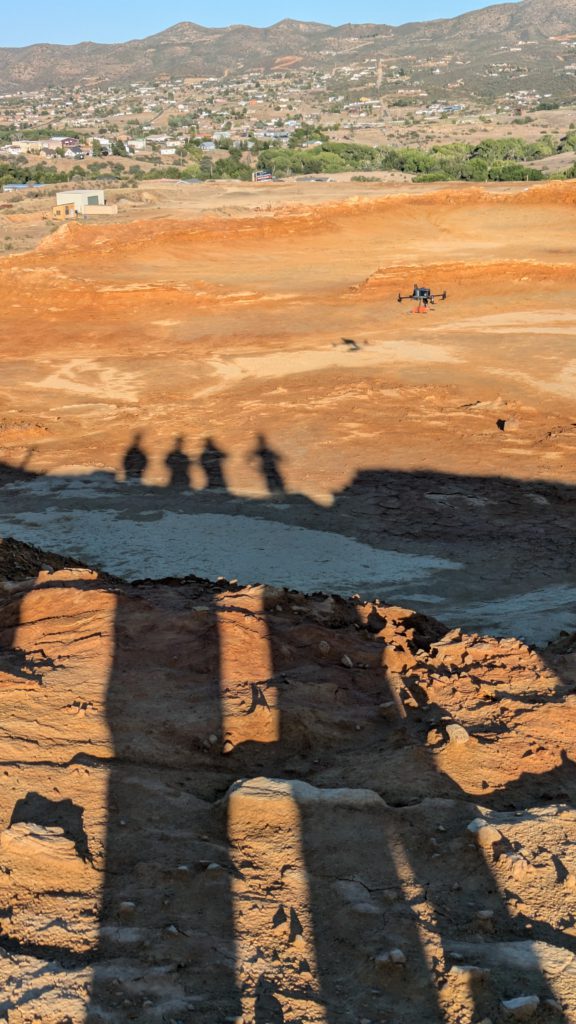
A $3.6 million Arbor-funded University of Arizona Tailings Center project, led by mining engineer Dr Isabel Barton, is evaluating whether 17.5 billion tons of historic copper tailings in Arizona—growing by ~100 million tonnes per year—can be reprocessed to recover critical minerals and reduce environmental risk. The team is combining statewide and UAV-based remote sensing, industry tailings datasets, drilling and surface sampling, mineralogical characterisation and techno-economic analysis using magnetic separation and basic leaching. Early work has identified unexpected mineral occurrences, including arsenic, zinc and possibly tungsten, which could justify flowsheet changes to keep these elements out of future tailings.
Technical Brief
- Statewide satellite remote sensing is combined with UAV-based high-resolution mapping of individual tailings facilities.
- Historical lack of 20th‑century tailings characterisation means many facilities are effectively “unknown ore bodies” with active geochemical alteration.
Our Take
The US$3.6 million Arbor-funded work on tailings in Arizona sits at the low end of critical-minerals funding in our database compared with the multi‑billion‑dollar “One Big Beautiful Bill”, suggesting this is being treated as a strategic technology pilot rather than a volume play.
With an estimated 17.5 billion tons of mine waste in play and a 100 million tonne per year accumulation rate, even modest recovery factors for copper, rare earths or gallium-bearing phases could materially extend the life of existing US operations without new greenfield disturbance.
In our coverage of US critical minerals, most capital has so far flowed to new lithium, nickel and rare earth projects; this University of Arizona tailings work signals that policymakers and funders are beginning to treat legacy waste as a parallel domestic resource base rather than just a closure liability.
Prepared by collating external sources, AI-assisted tools, and Geomechanics.io’s proprietary mining database, then reviewed for technical accuracy & edited by our geotechnical team.
Related Articles


Related Industries & Products
Mining
Geotechnical software solutions for mining operations including CMRR analysis, hydrogeological testing, and data management.
CMRR-io
Streamline coal mine roof stability assessments with our cloud-based CMRR software featuring automated calculations, multi-scenario analysis, and collaborative workflows.
HYDROGEO-io
Comprehensive hydrogeological testing platform for managing, analysing, and reporting on packer tests, lugeon values, and hydraulic conductivity assessments.
GEODB-io
Centralised geotechnical data management solution for storing, accessing, and analysing all your site investigation and material testing data.