Geomechanics.io

  • Free Tools
Sign UpLog In
AllGeotechnicalMiningInfrastructureMaterialsHazardsEnvironmentalSoftwarePolicy

Geomechanics.io

Geomechanics, Simplified.

© 2025 Geomechanics.io. All rights reserved.

Geomechanics.io

CMRR-ioGEODB-ioHYDROGEO-ioQCDB-ioFree Tools & CalculatorsBlogLatest Industry News

Industries

MiningConstructionTunnelling

Company

Terms of UsePrivacy PolicyLinkedIn
    Projects
    Research
    Sustainability

    Monash steel emissions hub: process design takeaways for mining engineers

    December 1, 2025|

    Reviewed by Tom Sullivan

    Monash steel emissions hub: process design takeaways for mining engineers

    First reported on Australian Mining Review – News

    30 Second Briefing

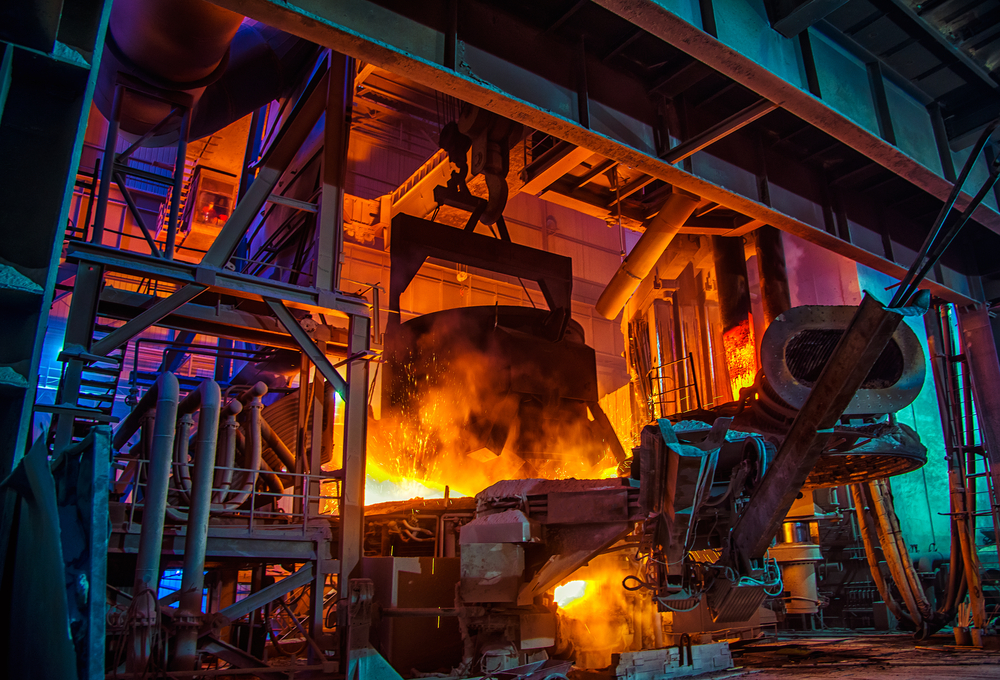
    A new ARC Research Hub for Smart Process Design and Control has been launched at Monash University to cut emissions from steelmaking, which currently accounts for about 8% of global CO₂ output and 18–20% of Australia’s export income via iron ore. The Hub links Monash, Macquarie, Queensland, UNSW and Western Sydney University with Rio Tinto, Baowu Steel and China Steel Corporation to develop AI- and simulation-driven, low-emission processes tailored to diverse Australian ores. More than 100 technical presentations from Australia, China and Korea marked the launch at a three-day conference.

    Technical Brief

    • Hub’s core mechanism couples process simulation, artificial intelligence and full-scale industrial testing for steelmaking optimisation.
    • Research programme is anchored at Monash’s Chemical and Biological Engineering Department, leveraging existing low‑carbon process expertise.
    • Research methods will rely on industrial-scale trials to validate simulated low‑emission flowsheets against real furnace performance.
    • Outputs are intended for direct integration into process control strategies, targeting lower fuel rates and off‑gas emissions.
    • Scope is limited to process design and control; upstream mining, logistics and end‑use steel applications sit outside the hub’s remit.

    Our Take

    With steel responsible for about 8% of global CO₂ emissions, collaboration between Monash University and major producers such as Rio Tinto and Baowu Steel signals that process innovations emerging from this ARC Research Hub are likely to be tested at industrial scale rather than remaining at lab level.

    Iron ore contributing 18–20% of Australia’s export income means any successful decarbonisation pathways developed through this Queensland-linked research cluster could directly influence the long-term competitiveness of Australian ore in low‑carbon steel value chains, especially against suppliers in China and Korea.

    The more than 100 presentations at the November–December conference suggest that steel and iron ore decarbonisation is now one of the denser technical themes in our 279 sustainability‑tagged pieces, indicating a rapidly diversifying pipeline of process-control and combustion‑efficiency concepts for operators to track.

    Geotechnical Software for Modern Teams

    Centralise site data, logs, and lab results with GEODB-io, CMRR-io, and HYDROGEO-io.

    No credit card required.

    • Save and export unlimited calculations
    • Advanced data visualisation
    • Generate professional PDF reports
    • Cloud storage for all your projects

    Prepared by collating external sources, AI-assisted tools, and Geomechanics.io’s proprietary mining database, then reviewed for technical accuracy & edited by our geotechnical team.

    Related Articles
    Equinox sells Brazilian operations to CMOC: portfolio and capex shift for mine planners
    Mining
    about 8 hours ago

    Equinox sells Brazilian operations to CMOC: portfolio and capex shift for mine planners

    Equinox Gold has agreed to sell its entire Brazilian portfolio — the Aurizona and RDM mines plus the Bahia complex (Fazenda and Santa Luz) — to China’s CMOC Group for over US$1 billion, including US$900 million cash on closing and up to US$115 million in contingent payments tied to production. The divested assets were guided to produce 250,000–270,000 oz. of gold in 2025, while Equinox’s refocused portfolio will centre on the Greenstone (220,000–260,000 oz.), Valentine (175,000–200,000 oz. at full run-rate) and Mesquite (85,000–95,000 oz.) operations. Proceeds will be used to retire US$800 million of debt, cutting interest costs and freeing capital for expansions at Valentine, Castle Mountain and Los Filos, with group output targeted at 700,000–800,000 oz. next year.

    Silicon Ridge critical minerals in Utah: grade, flowsheet and capex notes for engineers
    Mining
    about 13 hours ago

    Silicon Ridge critical minerals in Utah: grade, flowsheet and capex notes for engineers

    Ionic Mineral Technologies reports its Silicon Ridge project in Utah is a halloysite-hosted ion-adsorption clay system grading about 2,700 ppm (0.27%) combined rare earths and critical metals from 106 boreholes over 10,000 m and 35 trenches across 650 acres, exceeding typical Chinese IAC grades of 500–2,000 ppm. The confirmed mineralisation currently covers only 11% of the resource area to 100 ft depth, with existing mining permits and a 74,000 ft² Provo processing plant enabling rapid start-up. Ionic MT plans a vertically integrated flowsheet producing three co-product streams—critical minerals (including gallium, germanium, scandium, lithium and tungsten), high-purity alumina and nano-silicon—with a preliminary economic assessment due in H1 2026.

    Metso Geminex™ digital twins: control and reliability insights for plant engineers
    Mining
    1 day ago

    Metso Geminex™ digital twins: control and reliability insights for plant engineers

    Metso is promoting its Geminex™ digital twin platform as a way to move mineral processing plant control beyond traditional DCS screens towards predictive and proactive maintenance. Geminex™ integrates real-time sensor data with dynamic process models of grinding, flotation and filtration circuits to simulate plant behaviour, test “what‑if” scenarios and optimise setpoints before implementation. For operators, this signals deeper use of virtual commissioning, remote performance tuning and model-based failure prediction across comminution and concentrator lines.

    Related Industries & Products

    Mining

    Geotechnical software solutions for mining operations including CMRR analysis, hydrogeological testing, and data management.

    CMRR-io

    Streamline coal mine roof stability assessments with our cloud-based CMRR software featuring automated calculations, multi-scenario analysis, and collaborative workflows.

    HYDROGEO-io

    Comprehensive hydrogeological testing platform for managing, analysing, and reporting on packer tests, lugeon values, and hydraulic conductivity assessments.

    GEODB-io

    Centralised geotechnical data management solution for storing, accessing, and analysing all your site investigation and material testing data.