Deep-sea mining trial impacts on seabed fauna: key findings for project teams
Reviewed by Joe Ashwell
First reported on MINING.com
30 Second Briefing
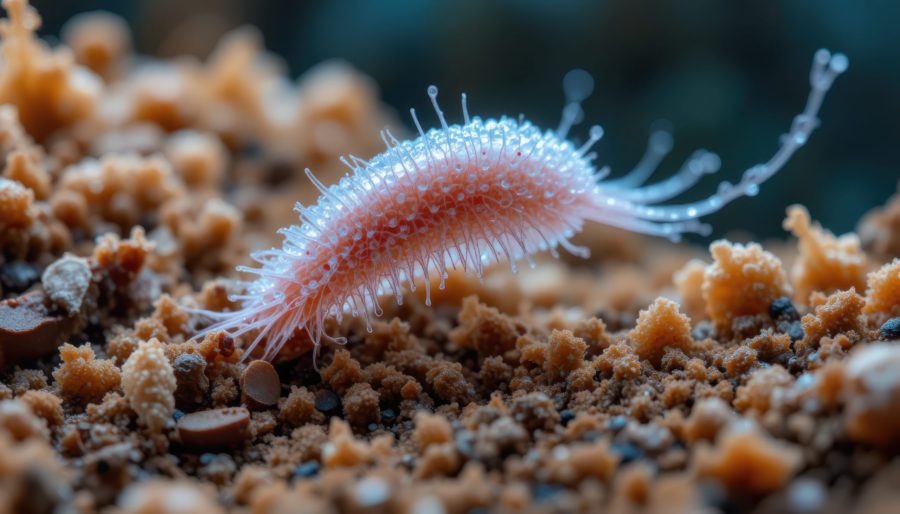
Deep-sea mining tests in the Clarion–Clipperton Zone at 4,280 metres depth, commissioned by Nauru Ocean Resources (a The Metals Company subsidiary), cut macrofaunal density by 37% and species richness by 32% along machine tracks over two years, based on disturbance of 3,000 tonnes of polymetallic nodules. European researchers from the Natural History Museum, University of Gothenburg and the National Oceanography Centre collected 4,350 sediment macrofaunal animals and identified 788 species, mainly polychaete worms, crustaceans and molluscs. The trial used machines only about half the size of planned commercial systems, raising concern that full-scale operations could cause larger, possibly irreversible, benthic impacts.
Technical Brief
- Trial disturbed 3,000 tonnes of polymetallic nodules in the Clarion–Clipperton Zone, central Pacific.
- Work was conducted at 4,280 m water depth, within Nauru Ocean Resources’ NORI contract area.
- Research campaign spanned five years, including >160 ship-days and ~3 years of laboratory analysis.
- Sampling across four expeditions recovered 4,350 sediment macrofaunal specimens, classified into 788 distinct species.
- Taxa were dominated by polychaete annelids, followed by isopods, tanaids, amphipods, snails and clams.
- A new solitaire coral species was discovered, indicating incomplete baseline biodiversity knowledge in the CCZ.
- Authors note impacts were assessed mainly for sediment-dwelling macrofauna, so responses of megafauna and pelagic biota remain unresolved.
Our Take
With an estimated 21 billion tonnes of minerals in the Clarion–Clipperton Zone, the 37% macrofaunal density and 32% species richness losses reported here sharpen the trade-off facing cobalt and nickel supply chains that are already under pressure from 2025 quota discussions in conventional producers such as Congo.
The CCZ’s 6 million km² footprint means that even localised disturbance patterns, if repeated across multiple licence blocks held by operators like Nauru Ocean Resources (linked to The Metals Company), could scale into basin-level ecological change that regulators will need to factor into ISA exploitation rules.
Among our relatively few Environmental stories, this is one of the more data-rich deep-sea pieces, and the 788 species identified will likely become a reference baseline for future impact assessments that battery-metal offtakers and ESG auditors demand from Pacific polymetallic nodule projects.
Prepared by collating external sources, AI-assisted tools, and Geomechanics.io’s proprietary mining database, then reviewed for technical accuracy & edited by our geotechnical team.
Related Articles
Related Industries & Products
Mining
Geotechnical software solutions for mining operations including CMRR analysis, hydrogeological testing, and data management.
CMRR-io
Streamline coal mine roof stability assessments with our cloud-based CMRR software featuring automated calculations, multi-scenario analysis, and collaborative workflows.
HYDROGEO-io
Comprehensive hydrogeological testing platform for managing, analysing, and reporting on packer tests, lugeon values, and hydraulic conductivity assessments.
GEODB-io
Centralised geotechnical data management solution for storing, accessing, and analysing all your site investigation and material testing data.