Adaptive pathways in UK coastal management: design lessons for engineers
Reviewed by Tom Sullivan
First reported on New Civil Engineer
30 Second Briefing
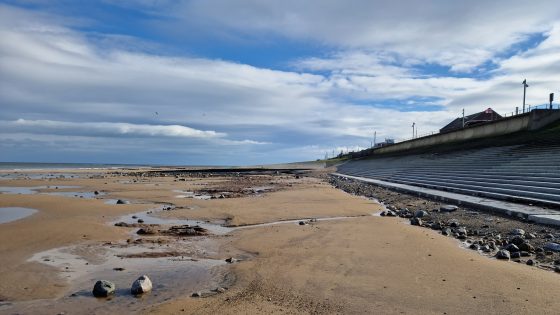
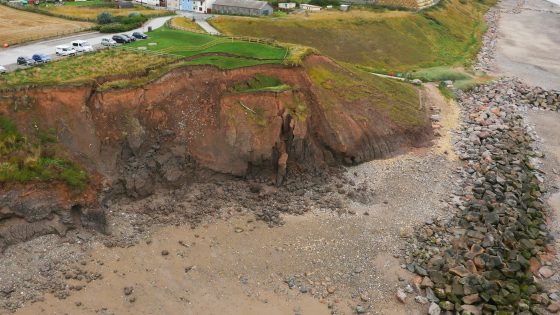
Storm Goretti’s impact on North East Yorkshire and Eastern Scotland is reviving concern over how Storm Babet in 2023 stripped and reprofiled beaches, exposing the limits of fixed “hold-the-line” coastal defences. Engineers are being urged to adopt adaptive pathways planning, sequencing measures such as managed realignment, dune and beach nourishment, and periodic crest raising rather than relying solely on hard sea walls and rock armour. The approach hinges on trigger points tied to beach levels, overtopping rates and asset condition, enabling long-term, staged investment under rising sea levels and more frequent extreme storms.
Technical Brief
- Adaptive pathways require predefined inspection regimes to verify beach profiles and defence condition after each major storm.
- Governance is framed around Shoreline Management Plans, with adaptive pathways nested within existing SMP policy units.
- For other UK coasts, similar storm‑driven profile losses would rapidly erode nominal design safety factors for overtopping.
Our Take
Within the 36 Hazards stories in our coverage, the UK features frequently for flood and coastal risk, so a long-term adaptive pathways approach in North East Yorkshire and Eastern Scotland is likely to become a reference model for other high-exposure coastlines.
Using a defined 2025–26 storm season horizon after events like Storm Babet (2023) signals a shift from purely historical design standards towards scenario-based planning, which typically favours modular defences and staged retreat options over single, fixed-line sea walls.
For UK practitioners, framing schemes around storm seasons rather than individual events tends to strengthen the business case for integrated catchment and coastal projects, allowing safety, sustainability and asset-management budgets to be aligned over multiple funding cycles.
Prepared by collating external sources, AI-assisted tools, and Geomechanics.io’s proprietary mining database, then reviewed for technical accuracy & edited by our geotechnical team.
Related Articles

Related Industries & Products
Mining
Geotechnical software solutions for mining operations including CMRR analysis, hydrogeological testing, and data management.
CMRR-io
Streamline coal mine roof stability assessments with our cloud-based CMRR software featuring automated calculations, multi-scenario analysis, and collaborative workflows.
HYDROGEO-io
Comprehensive hydrogeological testing platform for managing, analysing, and reporting on packer tests, lugeon values, and hydraulic conductivity assessments.
GEODB-io
Centralised geotechnical data management solution for storing, accessing, and analysing all your site investigation and material testing data.