Geomechanics, Streamlined.
© 2026 Geomechanics.io. All rights reserved.
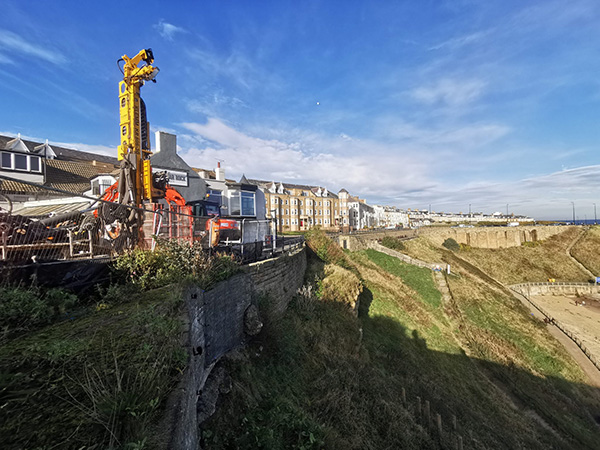
Slope stabilisation case studies from Aarsleff Ground Engineering show driven steel sheet piles, a 10 m-deep contiguous piled wall and soil nails being tailored to constrained brownfield and heritage sites in Alnwick, Tynemouth and Northampton. Solutions include 57.6 m and 20 m sheet-piled retaining walls installed with silent press and Movax to protect listed masonry, a 300 mm-diameter contiguous wall with 3 m rock bolts, gabions and 25 m² carved shotcrete for a 120-year cliff design life, and 8 m R32 hollow-bar soil nails designed via 3D clash modelling around buried services.
SCAPE has launched an £8.5bn, two-lot UK framework for defence and complex environment construction, targeting highly secure projects such as military bases, critical national infrastructure and sensitive research facilities. The framework will cover new-build, refurbishment and infrastructure works under stringent security and access controls, with call-off projects expected to demand robust blast-resistant design, hardened perimeters and tightly managed supply chains. Civil and geotechnical teams should anticipate complex ground conditions around existing assets, constrained working areas and elevated requirements for data security and vetting.
Premier Technical Services Group Ltd (PTSG) has acquired IDSL Group Holdings to build scale in passive fire compliance, spanning fire door inspections, technical surveys, evidence-based remediation, certification and lifecycle maintenance. IDSL adds in-house specialist fire door manufacturing plus strong technical competence in navigating the Building Safety Act and Fire Safety (England) Regulations, giving PTSG tighter control over quality, traceability and regulatory documentation. The combined business targets large, complex remediation programmes at scale, with integrated supply chains and faster mobilisation for critical fire safety works on occupied buildings.
UK office construction output fell 20% in 2025 to £10.2bn, with only 152 new contracts worth £2.7bn let in the first five months versus 185 worth £3.9bn a year earlier, signalling further tightening in 2026. Completions in 2026 across the Big Nine cities are forecast at just 694,000 sq ft, far below the 2020–24 average of 2.2 million sq ft, while UK-wide pipeline equates to only 1.3 years of Grade A supply under construction. City of London prime rents exceeded £100/sq ft after a 6.8% rise, with Grade A vacancy in core locations reported as low as 0.5–2.2%.
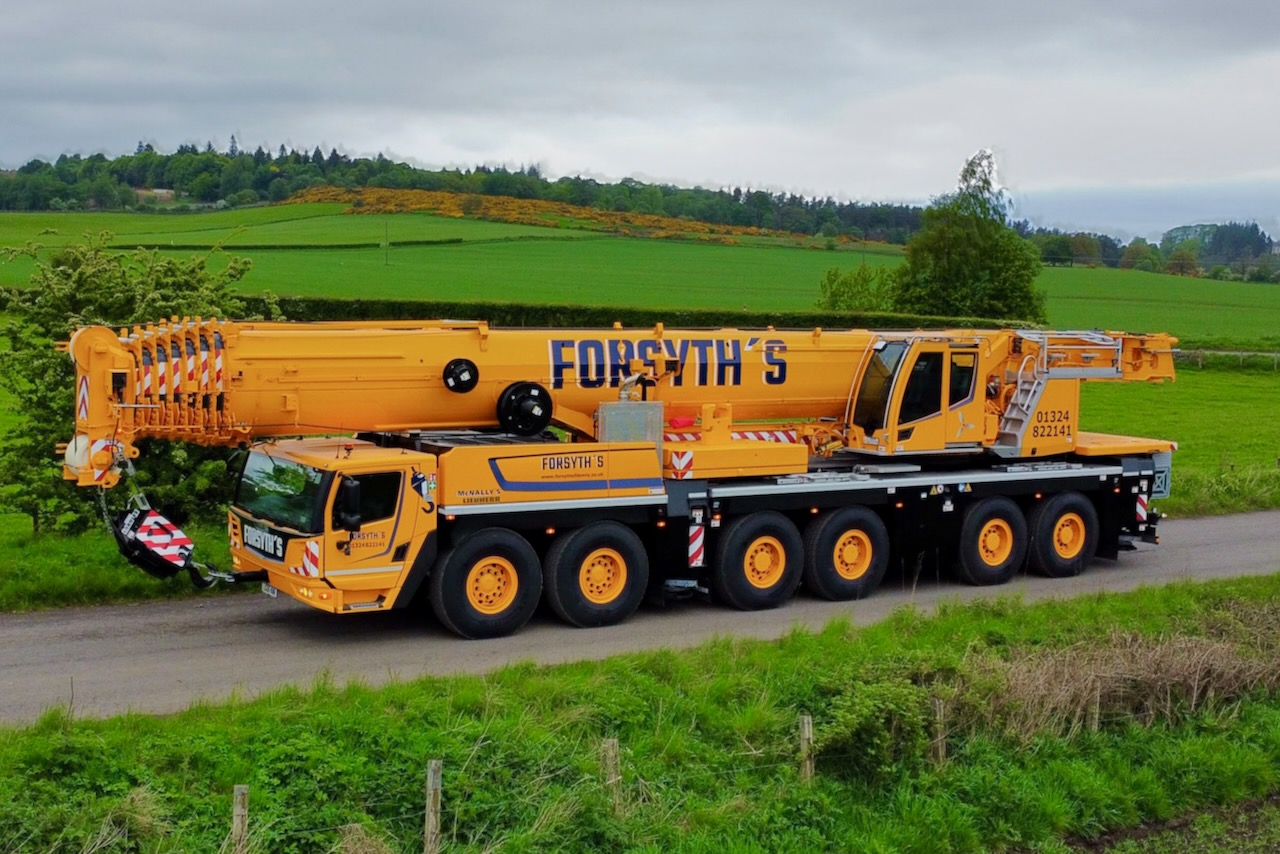
Forsyth of Denny has taken delivery of Scotland’s first Liebherr LTM 1300-6.4, a 300‑tonne capacity mobile crane with a 90‑metre main boom, its second long‑boom Liebherr unit. The crane is targeted at tower crane erection and wind turbine maintenance, where the 90‑metre telescopic boom reduces reliance on lattice extensions and multiple setup positions. For contractors, the higher reach on a six‑axle carrier should cut mobilisation time and simplify lifts on constrained wind farm and urban tower sites.
The Federation of Piling Specialists has established a carbon baseline from 63 UK foundation projects, showing about 330,000 tCO₂e emitted in 2025 against a combined turnover of £618m. Using the dataset, FPS has updated embodied carbon benchmarks for principal foundation installation techniques and introduced comparative metrics such as tCO₂e per £1m turnover, per hour worked and per cubic metre of concrete installed. The new benchmarks give piling contractors a sector-wide reference to target lower‑carbon materials, refine construction methods and identify outlier techniques for further optimisation.
Publication of the UK government’s revised Social Value Model (PPN 026) marks a reset for infrastructure procurement by tightening how social, environmental and economic outcomes are evaluated in public works tenders. The update is expected to reshape bid strategies on major frameworks such as the £30bn-plus Construction Playbook pipeline, with more prescriptive metrics on local employment, skills, carbon reduction and SME participation. Contractors and consultants will need more robust data capture and reporting systems to evidence social value delivery across design, construction and asset operation phases.
Former National Infrastructure Commission for Wales chair David Clubb, who led the body for more than four years, has stepped down, warning that long-term planning is being constrained by tight devolved budgets and fragmented responsibilities between Cardiff Bay, Westminster and local authorities. He points to stalled decisions on major transport corridors, grid reinforcement for new onshore wind and solar, and flood defence upgrades for low-lying coastal communities as critical pinch points. For engineers, he signals that robust business cases, whole-life carbon data and climate-resilient design will be central to securing funding in Wales over the next decade.
Scape has launched procurement for an £8.5bn Defence and Complex Environments Framework, providing a compliant route for highly secure construction and infrastructure works across UK defence, nuclear, and other sensitive sites. The framework is aimed at projects requiring stringent security clearance, complex phasing and constrained access, such as live operational bases, high-containment facilities and critical national infrastructure. Contractors will need proven capability in secure logistics, blast-resistant and hardened structures, and integration with existing defence estate asset management systems.
Rising concern among construction professionals over data privacy and cyber security is slowing adoption of artificial intelligence tools, according to a new Royal Institution of Chartered Surveyors (Rics) report. Respondents cited risks around sharing commercially sensitive project data from BIM models and cost plans with cloud-based AI platforms, and uncertainty over where training data is stored and processed. The findings signal that AI deployment on live projects, including for quantity take-off automation and programme optimisation, may stall without clearer contractual, regulatory and data-governance frameworks.
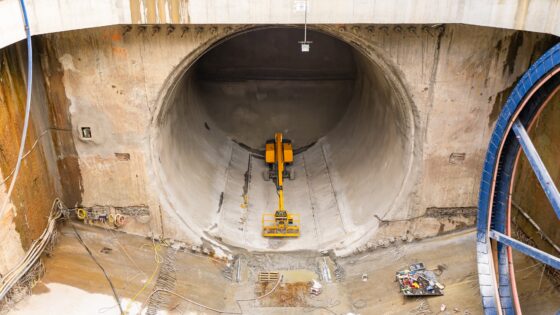
Construction of the tunnel boring machine (TBM) cradle at the Retkinia launch chamber in Łódź, Poland, has been completed, enabling assembly of the first TBM components for the country’s planned high-speed rail tunnel. The Retkinia shaft will serve as the primary launch point for the large-diameter TBM driving beneath the city, a critical interface between surface works and underground excavation. Contractors can now transition from heavy civil works to mechanical and systems installation, locking in alignment, thrust and support conditions for initial tunnelling.
Autonomous Komatsu 930E haul trucks have gone live at Vale’s Salobo copper complex in Brazil, integrating with the mine’s existing high-throughput open-pit operation. In parallel, Vale Base Metals has approved a Coarse Particle Flotation (CPF) project at Salobo III, expected to add 6 Mt per year of ore to the plant’s processing capacity. The combination of AHS haulage and CPF will push higher tonnage through the pit–plant system, tightening constraints on dispatch planning, crusher feed control and tailings/water management.
Forrestania Resources has awarded MEGA Resources the mining services contract for development of the Tycho open pit gold project in Western Australia’s Eastern Goldfields. The scope covers drill-and-blast, excavation, loading and haulage of both ore and waste, plus ore delivery to the processing stream. For contractors and mine planners, the award signals imminent mobilisation and short‑term demand for fleet, explosives supply and pit design refinement at a greenfield open pit in a mature gold district.
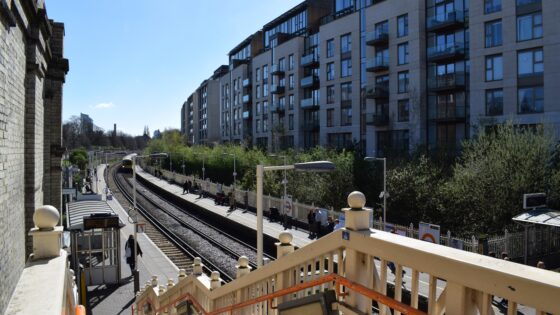
Planning policy changes in England now give a “default yes” to higher-density housing within walking distance of well-connected train, tram and Underground stations, aiming to accelerate approvals on brownfield and infill sites. Local plans will be required to prioritise station catchments with frequent services and existing utilities, reducing scope for refusal where schemes meet design codes and access standards. For civil and geotechnical teams, this signals sustained demand for mid-rise foundations, utility diversions and rail-adjacent construction methods with tight possession and vibration constraints.
Two derailments at Lewes in Sussex and Wickford in Essex, plus a landslip on another Sussex route and a separate track defect in Surrey, have simultaneously disrupted key commuter and regional rail corridors in south-east England. The incidents point to localised formation instability and asset degradation across multiple routes rather than a single point failure, with engineers now inspecting embankments, ballast condition and rail geometry. Operators face short-term speed restrictions and diversions while permanent repairs and geotechnical assessments are completed.
A decisive moment for UK water infrastructure is forcing utilities and engineers to share operational and asset-management knowledge more systematically to keep ageing networks supplying reliable potable water. With many trunk mains, service reservoirs and treatment works operating beyond original design lives and under tighter leakage and drought-resilience targets from Ofwat and the Environment Agency, the sector is under pressure to standardise best practice on inspection, rehabilitation and digital monitoring. For civil and geotechnical teams, this signals growing demand for condition assessment, trenchless renewal methods and data-driven prioritisation of capital works.
Andy Burnham’s new government is moving quickly on infrastructure, with freshly appointed transport and housing ministers and early policy announcements from the Prime Minister signalling a reset from the previous administration. Early priorities are expected to centre on rail capacity in the North West, upgrades to key inter-urban corridors linking Manchester to surrounding city-regions, and accelerating brownfield housing delivery around existing transport hubs. Civil engineers should watch for changes to funding models, revised appraisal rules for regional schemes, and potential re-opening of shelved rail and road projects.
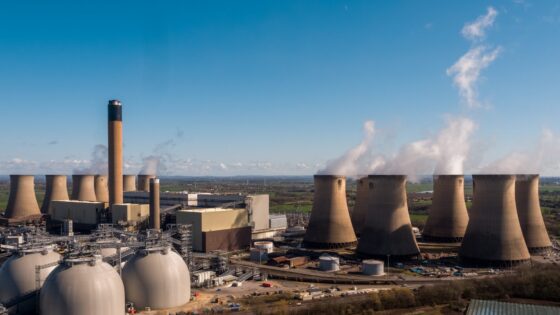
The Environment Agency has approved a variation to Drax Power Limited’s environmental permit, allowing post-combustion carbon capture to be added to its biomass-fired generating units at the Selby bioenergy plant in North Yorkshire. The decision enables integration of large-scale carbon capture and storage (CCS) infrastructure with existing flue gas treatment systems, including new absorber columns, solvent regeneration equipment and CO₂ compression and export facilities. Civil and geotechnical works will need to accommodate additional foundations, pipe racks and tie-ins within a live, high-load power station site.
The Institution of Civil Engineers has reached 500 female fellows, marking a sharp rise from only a handful of women holding FICE status a few decades ago. Fellowship is the ICE’s highest grade of membership, typically requiring at least 10–15 years of senior responsibility on major infrastructure, geotechnical or structural projects and evidence of leading teams or technical innovation. The milestone signals a broader shift in who is directing complex UK and international schemes, from major highways and rail to dams, tunnels and coastal defences.
Resilient Transport 2026 launches as a multi-year programme to strengthen road, rail and bridge networks against climate-driven extremes, ageing assets and rising demand under tight public budgets. Led through the Institution of Civil Engineers, it will focus on whole-life asset management, flood and heat resilience for pavements and track, and retrofit strategies for existing structures rather than wholesale replacement. For practitioners, the programme signals more emphasis on performance-based design, risk-based maintenance planning and quantifying resilience benefits to secure funding.
New members have been elected to the Institution of Civil Engineers (ICE) Trustee Board and Council following the 2026 membership election, with results confirmed at the AGM on 21 July 2026. The new governance line-up will influence strategic decisions on infrastructure policy, professional standards and investment priorities across ICE’s 95,000-strong global membership. Practitioners should expect the incoming Board and Council to shape future guidance on climate resilience, asset management and digital delivery, affecting specifications, procurement and competency requirements on UK and international projects.
Digital delivery on a major Gulf infrastructure programme is compressing the journey from concept visualisation to fully functional model from years to just a few months, with a single 3D environment expected to handle permit reviews, utility clash detection and construction sequencing. Engineers are using the same federated model to test street layouts, drainage corridors and utility corridors before design freeze, then hand it straight to contractors for 4D planning. The piece stresses that rapid model iteration still relies on experienced engineering judgement to set tolerances, interpret clashes and decide when digital outputs are buildable.
The Institution of Civil Engineers’ Annual General Meeting is positioned as a key forum for members to scrutinise governance and track delivery against strategic objectives. Trustees emphasise member participation in decisions on professional standards, knowledge-sharing programmes and policy engagement, which shape priorities for infrastructure design, asset management and climate resilience. For practising engineers, AGM outcomes influence future guidance, technical resources and institutional support for areas such as digital design, low‑carbon materials and whole‑life performance of civil assets.
HVME 2027 in the Hunter Valley is being positioned as a forum for miners, OEMs and tech suppliers to confront the region’s shift from coal-dominated operations towards artificial intelligence, automation and more diversified resource projects. Organisers aim to bring together coal producers, heavy industry and emerging technology vendors to discuss practical deployment of autonomous haulage, digital fleet management and AI-driven planning across existing Hunter sites. For engineers, the event signals growing pressure to retrofit legacy coal infrastructure with advanced control systems while planning for a more mixed commodity and industrial base.