Geomechanics.io

  • Free Tools
Sign UpLog In

    Geomechanics.io

    Geomechanics, Streamlined.

    © 2026 Geomechanics.io. All rights reserved.

    Geomechanics.io

    CMRR-ioGEODB-ioHYDROGEO-ioQCDB-ioFree Tools & CalculatorsBlogLatest Industry News

    Industries

    MiningConstructionTunnelling

    Company

    Terms of UsePrivacy PolicyLinkedIn
    Projects
    Failure
    Safety

    BHP loses Brazil dam disaster appeal: liability and risk lessons for engineers

    May 6, 2026|

    Reviewed by Tom Sullivan

    BHP loses Brazil dam disaster appeal: liability and risk lessons for engineers

    First reported on MINING.com

    30 Second Briefing

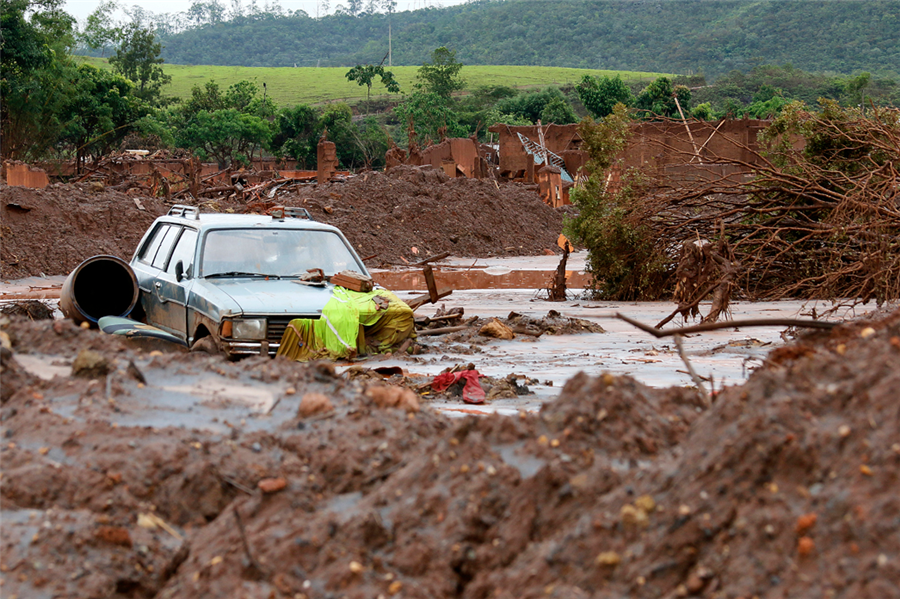
    BHP has been denied permission by London’s Court of Appeal to challenge a High Court ruling that found it liable under Brazilian law for the 2015 Fundão tailings dam collapse at the Samarco iron ore operation in Mariana, which killed 19 people and contaminated the Rio Doce for hundreds of kilometres. The decision clears the way for a two-year UK damages process, with a Stage 2 compensation trial scheduled for April 2027 and final awards potentially extending beyond 2030. BHP points to a roughly $32 billion Brazil settlement and remediation programmes that have already compensated more than 625,000 people, with about 240,000 claimants discontinuing UK claims after indemnification in Brazil.

    Technical Brief

    • London proceedings began in 2024 and are structured with distinct liability and compensation phases.
    • Court of Appeal found “ample evidence” of BHP’s liability under Brazilian law, closing ordinary appeal routes.
    • Brazil’s 170‑billion‑real (~$34.6bn) compensation agreement with BHP, Vale and Samarco was signed during week one of the UK trial.
    • BHP cites remediation and compensation programmes in Brazil since 2015 as its primary risk‑mitigation and redress mechanism.
    • Around 240,000 claimants (≈40% of the group) have signed Brazilian indemnities and will discontinue UK claims.
    • Long‑tail safety and liability exposure is evident, with UK damages trials projected to extend beyond 2030.

    Our Take

    In our hazards coverage, Fundão remains one of the few iron ore tailings failures still driving multi‑billion‑dollar liability discussions more than a decade on, which signals to operators that legacy dam risk can remain financially material well beyond normal mine planning horizons.

    BHP’s simultaneous push into low‑carbon initiatives and community investments in Australia and North America, as seen in recent pieces on Arca’s mineralisation work and the Seven Cities Vision, suggests the group is trying to offset reputational drag from Brazil by foregrounding ESG‑aligned projects in other jurisdictions.

    The scale of the 170‑billion‑real compensation framework around the Fundão dam contrasts with BHP’s current iron ore growth and long‑term supply deals into China, implying that even Tier‑1 producers may need to factor large, long‑tail environmental provisions into capital allocation for Pilbara‑style expansions.

    Geotechnical Software for Modern Teams

    Centralise site data, logs, and lab results with GEODB-io, CMRR-io, and HYDROGEO-io.

    No credit card required.

    • Save and export unlimited calculations
    • Advanced data visualisation
    • Generate professional PDF reports
    • Cloud storage for all your projects

    Prepared by collating external sources, AI-assisted tools, and Geomechanics.io’s proprietary mining database, then reviewed for technical accuracy & edited by our geotechnical team.

    Related Articles
    Melbourne sinkhole investigations: geotechnical lessons for tunnel project teams
    Hazards
    in about 2 months

    Melbourne sinkhole investigations: geotechnical lessons for tunnel project teams

    A sinkhole roughly 8–10 m wide and several metres deep has opened on the AJ Burkitt Reserve sporting oval in Heidelberg, directly adjacent to the North East Link tunnel alignment in Melbourne’s northeast. Victorian Infrastructure Delivery Authority has confirmed the “surface hole” is in the vicinity of active tunnelling operations, leading to a work pause while engineers and emergency crews carry out geotechnical investigations and monitoring. No injuries or structural damage have been reported, but the area remains fully cordoned off pending cause determination and stability assessment.

    Flooding mindset and financial change: asset management lessons for engineers
    Hazards
    8 days ago

    Flooding mindset and financial change: asset management lessons for engineers

    Flood and coastal defence assets are facing mounting maintenance backlogs as ageing embankments, culverts and sea walls are exposed to more frequent, higher-intensity storm events. Experts warn that current operational budgets and short funding cycles prevent timely renewal of critical structures such as tidal barriers, pumping stations and flap valves, increasing failure risk under extreme water levels. They call for a shift from reactive patch repairs to long-term, whole-life asset management with multi-year funding settlements to support planned inspections, resilience upgrades and adaptive design.

    Iran CO2 plant reopening: nuclear safety and supply-chain lessons for engineers
    Hazards
    9 days ago

    Iran CO2 plant reopening: nuclear safety and supply-chain lessons for engineers

    A disused UK carbon dioxide production plant has been recommissioned by the government to address a CO2 shortage triggered by the Iran conflict, with officials calling the gas “vital” for safe nuclear power station operation. CO2 is required for reactor systems such as coolant circuits, pressurisation and fire suppression, making supply-chain resilience a direct nuclear safety and availability issue. Engineers should expect renewed scrutiny of single-point vulnerabilities in industrial gas logistics and potential retrofits to diversify on-site CO2 storage and backup supply routes.

    Related Industries & Products

    Mining

    Geotechnical software solutions for mining operations including CMRR analysis, hydrogeological testing, and data management.

    CMRR-io

    Streamline coal mine roof stability assessments with our cloud-based CMRR software featuring automated calculations, multi-scenario analysis, and collaborative workflows.

    HYDROGEO-io

    Comprehensive hydrogeological testing platform for managing, analysing, and reporting on packer tests, lugeon values, and hydraulic conductivity assessments.

    GEODB-io

    Centralised geotechnical data management solution for storing, accessing, and analysing all your site investigation and material testing data.

    AllGeotechnicalInfrastructureHazardsEnvironmental