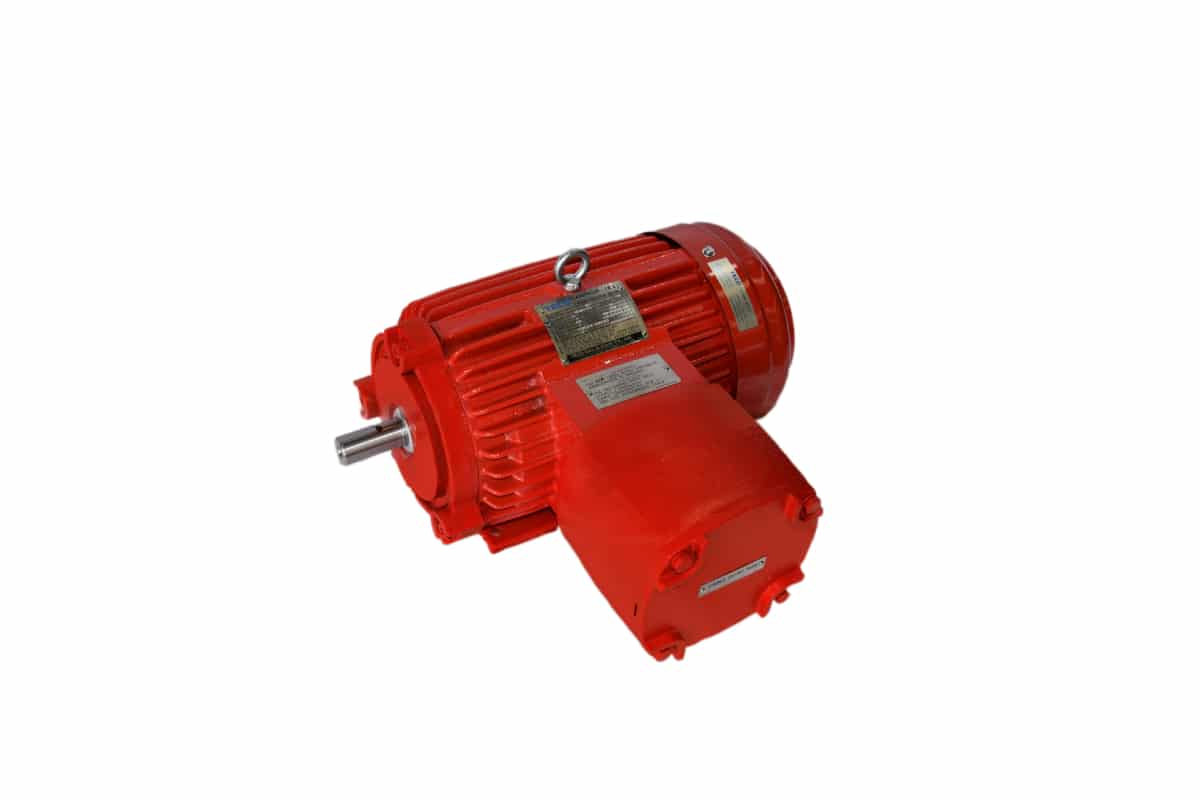
TECO MAX Ex d motor for underground coal mines: selection notes for engineers
Reviewed by Joe Ashwell
First reported on Australian Mining
30 Second Briefing
Specifying TECO’s MAX Ex d motor for underground coal mines centres on matching Ex d flameproof certification, insulation class (e.g. Class F/H windings) and available voltages to methane- and dust-laden headings with continuous duty. The AEMBXZ-TECO flameproof motor is designed for coalface and roadway equipment where restricted access limits maintenance intervals and thermal margins become critical. Engineers must balance frame size, starting torque and permissible temperature rise against hazardous area zoning and site supply (typically 1000 V or similar) to avoid derating and premature insulation failure.
Technical Brief
- Enclosures are designed to contain internal explosions without transmitting flame to the mine atmosphere.
- Motor thermal design accounts for dust accumulation on housings, reducing convective cooling efficiency.
- Continuous-duty ratings consider restricted ventilation typical of coal roadways and longwall installations.
- Flamepath tolerances and joint clearances require tight machining control to maintain Ex d integrity over life.
- Insulation systems are selected for repeated start–stop cycles on coalface equipment without thermal fatigue.
- Specifying engineers must integrate hazardous area zoning with mine electrical protection schemes and earth-fault limits.
- Wider industry implication is closer coordination between OEM motor design and site hazardous-area compliance teams.
Our Take
TECO’s earlier coverage on controlled conveyor motor starting in Australian Mining suggests the MAX Ex d unit is part of a broader push by the company to manage torque and current more precisely in harsh bulk-handling environments, which is directly relevant to high-inertia coal conveyor drives underground.
Coal is one of the more frequently referenced commodities in our 1185 Mining stories, and pairing it with a Safety tag typically signals that operators are prioritising explosion-protected electricals and ignition control as regulatory scrutiny tightens in Australian underground operations.
For Australian coal mines, specifying Ex d motors from a supplier already active in the region, such as TECO Australia and New Zealand, can simplify conformity with local hazardous-area standards and reduce integration risk compared with importing less regionally proven equipment.
Prepared by collating external sources, AI-assisted tools, and Geomechanics.io’s proprietary mining database, then reviewed for technical accuracy & edited by our geotechnical team.
Related Articles

Related Industries & Products
Mining
Geotechnical software solutions for mining operations including CMRR analysis, hydrogeological testing, and data management.
Tunnelling
Specialised solutions for tunnelling projects including grout mix design, hydrogeological analysis, and quality control.
CMRR-io
Streamline coal mine roof stability assessments with our cloud-based CMRR software featuring automated calculations, multi-scenario analysis, and collaborative workflows.
HYDROGEO-io
Comprehensive hydrogeological testing platform for managing, analysing, and reporting on packer tests, lugeon values, and hydraulic conductivity assessments.
GEODB-io
Centralised geotechnical data management solution for storing, accessing, and analysing all your site investigation and material testing data.