Geomechanics, Streamlined.
© 2026 Geomechanics.io. All rights reserved.
BHP convened more than 40 community organisations from the Pilbara and Perth for its inaugural “Impact Together – Community Partner Workshop”, aimed at coordinating social investment linked to its Western Australian iron ore operations. The workshop brought together local governments, Indigenous groups, youth services and training providers to align programmes around employment pathways, mental health support and regional infrastructure. For mining project teams, the initiative signals closer integration of community priorities into approvals, workforce planning and long-term closure strategies in the Pilbara.
Lincom Group is updating long‑running mineral processing centrifuges with maintenance‑centred design features such as improved access to wear liners, simplified scroll and bowl change‑outs, and upgraded vibration monitoring. The company is focusing on reducing unplanned downtime in coal and iron ore dewatering circuits, where high‑G decanter and screen‑bowl units typically run in abrasive, high‑solids slurries. For plant engineers, the changes aim to extend bowl and bearing life, cut crane time during overhauls, and stabilise moisture targets without frequent manual intervention.
Motion is expanding its mining service footprint with upgraded workshops in Mackay, Rutherford and Perth, adding CNC machining, hydraulic hose assembly and on-site conveyor belt splicing to support heavy equipment overhauls. The facilities are being tooled to handle large rotating equipment such as dragline components, longwall conveyor drives and high-capacity gearboxes, reducing turnaround times for shutdown-critical repairs. For mine operators, the shift means more component rebuilds and condition-based maintenance can be completed locally rather than sending assemblies to capital-city or OEM centres.
NOSHOK’s PTI Series intelligent pressure transmitters introduce IO-Link communication to mining pressure monitoring, pairing digital point-to-point connectivity with high-accuracy, rugged transmitters suited to harsh plant environments. The IO-Link interface enables parameterisation, continuous diagnostics and remote reconfiguration from PLCs or distributed control systems, reducing manual intervention on slurry lines, dewatering circuits and hydraulic systems. For brownfield sites, the devices can drop into existing 2‑wire or 3‑wire pressure transmitter locations while adding structured digital data for predictive maintenance and tighter process control.
IDS GeoRadar, part of Hexagon, has launched ArcSAR Neo, a ground-based synthetic aperture radar system providing true 3D resolution for continuous 360° open-pit slope monitoring. The GB-SAR platform is designed to capture high-density deformation data over entire pit walls in a single scan, improving detection of small-scale movements and complex failure mechanisms compared with traditional 2D line-of-sight radars. For geotechnical teams, the system aims to tighten trigger thresholds, refine exclusion zones and support more confident evacuation and re-entry decisions in geotechnically challenging pits.
Anglo American has signed an investment agreement with Mitsubishi Corporation to support development of the Woodsmith polyhalite mine in North Yorkshire, a deep underground operation designed to produce a multi-nutrient natural fertiliser. The deal backs continued construction of the mine’s major underground infrastructure, including its long-distance mineral transport tunnel to Teesside and associated shaft systems. For engineers, the partnership signals capital support for advancing geotechnical works, underground materials handling design and long-lead items for processing and export facilities.
Keltbray has enrolled 25 employees on Multiverse-run upskilling courses focused on artificial intelligence and data tools, targeting staff involved in infrastructure delivery and project controls. Training is expected to cover practical use of analytics platforms and automation for tasks such as programme optimisation, cost forecasting and site data capture. For engineers, this signals growing demand for capability in handling large project datasets and integrating AI-assisted workflows into planning, temporary works design and risk management.
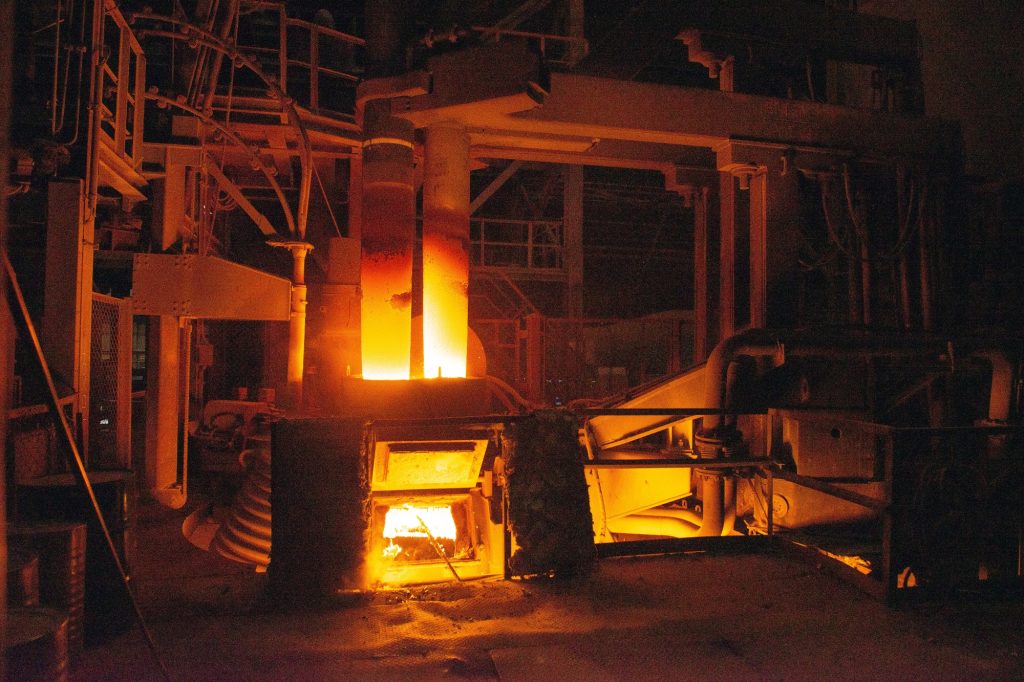
Circular, UK-made steel is being promoted as a route to cut embodied carbon in buildings and infrastructure while reducing exposure to volatile global supply chains. By using scrap-based electric arc furnace production and designing for disassembly and reuse of beams, columns and plate, contractors can lower lifecycle emissions compared with imported basic oxygen furnace steel. For geotechnical and civil teams, specifying circular steel in piles, retaining structures and frames will increasingly be driven by client net-zero targets and whole-life carbon assessments.
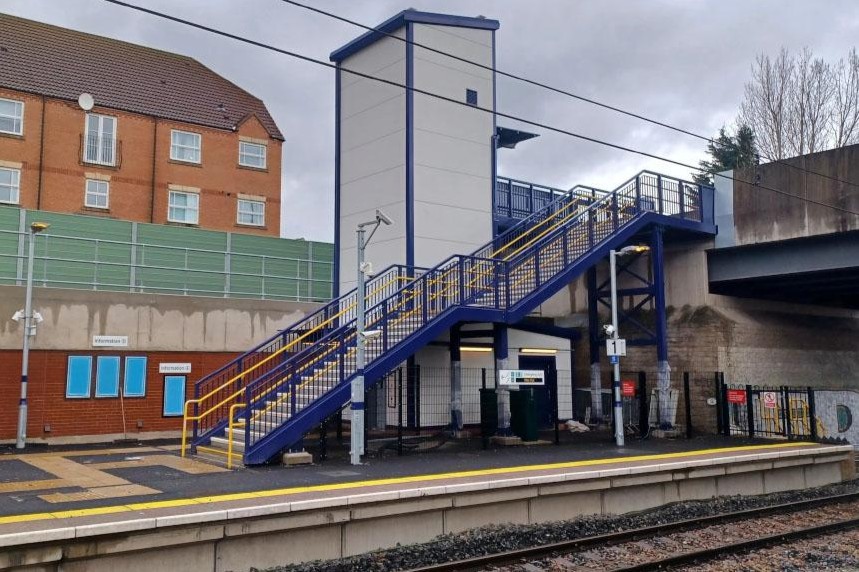
The final two stations on the Northumberland Line, Northumberland Park and Bedlington, are scheduled to open in the coming weeks, completing the rail corridor between Ashington and Newcastle. Northumberland Park will provide an interchange with the existing Tyne and Wear Metro network, requiring integrated track, signalling and platform interface arrangements. Bedlington’s opening restores heavy rail passenger services to a town long served only by freight, with implications for level crossing operation, timetable planning and local road–rail interface management.
Swiss researchers have strengthened ageing bridge decks by embedding heat‑activated iron‑based shape memory alloy (Fe‑SMA) bars within an ultra‑high‑performance fibre‑reinforced concrete (UHPFRC) overlay, creating active prestress when the bars are heated. The Fe‑SMA bars contract on activation and lock in compressive stresses as the UHPFRC hardens, improving fatigue performance and crack control without adding significant self‑weight. This approach offers a thin, bonded strengthening layer that can be installed on existing decks with minimal clearance loss and limited traffic disruption.
National Highways has launched preliminary market engagement for the long-delayed A38 Derby Junctions upgrade, now packaged as a single £600M, 10-year contract. The scheme covers three major grade-separated junctions around Derby on the A38 trunk road, a key north–south freight corridor linking the M1 and A50, and is expected to involve substantial earthworks, retaining structures and traffic management on constrained urban alignments. Contractors will need to plan for extended construction phasing, complex utilities diversions and maintaining high AADT flows throughout the decade-long delivery period.
Hinkley Point C’s first EPR reactor unit will now start generating power in 2030, as EDF Energy confirms project costs have risen to £35bn in 2015 prices, almost double the original budget. The twin-unit plant, designed for around 3.2GW gross output, remains based on the Flamanville and Taishan EPR reference designs, which have themselves faced schedule and cost overruns. Civil and nuclear contractors will need to manage prolonged high-intensity works on the 650ha Somerset site, with extended use of deep excavations, heavy lifts and complex reinforced concrete structures.
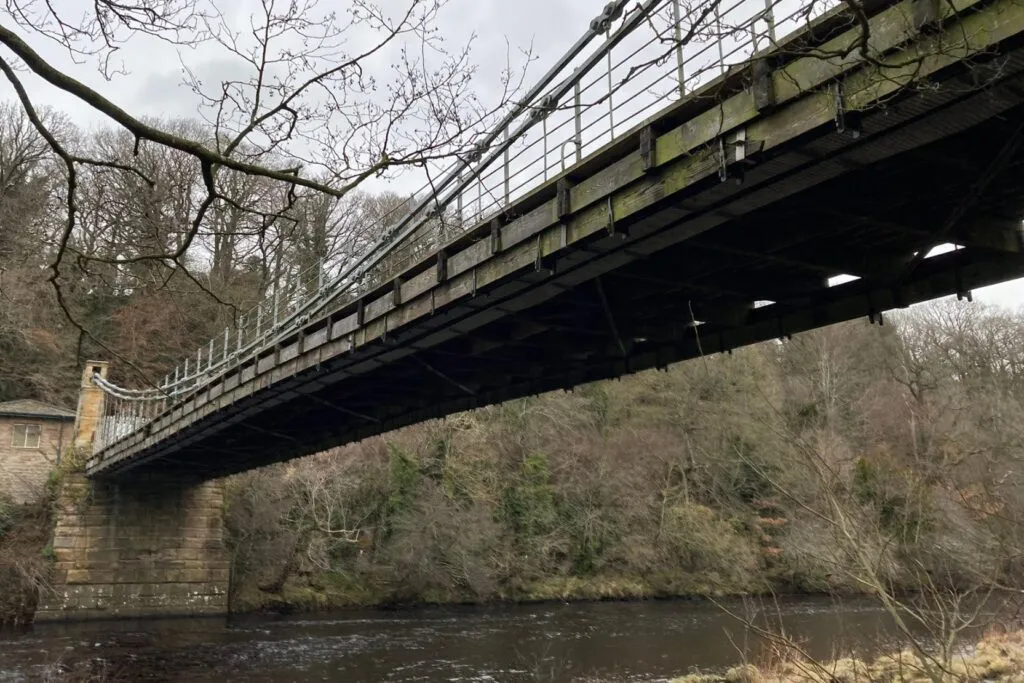
Work to reconstruct the Grade II*‑listed Whorlton Suspension Bridge in County Durham, the UK’s oldest road suspension bridge, has entered the re‑erection phase after a detailed design review deemed many original wrought‑iron components structurally unsound. Engineers are replacing or strengthening key load‑bearing elements, including hangers and deck connections, while retaining the historic suspension chains and stone towers where capacity checks confirm adequate residual strength. The project demands careful temporary works and staged lifting to control stresses in the 19th‑century fabric and meet current highway loading and inspection requirements.
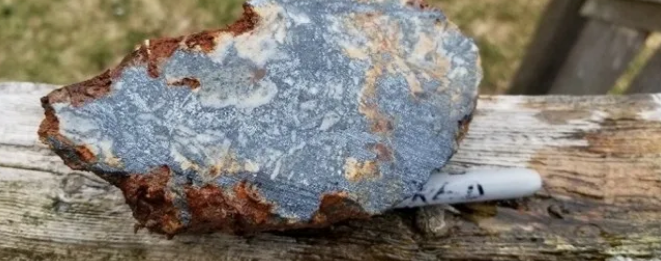
Antimony Resources Corp has exposed additional “massive” stibnite mineralisation in bedrock at the Marcus West Zone of its Bald Hill project in New Brunswick, and will immediately drill up to six shallow holes to test the zone at 30–50 m depth alongside a 10,000 m definition drilling campaign on the Main Zone. Historic trenching in the Central Zone returned 2.90% Sb over 8.18 m, including 5.79% Sb over 1.75 m and 8.47% Sb over 1.53 m, while ATMY trenching has traced South Zone stibnite over ~150 m. The 2026 programme also includes soil sampling, prospecting, and a potential airborne survey, positioning Bald Hill as a North American antimony target amid Chinese export controls.
Anglo American reported a $3.7 billion loss after a further $2.3 billion writedown on De Beers, cutting the diamond unit’s carrying value to $2.3 billion and taking total impairments to $6.8 billion in 2025, while trimming its dividend to $0.23 per share and reducing net debt to $8.6 billion. Copper and iron ore, including growth via the Teck Resources merger and assets such as Quebrada Blanca near Collahuasi, remain the core earnings focus as Anglo advances plans to exit diamonds, coal and platinum. Anglo is also in advanced talks with Mitsubishi Corp on partnering at the Woodsmith polyhalite project in northern England, which hosts the world’s largest known polyhalite deposit marketed as POLY4 and is currently on care and maintenance.
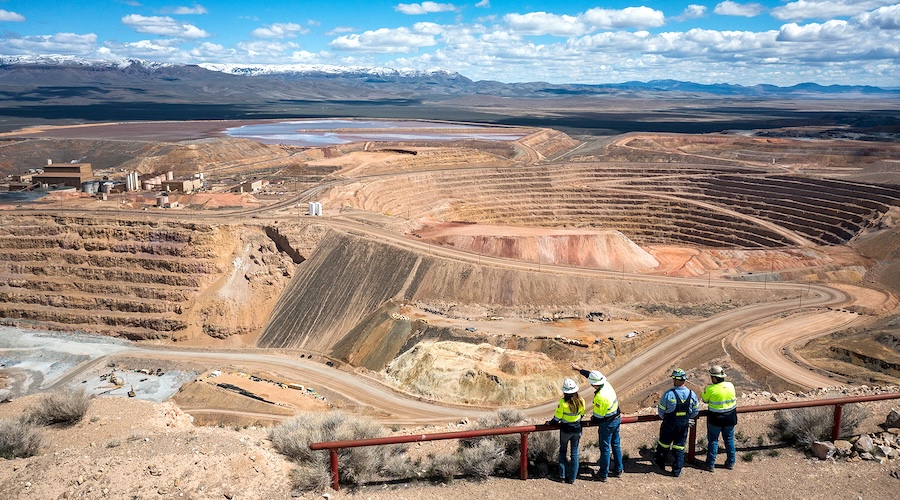
Newmont has issued Barrick with a formal notice of default, alleging Barrick diverted resources from the Nevada Gold Mines (NGM) joint venture to its wholly owned Fourmile project in breach of their 2019 JV agreement and Newmont’s right of first refusal. The dispute threatens Barrick’s plan to spin off its North American business, including its 61.5% NGM stake and Fourmile, via a 10–15% equity sale later in 2026, a move Newmont believes requires its consent. With NGM estimated by RBC to represent about 60% of Barrick’s market value and Barrick’s gold output falling for six consecutive years, any prolonged legal or operational disruption at Nevada will be closely watched by mine planners and investors.
First Quantum Minerals’ updated technical report values the Taca Taca copper-gold project in Salta, Argentina at an after-tax NPV of $5.92 billion with a 19.3% IRR, assuming $4.50/lb copper and $3,000/oz gold, more than double the 2021 NPV of $2.36 billion. The open-pit design is based on 1.99 billion tonnes of proven and probable reserves grading 0.42% Cu, 0.01% Mo and 0.09 g/t Au, supporting 35 years of mine life with initial 40 Mt/y processing, expanding to 60 Mt/y in year five. Forecast output averages 291,000 t/y Cu and 133,000 oz/y Au for the first decade at cash costs of $0.97/lb, but major capex of about $5.2 billion is unlikely before 2028, pending RIGI incentives and a restart of Cobre Panama.
Nova Minerals’ US-listed shares rose over 6% to $6.78 (market cap $255.3 million) even as short seller Spruce Point Capital Management disclosed a short position and warned of 45–60% downside to $2.50–$3.50 per ADR, or more than 100% under adverse scenarios such as loss of US Department of War funding. Spruce Point’s report questions Nova’s ability to deliver its proposed gold–antimony mine at the 500 km² Estelle project in Alaska’s Tintina belt, citing lack of infrastructure, community opposition, severe weather and concerns over the qualifications of its “competent” and “qualified” person. Nova plans a central mining and processing hub targeting first military-grade antimony output within two years, backed by a $43.4 million DoW award, and is preparing to redomicile to the US while consolidating the remaining 15% of Estelle.
Kazatomprom has agreed a uranium supply deal with India’s Department of Atomic Energy covering more than 50% of the company’s booked asset value, potentially locking in long-term offtake from the world’s largest resource holder. The transaction, which requires shareholder approval via an extraordinary general meeting under Kazakh law, comes as Kazatomprom lifted output to 67.2 million lb U₃O₈ in 2025, up 10% year-on-year, and targets a further 9% increase this year. Analysts, including Teniz Capital, still see a structural uranium deficit despite this additional Kazakh supply.
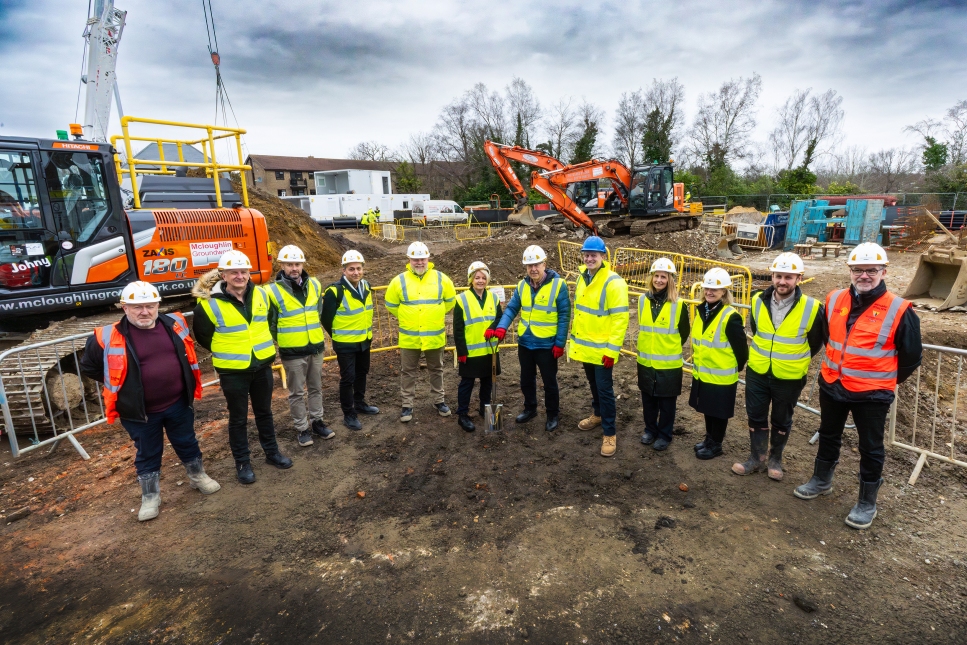
Willmott Dixon has started main construction on a £20m, two-storey health centre on the former Weybridge hospital site in Surrey, following two months of enabling works. Funded by the Department of Health & Social Care, NHS Property Services and NHS Surrey Heartlands ICB, the Murphy Philipps–designed facility is scheduled to open in spring 2027. The building will accommodate the Phoenix Family Practice plus maternity, same-day urgent care, diagnostics and wider wellbeing services, with layouts planned for long-term flexibility and future reconfiguration.
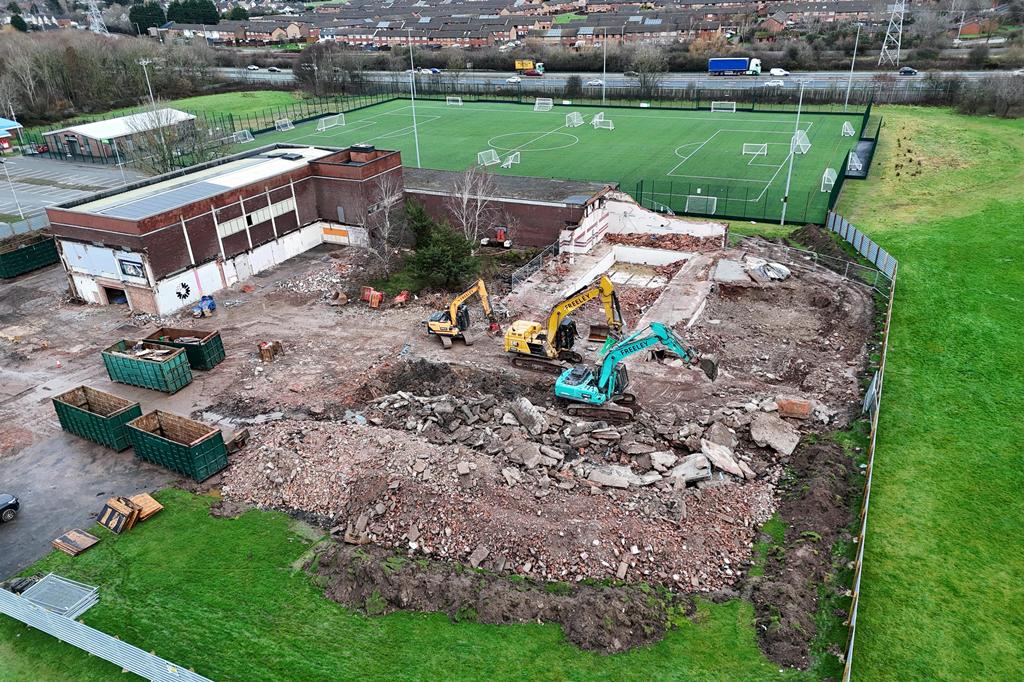
Demolition contractor J Freeley has begun dismantling the 1960s Woodchurch leisure centre in Birkenhead, following asbestos removal, with completion scheduled for April 2026. The reinforced concrete complex, which includes a disused swimming pool and indoor sports halls, sits in a dense residential setting alongside schools, a nursery and a family centre that must remain operational. Freeley has established exclusion zones, alternative pedestrian routes and tight traffic management to maintain access to the adjacent community centre and sports ground while controlling public interface risk.
Haringey Council has let a 10‑year, £570m framework to Equans Regeneration, United Infrastructure, Hugh LS McConnell and Mulalley & Company to upgrade 20,000 council homes across four geographic lots. The programme targets 14,500 renovations in the next three years, with 987 homes in 2024/25, rising to 1,929 in 2028/29, focusing on external wall and loft insulation, energy‑efficient doors and windows, new roofs, and fire safety works. The council aims to achieve 100% Decent Homes compliance by 2028 while lifting thermal performance and communal area standards.
Environment Agency drones are being deployed more aggressively against organised fly-tipping, with a 33-strong pilot squad logging 272 flight hours since July and preparing to carry light detection and ranging (LiDAR) payloads for high-resolution volumetric mapping of illegal waste sites. Moving LiDAR from manned aircraft to UAVs is intended to give prosecutors precise 3D evidence of waste locations and extents, while a new screening tool cross-checks lorry licence applications against waste permit records to flag suspect operators. Enforcement capacity has been boosted with the joint waste crime unit expanded from 13 to 20 staff, supporting 751 illegal sites shut and 221 prosecutions since March 2025 under a £15.6m enforcement budget.
Hochtief PPP Solutions (UK & Ireland) has appointed former Derwent Facilities Management operations director Grahame Sheeran as its new facilities management director, based at the company’s Cheadle offices. Sheeran will oversee FM delivery across Hochtief’s national PPP portfolio, including contracts with Aspire Student Group and the specialist Data Centre Partners division, covering complex SPV and contract-led environments. His remit includes mobilising new total facilities management contracts and developing FM service solutions to support future PPP acquisitions across the UK.