Environment Agency drone squad: LiDAR enforcement lessons for waste engineers
Reviewed by Tom Sullivan
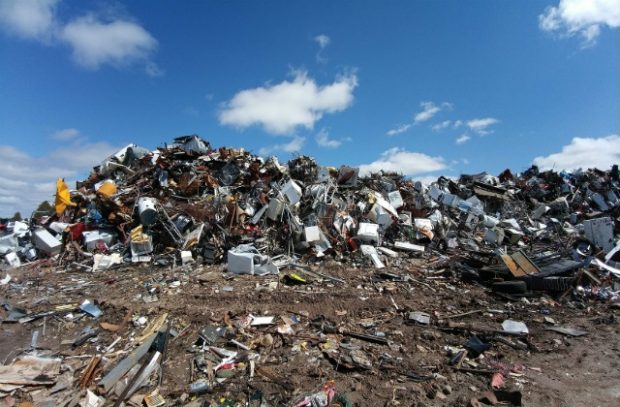
First reported on The Construction Index
30 Second Briefing
Environment Agency drones are being deployed more aggressively against organised fly-tipping, with a 33-strong pilot squad logging 272 flight hours since July and preparing to carry light detection and ranging (LiDAR) payloads for high-resolution volumetric mapping of illegal waste sites. Moving LiDAR from manned aircraft to UAVs is intended to give prosecutors precise 3D evidence of waste locations and extents, while a new screening tool cross-checks lorry licence applications against waste permit records to flag suspect operators. Enforcement capacity has been boosted with the joint waste crime unit expanded from 13 to 20 staff, supporting 751 illegal sites shut and 221 prosecutions since March 2025 under a £15.6m enforcement budget.
Technical Brief
- Lidar currently flown from a dedicated manned aircraft primarily for national flood information capture.
- Drone-captured 3D datasets are intended to be admissible courtroom evidence locating precise waste boundaries and volumes.
- New screening tool cross-checks lorry licence applications directly against Environment Agency waste permit databases in real time.
- Suspect haulage operators are algorithmically flagged before they obtain permissions to transport controlled waste streams.
Our Take
The Environment Agency and Defra feature together in several recent UK items in our database, signalling that waste enforcement and water regulation are increasingly being tackled as a joined-up compliance agenda rather than isolated policy strands.
A 50% uplift to the Environment Agency’s £15.6m enforcement budget, combined with the expansion of the joint unit for waste crime, suggests operators on marginal or informal waste sites in the UK should now assume a materially higher probability of aerial detection and prosecution.
With 751 illegal waste sites already shut in a record enforcement year, the use of drones for fly‑tipping surveillance is likely to spill over into monitoring of other land-use breaches, including unpermitted mineral extraction and stockpiling that fall under the ‘illegal mining’ incident category in our coverage.
Prepared by collating external sources, AI-assisted tools, and Geomechanics.io’s proprietary mining database, then reviewed for technical accuracy & edited by our geotechnical team.
Related Articles



Related Industries & Products
Mining
Geotechnical software solutions for mining operations including CMRR analysis, hydrogeological testing, and data management.
CMRR-io
Streamline coal mine roof stability assessments with our cloud-based CMRR software featuring automated calculations, multi-scenario analysis, and collaborative workflows.
HYDROGEO-io
Comprehensive hydrogeological testing platform for managing, analysing, and reporting on packer tests, lugeon values, and hydraulic conductivity assessments.
GEODB-io
Centralised geotechnical data management solution for storing, accessing, and analysing all your site investigation and material testing data.