A38 Derby Junctions £600M, 10‑year deal: delivery risks and phasing for engineers
Reviewed by Tom Sullivan
First reported on New Civil Engineer
30 Second Briefing
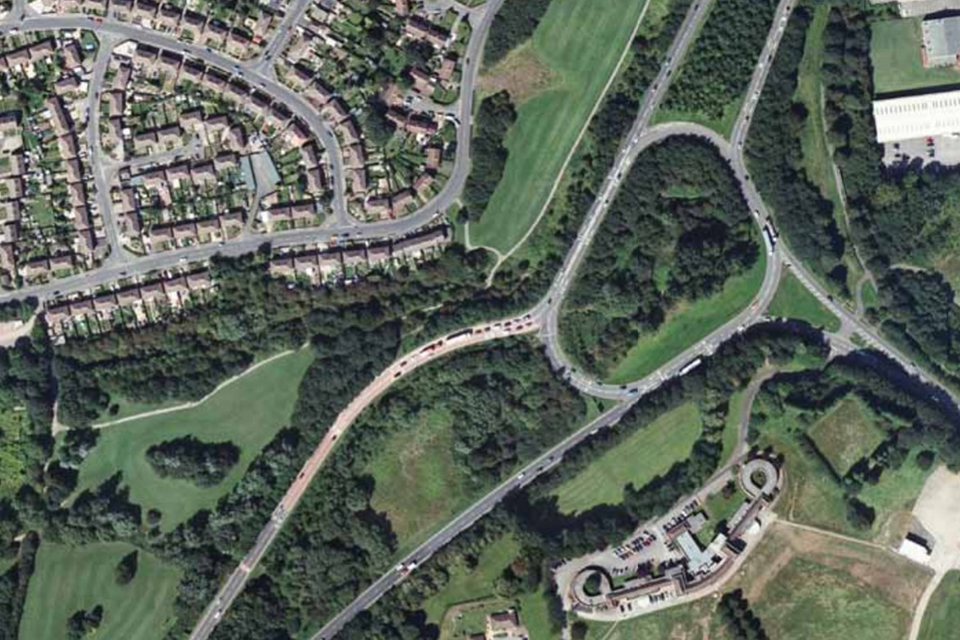
National Highways has launched preliminary market engagement for the long-delayed A38 Derby Junctions upgrade, now packaged as a single £600M, 10-year contract. The scheme covers three major grade-separated junctions around Derby on the A38 trunk road, a key north–south freight corridor linking the M1 and A50, and is expected to involve substantial earthworks, retaining structures and traffic management on constrained urban alignments. Contractors will need to plan for extended construction phasing, complex utilities diversions and maintaining high AADT flows throughout the decade-long delivery period.
Technical Brief
- Preliminary market engagement notice signals early contractor involvement before formal procurement launch.
- Single 10‑year contract structure implies integrated design, construction, phasing and long-term traffic management responsibilities.
- Long delay history suggests updated cost, risk and programme baselines will be required at tender stage.
- Market engagement phase will test contractor appetite for prolonged urban works under live traffic.
- Supply chain planning will need to accommodate sustained heavy civils workload over a full decade.
- Similar National Highways frameworks indicate early focus on constructability, logistics and stakeholder disruption constraints.
Our Take
Within our 752 Infrastructure stories, UK highway schemes led by National Highways tend to cluster in the £100M–£300M range, so a £600M, decade-long A38 Derby Junctions contract sits at the upper end of current road project scale and complexity.
A 10-year delivery window for a single corridor in the United Kingdom signals extended phasing and traffic management, which usually means prolonged interfaces with local authorities and utilities compared with shorter, design-and-build motorway upgrades in our database.
Projects of this value bracket in our coverage often trigger early contractor involvement or alliance-style arrangements, so bidders on the A38 Derby Junctions scheme are likely to be Tier 1 civils contractors with in-house design and major highways portfolio experience.
Prepared by collating external sources, AI-assisted tools, and Geomechanics.io’s proprietary mining database, then reviewed for technical accuracy & edited by our geotechnical team.
Related Articles


Related Industries & Products
Construction
Quality control software for construction companies with material testing, batch tracking, and compliance management.
Mining
Geotechnical software solutions for mining operations including CMRR analysis, hydrogeological testing, and data management.
QCDB-io
Comprehensive quality control database for manufacturing, tunnelling, and civil construction with UCS testing, PSD analysis, and grout mix design management.