Geomechanics, Streamlined.
© 2026 Geomechanics.io. All rights reserved.
A magnitude 7.0 earthquake near Yakutat, Alaska, has generated over 160 aftershocks in 24 hours, with shaking felt across southeastern Alaska and into Yukon and British Columbia, raising concern for ageing port, pipeline and road embankment infrastructure on soft coastal sediments. USGS reports shallow crustal rupture along the Fairweather–Queen Charlotte transform system, with peak ground accelerations locally exceeding typical design levels for older structures. Geotechnical teams are prioritising rapid reconnaissance of slope stability, liquefaction-prone deltaic deposits and critical lifelines, including fuel terminals and regional airstrips.
A newly built embankment along National Highway 66 at Mylakkadu in Kollam suddenly collapsed, trapping several vehicles including a school bus and opening deep ground fissures across the service road and adjacent plots. The failure occurred on a recently widened section of NH66, where fill had been placed to raise the carriageway above surrounding low-lying land, and eyewitnesses reported no prior signs of distress. State authorities have ordered a technical investigation into embankment design, fill quality, drainage provision and construction supervision, with traffic now diverted and the affected stretch closed.
Liebherr-Components has inaugurated a new hydraulic cylinder production complex in Oberopfingen, completing a three-year construction and relocation programme that began with ground-breaking in December 2022. The facility consolidates and significantly expands capacity for hydraulic cylinders with integrated mechanical manufacturing, previously carried out at the original Kirchdorf an der Iller site. For mining and heavy civil equipment OEMs, the enlarged plant signals increased availability of large, high-load cylinders critical for excavators, haul trucks and cranes, with shorter lead times and more centralised quality control.
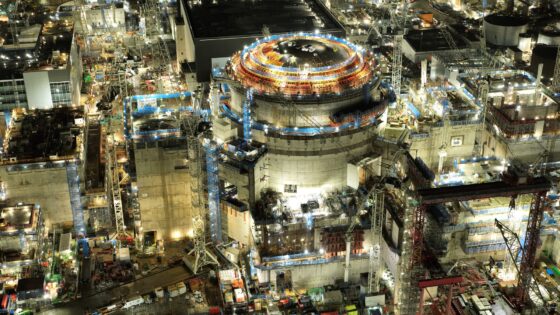
The “independent” Nuclear Regulatory Taskforce commissioned by UK prime minister Keir Starmer has issued its final report calling for a “radical reset of [an] overly complex nuclear regulatory system”, signalling de facto deregulation of new build and life-extension projects. Proposals include streamlining multi‑stage Office for Nuclear Regulation licensing, compressing generic design assessment timelines, and reducing overlap with Environment Agency permitting. For civil and geotechnical designers on projects such as Sizewell C and future SMR sites, this could shorten consent and design-freeze periods but increase pressure to lock in safety‑critical assumptions earlier with less iterative regulatory scrutiny.
Nuclear Waste Services is exploring an unmanned, highly automated design for the UK’s planned deep Geological Disposal Facility (GDF) for higher-activity radioactive waste, potentially removing routine human presence from underground vaults and access tunnels. Concepts under review include remote-operated emplacement systems, autonomous guided vehicles for waste packages, and fully automated ventilation, monitoring and backfilling operations. For geotechnical and civil designers, this points to layouts, shaft and drift geometries, and ground support that must accommodate robotic handling, long-term remote inspection and minimal maintenance access over many decades.
Welsh MPs have warned that the Great British Railways (GBR) Bill, which centralises rail planning and operations under a new GBR body, fails to address Wales’s specific infrastructure and funding needs. They argue that the legislation does not correct historic underinvestment in Welsh rail, where enhancements such as electrification and capacity upgrades on key corridors like the South Wales Main Line lag behind those in England. For civil engineers, the dispute signals continued uncertainty over long-term funding envelopes and governance for major Welsh rail renewals and enhancements.
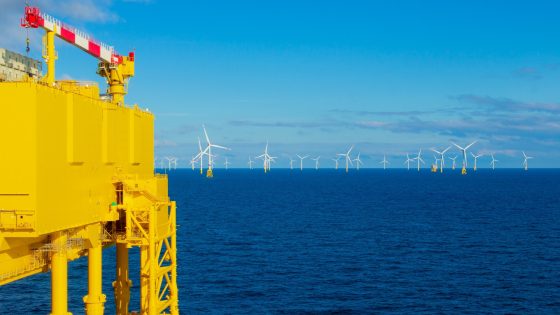
Three major onshore transmission “electricity superhighways” across Great Britain have cleared a key hurdle as Ofgem approves revised delivery timetables and early construction funding for National Grid projects. The schemes, part of the wider Holistic Network Design to move large volumes of offshore wind and other low‑carbon generation from Scotland and coastal hubs into English demand centres, include long‑distance 400kV circuits and new substations. Early funding unlocks detailed design, ground investigations and enabling works, with programme changes intended to de‑risk consenting and construction sequencing.
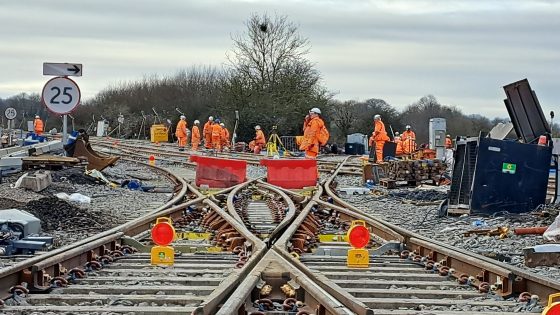
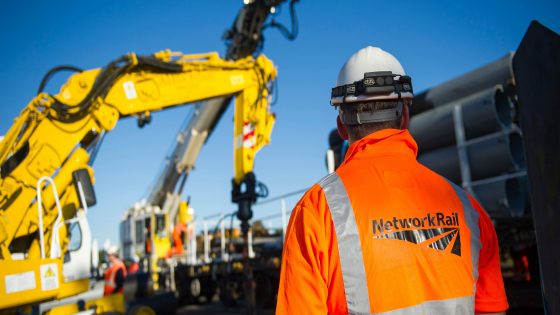
Network Rail’s board has identified four “principal challenges” to meeting its Control Period 7 objectives, including funding constraints, asset condition on ageing structures and track, delivery capacity for major renewals, and integration with new digital signalling. Board papers also flag emerging tensions with HS2 over programme interfaces, access to the existing network during construction, and responsibility for shared assets such as junctions and stations. For civil and rail engineers, this points to tighter possession windows, more complex staging of bridge and track works, and potential re‑prioritisation of renewals near HS2 corridors.
US Representative John Moolenaar is pressing the State Department over what he calls “well-documented” links between Ivanhoe Atlantic and Chinese state-owned enterprises, citing CITIC and Zijin Mining’s combined 39.5% stake in related company Ivanhoe Mines as of 2020 and a $1.8 billion Ivanhoe Mines–Liberia rail rehabilitation deal for Guinean iron ore. Ivanhoe Atlantic insists it is a separate entity from Ivanhoe Mines and says its Guinea iron ore project will supply only US and allied markets, avoiding China’s Trans-Guinean Railway. The dispute signals closer US scrutiny of indirect Chinese stakes in African iron ore and copper logistics.
BRICS central banks have lifted gold’s share of their reserves by 102% since 2020, combining aggressive bullion purchases with price gains as they diversify away from US‑dollar‑denominated assets. Over the same period, Western countries recorded only a 12% rise in gold holdings, largely from price appreciation rather than additional tonnes. The deepening reserve split signals sustained official‑sector demand that will influence long‑term mine project pipelines, reserve replacement strategies and hedging decisions across gold producers.
USA Rare Earth will accelerate commercial production at its Round Top heavy rare earths deposit in Texas to late 2028, two years earlier than planned, after solvent-extraction pilot work enabled its Hydromet demonstration plant in Colorado to start five SX circuits running 2,000–4,000 hours from early 2026. The circuits will focus on dysprosium and terbium while also extracting hafnium and zirconium, feeding into a mine-to-magnet chain that includes a 310,000-square-foot Stillwater, Oklahoma plant targeting nearly 5,000 tonnes of magnets per year from 2026. Shares fell up to 4.3% to $16.56 despite the accelerated schedule.
Silver prices have broken above $60/oz for the first time, with Sprott’s Paul Wong attributing the surge to a shrinking free-trading inventory and a forecast 125 million oz supply deficit in 2025, extending a cumulative shortfall to nearly 800 million oz since 2021. London vault stocks have fallen sharply from their 2021 peak, while global ETF holdings sit around 830 million oz versus 1 billion oz in 2021, leaving limited buffer if investment demand rebounds. Additional pressure comes from China’s strict silver export controls starting in 2026 and silver’s recent addition to the USGS critical minerals list.
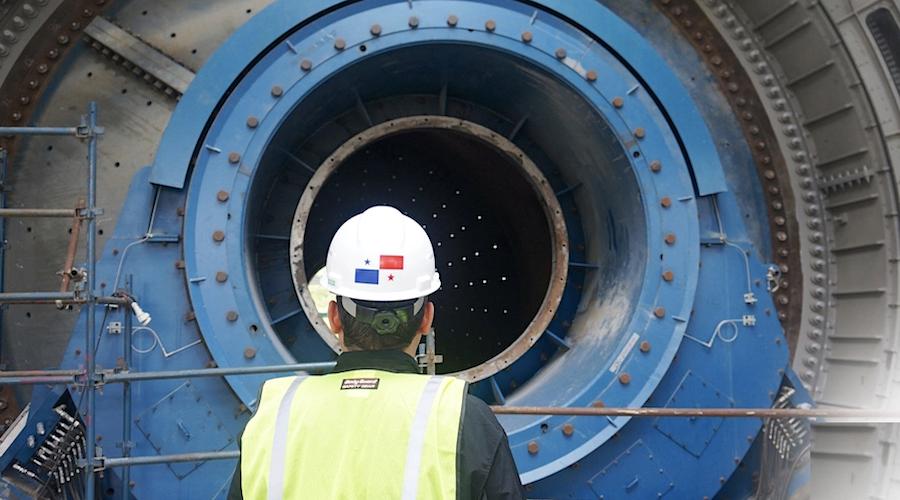
Panama will channel $29 million in royalties from the sale of 122,000 tonnes of copper concentrate stockpiled at First Quantum’s idled Cobre Panama mine into public works, including health centre upgrades, school expansions, road repairs and water and power systems. Under the Safe Preservation and Management Plan, First Quantum must continue paying about $15 million a month in care-and-maintenance costs, which have reached roughly $360 million since the November 2023 shutdown. A final audit due by end-February will inform decisions on restarting the 100 Mt/y nameplate operation, which produced 350,000 tonnes of copper in 2022.
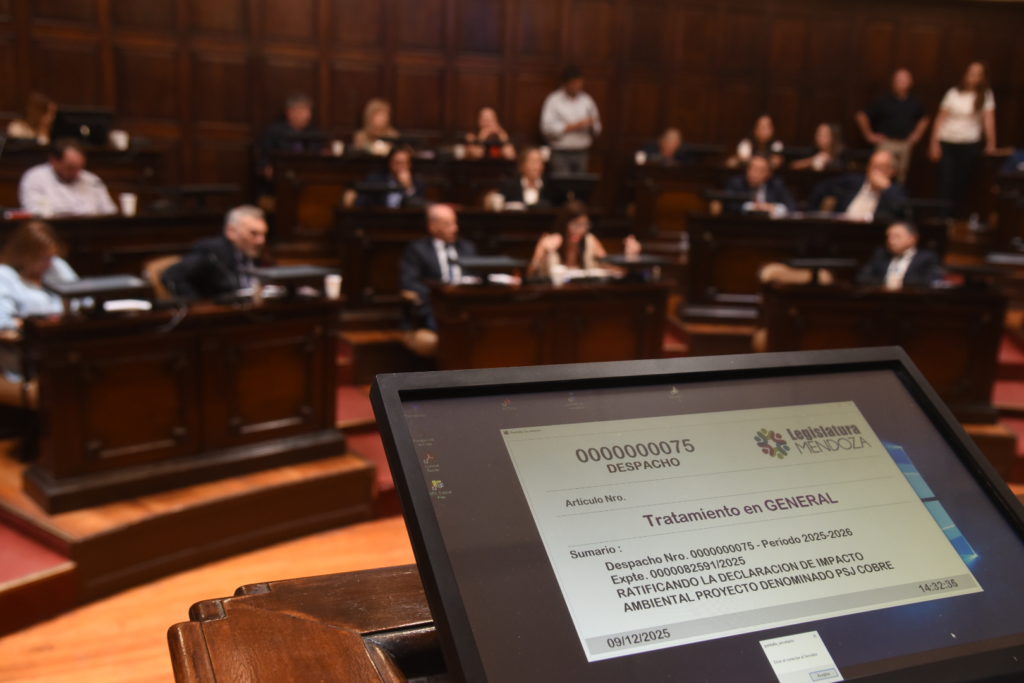
Argentina’s Mendoza province has approved the PSJ Cobre Mendocino project, a $559 million joint venture between Zonda Metals and Alberdi Energy, marking its first large-scale mine in over 20 years after Senate endorsement of the environmental impact statement. The Uspallata operation is planned for 40,000 tonnes per year of copper concentrate over a 16-year mine life, using conventional flotation, with construction scheduled for 18–24 months and an estimated 3,900 construction and 2,400 operating jobs. The project now moves into detailed engineering, feasibility, cost and financing analysis before a construction decision.
Copper prices rebounded to $11,556.50/t on the LME, close to this week’s record $11,771/t, as RBC Capital Markets warned that mine disruptions and weak project pipelines mean higher prices are needed to unlock new supply. Analysts link the tight outlook to AI-driven data centre build-out, EV expansion and expectations of a US copper tariff, all adding to structural demand. The move follows a brief 1.3% pullback after Chinese data showed producer prices falling for a 38th consecutive month ahead of a key US rate decision.
Perpetua Resources has partnered with Idaho National Laboratory, under Battelle Energy Alliance, to host, commission and operate a flexible, modular pilot plant to process Stibnite project ore into military‑specification antimony trisulphide concentrate for munitions and advanced defence systems. The pilot forms part of a US Army Defence Ordnance Technology Consortium agreement, with Perpetua now holding up to US$22.4 million in DOTC funding to advance domestic critical mineral processing. It runs alongside early works on the US$1.3 billion Stibnite gold‑antimony mine in central Idaho, aimed at a fully domestic “ground‑to‑round” supply chain.
Thiess has secured a five-year alliance agreement with Harmony to deliver bulk earthworks, workshop construction and mining services at the greenfield Eva Copper Mine Project in the Cloncurry region of Queensland, with the mining scope valued at about A$700 million. The contract covers establishment of mine support infrastructure and initial material movement, positioning Thiess to manage both early-stage civil works and ongoing production mining. For geotechnical and civil teams, the deal signals imminent large-scale earthworks and workshop foundation construction on a previously undeveloped copper site.
Allison Transmission is expanding its Indian mining presence with automatic transmissions deployed on Shar Projects’ new XCMG haul truck fleet, supporting the government’s Make in India and industrial modernisation programmes. The move extends Allison’s propulsion solutions from defence and on‑highway commercial vehicles into heavy mining applications, pairing its fully automatic gearboxes with XCMG’s large-capacity trucks for overburden and ore haulage. For mine operators, the combination targets smoother torque delivery, reduced driveline shock and lower operator fatigue compared with manual or automated manual transmissions.
Wärtsilä will supply engines, controls and auxiliary systems for a new 120 MW flexible engine power plant in Kalgoorlie, Western Australia, to expand power for Kalgoorlie Consolidated Gold Mines (KCGM), owned by Northern Star Resources. The contract, placed by independent power producer Zenith Energy Operations, adds dedicated generation capacity for one of Australia’s largest open-pit gold operations. For mine operators, the project signals continued reliance on high-availability, engine-based thermal power in remote gold districts, complementing but not replacing on-site renewables and storage.
Metso has opened a new engineering hub in Pittsburgh, USA, focused on bulk material handling and port solutions to support mines and terminals across North America. The office will concentrate expertise in conveyors, shiploaders, stacker-reclaimers and related wear parts and services, integrating with Metso’s existing grinding, pyro and smelting service lines led by Senior Vice President Jonathan Allen. Closer regional design and troubleshooting support should shorten turnaround for upgrades to high-capacity loading systems and brownfield materials handling retrofits.
Iron Mine Contracting has secured a 39‑month mining services contract with Covalent Lithium to deliver drill, blast, load and haul, and run‑of‑mine management at the Mt Holland hard‑rock lithium operation in Western Australia’s Goldfields. The scope covers full open‑pit production support for Covalent’s Mt Holland mine and concentrator, which will feed spodumene concentrate to the company’s Kwinana Refinery now in commissioning. The deal signals long‑term third‑party involvement in both production drilling and material movement at one of Western Australia’s key lithium projects.
BHP has agreed a US$2 billion deal with Global Infrastructure Partners, now part of BlackRock, to restructure its 85% share of the Western Australia Iron Ore (WAIO) inland power network in the Pilbara via a dedicated trust. The transaction separates power infrastructure ownership from mining operations across WAIO’s four main joint ventures, signalling a shift towards third‑party capital for high‑voltage transmission and generation assets. For mine planners and electrical engineers, the move points to longer‑term, utility‑style management of load growth, decarbonisation projects and network reliability.
Perpetua Resources has signed an agreement with Idaho National Laboratory, operated by Battelle Energy Alliance, to host, commission and run a flexible, modular pilot plant to recover critical and defence-related minerals, including antimony, from Perpetua’s orebodies. The pilot is expected to test flowsheets for selective antimony recovery alongside other strategic elements, using containerised process modules that can be reconfigured for different ore types and chemistries. Outcomes will inform full‑scale processing design for the Stibnite Gold Project and potential US domestic supply chains for military‑grade antimony products.
Aurecon has been appointed Engineering Program Partner for Rio Tinto Iron Ore’s Sustaining Capital teams in Western Australia from October 2025 to October 2028, extending its long-running role on Pilbara brownfield projects. The mandate covers multi‑disciplinary engineering for fixed plant, rail and port assets across RTIO’s iron ore network, including structural upgrades, materials handling improvements and life‑extension works on existing processing infrastructure. For geotechnical and civil teams, the partnership signals continued demand for staged upgrades, brownfield tie‑ins and asset integrity assessments rather than major greenfield expansions.