Geomechanics, Streamlined.
© 2026 Geomechanics.io. All rights reserved.
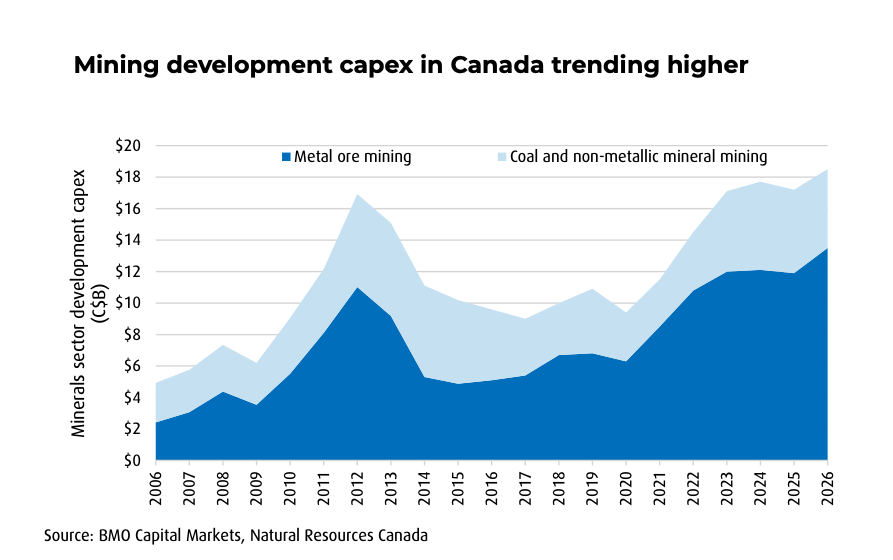
Canada is pitching C$1 trillion in global investment with mining at its core, with more than a third of the 167 projects at the Canada Investment Summit in Toronto tied to minerals, including Troilus Mining’s C$1.43‑billion gold‑copper project in Quebec and the first new uranium refining and conversion facility in over 40 years. BMO expects Canadian miners to spend about C$350 billion over five years, but lengthy permitting and 20‑year mine timelines threaten delivery. Ottawa is courting over $70 trillion in investor capital while signalling support for downstream assets such as copper smelting, battery precursor plants and rare earth separation to build full domestic supply chains.
Saudi Arabia has reported identifying about 110 million tonnes of uranium-bearing ore in the Medina region, with Energy Minister Prince Abdulaziz bin Salman saying exploration shows “high concentrations” of heavy rare earth elements alongside “promising” uranium grades. No uranium grade, contained metal estimate, mineralogy or recovery factors were disclosed, leaving the economic viability and potential production scale uncertain for now. The find coincides with a 30‑year US–Saudi civilian nuclear co‑operation deal that could permit domestic enrichment and follows C$710 million of Canada–Saudi commercial agreements.
ONGold Resources has revived the Monument Bay project in northeast Manitoba with a new open-pit resource of 74.4 million measured and indicated tonnes at 0.84 g/t gold (2.0 Moz) plus 24.5 million inferred tonnes at 0.62 g/t (491,000 oz), using a 0.2 g/t cut-off and a US$3,000/oz pit shell. SRK Consulting rebuilt the model over the 4.2 km Twin Lakes shear zone from 833 diamond holes (~237,000 m), defining higher-grade zones above 1 g/t and proposing a 20-hole, 11,150 m drill programme targeting deeper shoots such as TL16-575 (132 m at 6.15 g/t, including 2.75 m at 163.92 g/t). Tungsten, occurring mainly as scheelite and historically estimated at 248,000 tonnes WO₃, is being re-evaluated via 13,900 new assays to test continuity for a potential separate resource.
Osisko Gold Group has approved full construction of the C$841 million Cariboo underground gold mine in the historic Wells-Barkerville camp, 500 km north of Vancouver, targeting first gold in early 2029 and commercial production in H2 2029 after a 30‑month build. The project is already 22% complete, with about 3 km of underground development, 40% of detailed engineering and 44% of long-lead procurement finished, and a feasibility study outlining 1.89 million oz over 10 years from 17.4 Mt at 2.88 g/t measured and indicated. Financing includes C$1.64 billion in available capital, a US$30 million equity placement to Trafigura at US$3.14 per share, and a potential US$120 million gold prepay, leaving a projected C$201 million surplus and committing up to 80,000 t of concentrate and doré in the first four years.
The US government has taken a 10% equity stake in Trilogy Metals via a US$35.6 million investment to advance the Upper Kobuk Mineral Projects (UKMP) in Alaska’s remote Ambler district, where Ambler Metals, a 50/50 JV with South32, controls 190,929 ha including the high‑grade Arctic and Bornite deposits. Arctic’s latest plan outlines a 13‑year mine life with average annual payable output of 149 Mlb copper, 173 Mlb zinc, 26 Mlb lead, 32,538 oz gold and 2.8 Moz silver, and is now in the FAST‑41 federal permitting stream with a Clean Water Act Section 404 application lodged. Federal agencies have also been directed to advance approvals and financing options for the proposed 340 km Ambler Road, a critical constraint on project logistics and construction access amid ongoing environmental and indigenous opposition.
The US Department of War will invest $450 million in The Elmet Group, including $150 million for Blue Moon Metals’ Springer tungsten complex in Nevada, combining a $50-million concentrate prepayment, $25-million equity and a $75-million JV to restart the ammonium paratungstate plant by mid-2028. More than $165 million will upgrade Elmet’s tungsten and advanced materials plants in Maine, Michigan and Ohio, while a separate indefinite-delivery contract with the Defense Logistics Agency provides up to $2 billion for tungsten ores, concentrates and sodium tungstate through 2033. Analysts at Haywood and Scotiabank say the package materially de-risks Springer, leaving Blue Moon with full ownership of the mine and mill and a 20% APT stake.
Stormlands Mining’s updated economic model for Galway Metals’ Clarence Stream gold‑antimony project in New Brunswick lifts project NPV 52.8% to US$676.1 million at a 5% discount rate, using a gold price of US$4,245.22/oz and antimony at US$31,000/t. The 2026 MRE‑based case raises projected life‑of‑mine revenue from US$4.23 billion to US$5.48 billion and EBITDA from US$2.93 billion to US$4.17 billion, with IRR increasing from 31.15% to 44.86% and payback shortened by about one year. Gold contributes over 95% of modelled revenue and almost all of the US$1.25 billion uplift, underlining strong price sensitivity ahead of the formal PEA.
Milford Mining Company Utah has secured a conditional US$25 million, 16.5‑year USDA Rural Development loan guarantee, privately financed via Magnolia Bank, to expand its fully permitted copper mining and processing complex in Beaver County. The investment targets modernisation of processing equipment, removal of bottlenecks and capacity upgrades to double copper cathode and concentrate throughput by end‑2027 across the 62,000‑acre property, which also hosts tungsten, antimony and rare earth elements. MMCU expects to add about 100 jobs to its current 180‑strong workforce in rural Utah.
Hancock Iron Ore is using Microsoft Azure AI tools, including Microsoft Foundry, Microsoft Fabric, Azure Databricks and Microsoft 365 Copilot, to predict and schedule maintenance on its heavy-haul rail network in Western Australia, targeting a 10% extension in rail asset lifespan. Unified data from inspection, maintenance and operations is being fed into AI-assisted decision systems so track teams can intervene earlier on wear, geometry defects and operational constraints. For geotechnical and civil engineers, the approach signals growing reliance on integrated condition-monitor data to optimise track life under high axle loads.
NRW Holdings’ subsidiary Primero Group has secured the EPC contract for Ramelius Resources’ Mount Magnet Expansion Project in Western Australia, covering a major upgrade of the gold processing plant. The works will reconfigure processing infrastructure to integrate multiple ore sources into a single production hub, shifting Mt Magnet towards a centralised treatment model. For plant and process engineers, the project signals upcoming brownfield tie-ins, debottlenecking of existing circuits and potential changes to comminution and leach residence times to handle more variable feed.
SME and the SME Foundation are offering approximately $1.6 million in scholarships for the 2026–2027 academic year to SME student members pursuing mining and minerals careers. The application window runs through 15 October, targeting undergraduates and postgraduates in mining engineering, metallurgy and related disciplines. For operators and consultants, the programme signals a continued pipeline of formally trained graduates at a time of tightening labour markets and increasing technical demands around automation, geometallurgy and ESG reporting.
Glencore Technology’s Jameson Cell is delivering higher mass pull and improved concentrator recoveries at Valterra Platinum’s Mogalakwena North Concentrator in South Africa after four units replaced 40 conventional flotation cells. The compact Jameson Cells provide intensified mixing and aeration in a much smaller footprint, cutting the number of banks and associated piping, instrumentation, and maintenance points. For plant designers and metallurgists, the case signals scope to debottleneck existing flotation circuits and reduce capex/opex by substituting high-intensity cells for large fleets of conventional machines.
Canada Nickel Company has chosen Komatsu and dealer SMS Equipment to supply the primary load-and-haul fleet for the Crawford nickel project in Ontario, following competitive proposals from four OEMs. The agreement lays the foundation for an autonomous, battery-electric truck and shovel fleet, integrating Komatsu’s AHS-ready haul trucks with SMS’s Canada-wide support network. For mine planners and engineers, the decision signals early commitment to high-automation, low-emission fleet design, influencing pit layout, power distribution, and maintenance infrastructure from the feasibility stage.
Works have commenced on a $6 million upgrade of the Snowy Mountains Highway between Cooma and Yarrangobilly in New South Wales, funded jointly by the Federal and State governments under a broader $36 million Road Safety programme. The corridor is a key freight and tourism route into the alpine region, so works are expected to focus on pavement rehabilitation, shoulder widening and safety treatments at high‑risk curves and grades. Contractors should anticipate cold‑climate asphalt specifications, drainage improvements and traffic management constraints on steep, two‑lane sections.
The new Fremantle Traffic Bridge in Western Australia will open ahead of schedule on 1 November, with the structure carrying road traffic later that evening after a community walk-through event. The replacement follows closure of the old Fremantle Bridge in February, removing a key bottleneck on the approach to Fremantle Port and the rail corridor. Early opening gives contractors a longer window for staged demolition of the old bridge and final tie-ins, reducing temporary traffic management and construction loading risks over the Swan River.
Rox Resources is preparing to start production stoping at the Youanmi underground gold mine in Western Australia, with development now advanced beyond the original definitive feasibility study (DFS) mine plan. High‑grade infill drilling at the United North lode is targeting tighter orebody definition and greater confidence in stope design and ore delivery scheduling ahead of first stopes. For geotechnical and planning teams, the extended development relative to the DFS suggests scope for revised mine designs, updated ground support regimes and potentially higher early production flexibility.
Victory Metals has secured Mining Lease M20/564 over roughly 2,006 hectares for its North Stanmore heavy rare earth project near Cue in Western Australia, following approval by the state’s Department of Mines, Petroleum and Exploration in early September. The lease grants long‑term mining tenure across the clay‑hosted rare earth mineralisation footprint, enabling detailed mine planning, reserve definition and permitting for processing infrastructure. For geotechnical and mine planners, the decision removes tenure risk and allows progression of pit design, waste landforms and haul road layouts tailored to the project’s shallow, lateritic ore geometry.
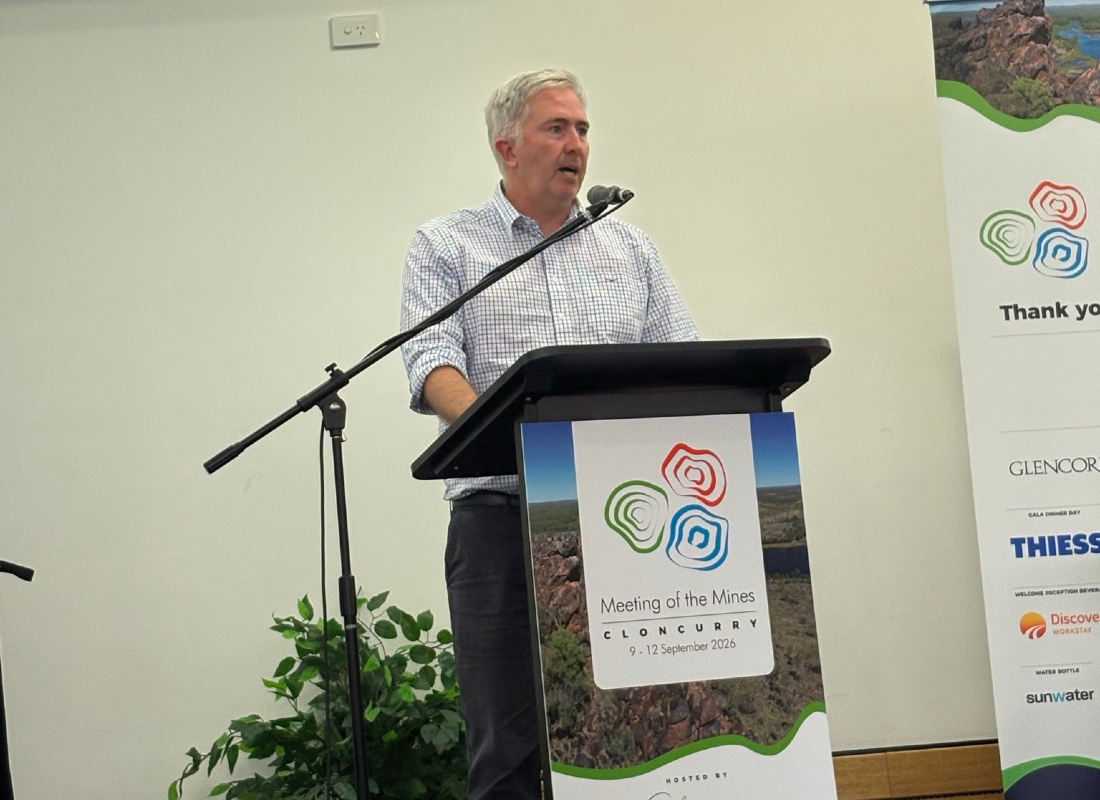
North-west Queensland has been named a core focus of the Federal Government’s $3.4 billion Resourcing Australia’s Prosperity initiative, with Geoscience Australia leading new high-resolution geological and geophysical surveys to target critical minerals. Speaking at the fourth Meeting of the Mines in Cloncurry, Assistant Minister for Resources Anthony Chisholm framed the work as pre-competitive data acquisition to de-risk exploration across the Mount Isa–Cloncurry corridor. For explorers and geotechs, the program signals a pipeline of updated stratigraphic models, basin architecture mapping and mineral systems analysis to refine drill targeting.
Catalyst Metals has lifted underground probable reserves at the Trident deposit by 32 per cent to 524,000oz, now defined as 3.9Mt at 4.2g/t Au, reinforcing feed for its plan to double output across Western Australia’s Plutonic gold belt. The reserve upgrade follows ongoing underground development, supporting longer mine life and scheduling flexibility for Trident as a key ore source. Geotechnical and mine planning teams will need to optimise stope design and sequencing around the higher-grade 4.2g/t inventory to realise the targeted production uplift.
Australian mining bodies are urging the Federal Government to extend capital gains tax (CGT) concessions to junior mineral explorers, matching relief already available to tech and other start-up sectors. The Minerals Council of Australia and the Association of Mining and Exploration Companies warn proposed CGT changes could deter high-risk greenfields exploration, particularly for early-stage ASX-listed juniors reliant on equity raisings. Industry groups argue that without tailored CGT treatment, pre-discovery investors may exit earlier and reduce funding for drilling campaigns and resource definition.
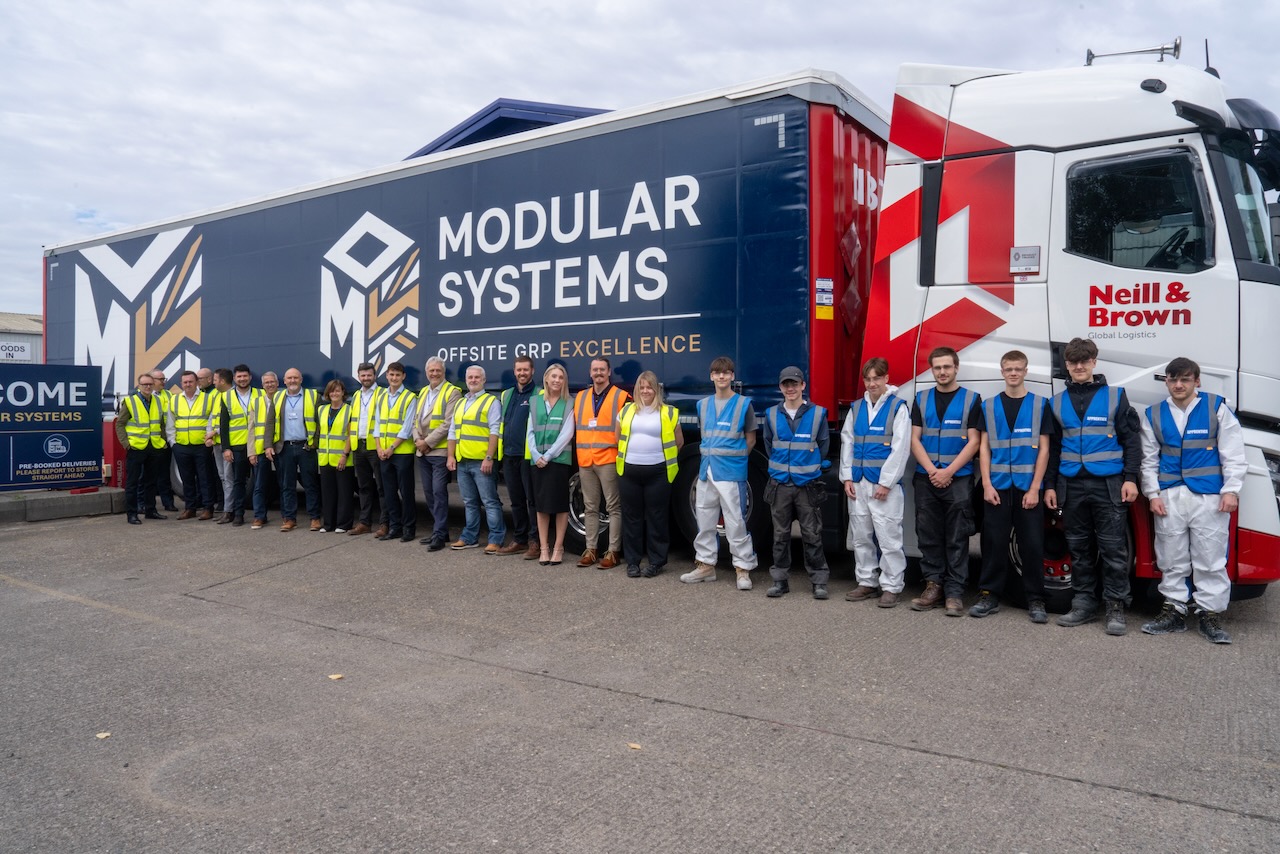
Hull-based Modular Systems has been selected by McLaren Construction to manufacture prefabricated bathroom pods for the Sizewell C worker accommodation campus on the Suffolk coast, part of the new nuclear power station build. The contract will see Modular Systems expand its apprenticeship scheme with Hull College and recruit additional skilled staff across manufacturing, engineering, quality, logistics and technical design. Sizewell C has already invested nearly £5bn with more than 1,000 UK suppliers, signalling substantial ongoing demand for offsite and modular components in major nuclear infrastructure.
Egis has appointed Jamie Gleave as senior environmental impact assessment technical director for the UK, bringing more than 25 years’ experience across energy, transport and water infrastructure, including Wylfa Newydd nuclear power station and National Grid electricity transmission schemes. Gleave previously served as EIA technical director at AECOM, where he led its global EIA technical excellence practice and directed environmental work on the A428 Black Cat to Caxton Gibbet and M42 Junction 6 DCO schemes, acting as expert witness. He will work with UK–Ireland head of environment Afshan Rasheed to build Egis’s EIA, DCO and technical assurance capability.
Anglian Water has appointed Systra Limited to its hydrological surveys and assessments framework to support capital delivery and environmental programmes across infrastructure schemes in the East of England. Systra will deliver baseline hydrological surveys, flood risk assessment and modelling, impact assessments and post-construction monitoring to inform planning, permitting, detailed design and construction sequencing. The work will influence drainage strategies, flood resilience measures and hydraulic design parameters for new and upgraded assets across Anglian’s network.
Grid upgrades are lagging behind the rapid build-out of renewables, with the National Audit Office warning that transmission constraints could cost up to £7.8bn in 2030 if the current programme is not accelerated. Ofgem estimates transmission owners must invest up to £70bn in the next five years, with NESO calling for a further £89bn beyond 2030, yet many of the 64 upgrade projects are still at early development stages and face land-use approval delays of up to three years. Frequent cancellation or rearrangement of planned outages, plus supply chain and skills bottlenecks, signal prolonged curtailment payments to wind and increased reliance on gas plant dispatch.