Geomechanics, Streamlined.
© 2026 Geomechanics.io. All rights reserved.
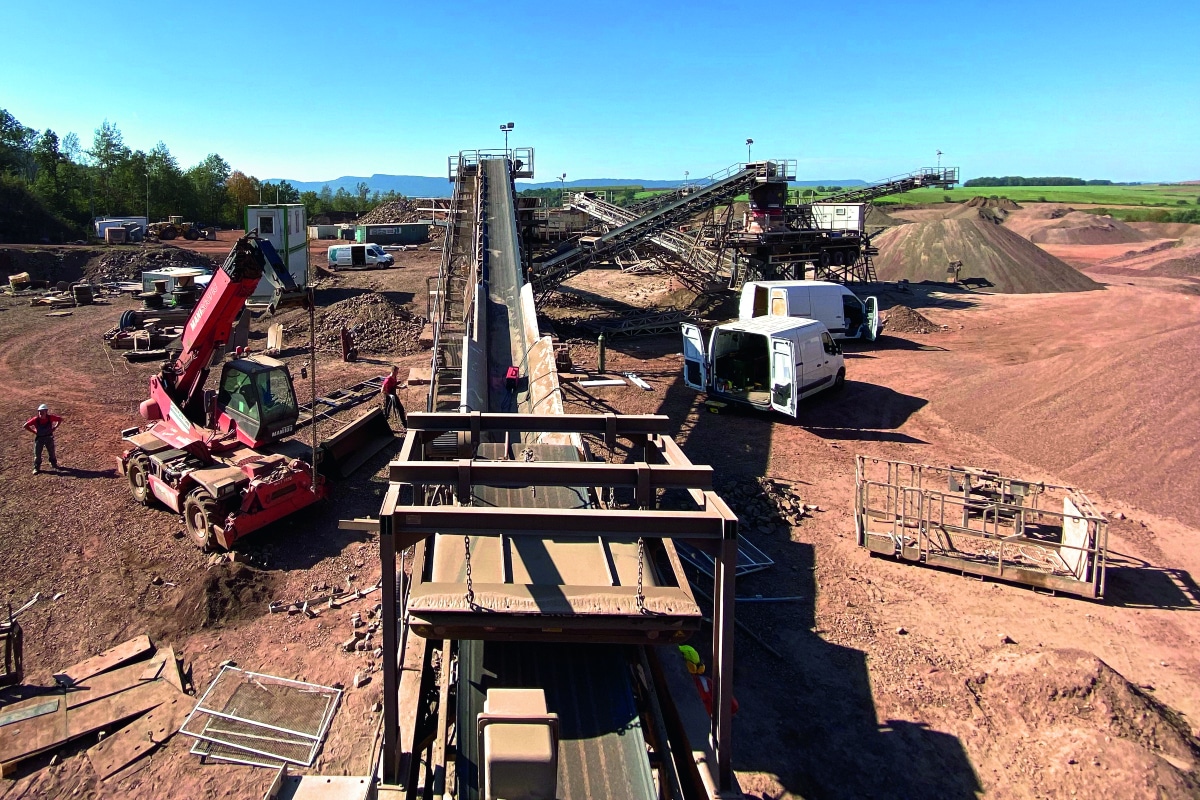
Adderstone Civils is reprocessing about 22,000m³ (circa 48,000t) of excavated stone into Type 1 sub-base for Strata’s first north-east housing scheme in Spennymoor, County Durham, covering adoptable roads, foul and surface water drainage, utilities and external works. The three‑year programme, which began in May 2026, uses an “intelligent” cut‑and‑fill balance so no virgin aggregate is imported and no arisings go to landfill. The materials strategy avoids an estimated 2,000 HGV movements and cuts embodied carbon by roughly 480t CO₂e.
Strengthening of Birmingham’s A38(M) Tame Valley viaduct, which links the M6 to the city centre, has been completed using an asset-led life-extension strategy rather than full replacement, under project management and supervision by Arcadis. Working with Birmingham City Council, AtkinsRéalis and VolkerFitzpatrick, the team delivered critical strengthening works in a live motorway environment, maintaining traffic flow under tight financial constraints. Delivery relied on 360-degree imaging, data-driven quality management, digital access to box girder interiors and enhanced confined-space safety controls to manage risks inside the viaduct.
Will Rudd has enabled installation of a 1 MW solar carport system for Scottish Water’s Stepps HQ in Glasgow, with 2,250 panels spanning 243 parking bays and expected to generate about 1 GWh/year, roughly one third of the site’s electricity and a 160‑tonne annual carbon saving. By re‑using the existing drainage network and SuDS features and adding only one new connection for a GRP switch room, the team avoided extensive new underground drainage works and associated cost. Responsibilities covered foundation and substructure design, swept path analysis for vehicle movements, SER certification of third‑party canopies, and live‑site construction support.
Volvo has redesigned its L30 and L35 compact wheel loaders with a new rear frame featuring additional mounting points for rear-mounted equipment and trailer couplings, plus provision for hydraulic and electrical connections, while retaining high-flow hydraulics of up to 100 l/min on the L30 and 110 l/min on the L35. Split side-mounted counterweights can now be removed for better access, and a larger front-frame opening improves reach to key components and simplifies retrofitting of extra systems. Production of the updated machines is scheduled to start in late 2026.
Kier has reported adjusted revenues up 7.5% to £4,393m for the year to 30 June, from £4,087.8m, with adjusted profit before tax rising 8.8% to £136.4m. The contractor has now set a target for double-digit growth in earnings per share, signalling confidence in its forward order book and margin discipline. For infrastructure and civils suppliers, the stronger balance sheet suggests continued demand for major frameworks and long-term delivery capacity.
An 80t steel and concrete lid measuring 22m by 10m has been installed over Brisbane’s new Albert Street underground rail station as a flood barrier designed for a 1-in-10,000-year event. The structure is being load- and watertightness-tested in situ to confirm performance under extreme hydraulic head and debris impact conditions. For station box and tunnel designers, the project shows a move towards integrated, surface-level hard barriers rather than relying solely on internal flood doors and sump pumping capacity.
Accelerating UK defence spending after the Strategic Defence Review is pushing complex, security‑sensitive projects such as hardened data centres, munitions storage and airfield upgrades to be delivered on compressed programmes. Early engagement of Tier 1 contractors, specialist security and blast consultants, and end‑users during RIBA Stages 0–2 is being used to lock in physical protection measures (e.g. progressive collapse detailing, TEMPEST shielding, vehicle standoff) before planning and cost freeze. For geotechnical and civil teams, this front‑loaded approach shifts key ground risk, utilities diversion and access constraints resolution into pre‑contract phases, reducing late redesign and rework.
Graham has secured a £220M contract from the Environment Agency to deliver the Oxford Flood Alleviation Scheme (OFAS), described as one of England’s most significant flood defence projects. The scheme will create a new flood relief channel around Oxford, integrating earth embankments, lowered floodplains and new river crossings to divert peak flows from the Thames and its tributaries. For civil and geotechnical teams, the project signals substantial packages in large-scale earthworks, river training structures and foundation works in a constrained urban floodplain.
Codelco has signed a strategic agreement with Chilean collective management system Valora Más to recover category A end-of-life tyres, defined as units with rim diameters under 57 inches used on light vehicles and support fleets across its operations. The alliance focuses on optimising collection, traceability and recycling logistics for these ELTs under Chile’s REP (Extended Producer Responsibility) framework, complementing existing in-pit and plant waste streams. For mine operators, the move signals tighter compliance expectations on tyre segregation, storage design and contracted recycling capacity for small and medium-sized tyres, not just ultra-class haul truck tyres.
Techking has signed a strategic cooperation agreement with Boonray Technology to develop intelligent tyre solutions for unmanned, autonomous and electric mining trucks. The partnership focuses on tyre intelligence, electrification and data collaboration, likely integrating real-time tyre condition monitoring and vehicle–tyre interaction data into autonomous haulage control systems. For mine operators, the move signals closer coupling between tyre performance data and fleet management, with potential impacts on haul road design, payload limits and maintenance planning in large open-pit operations.
Mott MacDonald and Dublin-based Roughan & O’Donovan have been appointed to Iarnród Éireann’s new multi-party framework for multidisciplinary project consultancy, valued at about €600M (£515M). The long-term framework will support rail infrastructure planning, design and delivery across the Irish network, covering track, structures, stations and systems. For geotechnical and civil teams, this signals a substantial pipeline of investigation, ground engineering and structural assessment work tied to capacity upgrades and asset renewals.
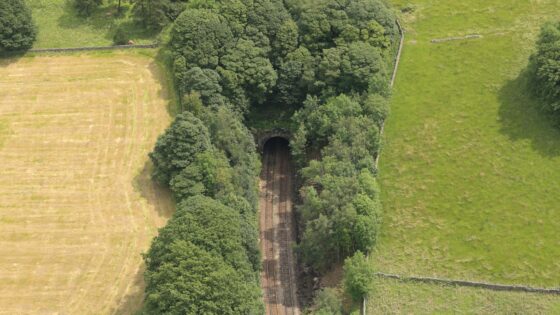
A £1.5M Network Rail project will upgrade 400m of track through the 163-year-old Eaves Tunnel in Buxton during the last weekend of September. Works will focus on replacing life-expired rail and ballast within the single-bore tunnel, improving track geometry and drainage performance on this constrained section. Possession over one weekend suggests intensive access planning, with knock-on implications for track-bed condition monitoring and future maintenance intervals on similar Victorian tunnel assets.
Airport expansion at UK hubs is increasingly driven by resilience and decarbonisation, with projects combining terminal capacity upgrades, airfield reconfiguration and low‑carbon energy systems rather than simply adding gates. Engineers are integrating high‑voltage electrical infrastructure for aircraft stand power, hydrogen‑ready or SAF (sustainable aviation fuel) storage and distribution, and expanded baggage and security halls designed for higher throughputs. For geotechnical and civil teams, this means complex airside phasing on constrained sites, strengthening pavements for heavier next‑generation aircraft and coordinating utility corridors for future‑proofed power and fuel networks.
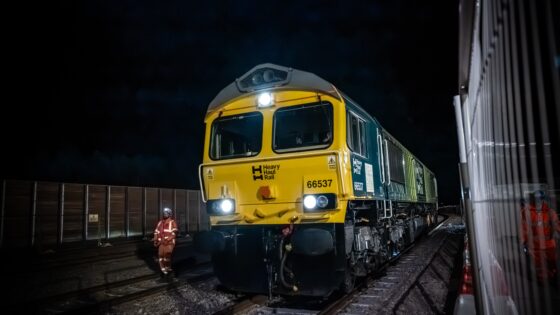
Freight trains have begun delivering construction materials to the Sizewell C nuclear project via its new Green Rail Route (GRR), marking the first commercial rail movements into the site. The GRR connection enables bulk aggregates and other heavy materials to be brought in by rail rather than HGV, reducing road haulage on rural Suffolk routes and cutting associated emissions. For contractors and logistics planners, the rail link changes assumptions on temporary works, laydown areas and just‑in‑time delivery scheduling for major concrete and earthworks packages.
Joining the dots between people and engineering is revisited 12 years after the author began as a graduate at Aecom in 2014, focusing on how design teams engage with end users, local communities and operators throughout project lifecycles. The piece reflects on shifting practice towards earlier stakeholder input into option selection, human-centred design of transport and urban infrastructure, and closer collaboration between engineers, behavioural specialists and social value teams. For practitioners, it signals continued movement away from purely asset-centric delivery towards measurable outcomes in usability, accessibility and long-term community benefit.
Planning consent has been granted for a green hydrogen plant at Cromarty, Scotland’s only hydrogen scheme to secure a contract-for-difference (CfD) in the UK Government’s first Hydrogen Allocation Round (HAR1). The multidisciplinary project team can now proceed to detailed design and procurement under the HAR1 support framework, which guarantees a strike price for low-carbon hydrogen output. For civil and geotechnical engineers, key next steps will centre on coastal site preparation, foundation design for electrolysers and storage, and integration with local grid and port infrastructure.
The UK Government will invest £30M in the SaxaVord Spaceport on Unst in Shetland, to be matched by a further £30M of planned private funding for the vertical-launch facility. The project centres on developing multiple orbital-class launch pads, integration hangars and associated ground infrastructure on a remote former RAF radar site, requiring heavy-lift access, coastal erosion management and robust wind-loading design. For civil and geotechnical teams, the funding signals a pipeline of works on foundations, pavements and marine-facing structures in a highly exposed sub-Arctic environment.
Great British Energy – Nuclear (GBE-N) says it has no record of any approach from small modular reactor (SMR) developer SGE about acquiring land at the former Oldbury nuclear power station site for new SMR units. SGE maintains it lodged an “indicative interest” in purchasing the Oldbury land, which previously hosted twin Magnox reactors, as part of its UK deployment plans. The dispute leaves ownership clarity and programme timing for any SMR build at Oldbury unresolved, complicating early-stage site assessment and grid-connection planning.
UK and US governments are signing two agreements to accelerate commercial nuclear fusion development by combining national expertise in artificial intelligence and high‑performance computing. The pacts are expected to support faster optimisation of plasma confinement and reactor control algorithms, and to improve simulation of tokamak and stellarator designs that currently demand exascale‑class computing. For civil and nuclear engineers, this signals future design programmes where structural, thermal and neutronic load cases for fusion plants are iterated rapidly using shared AI‑driven modelling frameworks.
Northern Star Resources has appointed former Anglo American chief executive Mark Cutifani and resources investment specialist Peter Rozenauers as independent non-executive directors from 1 October, following talks with major shareholder Elliott Investment Management. The board changes come as the ASX-listed gold producer prepares for a leadership transition under incoming managing director Stuart Tonkin, who will oversee operations including the 1.6Mozpa Kalgoorlie and Yandal production centres. For mine planners and project teams, the move signals continued emphasis on large-scale underground gold operations and capital discipline shaped by Cutifani’s and Rozenauers’ backgrounds in complex, multi-asset portfolios.
VEGA radar level sensors are being deployed across the Tłumaczów open-pit melaphyre mine in Lower Silesia, with REGNARS using them to monitor crushers, silos and conveyor transfer points under heavy dust, vibration and temperature fluctuations. Non-contact 80GHz radar units provide continuous level measurement on rock stockpiles and crushed material bunkers, maintaining reliable signals despite build-up and irregular surfaces. For mine operators, the case shows radar’s robustness versus ultrasonic or mechanical systems in abrasive aggregate environments and its value for tighter control of feed rates into asphalt, concrete and rail ballast production.
Cyprium Metals has restarted acid leaching at the Nifty copper complex in Western Australia for the first time since 2009, commissioning existing heaps with acid solution and targeting first copper cathode in the December 2026 quarter. Refurbishment of the site’s solvent extraction and electrowinning (SX–EW) plant is progressing in parallel, enabling a return to on-site cathode production rather than concentrate export. For engineers, the restart centres on rehabilitating legacy heap leach infrastructure and integrating it with an upgraded SX–EW circuit after a 17‑year leach hiatus.
Ramelius Resources has awarded Primero Group the Mt Magnet expansion project in Western Australia, adding 3Mtpa of processing capacity to support its target of 500,000oz of gold production per year by FY30. The EPC-style contract, announced by parent company NRW Holdings, centres on upgrading the existing Mt Magnet plant rather than building a greenfield facility, leveraging current infrastructure and power. For mine planners and process engineers, the uplift in nameplate throughput will drive revised pit schedules, ore blending strategies and potential debottlenecking of crushing and grinding circuits.
Forrestania Resources has secured rights to purchase and process up to two million tonnes of ore over 24 months from MEGA Resources, underpinning feed for its Western Australian gold processing hubs. The deal is paired with a five-year master services agreement covering future mining activities across Forrestania’s broader project portfolio. For plant operators and mine planners, the arrangement provides medium-term ore supply visibility and a contractual framework to schedule additional contract mining, haulage and processing capacity as projects advance.