Melton Mowbray Distributor Road: delivery lessons for project and ground engineers
Reviewed by Joe Ashwell
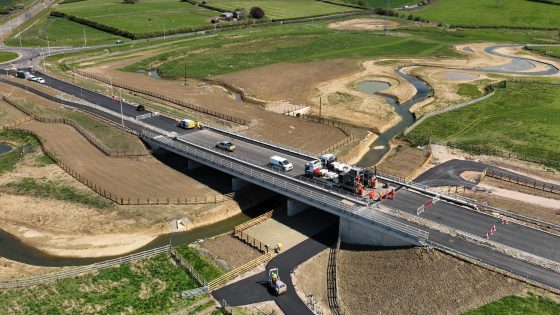
First reported on New Civil Engineer
30 Second Briefing
Construction of the Melton Mowbray Distributor Road, now named Pork Pie Way, saw Galliford Try and Leicestershire County Council work through multiple environmental constraints and programme risks to complete the new link. The scheme required careful phasing around existing traffic in the town, extensive utility diversions and mitigation for sensitive habitats along the corridor. For geotechnical and civil teams, the project illustrates the importance of early contractor–client collaboration on ground risk, drainage strategy and statutory approvals to keep a complex distributor road on schedule.
Technical Brief
- Similar distributor road schemes with constrained corridors and sensitive receptors can benefit from this early, integrated contractor–client approach.
Our Take
Galliford Try’s role on the Melton Mowbray Distributor Road comes as our database shows the contractor simultaneously building a strong pipeline across water (e.g. the £47.5M Camberley Sewage Treatment Works upgrade) and energy-related civils, signalling that its highways work for Leicestershire County Council is part of a broader multi-sector infrastructure push.
Recent coverage of Galliford Try includes sustainability-led initiatives such as powering a National Highways compound in Bootle with a green hydrogen fuel cell generator, suggesting that carbon and air-quality constraints are likely being treated as design drivers rather than add-ons on road schemes like Melton Mowbray.
With Galliford Try now appearing on National Grid’s major civils framework as well as housing and water frameworks, its involvement in the Melton Mowbray Distributor Road positions Leicestershire County Council to tap a contractor that is already navigating complex interfaces between transport, utilities and future grid connections on other UK projects.
Prepared by collating external sources, AI-assisted tools, and Geomechanics.io’s proprietary mining database, then reviewed for technical accuracy & edited by our geotechnical team.


