Geomechanics, Streamlined.
© 2026 Geomechanics.io. All rights reserved.
Geoprofessionals in mining and civil sectors are increasingly adopting AI tools but still struggle to extract value from complex, multisource subsurface datasets, according to Seequent’s 7th Geoprofessionals Data Management Report surveying over 1,000 practitioners. Respondents report data spread across multiple software platforms and large volumes of un-managed files, limiting effective integration of geological, geophysical and geotechnical information. The findings signal persistent bottlenecks in model building, QA/QC workflows and cross-discipline data sharing, despite wider availability of AI-assisted interpretation tools.
The Government of Liberia and ArcelorMittal have signed an amended Mineral Development Agreement extending the company’s iron ore mining rights to 2050, with an option to renew for a further 25 years. The ratified deal secures long-term access to Liberia’s existing rail and port export corridor, critical for moving high-volume ore from inland operations to the Port of Buchanan. For mine planners and infrastructure engineers, the extended tenure supports justification of major brownfield upgrades to rail capacity, load-out facilities and materials handling systems over multi-decade horizons.
FLSmidth has installed a large semi-mobile crushing station with sizer technology at Vale’s S11D Serra Sul iron ore operation in Brazil, with the first 26 m-high module commissioned in Area 5 to open new mining blocks. The semi-mobile design allows relocation as the pit advances, reducing truck haul distances to the conveyor network and supporting S11D’s high-throughput, low-strip-ratio mine plan. For mine planners and process engineers, the setup signals continued shift towards in-pit crushing and conveying (IPCC)-style layouts at large-scale iron ore operations.
Codelco has signed an agreement with Neuvol, Chile’s first collective management system for used and end-of-life tyres, to comply with the country’s Extended Producer Responsibility (REP) Law and embed circular-economy practices in its large mining tyre stream. The alliance’s first milestone is the processing of Codelco’s mining tyres through Neuvol’s system, shifting material from on-site stockpiles and potential landfill towards recovery routes such as granulation, pyrolysis or co-processing. For mine operators, the deal signals growing regulatory pressure to design haulage tyre logistics, storage yards and contracts around traceable collection and certified recycling capacity.
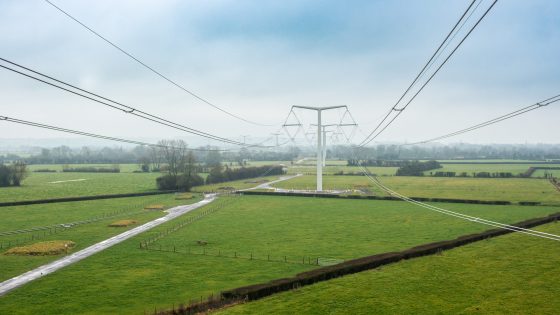
National Grid has deployed Triton, a digital twin and data visualisation platform developed with Atos, to model future electricity demand at grid supply points and transmission substations and cut infrastructure planning time by up to 70%. The tool integrates asset, demand and network constraint data to test reinforcement options virtually, allowing planners to compare multiple substation upgrade and new connection scenarios before committing to physical design. Faster optioneering is expected to de-risk programme delivery for major connections, including utility-scale renewables and high-load industrial customers.
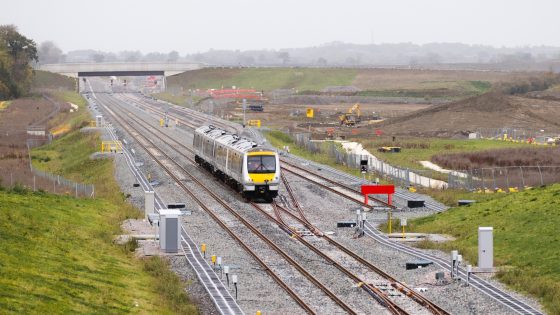
East West Rail (EWR) will run a full public consultation on the remaining sections of the Oxford–Cambridge route even though the Planning and Infrastructure Bill removes the statutory requirement for such engagement. The commitment covers outstanding route options between Bedford and Cambridge, where alignments, junction layouts and land-take for new double-track sections and structures are still to be finalised. For designers and geotechnical teams, this signals continued scrutiny of earthworks, noise barriers, level crossing closures and settlement impacts on adjacent communities before Development Consent Order submission.
Ofwat has approved further funding for the £510M Grand Union Canal Strategic Resource Option and the £200M Minworth Strategic Resource Option, moving both major water transfer schemes to gate four of the regulatory process. The Grand Union Canal scheme is being developed to move raw water over long distances using existing canal corridors, while Minworth focuses on transferring treated water from Severn Trent’s large wastewater treatment and supply assets. Progression to gate four signals detailed design, environmental assessment and geotechnical route refinement can now advance under the RAPID programme.
National Highways is launching six supply chain roadshows to help Kent and Essex firms bid for work on the Lower Thames Crossing, the proposed new Thames road tunnel linking the M25 near North Ockendon with the A2/M2 near Gravesend. The events will target SMEs in civils, geotechnical works, materials supply and specialist services needed for the twin‑bore tunnel, approach cuttings, and associated junction upgrades. Contractors are expected to gain early visibility of work packages, prequalification requirements and procurement timelines for this multi‑billion‑pound scheme.
Bouygues has completed a post-tensioned timber wildlife bridge over the Zurich–Bern motorway, reconnecting fragmented habitats while separating animal movements from high-speed traffic. The structure uses longitudinal post-tensioning in engineered timber elements instead of conventional reinforced concrete, reducing self-weight and material-related embodied carbon while enabling a slender deck profile. For designers, the scheme signals growing acceptance of large-span timber with prestressing on primary highway infrastructure, with implications for dynamic performance, durability detailing and fire design.
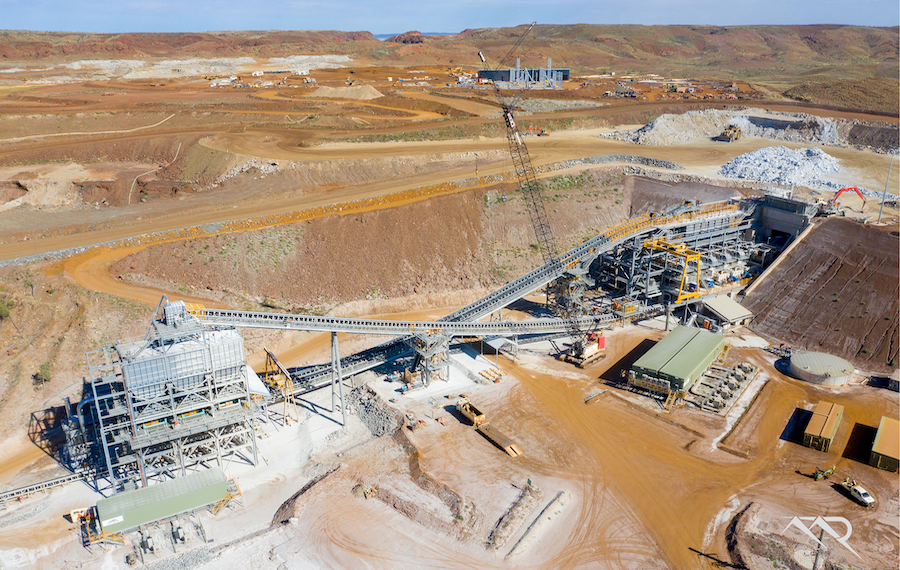
Australian hard rock lithium producers are moving to restart and expand capacity after spodumene prices rebounded from about $600/t in July 2025 to intraday highs near $2,500/t in January, with Barrenjoey now forecasting $3,250/t in 2026. Pilbara Minerals is weighing a four‑month restart of its 200,000tpa Ngungaju plant and a A$1.2 billion expansion of Pilgangoora to 2Mtpa, while Mineral Resources has lifted FY26 guidance at Wodgina and Mt Marion to 450,000–490,000t and is assessing a four‑month restart of Bald Hill. Longer‑dated supply includes Greenbushes’ CGP3 adding 500,000tpa, Liontown studying a 4Mtpa expansion at Kathleen Valley, and Develop’s Pioneer Dome targeting six‑month DSO start‑up for A$35–40 million.
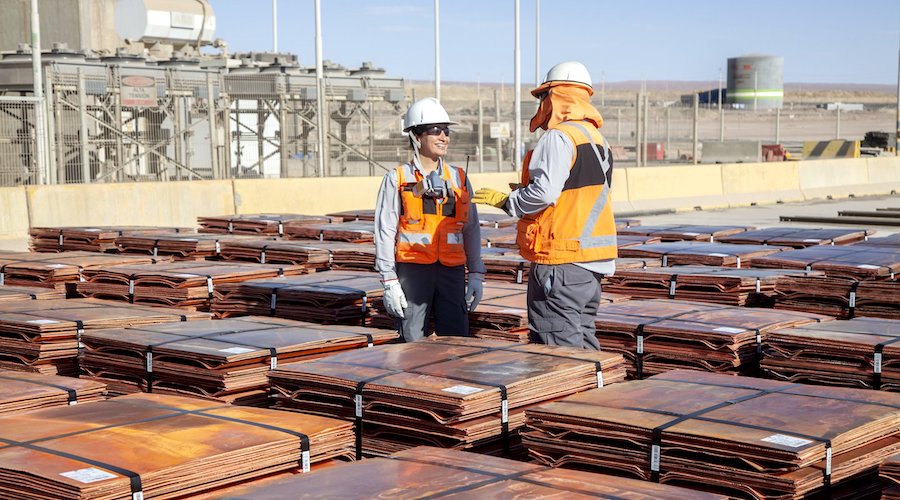
High base metal prices are being driven by tight supply rather than industrial demand, with BMO’s Helen Amos noting Chinese crude steel, copper and zinc consumption stayed sluggish in November–December despite manufacturing PMIs expanding in over half of major economies. Iron ore rose 4% to US$106/t in 2025, copper about 50% to US$5.89/lb (a post‑2011 high) and zinc 15% to US$1.52/lb, even as Chinese construction logged a sixth straight year of falling floor starts and negative flat steel margins. The main demand bright spot is autos, with 2025 light‑vehicle sales at 91.7 million units and EV sales up 20% to 20.7 million, reinforcing transport as a key metals offtake counterweight to weak Chinese building.
Gemfields’ 2025 auction revenue dropped 34% to $129 million, down from $196 million in 2024 and 47% below the $242 million achieved in 2023, signalling sustained pricing and demand weakness across coloured gemstones in line with the diamond market. The second processing plant at the Montepuez ruby mine in Mozambique is in final commissioning, on budget, with first output due for the February 2026 mixed‑quality ruby auction. At the Kagem emerald mine in Zambia, premium emerald recoveries have met expectations since focused mining restarted in May 2025, while group net debt has been cut to $39.2 million from $80.5 million.
Gold and silver prices crashed on Friday, with spot gold plunging over 12% intraday before closing around $4,910/oz (down more than 8%) and silver dropping as much as 33% to $75/oz before settling at $85/oz, still 29% lower. The sell-off followed reports that the Trump administration will nominate noted hawk Kevin Warsh as Federal Reserve chair, compounding pressure from a hotter‑than‑expected US producer price print and extreme positioning, including record call‑option buying. Despite the rout, gold remains up over 10% and silver more than 20% year‑to‑date, after peaks near $5,600/oz and $121/oz earlier this week.
Centerra Gold has suspended operations at its Langeloth metallurgical facility in Pennsylvania after an uncontrolled mixture of chemicals triggered an uncontained reaction adjacent to the acid plant at about 6:15 p.m. Eastern on Thursday. Two contractors were hospitalised with injuries and two employees taken to hospital as a precaution, with Centerra reporting no significant environmental release and confirming regulators have been notified. The shutdown hits Centerra’s key downstream plant for molybdenum concentrate, slated to process output from the Thompson Creek mine in Idaho when it restarts next year.
El Salvador’s central bank has bought 9,298 troy ounces of gold for about $50 million, lifting national reserves to 67,403 ounces valued at roughly $350 million at current prices. The move, welcomed by President Nayib Bukele as “buying the dip” after a sharp intraday price fall, follows a similar 13,999‑ounce purchase in September 2025, the first since 1990. Alongside the bullion build-up, Arkham data show El Salvador now holds 7,547 Bitcoin, worth about $620 million, reinforcing its unconventional reserve mix of gold, Bitcoin and US dollars.
Chief Rosanne Casimir of the Tk̓emlúps te Secwépemc Nation told the AME Roundup conference that meaningful reconciliation in British Columbia mining requires shared decision-making, recognition of Indigenous law and early engagement under DRIPA and UNDRIP. She warned that a large portion of Stk̓emlúpsemc te Secwépemc Nation territory is already staked through the province’s online mineral tenure system, often without consent, and that crown reserves frequently overlap culturally and environmentally sensitive areas. Casimir cited New Gold’s Afton copper-gold mine and the Ajax proposal to stress that SSN is not anti-mining, but will oppose projects in high-impact locations and expects proponents with claims to initiate early, relationship-based consultation.
Glencore remains deadlocked with Quebec over the future of its nearly 100-year-old Horne copper smelter in Rouyn-Noranda, where arsenic emissions must be cut from current levels to 45 ng/m³ by March and 15 ng/m³ from 2027—still five times the provincial standard. The company is weighing a US$200 million modernisation to meet the 15 ng/m³ target but is demanding an 18‑month transition period and guarantees against tighter future limits before committing. Closure would also threaten the Canadian Copper Refinery in Montreal, which relies on Horne’s 210,000 t/y copper and precious metals output, and comes amid an authorised class action over historical emissions.
MAX Power Mining has defined a new natural hydrogen drilling target at the Bracken prospect on the Saskatchewan–Montana border, complementing its confirmed Lawson discovery on the 475 km-long Genesis Trend. The Bracken well, planned to spud in February pending licensing, sits within the 75 km-wide Grasslands project and was sited using 34.3 line-km of proprietary 2D seismic integrated with legacy seismic to map basement architecture, structural pathways and migration corridors. MAX Power aims to use Bracken as a calibration point to test basin-scale continuity and repeatable, scalable natural hydrogen systems that may also host helium.
Funding approval from Hackney Council’s cabinet will deliver 400 new council homes across 14 infill sites, including nine terraced houses on the Nye Bevan Estate and an 18-home block replacing garages at Blackwell Close in Clapton. At least 300 units are designated for council social rent, funded through the Mayor of London’s Affordable Homes Fund and direct council capital, as part of a wider 972-home programme. The council notes current build costs above £500,000 per unit in London, signalling tight viability margins for dense urban social housing schemes.
National Highways chief executive Nick Harris is stepping down after five years in the role, with recruitment for a permanent successor to start in spring and interim leadership to be arranged by the board. Harris, who joined as operations director in 2016 after a career at Thames Water, earned more than £426,000 last year including bonuses and recently turned 60. His departure comes just before the third Road Investment Strategy (RIS3) period and a new safety strategy that set more demanding performance and outcomes targets for the strategic road network.
Sefton Council has selected Vinci Building as preferred contractor under a pre-construction services agreement for the £73m Marine Lake Events Centre in Southport, after talks with Kier and John Graham Construction collapsed in 2023. The scheme will replace the demolished Southport Theatre with a 1,200-seat auditorium and exhibition space on the lakefront, where extensive sheet piling and new retaining walls have already been installed as enabling works. Main construction is scheduled to start in late 2026 once the main contract is signed, with Vinci already engaged locally on the Bootle Strand regeneration.
Laing O’Rourke will start main construction this summer on the £250m, five-storey Sussex Cancer Centre at Royal Sussex County Hospital in Brighton, following a 40‑week enabling works package that began in April 2024. The scheme, part of Wave 1 of the New Hospitals Programme and adjacent to Laing O’Rourke’s Louisa Martindale Building, will rely heavily on digital design and offsite manufacturing to control quality and reduce on-site disruption. Designed as a regional cancer hub, it is planned to open in 2029, tripling current capacity to treat around 60,000 patients a year.
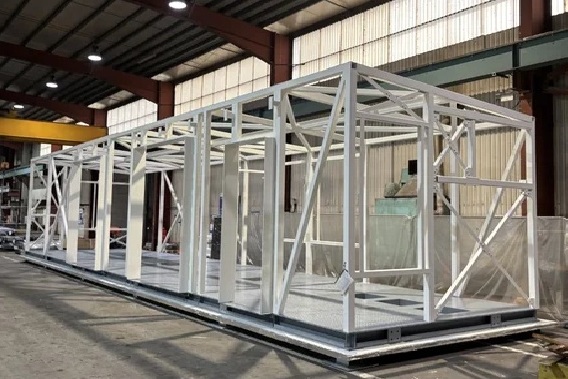
Severfield is shutting its Severfield Modular Solutions (SMS) business after a strategic review by new chief executive Paul McNerney, who joined from Laing O’Rourke in November and deemed SMS a sub‑scale, non-core activity. SMS, incorporated in 2018, reported 12% turnover growth to £24.1m and a 154% rise in operating profit to £368,000 for the year to March 2025, driven by renewable energy and data centre work, but has faced a tougher modular market this year. The closure affects more than 140 employees, while the Construction Metal Forming (CMF) joint venture continues unchanged, with a wider core-business growth strategy due in 2026.
Civil engineering contractors, through the Civil Engineering Contractors Association, have urged the Competition & Markets Authority’s road and rail market study to push harder for early contractor involvement, outcome-based specifications and frameworks tied to clear, funded pipelines with minimum workload commitments. CECA wants procurement to move away from lowest-price weighting towards whole-life value, with objectively scored criteria for quality, deliverability, safety culture, carbon reduction and social value. The response also calls for streamlined regulatory approvals for new products and techniques, consistent national standards, and stronger commercial and engineering skills within client bodies.