Geomechanics.io

  • Free Tools
Sign UpLog In
AllGeotechnicalMiningInfrastructureMaterialsHazardsEnvironmentalSoftwarePolicy

Geomechanics.io

Geomechanics, Streamlined.

© 2026 Geomechanics.io. All rights reserved.

Geomechanics.io

CMRR-ioGEODB-ioHYDROGEO-ioQCDB-ioFree Tools & CalculatorsBlogLatest Industry News

Industries

MiningConstructionTunnelling

Company

Terms of UsePrivacy PolicyLinkedIn
    Projects
    Sustainability

    Glencore’s Horne smelter talks: emissions, capex and closure risk for mine planners

    January 30, 2026|

    Reviewed by Tom Sullivan

    Glencore’s Horne smelter talks: emissions, capex and closure risk for mine planners

    First reported on MINING.com

    30 Second Briefing

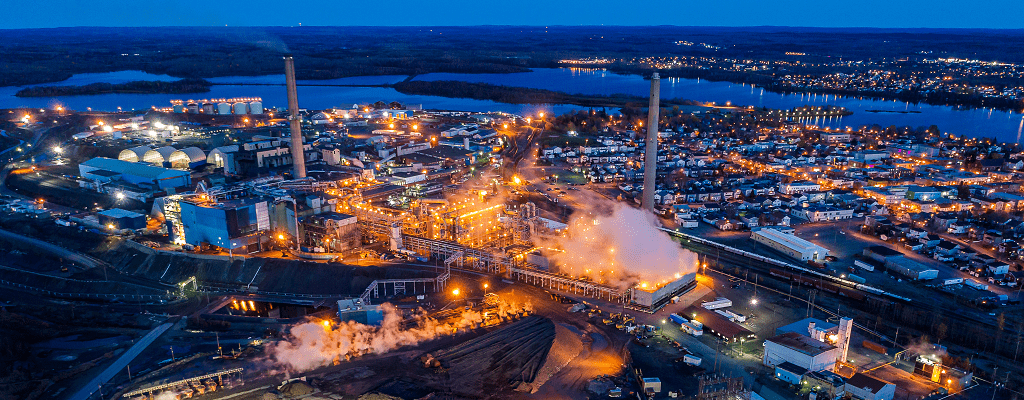
    Glencore remains deadlocked with Quebec over the future of its nearly 100-year-old Horne copper smelter in Rouyn-Noranda, where arsenic emissions must be cut from current levels to 45 ng/m³ by March and 15 ng/m³ from 2027—still five times the provincial standard. The company is weighing a US$200 million modernisation to meet the 15 ng/m³ target but is demanding an 18‑month transition period and guarantees against tighter future limits before committing. Closure would also threaten the Canadian Copper Refinery in Montreal, which relies on Horne’s 210,000 t/y copper and precious metals output, and comes amid an authorised class action over historical emissions.

    Technical Brief

    • The company is tying any investment decision to the duration and terms of the next ministerial authorisation.
    • Horne and Montreal’s Canadian Copper Refinery together constitute Canada’s only fully integrated copper smelting–refining chain.
    • Horne currently processes copper concentrates and outputs about 210,000 tonnes per year of copper plus precious metals.
    • Two Quebec unions have publicly pressed Premier François Legault to conclude an agreement before his planned resignation.
    • For other smelting operations, the case underlines how regulatory predictability directly conditions large‑scale emissions‑control CAPEX decisions.

    Our Take

    Glencore’s need to justify roughly $200–300 million of emissions upgrades at the Horne copper smelter comes as our recent coverage shows its copper output under pressure from weaker grades elsewhere, which may limit appetite for non‑essential capex but also raises the strategic value of keeping North American refining capacity online.

    The arsenic limits being negotiated in Quebec are materially tighter than legacy norms for older smelters, signalling that other ageing copper and precious‑metals facilities in Canada could face similar retrofit-or-closure choices as provincial regulators move closer to health-based standards.

    With copper prices recently highlighted in our database as underpinning one of the strongest earnings outlooks for diversified miners, Glencore has more pricing headroom than in past downturns to absorb a phased 18‑month transition at Horne, which may strengthen Quebec’s hand in insisting on the 2027 arsenic target rather than long deferrals.

    Geotechnical Software for Modern Teams

    Centralise site data, logs, and lab results with GEODB-io, CMRR-io, and HYDROGEO-io.

    No credit card required.

    • Save and export unlimited calculations
    • Advanced data visualisation
    • Generate professional PDF reports
    • Cloud storage for all your projects

    Prepared by collating external sources, AI-assisted tools, and Geomechanics.io’s proprietary mining database, then reviewed for technical accuracy & edited by our geotechnical team.

    Related Articles

    Queensland 2025 Resources Awards for Women: workforce lessons for mine operators
    Mining
    about 12 hours ago

    Queensland 2025 Resources Awards for Women: workforce lessons for mine operators

    Queensland’s 2025 Resources Awards for Women have named 18 finalists spanning roles from engineering superintendent and diesel fitter to dragline operator and chief operating officer across coal, metals and quarrying operations. Nominees include frontline trades, site-based supervisors and corporate leaders from major producers and contractors, with categories covering technical excellence, safety leadership and gender diversity initiatives. For mine operators, the awards signal growing recognition of women in production-critical roles and may influence recruitment, apprenticeship intake and retention strategies on remote sites.

    Tungsten Mining’s $53m critical minerals raise: project pipeline signals for engineers
    Mining
    about 12 hours ago

    Tungsten Mining’s $53m critical minerals raise: project pipeline signals for engineers

    Tungsten Mining has raised $53 million via a placement after being listed in the Australian Critical Minerals Prospectus, bolstering funding for its tungsten-focused project pipeline. The capital injection strengthens the company’s balance sheet for advancing drilling, resource definition and feasibility work on Australian tungsten deposits, a metal critical for hardmetals, drill bits and high-temperature alloys. For mining engineers and project developers, the raise signals continued investor appetite for domestic critical minerals projects despite limited public detail on specific mine capacities or development timelines.

    Victory’s hafnium at North Stanmore: flowsheet and revenue notes for engineers
    Mining
    about 12 hours ago

    Victory’s hafnium at North Stanmore: flowsheet and revenue notes for engineers

    Victory Metals has reported metallurgical test work at its North Stanmore rare earths project near Cue in Western Australia confirming a high-value hafnium by-product alongside its clay-hosted REE mineralisation. The company is advancing flowsheet development to selectively recover hafnium from leach solutions already designed for rare earth extraction, positioning the metal as a potential “game-changer” revenue stream. For process and project engineers, the key issue will be integrating hafnium separation into existing hydrometallurgical circuits without materially increasing reagent consumption or capital intensity.

    Related Industries & Products

    Mining

    Geotechnical software solutions for mining operations including CMRR analysis, hydrogeological testing, and data management.

    CMRR-io

    Streamline coal mine roof stability assessments with our cloud-based CMRR software featuring automated calculations, multi-scenario analysis, and collaborative workflows.

    HYDROGEO-io

    Comprehensive hydrogeological testing platform for managing, analysing, and reporting on packer tests, lugeon values, and hydraulic conductivity assessments.

    GEODB-io

    Centralised geotechnical data management solution for storing, accessing, and analysing all your site investigation and material testing data.