Geomechanics, Streamlined.
© 2026 Geomechanics.io. All rights reserved.
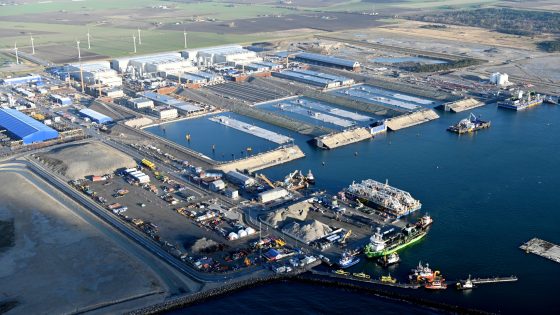
Tensions are escalating between Femern A/S and the main contractors on the Fehmarnbelt Fixed Link immersed tunnel between Denmark and Germany as tunnel element submersion has still not begun despite schedule and budget overruns. Senior-level correspondence reportedly details disputes over responsibility for delays to placing the 18km-long immersed elements and associated marine works in the Baltic Sea. Prolonged stand-off risks further cost escalation, extended use of temporary works and marine plant, and knock-on impacts on rail and road connection programmes on both sides of the border.
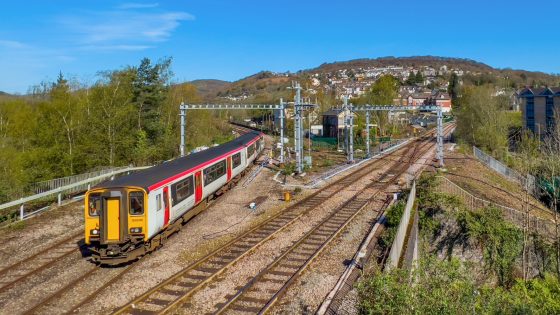
A proposed amendment to the UK Railways Bill to devolve control of rail infrastructure and services to the Welsh Government has been rejected, prolonging disputes between Westminster and the Senedd over chronic underinvestment in routes such as the South Wales Main Line and Valleys commuter network. The decision leaves Network Rail and Great British Railways, rather than Transport for Wales, as primary decision-makers on track renewals, signalling upgrades and capacity enhancements. For civil and rail engineers, major schemes like electrification, station remodelling and resilience works will continue to be planned and funded through UK-wide, not devolved, budgets.
Work on the $16bn Hudson Tunnel rail project under the Hudson River between New York and New Jersey is set to cease next week after a halt in federal funding, with the White House blaming Democrat resistance to a wider border security deal and “illegal aliens”. The scheme, part of the Gateway Program, includes twin rail tunnels and major approach works designed to increase Amtrak and NJ Transit capacity and rehabilitate the existing 1910 North River Tunnel. A prolonged stop risks contractor demobilisation, schedule slippage and higher costs on complex riverbed and urban tunnelling packages.
Beam lifts on National Highways’ M3 Junction 9 scheme in South Hampshire will start this weekend, marking the next construction phase for reconfiguring the existing roundabout that links the M3 with the A34 strategic freight route. The works involve installing new bridge beams over live carriageways to create additional free-flow links and reduce weaving between northbound A34 and southbound M3 traffic. Temporary traffic management and overnight possessions will be critical for crane operations, with geotechnical checks on existing embankments and foundations needed to accommodate altered load paths and construction plant.
Ramboll engineers have developed a grid-stabilising device aimed at countering frequency and voltage instability as inverter-based renewable generation is added to ageing transmission and distribution networks. The unit is designed to provide synthetic inertia and fast reactive power support, acting as a grid-forming resource that can be retrofitted at substations without major reinforcement works. For civil and electrical designers, this points to more compact, modular stabilisation plant competing with traditional synchronous condensers and potentially reducing the need for large new switchyard footprints.
Automating back analysis in Rocscience RS2 is enabling geotechnical teams to calibrate deep excavation models by iteratively adjusting soil stiffness, strength parameters and support properties against monitored wall deflections and ground movements. The workflow uses Python scripting and RS2’s API to batch-run hundreds of finite element models, compare calculated displacements with inclinometer data, and systematically narrow parameter ranges instead of relying on manual trial‑and‑error. This approach scales to large projects with multiple stages and construction sequences, improving confidence in design envelopes and trigger levels for observational method schemes.
Rio Tinto and Aluminum Corporation of China Limited (Chalco) have agreed a joint venture, owned 33% by Rio Tinto and 67% by Chalco, to acquire Votorantim’s 68.596% controlling stake in Companhia Brasileira de Alumínio (CBA), a vertically integrated low‑carbon aluminium producer in Brazil. CBA’s portfolio spans bauxite mining, alumina refining and aluminium smelting/rolling, giving the JV immediate access to upstream ore and downstream semi‑fabricated products in a single platform. The deal signals stronger Chinese–Anglo participation in Brazil’s aluminium value chain, with implications for bauxite offtake, power‑intensive smelting capacity and low‑carbon product supply.
Navoi Mining & Metallurgical Company has commissioned Grinding Mill No. 8 at Hydrometallurgical Plant No. 3 as part of Phase III of its Kokpatas and Daugyztau gold ore mining project. The new grinding capacity is designed to support expanded ore throughput from the two open pits, feeding downstream hydrometallurgical circuits at the plant. For process engineers, the additional mill will affect grind size control, reagent consumption and leach kinetics, and may require updated liner strategies and power draw management across the grinding circuit.
AI is increasingly embedded across BHP’s operations, with machine-learning models now supporting exploration teams in targeting new mineral deposits and optimising large processing plants and rail networks. Algorithms are being used to interpret multi-source geological datasets, predict equipment and process upsets earlier, and tune plant control strategies in near real time. For geotechnical and mining engineers, this signals more data-driven design and operational decisions, tighter process envelopes, and earlier intervention on stability, maintenance and throughput constraints.
Atlas Iron, owned by Hancock Prospecting, has approved Stage 2 of its Sanjiv Ridge iron ore project in Western Australia’s Pilbara, expanding production from the existing Sanjiv Ridge and nearby Miralga Creek deposits. The development will rely on conventional open-pit mining, haul trucks and on-site crushing before road haulage to port, leveraging existing Pilbara logistics rather than new rail. For geotechnical and civil contractors, the decision signals upcoming work in pit wall design, haul road construction and waste dump earthworks in hard banded iron formation terrain.
Nagambie Resources has signed a binding term sheet with Alkane Resources for a proposed joint venture over the historic Nagambie gold–antimony mine in central Victoria, targeting high-grade underground mineralisation rather than the site’s former open-pit operations. Alkane, which operates the Tomingley gold mine in New South Wales, would fund exploration and evaluation drilling to earn into the project, focusing on structurally controlled gold–stibnite lodes. The deal signals renewed interest in Victorian antimony-bearing systems, with potential implications for underground geotechnical design in historically backfilled and partially rehabilitated workings.
True North Copper has boosted confidence in its Mt Oxide project in Queensland with new drilling at the Wallace North and Great Australia deposits, targeting higher-grade copper zones near existing underground development. ACDC Metals advanced rare earths and mineral sands exploration at its Goschen Central and Watchem projects in Victoria, reporting thick, near-surface clay-hosted REE and Ti-Zr mineralisation amenable to low-strip-ratio open pit concepts. Western Yilgarn continued greenfields work across its Julimar West and Bulga projects in Western Australia, using detailed gravity and EM surveys to refine intrusion-hosted nickel-copper-PGE targets before deeper drilling.
Barloworld has completed its transition to a privately held, South African-led Caterpillar dealership group after an Entsha-led consortium acquired the company and it delisted from the JSE and A2X, with Entsha holding 51% and Saudi-based Zahid Group 49%. The structure creates a Saudi–South African alignment across Cat mining and construction equipment distribution, linking Zahid’s established dealership operations in the Middle East with Barloworld’s footprint in southern Africa. For mine operators, the combined ownership is likely to influence fleet support strategies, parts logistics, and long-term service contracts across both regions.
Navoi Mining & Metallurgical Company has commissioned a new “cyclic-flow” in-pit crushing and conveying (IPCC) system on the southern flank of the Muruntau open pit to optimise ore transport to permanent and temporary stockpiles. The complex integrates truck haulage to an in-pit crusher with belt conveyors for continuous ore transfer, reducing reliance on long uphill truck ramps and diesel-intensive haul cycles. For mine planners and geotechnical teams, the layout fixes pit exit points and ramp geometries, influencing future pushback design and slope stability management around conveyor corridors.
IEEFA research challenges Australian federal forecasts of peaking diesel emissions from mining, arguing actual diesel use is still climbing as haul distances increase, ore grades fall and material movement intensifies. The analysis links this growth to miners cutting decarbonisation capital budgets, delaying deployment of battery-electric haul trucks, in-pit crushing and conveying, and site-scale renewables with grid-strength batteries. For geotechnical and mine planners, the findings signal continued reliance on diesel-powered haulage fleets and associated ventilation, pit slope and haul road design loads through at least the medium term.
Peru’s government has formally endorsed Lima as host city for the World Mining Congress (WMC) 2026, calling the event a strategic milestone for both the country and the global mining sector. The announcement by the Minister of Energy and Mines positions Peru’s large copper, gold and polymetallic operations, including its high-altitude Andean open pits and underground mines, at the centre of technical dialogue on productivity, decarbonisation and social licence. Organisers are expected to leverage Lima’s established mining supply chain and academic base to attract senior operators, OEMs and technology providers.
BYD has made a RMB100 million (about US$14.4 million) strategic investment in Shanghai-headquartered Boonray Technology, a leading Chinese supplier of electric and autonomous mining trucks and control systems. The deal strengthens BYD’s position in heavy-duty battery and drivetrain supply while giving Boonray additional capital to scale autonomous haulage fleets in large open-pit operations. For mine planners and fleet engineers, the move signals continued acceleration of Chinese-made battery-electric haul trucks and autonomy stacks as alternatives to diesel fleets from traditional OEMs.
Magotteaux is expanding its global Scrap Buy Back (SBB) programme, under which it purchases worn grinding media and wear parts from mine sites and recycles them into new high-chrome and forged steel components. The circular-economy model reduces primary steel consumption and transport of waste liners and balls, while giving concentrator operators a controlled scrap outlet and traceable alloy feedstock. For process and maintenance teams, SBB can influence total cost of ownership calculations for mills and crushers by linking wear-life performance directly to scrap value and closed-loop supply.
A fleet of 40 Zoomlion ZT160HEV hybrid haul trucks fitted with CiDi’s intelligent autonomous haulage system has been delivered to a large coal mine in Xinjiang, taking the site’s total unmanned truck count to more than 120 units. The ZT160HEV platform combines diesel-electric hybrid power with drive‑by‑wire controls, enabling CiDi’s system to manage autonomous haul cycles, navigation and collision avoidance in complex pit conditions. For mine operators, the scale of deployment signals growing confidence in mixed hybrid–autonomous fleets for high‑volume coal haulage in remote regions.
Autodesk reports that contractors using its connected construction platform on infrastructure projects are delivering work up to 30 per cent faster with 25–30 per cent fewer RFIs and change orders, by integrating design models, field data and cost controls in a single environment. Case studies cite clash detection on complex bridge and roadworks, mobile issue tracking on tablets, and centralised document control cutting rework and site delays. For geotechnical and civil teams, the data suggests tighter control of design revisions, as-built records and subcontractor coordination under labour and supply constraints.
Main works for Parramatta Light Rail Stage 2 in New South Wales have been approved, with construction of the 10‑kilometre line scheduled to start in early 2027. The alignment will link Camellia, Rydalmere, Ermington, Melrose Park, Wentworth Point and Sydney Olympic Park over 14 stops, extending the existing Stage 1 network. Civil and geotechnical teams can expect complex works in a dense brownfield corridor, including utilities relocation and ground interface issues along the Parramatta River foreshore and former industrial land at Camellia.
New grants under Round 11 of the Heavy Vehicle Safety Initiative will fund industry-led projects targeting compliance and road safety in Australia’s freight and logistics sector. The Federal Government and National Heavy Vehicle Regulator are seeking proposals that address risks such as fatigue management, load restraint and heavy vehicle interactions with vulnerable road users, with funding directed to practical, on-road interventions. Outcomes are expected to influence operator training, telematics use and infrastructure treatments on key freight corridors.
Gold Fields is building a large hybrid renewable power system at its St Ives gold mine in Western Australia, centred on a utility‑scale solar farm using single‑axis tracking and integrated with on‑site battery storage and existing gas generation. The project is designed to supply a major share of the mine’s load and cut diesel and gas consumption, with the tracking PV array maximising output during peak daytime processing demand. For geotechnical and civil teams, key tasks include foundation design for tracker posts in variable regolith and wind‑governed pile layouts across the flat lakebed terrain.
Supagas national executives identify five trends reshaping LPG use in mining and regional industry in 2026, centring on gas supply reliability, decarbonisation pressures and shifting customer demand for on-site storage and backup generation. The company points to increased dual‑fuel systems pairing LPG with diesel gensets, tighter specifications for bulk tank farm design in cyclone‑prone regions, and stronger interest in telemetry‑equipped cylinders for remote operations. For mine operators, this signals closer scrutiny of fuel redundancy, emissions reporting and hazardous area compliance on both fixed plants and mobile refuelling infrastructure.