Geomechanics, Streamlined.
© 2026 Geomechanics.io. All rights reserved.
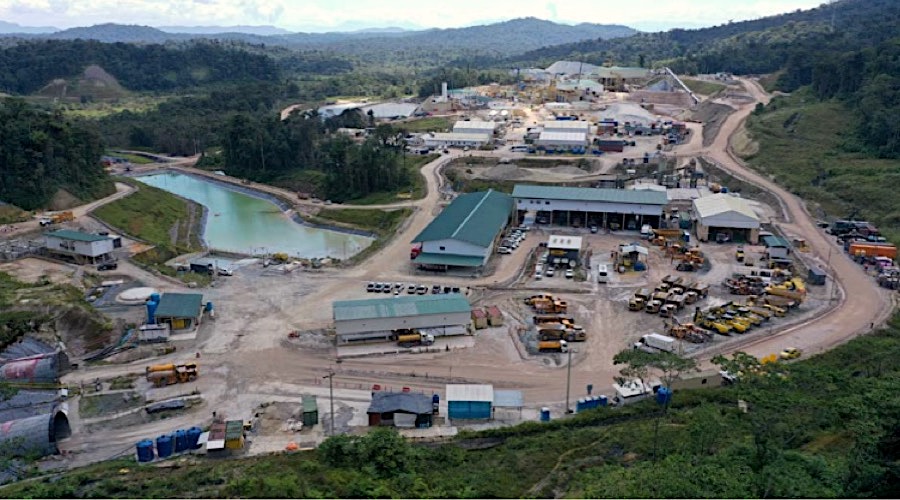
Lundin Gold has outlined a large intrusive complex with multiple shallow copper-gold porphyry systems near its Fruta del Norte mine in Ecuador, including Sandia hole SND-2025-383 with 603 m at 0.68% Cu, 0.1 g/t Au, 2.85 g/t Ag and 16.32 ppm Mo from 27 m. A newly identified fifth porphyry centre, Chontas, 7 km south of the main deposit, extends the porphyry corridor to at least 10 km, while Trancaloma hole TRL-2025-340 returned 945 m at 0.33% Cu from 152 m. Lundin plans 133,000 m of drilling in 2026 at Fruta del Norte, budgeted at $85 million, to support a potential south-zone mine decision and district-scale copper-gold evaluation.
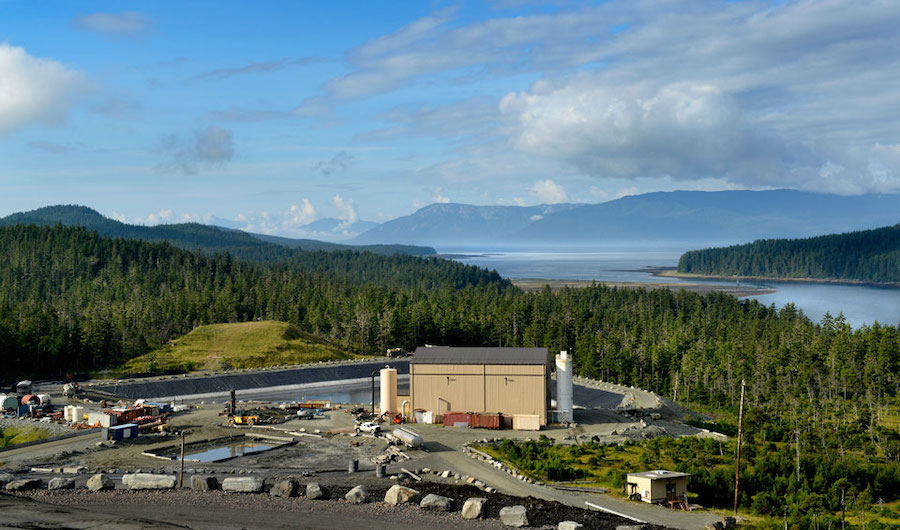
Hecla Mining is nearly doubling 2026 spend on exploration and pre-development to US$55 million, targeting Nevada projects and producing assets Greens Creek (Alaska), Keno Hill (Yukon) and Lucky Friday (Idaho) to at least offset annual reserve depletion. The company reports 231 million oz silver and 2 million oz gold in reserves after 2025 output of 17 million oz silver, including a record 5.3 million oz from Lucky Friday and roughly half of total silver from Greens Creek. Drilling is focused on converting Inferred resources, extending reserve envelopes and testing high-grade targets at the historic Midas mine, which has produced 27 million oz silver and 2.2 million oz gold.
Project Vault, a new $12 billion US government stockpile, targets critical minerals but leaves permanent magnet manufacturing—especially neodymium-based and other rare earth magnets—as the key unresolved vulnerability in decoupling from Chinese supply. Wade Senti, CEO of Advanced Magnet Lab, argues for a market-led, innovation-first strategy that diversifies rare earth feedstocks and sources while backing alternative magnet chemistries such as Samarium Iron Nitride (SmFeN) and Manganese Bismuth (MnBi). For mining and processing projects, this implies demand for flexible mine-to-magnet flowsheets, equipment-intensive magnet plants, and closer integration with downstream OEMs.
Wales has launched its first dedicated roofing, slating and tiling apprenticeship, delivered jointly by CITB, the National Construction College, Bridgend College and the National Federation of Roofing Contractors, with an initial cohort of nine apprentices starting in South Wales next month and a second intake planned for September. Training will combine classroom teaching with outdoor practical instruction led by a CITB roofing tutor, targeting both public and private sector demand. CITB’s Construction Workforce Outlook projects the UK will need 630 additional roofers by 2029, including at least 50 in Wales, within a wider requirement for 47,000 extra construction workers annually.
Construction has started on Lovell Homes’ £42m Swinfen Vale scheme on a 10.4-acre greenfield site off Beveridge Lane, Ellistown, forming part of Harworth Estates’ wider regeneration of southeast Coalville. The development will deliver 146 one- to four-bedroom homes, all designed to achieve SAP B energy ratings using gas heating supplemented by roof-mounted solar panels. Lovell will contribute £1m via planning obligations to local infrastructure and services, with first homes due on sale in July 2026 and initial occupation targeted for September 2026.
The £1bn regeneration of Leeds’ four-hectare Eastgate Quarter has advanced with Khalbros and Torsion Group’s JV appointing FeildenCleggBradley Studios as lead architect/masterplanner and Danish urban designers SLA to reshape land between Vicar Lane and Bridge Street, from Lady Lane to the A64(M). Roscoe will deliver structural and civil engineering, AMA will advise on highways and transport, and FD Global will assess wind conditions, alongside ecology, archaeology, heritage and daylight/sunlight specialists. The mixed-use scheme, now in pre-application with Leeds City Council, aims to densify a long-underused inner-city area while reusing heritage buildings and expanding the city centre.
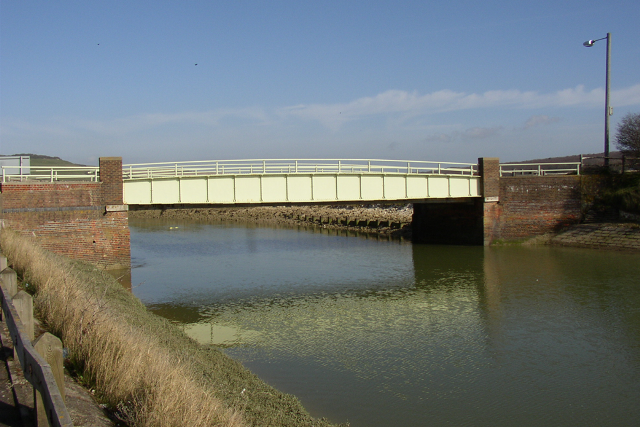
Jackson Civil Engineering has secured a £20m contract from East Sussex County Council to replace the single-lane, 1870s Exceat Bridge on the A259 over the River Cuckmere in the South Downs National Park. The scheme, funded by £7.9m from the Levelling Up Fund, £11.28m from Bus Service Improvement Plan Round 1 and council capital, will remove a major traffic pinchpoint between Seaford and Eastbourne where queues currently form in both directions. Preparatory works are due to start in spring, with environmental sensitivity a key requirement given the Seven Sisters Country Park setting.
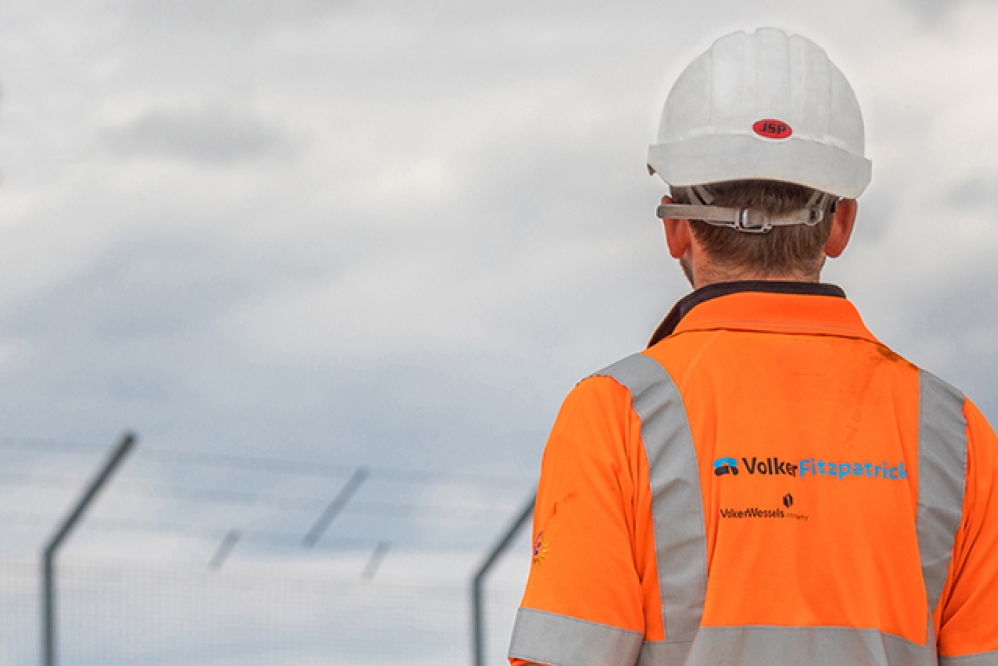
Work has begun on a £28m upgrade of RAF Coningsby’s Air Operating Surfaces, with VolkerFitzpatrick reconstructing taxiways and apron areas under a construction contract initially valued at £18.6m and Aecom acting as consulting engineer. As the Lincolnshire base is one of two RAF Quick Reaction Alert stations, all works must be sequenced around 24/7 Typhoon launch readiness for 3 (Fighter), XI (Fighter) and 29 Squadrons. Completion is scheduled for October 2026, implying prolonged phasing, night working and tight airside access controls for contractors.
Sandvik is launching the Leopard DI610i, a down-the-hole surface drill rig for open-pit mines and contractors, covering a 115–203 mm (4½–8 in) hole size range. The i-series platform targets high utilisation and rapid operator on-boarding through advanced automation, digital drilling controls and an ergonomic cabin layout. Sandvik positions the DI610i to cut total cost of ownership versus previous Leopard rigs by optimising fuel use, consumable life and maintenance intervals, which will interest operations rationalising large DTH fleets.
Turner Mining Group has mobilised a new Caterpillar mining fleet to Minera Alamos’ Pan Mine in Nevada under a multi-year contract, completing assembly, commissioning and crew deployment over the holiday period while holding to targeted production rates. The contractor is now responsible for full-scale mine services, with the Cat fleet expected to handle drilling, loading and haulage across the open-pit gold operation. For engineers, the key point is a rapid contractor transition without a production dip, stressing the importance of parallel commissioning and workforce ramp-up.
Rox Resources has appointed MACA Interquip Mintrex (MIQM), part of the MACA Limited Group, as preferred EPC contractor for the new Youanmi gold processing plant and associated facilities at its 100%-owned Youanmi project in Western Australia. MIQM will deliver engineering, procurement and construction for the plant, drawing on its multi-disciplinary capability across process plant design, structural and mechanical works, and site infrastructure. The appointment signals progression towards detailed design and construction, giving mine planners clearer timelines for integrating processing capacity with pit and underground scheduling.
New South Wales is rolling out Renewable Energy Zones (REZs) to replace ageing coal plants, clustering large-scale wind, solar and storage projects where grid capacity can be efficiently reinforced. Engineers are being redeployed from coal and gas infrastructure into REZ planning, high‑voltage transmission design and grid‑forming inverter integration, with a strong focus on connection studies and system strength. The shift is driving demand for civil and geotechnical works on new substations, access roads and foundations in remote sites, plus materials expertise for high‑temperature, high‑UV environments.
Work to upgrade the East Coast Main Line between Welwyn and Hitchin has reached its halfway point, with engineers set to start digital signalling tests later this month to enable in‑cab signalling on this busy mixed‑traffic corridor. The programme forms part of the wider ECML East Coast Digital Programme, replacing lineside signals with ETCS‑based cab displays to increase capacity and reduce maintenance exposure on one of the UK’s highest‑loaded main lines. Upcoming tests will focus on integrating onboard ETCS equipment with existing interlockings and traffic management systems.
A proposed £34bn upgrade of Britain’s electricity transmission and distribution network over 15 years is projected by Arup to unlock £194bn in wider economic benefits and support tens of thousands of jobs. The study points to accelerated grid reinforcement, new high‑voltage connections for offshore wind and solar, and targeted investment in substations and interconnectors as critical to connecting low‑carbon generation and electrified transport and heat. For civil and geotechnical engineers, this signals sustained demand for large‑scale cable corridors, substation platforms, foundations and associated transport and logistics works.
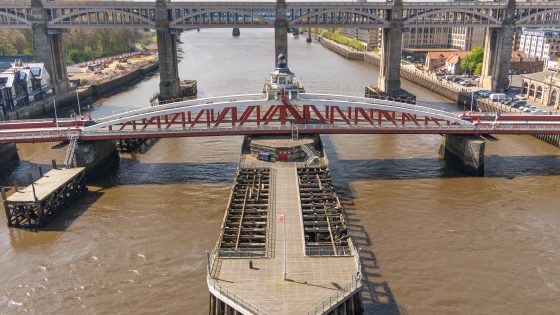
A campaign is urging local authorities to fund remediation of the 150‑year‑old hydraulic swing bridge over the River Tyne, which has remained in a fixed, closed position since 2019. The structure, originally designed to pivot to provide a navigable channel for shipping, now requires significant mechanical and hydraulic system repairs before any reopening can be considered. For civil and structural engineers, the case raises questions over life‑extension strategies, heritage load assessments and the cost–benefit of restoring full swing functionality versus partial structural refurbishment.
Albert Bridge in west London has been closed to motor traffic after a routine inspection found a cracked cast iron component at one of the bridge abutments, Kensington and Chelsea council confirmed. The 1873 Grade II* listed structure, a hybrid cable‑stayed and suspension bridge over the Thames, remains open to pedestrians and cyclists while engineers assess the defect. Structural investigations will focus on load paths through the affected abutment detail and the implications for fatigue and brittle fracture behaviour in the historic cast iron.
Fellow and risk specialist John Carpenter has resigned from the Institution of Civil Engineers, issuing an open letter criticising what he calls the ICE’s “lack of adequate response” to the Grenfell Tower fire. Carpenter, a long-standing member with recognised expertise in risk management, argues the institution has failed to provide sufficiently robust professional guidance on fire safety, cladding and high-rise residential design. His departure signals growing pressure on professional bodies to tighten competency standards and technical leadership on life-safety critical infrastructure.
The Planning Inspectorate is introducing new digital tools and revised procedures to speed up consenting for Nationally Significant Infrastructure Projects (NSIPs), aiming to cut overall examination and decision times while maintaining statutory consultation requirements. Measures include expanded use of online portals for document submission and evidence management, greater standardisation of environmental impact assessment templates, and earlier issue resolution through structured pre-application engagement. For major energy, transport and water schemes, faster and more predictable Development Consent Order timelines could materially reduce holding costs, contractor mobilisation risks and programme float tied to planning uncertainty.
Network Rail has issued a prior information notice for a £450M Scotland’s Railway Electrification Framework, signalling a multi-year programme to extend 25kV overhead line equipment as part of Scotland’s rail decarbonisation plan. The framework is expected to cover design, civils and structures, mast and portal installations, feeder stations and sectioning cabins across multiple routes, with contractors needing proven experience in live-rail possessions and integration with existing signalling and structures. Geotechnical and civil packages are likely to include new foundations, bridge parapet and clearance modifications, and structural assessments for increased electrical clearances.
Construction of a new mass transit link between Bristol city centre and Bristol Airport is being prioritised by the West of England Combined Authority, with construction targeted to begin within four to five years. The scheme is expected to provide a high-capacity, segregated corridor along the heavily congested A38 route, replacing or supplementing existing bus services that currently face peak-hour delays. Early work will need to address tight urban corridors, airport security and access constraints, and integration with Bristol’s wider public transport upgrades.
Alkane Resources has posted what it calls the strongest quarter in its history after its August 2025 merger with Mandalay Resources, consolidating the Tomingley gold operation in NSW with two Mandalay underground gold–antimony mines into a three-mine portfolio. The enlarged group has focused on higher-grade stopes, tighter unit-cost control and shared technical services across the sites, lifting group mill throughput and gold-equivalent output while cutting all-in sustaining costs. For mine planners and geotechs, the integration is driving more aggressive cut-off grade strategies and coordinated underground scheduling across multiple orebodies.
Exploration activity is accelerating across Australia, with recent campaigns reporting high-grade intercepts in gold, tungsten and critical minerals and several new drill targets defined from geophysics and geochemistry. True North Copper has updated its resource at Cloncurry in Queensland, refining copper and gold tonnages and grades across multiple lodes and signalling scope for further step-out drilling. For geotechs and mine planners, the work points to expanding pit and underground envelopes in established districts rather than purely greenfield growth.
Helical piles are being positioned as an alternative to traditional drilled or spread concrete foundations for lattice and monopole communication towers, particularly where uplift, lateral loads and variable soils control design. Screw-in steel piles with helix plates can be installed with smaller rigs, generate minimal spoil, allow immediate loading and are removable at decommissioning, contrasting with large-diameter drilled shafts or pad-and-pier systems that require curing time and substantial excavation. The comparison focuses on sites with constrained access, weak or layered soils, and projects needing rapid deployment or future relocation.
Sandvik Group has signed a new global strategic cooperation agreement with Chinese contract mining major JCHX in Beijing, following a visit by Sandvik President and CEO Stefan Widing to JCHX’s headquarters on 11 February. JCHX Chairman Wang Xiancheng and Executive Vice President Wang Cicheng hosted the talks, where both parties agreed to expand the breadth and depth of their collaboration across underground mining equipment and services. The deal signals closer alignment between Sandvik’s OEM capabilities and JCHX’s large-scale contract mining projects in China and overseas.