Geomechanics, Streamlined.
© 2026 Geomechanics.io. All rights reserved.
New South Wales is rolling out Renewable Energy Zones (REZs) to replace ageing coal plants, clustering large-scale wind, solar and storage projects where grid capacity can be efficiently reinforced. Engineers are being redeployed from coal and gas infrastructure into REZ planning, high‑voltage transmission design and grid‑forming inverter integration, with a strong focus on connection studies and system strength. The shift is driving demand for civil and geotechnical works on new substations, access roads and foundations in remote sites, plus materials expertise for high‑temperature, high‑UV environments.
Work to upgrade the East Coast Main Line between Welwyn and Hitchin has reached its halfway point, with engineers set to start digital signalling tests later this month to enable in‑cab signalling on this busy mixed‑traffic corridor. The programme forms part of the wider ECML East Coast Digital Programme, replacing lineside signals with ETCS‑based cab displays to increase capacity and reduce maintenance exposure on one of the UK’s highest‑loaded main lines. Upcoming tests will focus on integrating onboard ETCS equipment with existing interlockings and traffic management systems.
A proposed £34bn upgrade of Britain’s electricity transmission and distribution network over 15 years is projected by Arup to unlock £194bn in wider economic benefits and support tens of thousands of jobs. The study points to accelerated grid reinforcement, new high‑voltage connections for offshore wind and solar, and targeted investment in substations and interconnectors as critical to connecting low‑carbon generation and electrified transport and heat. For civil and geotechnical engineers, this signals sustained demand for large‑scale cable corridors, substation platforms, foundations and associated transport and logistics works.
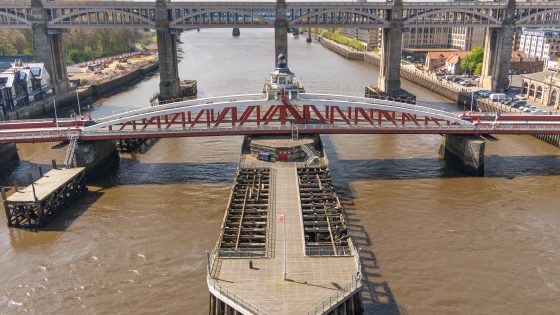
A campaign is urging local authorities to fund remediation of the 150‑year‑old hydraulic swing bridge over the River Tyne, which has remained in a fixed, closed position since 2019. The structure, originally designed to pivot to provide a navigable channel for shipping, now requires significant mechanical and hydraulic system repairs before any reopening can be considered. For civil and structural engineers, the case raises questions over life‑extension strategies, heritage load assessments and the cost–benefit of restoring full swing functionality versus partial structural refurbishment.
Albert Bridge in west London has been closed to motor traffic after a routine inspection found a cracked cast iron component at one of the bridge abutments, Kensington and Chelsea council confirmed. The 1873 Grade II* listed structure, a hybrid cable‑stayed and suspension bridge over the Thames, remains open to pedestrians and cyclists while engineers assess the defect. Structural investigations will focus on load paths through the affected abutment detail and the implications for fatigue and brittle fracture behaviour in the historic cast iron.
Fellow and risk specialist John Carpenter has resigned from the Institution of Civil Engineers, issuing an open letter criticising what he calls the ICE’s “lack of adequate response” to the Grenfell Tower fire. Carpenter, a long-standing member with recognised expertise in risk management, argues the institution has failed to provide sufficiently robust professional guidance on fire safety, cladding and high-rise residential design. His departure signals growing pressure on professional bodies to tighten competency standards and technical leadership on life-safety critical infrastructure.
The Planning Inspectorate is introducing new digital tools and revised procedures to speed up consenting for Nationally Significant Infrastructure Projects (NSIPs), aiming to cut overall examination and decision times while maintaining statutory consultation requirements. Measures include expanded use of online portals for document submission and evidence management, greater standardisation of environmental impact assessment templates, and earlier issue resolution through structured pre-application engagement. For major energy, transport and water schemes, faster and more predictable Development Consent Order timelines could materially reduce holding costs, contractor mobilisation risks and programme float tied to planning uncertainty.
Network Rail has issued a prior information notice for a £450M Scotland’s Railway Electrification Framework, signalling a multi-year programme to extend 25kV overhead line equipment as part of Scotland’s rail decarbonisation plan. The framework is expected to cover design, civils and structures, mast and portal installations, feeder stations and sectioning cabins across multiple routes, with contractors needing proven experience in live-rail possessions and integration with existing signalling and structures. Geotechnical and civil packages are likely to include new foundations, bridge parapet and clearance modifications, and structural assessments for increased electrical clearances.
Construction of a new mass transit link between Bristol city centre and Bristol Airport is being prioritised by the West of England Combined Authority, with construction targeted to begin within four to five years. The scheme is expected to provide a high-capacity, segregated corridor along the heavily congested A38 route, replacing or supplementing existing bus services that currently face peak-hour delays. Early work will need to address tight urban corridors, airport security and access constraints, and integration with Bristol’s wider public transport upgrades.
Alkane Resources has posted what it calls the strongest quarter in its history after its August 2025 merger with Mandalay Resources, consolidating the Tomingley gold operation in NSW with two Mandalay underground gold–antimony mines into a three-mine portfolio. The enlarged group has focused on higher-grade stopes, tighter unit-cost control and shared technical services across the sites, lifting group mill throughput and gold-equivalent output while cutting all-in sustaining costs. For mine planners and geotechs, the integration is driving more aggressive cut-off grade strategies and coordinated underground scheduling across multiple orebodies.
Exploration activity is accelerating across Australia, with recent campaigns reporting high-grade intercepts in gold, tungsten and critical minerals and several new drill targets defined from geophysics and geochemistry. True North Copper has updated its resource at Cloncurry in Queensland, refining copper and gold tonnages and grades across multiple lodes and signalling scope for further step-out drilling. For geotechs and mine planners, the work points to expanding pit and underground envelopes in established districts rather than purely greenfield growth.
Helical piles are being positioned as an alternative to traditional drilled or spread concrete foundations for lattice and monopole communication towers, particularly where uplift, lateral loads and variable soils control design. Screw-in steel piles with helix plates can be installed with smaller rigs, generate minimal spoil, allow immediate loading and are removable at decommissioning, contrasting with large-diameter drilled shafts or pad-and-pier systems that require curing time and substantial excavation. The comparison focuses on sites with constrained access, weak or layered soils, and projects needing rapid deployment or future relocation.
Sandvik Group has signed a new global strategic cooperation agreement with Chinese contract mining major JCHX in Beijing, following a visit by Sandvik President and CEO Stefan Widing to JCHX’s headquarters on 11 February. JCHX Chairman Wang Xiancheng and Executive Vice President Wang Cicheng hosted the talks, where both parties agreed to expand the breadth and depth of their collaboration across underground mining equipment and services. The deal signals closer alignment between Sandvik’s OEM capabilities and JCHX’s large-scale contract mining projects in China and overseas.
Sripath Technologies is marking 20 years of supplying specialised asphalt additives and modifier technologies to the global road construction and maintenance sector, with a focus on performance and cost efficiency. The company’s portfolio includes products such as rejuvenators and polymer modifiers designed to improve rutting resistance, fatigue life and workability, while enabling higher reclaimed asphalt pavement (RAP) contents. Its long-term commercial track record signals growing confidence in engineered additives as a route to more durable, lower‑carbon pavements without major changes to existing plant or laying practices.
New South Wales has introduced a bill to make its Demerit Point Reward Program permanent, following a trial that began in 2023 to encourage safer driving behaviour. The scheme rewards motorists who avoid new offences over a defined period by restoring demerit points, directly affecting licence suspension thresholds and enforcement loads on the road network. For road and traffic engineers, the programme’s permanence would lock in a behavioural lever that can be modelled alongside physical safety upgrades, speed zoning and enforcement camera placement.
Komatsu is expanding a national network for parts recycling and re-manufacture, using dedicated component workshops and centralised core collection to return engines, hydraulic pumps and driveline assemblies to OEM specification. The programme, developed over more than 30 years, focuses on heavy civil and mining fleets, offering factory-certified reman components with standard new-part warranties and controlled turnaround times to reduce machine downtime. For contractors and asset owners, the approach cuts lifecycle costs, lowers embodied carbon in major components and supports more predictable maintenance planning on high-hour equipment.
BFCG is supplying Western Australian mines with high-specification materials handling and processing components from drill string hardware through to weighbridge systems, targeting tighter tolerances and longer service life in abrasive ore conditions. The company focuses on precision-machined parts, fit-for-purpose alloys and coatings, and accurate load measurement to reduce unplanned downtime and mis-weighing at high-throughput sites. For maintenance and reliability teams, the approach supports more predictable wear behaviour, cleaner data for production accounting, and better integration between pit equipment and fixed plant.
Schlam Payload has launched what it calls the world’s first mining truck bodies manufactured from green steel, integrating low‑emissions steel plate into its Hercules open‑pit haul truck trays. The design retains the Hercules’ ultra‑lightweight, high‑volume profile for large rigid dump trucks while substituting conventional plate with certified low‑carbon steel from SSAB’s HYBRIT-based supply chain. For mine operators, the move offers a direct Scope 3 emissions reduction lever on load-and-haul fleets without redesigning truck chassis, payload envelopes or existing maintenance practices.
Alligator Energy has started a bankable feasibility study (BFS) on its Samphire uranium project near Whyalla in South Australia, moving the in‑situ recovery (ISR) development closer to a final investment decision as uranium prices trade near 15‑year highs. The BFS will refine wellfield layouts, leach chemistry and processing flowsheets for the Blackbush and Plumbush deposits, building on previous ISR field trials and updated JORC resources. For geotechnical and hydrogeological teams, the work will focus on aquifer characterisation, permeability controls and containment of lixiviant within the target sandstone units.
FLS has opened a large-scale service centre in Mackay, central to the Bowen Basin coalfields, to cut shutdown durations for Queensland miners by bringing overhaul capability for crushers, mills and vibrating screens closer to site. The modern workshop is sized for major components such as SAG mill heads and large cone crusher shells, with overhead lifting, specialised machining and condition-monitoring support integrated under one roof. Locating this capacity in Mackay reduces freight time for heavy equipment, enabling faster turnaround on wear parts and planned maintenance campaigns.
Ultra high-grade fluorite intercepts from Tivan Limited’s maiden drilling at the Sandover project in the Northern Territory show multiple drill holes returning exceptionally rich mineralisation, positioning the asset as a potentially significant fluorite source. The results come from the first systematic programme over the Sandover tenements, targeting structurally controlled fluorite-bearing zones identified in earlier surface work. For geologists and mine planners, the continuity and grade across several holes will drive follow-up drilling, resource definition and early thinking on beneficiation flowsheets for high-purity CaF₂ products.
Canada’s critical minerals push is lagging US urgency, with Washington proposing a US$12‑billion “Project Vault” stockpile and even floating single‑month permitting for strategic mines, while Canadian approvals remain “glacial”. Anthony Vaccaro argues Canada’s C$4‑billion Critical Minerals Strategy, 26 G7 Production Alliance-backed investments and talk of a Critical Minerals Sovereign Fund still lack the execution speed needed to convert world-class lithium, graphite, nickel and rare earth deposits into processing capacity. He warns that without rapid permitting reform and Arctic infrastructure – ports, rail, grids and logistics – Canada risks ceding geopolitical leverage to China and faster-moving allies.
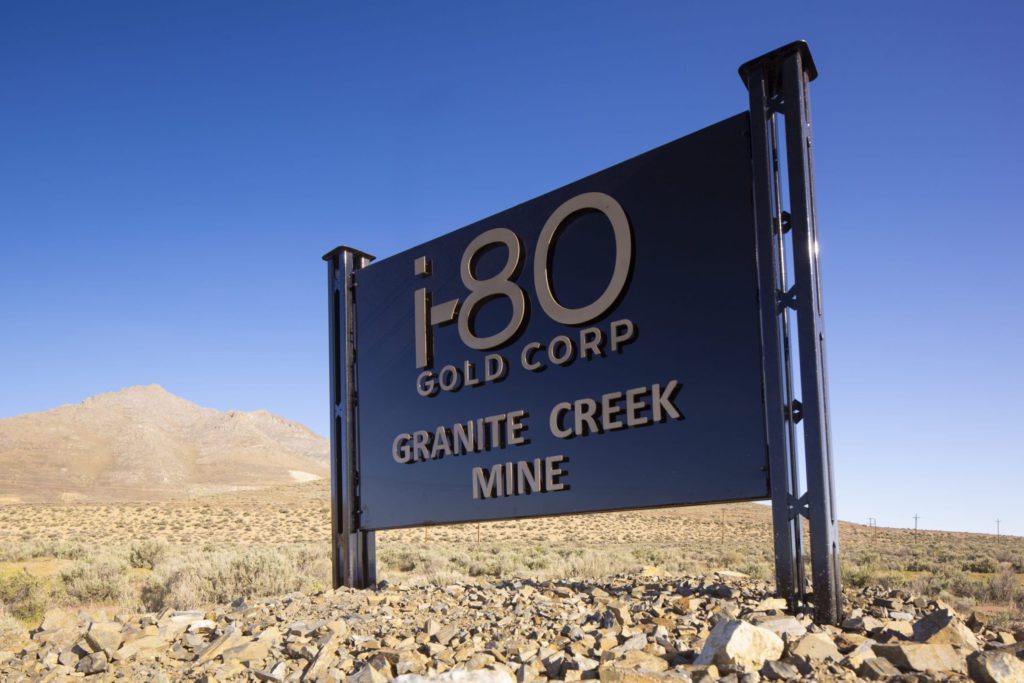
i-80 Gold has secured a US$500 million package, including a US$250 million life-of-mine NSR royalty sale to Franco-Nevada (1.5%, rising to 3% from 2031) and a US$150 million gold prepay facility with National Bank and Macquarie plus a US$100 million accordion, to fund its Nevada growth plan and clear roughly US$175 million of debt. The financing is expected to fully fund Phase 1 and Phase 2, ramping Granite Creek, advancing Archimedes, and expanding Cove underground and the Granite Creek open pit to lift output from ~50,000 oz/year to 300,000–400,000 oz/year by 2031. Longer term, i-80 aims to develop the Mineral Point oxide heap leach project, which has 4.6 million oz Au-eq (measured and indicated) and a PEA outlining a 17-year life at 282,000 oz Au-eq/year, targeting total production of 600,000 oz/year across four Nevada operations.
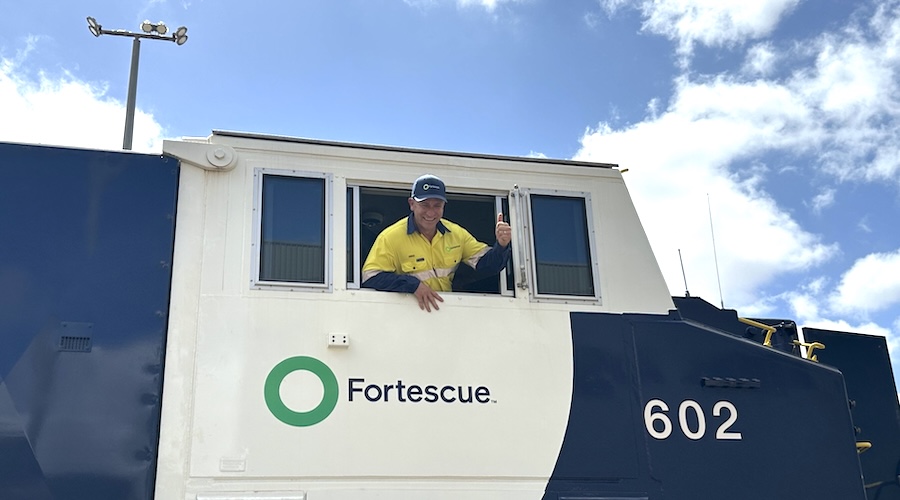
Fortescue has commissioned two Progress Rail battery electric locomotives in the Pilbara, each with a 14.5MWh onboard battery and 40–60% regenerative braking, to haul 40,000-tonne iron ore trains over 300–400km and cut about one million litres of diesel use per year. The units will run on renewable power from the Pilbara Energy Connect network, which already includes a 100MW solar farm with a 250MWh BESS at North Star Junction and a 760km electrified rail corridor linking five mines to Port Hedland. Fortescue is concurrently advancing 190–644MW-scale solar projects, its first Pilbara wind farm at Nullagine, and a green iron plant at Christmas Creek targeting first metal by June 2026.