Geomechanics, Streamlined.
© 2026 Geomechanics.io. All rights reserved.
US Antimony has secured $27 million in Defense Production Act Title III funding to modernise and expand its Montana smelter, currently capable of producing 5 million lb of antimony metal and described as the only fully integrated antimony operation outside China and Russia. The funding will also advance development of a 35,000-acre, 120-claim antimony project in Alaska to provide domestic feedstock and support full vertical integration from ore extraction through flotation to finished products. The Pentagon frames the move as reducing supply risk for flame retardants, batteries and munitions.
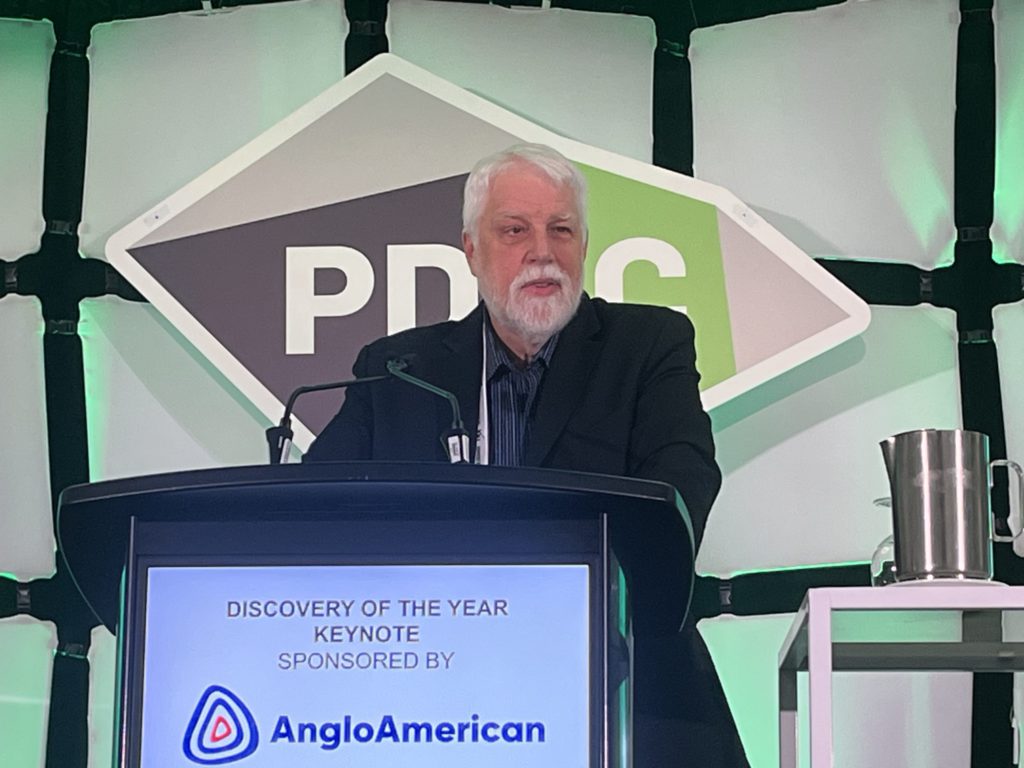
AngloGold Ashanti’s Silicon project in southern Nevada has earned PDAC’s Thayer Lindsley Discovery of the Year after detailed field mapping and core logging converted an “oddball” alteration system into one of the largest recent US gold finds. Probable reserves now stand at 88 million tonnes grading 1.75 g/t gold and 2.75 g/t silver, totalling about 5 million oz. gold and 7.8 million oz. silver, 200 km from Las Vegas. Geologist Paul Bartos stressed that Landsat-based alteration mapping, followed by systematic drilling, was critical in a district long dismissed as over-explored.
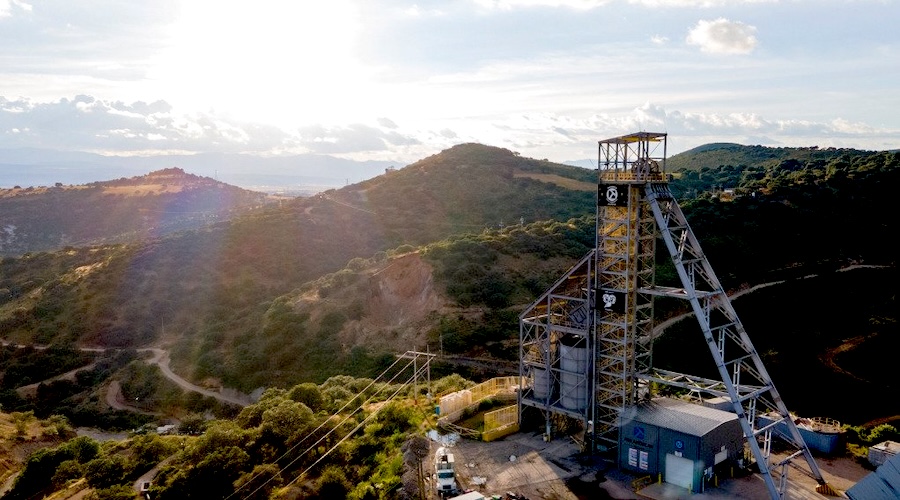
Pan American Silver has identified at least four new high-grade veins — Filomena, Nicolasa, Bernardina and Josefina — at its La Colorada mine in Zacatecas, with about 40% of recent drill holes assaying above 1,000 g/t silver in the Candelaria zones. The company plans to fold the results into a June mineral reserve and resource update and is shifting to a phased development plan targeting higher-grade vein and skarn zones. The expansion comes as Mexico’s silver sector operates under elevated security risk following cartel-related violence and worker abductions.
Resolute Mining has lifted its global gold resource 60% year-on-year to 347 million tonnes at 1.6 g/t (17.63 million oz.), after acquiring the Doropo and ABC projects in Côte d’Ivoire from AngloGold Ashanti for $150 million, adding 6.6 million oz. The group now holds 6.8 million oz. in ore reserves on a 100% basis, up 55%, including 2.5 million oz. at Doropo and an initial 348,000 oz. reserve at Tomboronkoto in Senegal, with 5.9 million oz. attributable. Syama in Mali, mined as a sub-level cave, is forecast to process 2.6 million tonnes in 2026 at 2.4–2.5 g/t.
Gold fell as much as 1.5% to $5,053/oz on Thursday, with US futures down about 1% to $5,080/oz, as a stronger dollar and expectations of reduced US Federal Reserve easing outweighed safe‑haven demand from the escalating Middle East conflict. Swaps markets now price only about 35 basis points of Fed cuts by year‑end, down from 60 bps last week, raising the opportunity cost of holding non‑yielding bullion. ING commodity strategist Ewa Manthey attributes part of the drop to investors liquidating gold to meet losses in US equities, rather than a shift in fundamentals.
Codelco has signed an 18‑month memorandum of understanding with Microsoft to deploy artificial intelligence, advanced analytics, autonomous operations and strengthened cybersecurity across its copper mines, backed by joint strategic and operational governance. The collaboration targets intensive use of operational data for AI‑driven decision-making and automation of critical processes, with both parties committing to early testing of new digital solutions under strict data protection standards. The deal extends a 27‑year technical relationship and signals large‑scale digital integration across the world’s largest copper producer’s operations in Chile.
Indigenous equity stakes in Canadian resource projects are being pushed by the First Nations Major Projects Coalition (FNMPC) as a practical route to faster mine and energy permitting, with CEO Mark Podlasly arguing that ownership aligns community rights with project economics. FNMPC, now representing 186 First Nations, has supported deals such as a collective 10% stake in the 670 km Coastal GasLink pipeline and ~50% Indigenous equity in multiple electricity transmission lines, and is advising an early-stage lithium project in northern Ontario. With Ottawa’s Major Projects Office targeting two‑year approvals for major mining and energy schemes, Podlasly contends that Indigenous co-investors are far less likely to litigate or oppose projects that embed their environmental and economic priorities.
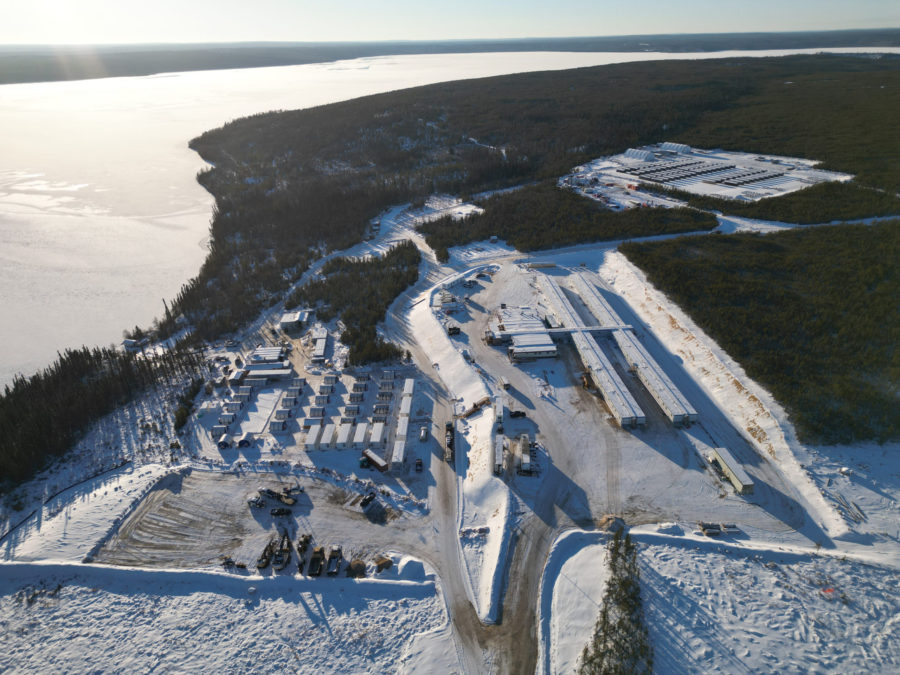
NexGen Energy will begin construction this summer on the C$2.2 billion Rook I uranium mine in Saskatchewan’s southwest Athabasca Basin, after securing Canadian Nuclear Safety Commission approval for its environmental assessment and construction licence. The Arrow deposit hosts 4.57 million tonnes of probable reserves grading 2.37% U3O8, with feasibility work indicating output of almost 30 million lb. U3O8 per year over the first half of an 11-year mine life, making it the largest planned uranium producer in North America. At a US$95/lb uranium price, Rook I carries an NPV8 of C$6.32 billion and a 45% IRR, with a four-year build expected.
Vizsla Silver has confirmed two more deaths among the 10 workers kidnapped from its Panuco silver-gold project near Concordia, Sinaloa, in late January, bringing the death toll to seven as Mexican authorities continue search and investigation efforts amid cartel-related violence about 50 km east of Mazatlán. The company is reviewing and tightening on-site security protocols in coordination with local authorities, directly affecting risk planning for future underground and surface operations at Panuco, which targets first production in 2027. Vizsla’s Toronto-listed shares dropped as much as 4.6% to C$5.39 before recovering to C$5.51, leaving its market capitalisation around C$1.9 billion.
A £15.2m remodelling of Colchester’s St Botolph’s Circus has been awarded to Jackson Civil Engineering, with main construction scheduled from April 2026 to autumn 2027. The scheme removes existing pedestrian underpasses on Southway and installs new at-grade crossing points to improve pedestrian and cyclist safety and connectivity into the city centre. For designers and contractors, the works will involve complex traffic management and staged demolition/reconstruction in a constrained urban gateway.
Morgan Sindall Construction has begun a £13m expansion of Kingsbrook School in Aylesbury, adding a 2,300 m², three-storey block to increase capacity from 1,080 to around 1,440 pupils by moving from six to eight forms of entry. The scheme delivers 20 classrooms, new science labs, food preparation rooms, enlarged SEN provision and additional sixth form study and social space, supporting growth from the surrounding Kingsbrook housing development. A traditional steel frame with precast floors is being used for rapid erection, with segregated worksites and a dedicated access tunnel to maintain safe pupil routes to sports facilities.
Waverley Borough Council has approved a revised £36m budget, including an extra £4.9m, for Willmott Dixon to deliver a new Passivhaus‑certified leisure centre in Cranleigh by winter 2027. Designed to replace the 1969, high‑energy facility, the building is expected to use about 60% less energy per square metre and cut operational carbon emissions by roughly 75%. The design includes upgraded air‑handling and latest‑generation pool microfiltration, with most cost escalation attributed to rising materials and services prices despite prior inflation allowances.
HBC Construction (formerly Henry Boot) has become the first major contractor to join MukAway, a digital spoil-management platform that matches sites with surplus soil to projects needing fill. The app, already used by major housebuilders including Vistry, Barratt, Bellway and Keepmoat, operates on a low subscription model to broker soil movements and cut waste to landfill. HBC managing director Lee Powell expects the platform to reduce muck-away costs and enable direct collaboration between contractors and housebuilders on bulk earthworks.
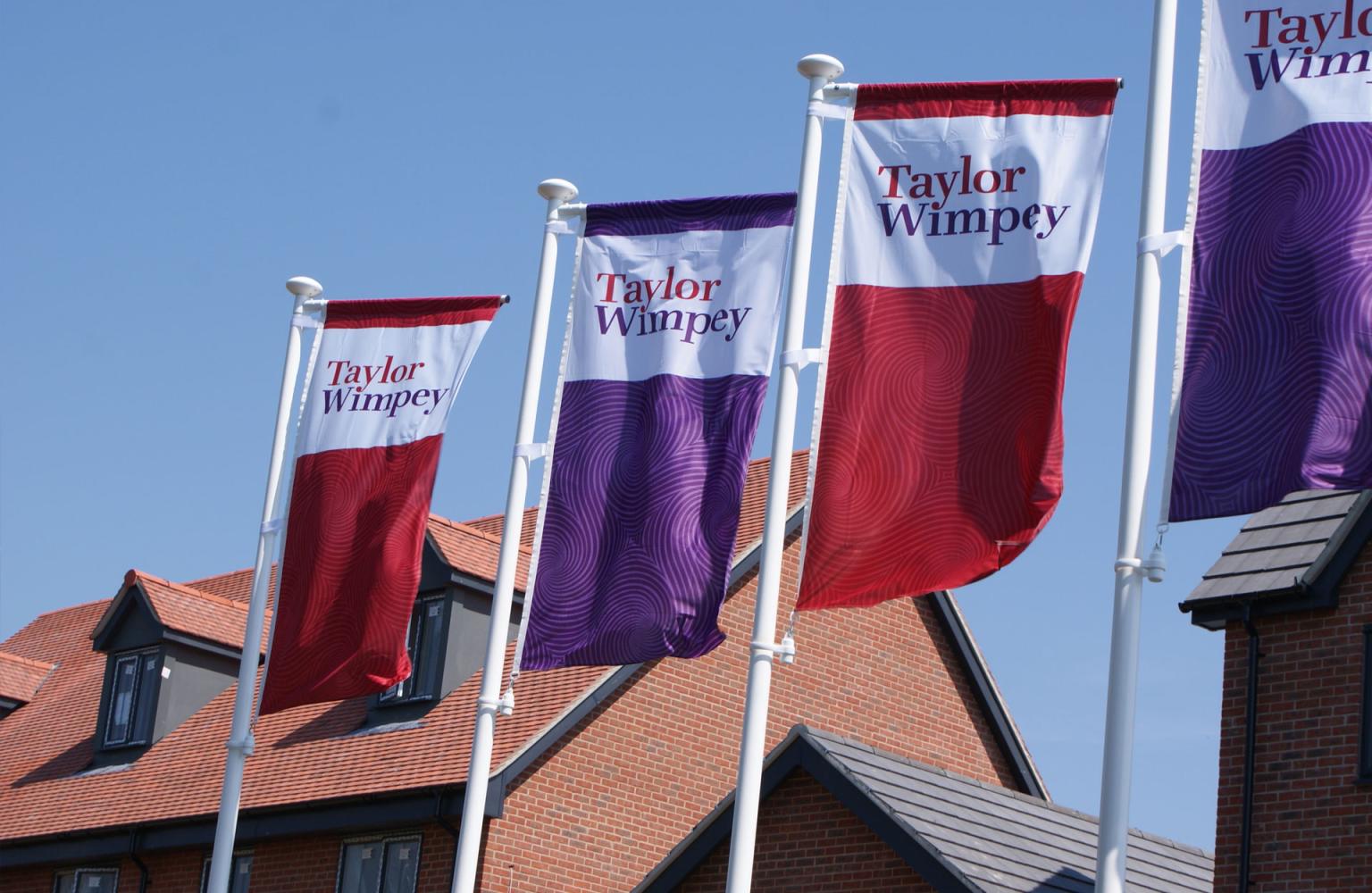
Taylor Wimpey’s 2025 pre-tax profit fell more than 50% to £146.5m despite a 13% revenue rise to £3,845m, as it booked £243.8m of exceptional costs including a £225.8m cladding fire safety provision and an £18m Competition & Markets Authority settlement over cartel investigations. The cladding provision directly impacts remediation budgets on legacy high-rise schemes, tying up capital that could otherwise support new housing delivery and land acquisition. The 2026 order book slipped to £2,182m or 7,678 homes by 1 March, down from £2,283m and 8,097 homes a year earlier, although spring sales are reported as improving.
UK construction output contracted faster in February as the S&P Global UK Construction PMI fell to 44.5 from January’s 46.4, marking 14 consecutive months below the 50.0 threshold, with residential work weakest at an index of 37.0 and civil engineering at 41.0. New orders have declined every month since January 2025, yet 42% of firms still expect higher output over the next year, citing forthcoming infrastructure and energy projects. Contractors report sharper input cost inflation for concrete, copper, insulation and steel, even as material lead times have shortened for seven straight months.
Construction of the £8.4m Hethel spine road has started in South Norfolk, with Jackson Civil Engineering moving from preliminary works into main construction, including a new roundabout giving direct access to an expanded employment zone beside the Lotus Cars factory. The scheme will unlock 20 hectares of development land owned by Hethel Enterprises, allocated in the Greater Norwich Local Development Plan for engineering and technology businesses. Delivered jointly by South Norfolk Council and Norfolk County Council, the road is intended to support growth of the Hethel Engineering Centre and co-located start-ups.
Student licences for PLAXIS and GeoStudio now apply visible watermarks to outputs, with PLAXIS marking all plots and reports and GeoStudio watermarking only exported graphics, not on-screen views. The watermark text typically includes “Student Version” or similar, cannot be removed or hidden, and persists in printed or PDF deliverables, making results unsuitable for formal design submissions, commercial reports, or regulatory approvals. Educators and students are advised to use these licences strictly for teaching, coursework, and non-commercial research, switching to full licences for any professional geotechnical design work.
Maptek has acquired PETRA in full, increasing its stake from 25% to 100% and bringing PETRA’s orebody learning and data fusion technology fully in‑house. The deal consolidates PETRA’s AI‑driven orebody intelligence tools with Maptek’s existing mine planning and design platforms such as Vulcan and Evolution, aiming to link block models, drill‑and‑blast, and production data in a single decision‑support workflow. For geologists and mining engineers, this signals tighter integration of real‑time data analytics with long‑term resource and scheduling models.
Overland Conveyor Company has returned to private ownership effective 12 February 2026, led by long-term employee and now shareholder-president Paul Ormsbee as it nears 30 years in the conveyor design and software market. The move separates OCC from its former corporate parent and positions its niche tools for complex overland conveyor analysis and optimisation, such as dynamic modelling and belt capacity studies, under tighter specialist control. For mine planners and materials handling engineers, this signals continuity of OCC’s technical direction with potentially faster decision-making on product development and support.
Rio Tinto has signed a Memorandum of Understanding with Chinese battery manufacturer CATL to develop mine electrification strategies covering mobile equipment, fixed plant and supporting energy storage. The partnership will focus on integrating CATL lithium-ion battery systems into Rio Tinto’s operations, co-developing supply chains for critical battery materials and establishing circular-economy pathways for end-of-life cells. For engineers, the deal signals closer alignment between mine design and OEM battery platforms, with potential implications for fleet selection, power infrastructure and decarbonisation project timelines.
Metso has secured orders worth about €39 million ($45 million) to supply crushing and grinding plant equipment for Artemis Gold’s Blackwater Mine Expanded Phase 2 (EP2) project in central British Columbia, supporting the next throughput step-up at the open-pit operation. The package includes a Superior MKIII primary gyratory crusher and Nordberg HP Series cone crushers, integrated into a new comminution line. For process engineers, the standardised Metso flowsheet should simplify spares, liner management and control integration across Blackwater’s staged expansions.
Rio Tinto and the Western Australian Government have formed a 50:50 joint venture to deliver the A$1.1 billion Dampier Seawater Desalination Plant, comprising Stage 1 and Stage 2. When fully operational, the plant will supply 8 GL/y of desalinated water into the West Pilbara Water Supply Scheme, easing demand on stressed regional aquifers that currently support mining and communities. For mine planners and water engineers, the scheme signals a shift towards coastal desalination as a primary source for Pilbara process and potable water security.
Epiroc is analysing how electric surface drill rigs interact with weak and remote mine grids, focusing on load profiles, start-up currents and grid contingencies that can destabilise existing 11–33 kV distribution systems. The company is testing smart power management strategies such as ramped starts, active power factor correction and local energy storage to smooth high transient loads from large electric drills. For mine planners and electrical engineers, the work points to earlier integration of grid studies with fleet selection and potential use of hybrid on-site generation to avoid costly grid reinforcements.
Austmine and AusIMM, with Expande (Chile), Peru Mining Innovation Hub, CEMI (Canada) and Colab Partner Baker Hughes, have launched the Global Open Innovation Colab challenge “Critical Disruptors: From Discovery to Recovery” to run at the Global Resources Innovation Exchange 2026 (GRX26). The challenge targets technologies that compress exploration-to-extraction timelines, including concepts for faster orebody characterisation, integrated drilling-to-processing data streams and step-change recovery methods. For miners and METS suppliers, it offers a structured route to pilot novel sensing, automation and processing solutions with multi-jurisdictional partners.