Geomechanics, Streamlined.
© 2026 Geomechanics.io. All rights reserved.
MacLean Engineering has delivered its first Volvo Penta-powered underground mining machine to a Quebec operation, using an industrial off-road diesel from Volvo Penta supplied through Canadian distributor Wajax. The deal follows the formalisation of the Volvo Penta–Wajax distribution partnership in Canada, targeting MacLean’s fleet of battery-electric and diesel support units such as bolters, shotcrete sprayers and utility vehicles. For mine operators, the move standardises powertrains around a globally supported engine platform, simplifying parts, service logistics and emissions compliance across mixed fleets.
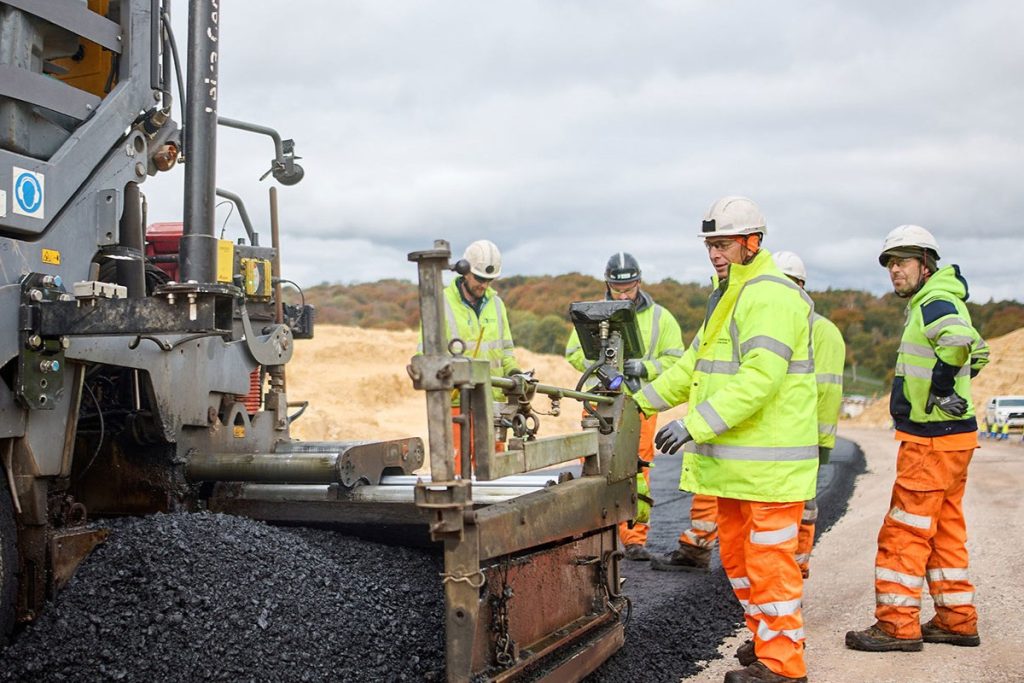
National Highways has awarded a £968M framework to Graham, John Sisk & Son and Kier to reconstruct ageing concrete pavements across the Strategic Road Network in England. The multi-year programme will target rigid carriageways nearing or beyond design life, replacing them with modern concrete or composite pavement structures designed for higher traffic loading and reduced maintenance interventions. Contractors are expected to deploy large-scale slab removal, fast-track slipform paving and night-time possession strategies to keep key motorways and trunk roads operational during works.
A proposed £130bn high‑speed “rail loop” concept from Riba president Muyiwa Oki would link major cities across Scotland, England, Wales, Ireland and Northern Ireland in a single integrated network. Oki confirms maglev is being considered alongside conventional high‑speed rail, raising questions over guideway geometry, viaduct and tunnel design, and long‑span crossings for the Irish Sea. For engineers, the key issues will be route alignment, interoperability with existing hubs, and whether UK demand and geology justify maglev’s higher capital and maintenance costs.
Heathrow Airport has shortlisted five teams in its 2026 Early Careers Innovation Challenge, run with New Civil Engineer, to progress concepts aimed at improving airport infrastructure and operations. The finalists, drawn from early-career engineers, will now develop proposals that could influence future upgrades to airside pavements, terminal assets and landside transport interfaces at one of Europe’s busiest hubs. For consultants and contractors, the programme signals Heathrow’s interest in piloting novel civil and systems solutions from younger practitioners within a structured development framework.
A 150km hydrogen pipeline running from the Lincolnshire coast to Nottinghamshire has entered public consultation, with promoters positioning it as strategic energy infrastructure for local industry. The scheme would create a dedicated transmission route to move low‑carbon hydrogen from coastal production and import facilities inland to industrial users in Nottinghamshire. For civil and pipeline engineers, key issues will include long‑distance route selection across agricultural land, geotechnical risk management in low‑lying flood‑prone areas, and integration with existing gas and industrial networks.
Women are taking on a wider range of roles in Australian mining, from underground production and haul-truck operation to senior leadership in major producers and METS companies. Operators report more mixed-gender crews on large open-cut coal and iron ore sites in the Pilbara and Bowen Basin, supported by flexible rosters, remote operations centres and redesigned PPE for smaller body sizes. Company leaders are linking gender targets in site-based technical teams to ESG reporting, contractor prequalification and board-level remuneration structures.
Geoscience Australia’s Public Talks series is returning in 2026 with monthly evening sessions in Canberra and live-streamed broadcasts covering topics from critical minerals mapping to induced seismicity near major mines. Chief scientist Dr Steve Hill and invited researchers will present new data from national geophysical surveys, including high-resolution aeromagnetic and gravity datasets used in greenfields exploration targeting copper, nickel and rare earths. For practitioners, the programme offers direct access to pre-competitive datasets, workflow case studies and Q&A on integrating these layers into 3D geological models and resource assessments.
Ontario is shifting its critical minerals strategy away from a pure EV focus towards defence and aerospace, adding high-purity iron ore and aluminium to its critical minerals list, which now totals 35 commodities. Major EV-linked projects are being delayed or reprofiled, including Honda’s roughly $15‑billion EV and battery complex pushed back about two years, Ford’s $2‑billion Oakville plant reverting to Super Duty trucks, and GM suspending BrightDrop van output at the $1‑billion‑retooled CAMI plant. Toronto is also bidding to host a NATO‑backed international defence bank, with Ontario targeting a revised critical minerals strategy by 2027 after new consultations with industry and First Nations.
The Northern Territory Government has expanded its critical minerals guide to include bismuth, iron ore, lead, silver, uranium and now gold, signalling broader strategic support beyond traditional battery and rare earth commodities. Inclusion in the guide typically unlocks streamlined permitting pathways, targeted geoscience data and promotional backing for listed projects, which could materially affect exploration economics across the Territory. For geotechnical and mining engineers, the shift suggests increased demand for feasibility studies, resource definition drilling and mine design in both precious and bulk commodity deposits.
Boss Energy will keep its 2025–26 production guidance for the Honeymoon in-situ recovery uranium project in South Australia despite a rain-hit quarter that reduced output. Heavy rainfall disrupted wellfield access and slowed resin loading from the ion-exchange columns, temporarily constraining plant throughput. Management is banking on improved dry-season access and additional production wells coming online to recover volumes, signalling confidence in the leach circuit and groundwater management strategy rather than revising guidance after a single weather-affected quarter.
Sandvik is set to launch the Ranger DX1010i top hammer surface drill rig at CONEXPO‑CON/AGG 2026, targeting high‑productivity mining and quarry bench drilling. The DX1010i builds on the Ranger DXi platform with 290°–360° revolving superstructure coverage and an integrated Sandvik rock drill, enabling fewer set‑ups and faster drilling cycles on 76–127mm holes. For mine planners and drill‑and‑blast engineers, the extended reach and automated drilling controls are aimed at tighter pattern accuracy and reduced non‑drilling time on large benches.
Hubbell Power Systems has completed combined field and laboratory torque testing to investigate premature failures of cableway slots in concrete‑collar street‑light foundations using Chance helical anchors. Tests compared standard and modified cableway geometries, varying embedment depth, grout conditions and torque levels to identify when slot cracking and spalling initiate. Findings give designers and contractors clearer limits on installation torque and collar detailing, reducing the risk of localised concrete damage and unplanned anchor replacement in street‑lighting foundations.
SGS has entered a long-term strategic collaboration with Quebec-based Exterra Technologies to develop new mineral processing solutions aimed at strengthening Canada’s domestic critical mineral processing capacity. Announced at the PDAC 2026 Convention, the partnership targets lower environmental footprints in mineral production, signalling a push for cleaner process flowsheets and more efficient use of reagents and energy. For operators, the move points to future access to SGS‑validated Exterra technologies within Canadian testwork, pilot plants and commercial operations.
Michelin North America has launched the Michelin XHA3 earthmover tyre at CONEXPO 2026, targeting loaders and graders with higher load capacity and improved tonne-kilometre-per-hour (TKPH) performance over the XHA2. The XHA3 introduces a new, more aggressive tread pattern aimed at better traction and wear life in high-abrasion quarry and mine-floor conditions. For mine operators, the higher TKPH rating and payload capability offer scope to upsize buckets or extend haul cycles without overheating tyres, subject to site-specific duty calculations.
Volvo Construction Equipment has rolled out safety and productivity upgrades across its large wheel loader range at CONEXPO-CON/AGG 2026 in Las Vegas, targeting heavy quarrying and mining duty cycles. The updates, driven by customer feedback, focus on maximising uptime and jobsite safety for high-hour machines working in abrasive, high-load environments. For mine operators, the changes signal continued OEM emphasis on lifecycle performance and cost-per-tonne in primary loading fleets.
Twin rail tunnels for the Sydney Metro West project between Westmead and Hunter Street in the CBD are now fully excavated, with tunnel boring machine (TBM) Jessie completing the drive after a 34‑month campaign. The breakthrough, following the earlier arrival of sister TBMs on adjacent drives, confirms continuous twin-bore excavation beneath densely built urban ground conditions. Contractors now shift from TBM operations to lining, fit-out and interface works, with geotechnical focus moving from face stability to long-term settlement control and groundwater management.
Modular bitumen storage systems from TEC Container Solutions are being adopted across Australian and New Zealand asphalt plants to handle speciality binders such as crumb rubber and polymer modified bitumen. The containerised tanks are supplied as plug‑and‑play units with integrated heating, agitation and level control, allowing rapid deployment on brownfield plant upgrades and new greenfield sites without major civil works. For pavement engineers, this supports more consistent binder temperature control and segregation management, enabling wider use of high‑performance surfacing mixes.
Rio Tinto and the Western Australian Government have agreed a 50:50 joint venture to deliver the $1.1 billion West Canning Basin managed aquifer recharge scheme, securing long-term water supply for Rio’s Pilbara iron ore operations and the West Canning Basin Water Project. The deal covers completion of Stage 1 and Stage 2 infrastructure, including production bores, pipelines and recharge systems designed to inject treated surplus water back into deep aquifers. For mine planners and tailings engineers, the scheme reduces reliance on surface water and provides a more predictable input for dewatering and processing circuits.
Austmine has appointed Tony Davis as its new chief executive officer, tasking the former consulting and technology executive with steering Australia’s mining equipment, technology and services (METS) cluster through accelerating automation and decarbonisation. Davis is expected to focus on strengthening collaboration between mine operators, OEMs and digital solution providers, particularly around data interoperability and deployment of advanced analytics on brownfield sites. His leadership will likely influence how smaller METS firms commercialise niche technologies such as real-time ore characterisation and remote asset monitoring across major iron ore and coal operations.
Kalamazoo Resources has appointed seasoned mining executive Andrew McDougall as chief executive officer to drive development of its 1.44-million-ounce gold portfolio in Western Australia and Victoria. McDougall, who previously held senior roles with mid-tier producers and project developers, is expected to focus on advancing the Castlemaine and Ashburton projects through resource growth and study de-risking. The leadership change signals a push from exploration-led value to near-term development, with implications for drilling contractors, study consultants and potential JV or farm-in partners.
Silo level measurement using Dimetix D‑Series laser distance sensors is being promoted for bulk materials handling in sectors such as mining, plastics and construction materials, offering non-contact measurement over long ranges with millimetre accuracy. The IP65/67-rated units can be mounted at the silo roof, measure through dust using visible red laser technology, and integrate via standard industrial interfaces (e.g. 4–20 mA, Profibus, Profinet) into existing PLC/SCADA systems. For mine sites, this enables continuous stock level monitoring in ore, cement or lime silos without intrusive radar probes or load cells, reducing maintenance in abrasive, dusty environments.
Australia’s position as a major producer of iron ore, bauxite, lithium and nickel is being reframed around “green metals”, with processing powered by large-scale solar and wind backed by battery storage and, in some cases, green hydrogen. Miners are examining electrified crushing and grinding circuits, electric mining fleets and renewable-powered refineries to cut Scope 1 and 2 emissions from traditionally diesel- and gas-heavy operations. For geotechnical and civil teams, this shift implies new load profiles, substation and battery foundations, and altered pit and plant layouts to integrate high-capacity renewables.
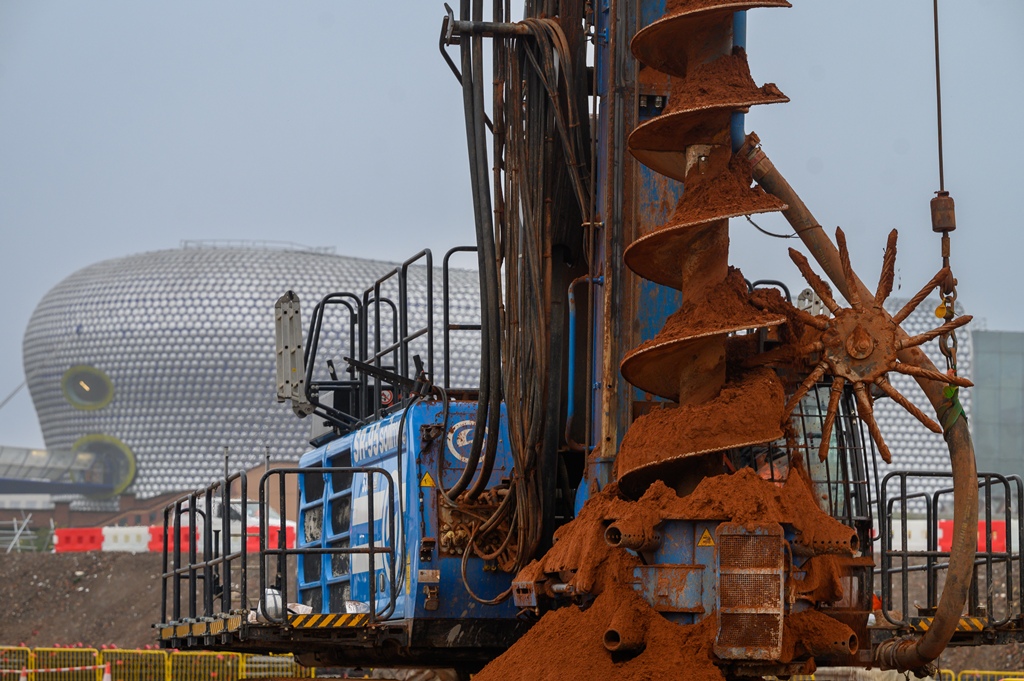
Completion of piling for HS2’s Curzon Street station in Birmingham sees Keltbray, for the Mace Dragados JV, install 2,011 CFA-bored reinforced concrete piles to depths of 6–24 metres along the 400‑metre site between Moor Street and Millennium Point. Works also include an eight‑metre‑high retaining wall, excavation of 47,000 m³ of material, and sub‑surface construction requiring 19,000 tonnes of rebar and 69,000 m³ of concrete, of which 7,000 tonnes and 29,000 m³ are already in place. Attention now shifts to remaining foundations, the Digbeth West Midlands Metro extension under New Canal Street, and sliding the 40‑metre‑high Curzon 2 viaduct across the Cross City line this summer.
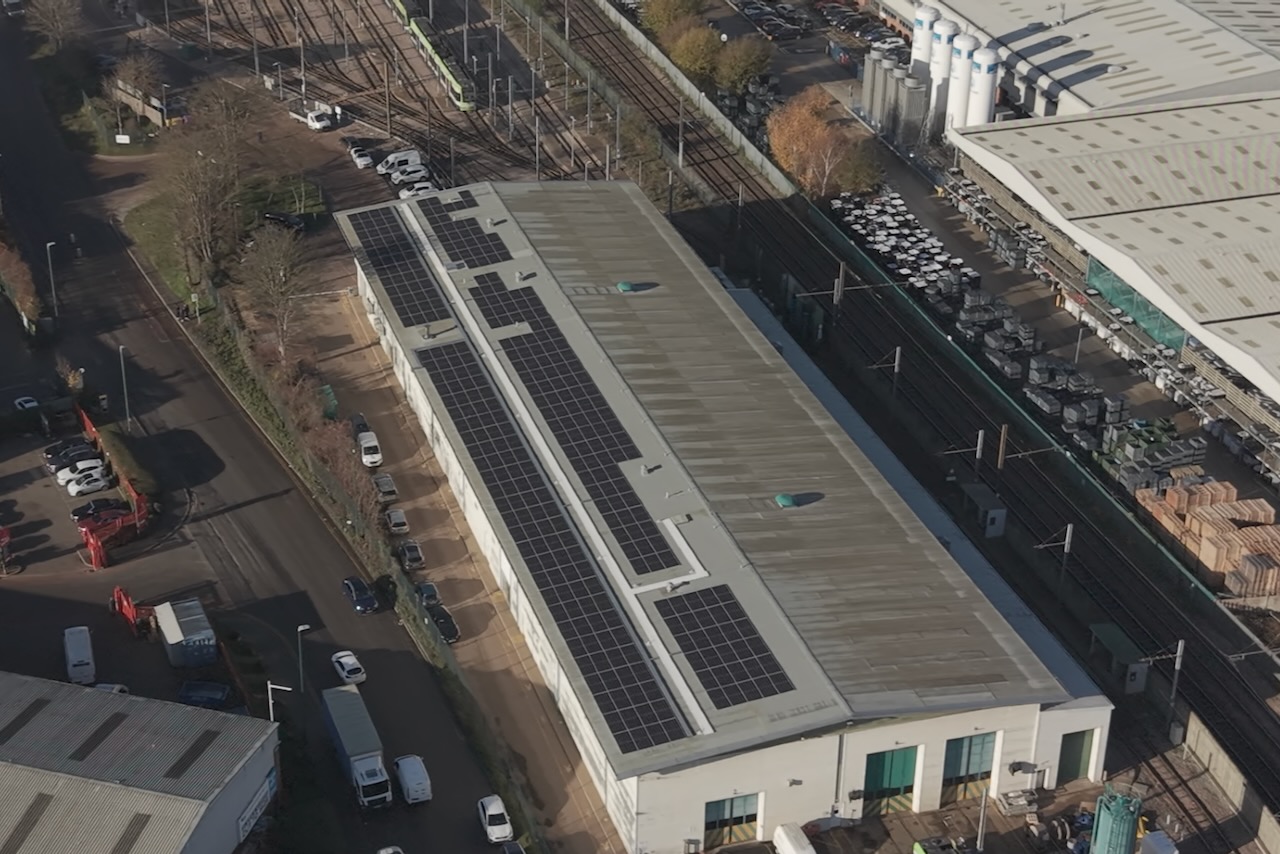
Transport for London has appointed SSE Solar Solutions to build, operate and maintain dedicated solar generation to supply the Underground’s full 1.16TWh annual electricity demand. The long-term power purchase arrangement will see new offsite solar farms developed specifically for TfL loads, rather than relying on generic grid decarbonisation. For engineers, the move signals growing demand for grid-scale PV, grid-connection capacity and power-quality management to support high-reliability traction and station systems on legacy urban rail networks.