Geomechanics, Streamlined.
© 2026 Geomechanics.io. All rights reserved.
Sandvik Mining’s Zeltweg plant has shipped the first Sandvik MC431 continuous miner to Australia after completing factory acceptance testing, extending the MC430 platform that has logged 13 years of mechanical cutting performance in South Africa. The MC431 is engineered for high-capacity roadway development in hard rock and coal, with upgraded cutting power and ground support integration aimed at improving advance rates and profile control. For Australian operators, the machine signals a shift towards more standardised, OEM-supported continuous mechanical cutting fleets in place of drill-and-blast in selected headings.
Codelco has signed a collaboration framework with Microsoft to evaluate joint initiatives in artificial intelligence, advanced analytics, automation and digital security as part of its digital transformation strategy. The agreement, signed by Codelco CEO Rubén Alvarado and Microsoft President Brad Smith, will focus on applying cloud-based analytics and AI tools across mine planning, processing and asset management. For engineers, the deal signals more data-driven optimisation of concentrators and smelters, tighter cybersecurity around OT networks, and potential expansion of predictive maintenance on critical mobile and fixed plant.
Weir has secured a contract to supply ENDURON® high pressure grinding rolls (HPGR) for the tertiary crushing circuit in Ivanhoe Mines’ Platreef Phase 2 concentrator expansion in South Africa. The HPGR circuit will be integrated as part of the Phase 2 flowsheet rather than relying solely on conventional cone crushing, targeting improved energy efficiency and finer product for downstream milling. For process engineers, the move signals continued adoption of HPGR technology on large-scale PGM–nickel concentrators to cut specific energy and potentially reduce overall comminution footprint.
DELKOR India has secured an EPC contract from Arab Potash Company to supply a 50 m diameter DELKOR Thickener for the Hot Leach Potash (HLP) circuit in the firm’s latest capacity expansion project. The large-diameter unit is designed for high-throughput liquid/solid separation in hot brine conditions, a critical bottleneck in potash crystallisation and recovery. For process and tailings engineers, the installation signals further scaling of HLP operations at Arab Potash’s Jordan facilities, with implications for water balance, underflow rheology and downstream evaporation capacity.
Cohda Wireless and Spectrum FiftyNine are deploying compact V2X (Vehicle-to-Everything) modules at Rio Tinto’s Oyu Tolgoi underground mine in Mongolia to deliver real-time proximity awareness between heavy vehicles and personnel. The system integrates Cohda’s V2X software stack with Spectrum FiftyNine’s low-profile hardware, Roobuck cap lamps and Maptek’s mine planning and visualisation tools to create a unified situational awareness layer. For geotechnical and operations teams, this enables tighter traffic management in constrained headings and declines without relying solely on line-of-sight or radio voice calls.
Jon Whelan has been appointed chair of the Austroads Board, bringing four decades’ experience with the South Australian Department for Infrastructure and Transport, where he is currently Chief Executive. Starting his career in a pavements laboratory, Whelan has a technical background in road materials and surfacing performance as well as network-level transport planning. His leadership is likely to influence future Austroads guidance on pavement design, asset management and multi-modal transport standards across Australian and New Zealand road agencies.
Victoria’s Transport Accident Commission Local Government Grant Program is allocating a further $2.4 million to councils to upgrade local road safety infrastructure. Bayside City Council will use its share to construct five raised “wombat” pedestrian crossings and reduce speed limits at a Brighton roundabout, targeting lower impact speeds and better visibility at conflict points. For designers and traffic engineers, the works signal continued state backing for vertical deflection devices and speed management on suburban collector roads.
Plastic pipe manufacturer Polypipe Building Services has invested £1.5m in automation, £3m in moulding machinery and £2.5m in extrusion technology at its 24-hour, five-day Aylesford plant, moving key lines to fully automated operation. Six-axis and Cartesian robots now handle production and packaging, while an IV4 AI vision camera counts parts and flags dimensional variation, ovality and moulding defects before dispatch. Operator loading has shifted from one operator per machine to typically one per four machines, with staff redeployed and further automation planned in the fabrication department.
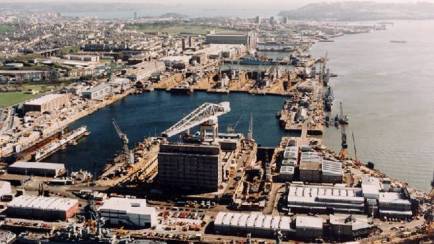
Devonport Royal Dockyard Limited has been taken out of the Office for Nuclear Regulation’s “enhanced attention” regime after 12 years, returning the Plymouth nuclear dockyard to routine regulatory oversight. ONR cited sustained improvements in leadership, organisational capability, decision-making and internal assurance, addressing earlier safety issues linked to ageing facilities, construction activities and control of work. The regulator now judges DRDL to have sufficient capability and capacity to maintain safety performance across both major construction works and submarine maintenance, but will continue targeted monitoring to ensure gains are sustained.
Mace Group has completed the demerger and sale of its international consultancy arm, Mace Consult, to Goldman Sachs Alternatives, which now holds a majority stake while existing Mace shareholders retain a minority interest and the UK-focused contracting arm prepares to drop the Mace name. Mace Consult reported close to US$1bn revenue in 2025, with Mace Finance’s 2024 accounts showing £687m turnover for Consult versus £2.1bn for Construct, indicating substantial overseas consultancy operations. Chief executive Davendra Dabasia plans to use Goldman Sachs capital to scale particularly in North America and invest in digital tools for programme predictability, automation and lifecycle control.
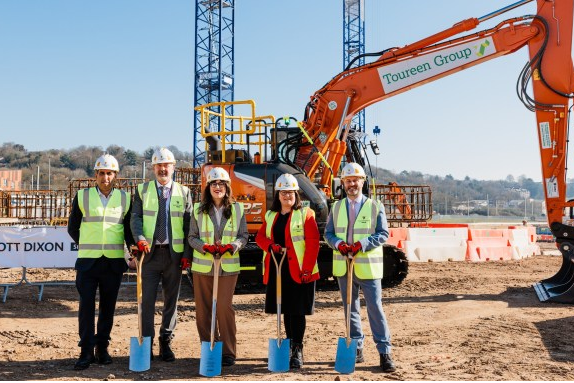
Willmott Dixon has broken ground on The Stage, a £136m residential-led mixed-use scheme on the former Bute Street Shoppers car park site in Luton, delivering 292 apartments plus commercial units, a food hall/events space and a new public garden square. The project team includes WSP and Rider Levett Bucknall as employer’s agent and project manager, with Artelia UK as quantity surveyor, under Luton Council’s wider town centre regeneration programme. For contractors and consultants, the scheme signals a substantial pipeline of town-centre, brownfield, high-density work in the area.
Heathrow Airport has shortlisted five teams in its 2026 Early Careers Innovation Challenge, run with New Civil Engineer, to progress their concepts for future airport infrastructure and operations. The finalists, drawn from early-stage engineers and construction professionals, will now receive mentoring and technical support to refine proposals that could influence airside pavements, terminal asset management and passenger-flow design. For consultants and contractors working at Heathrow, the challenge signals a pipeline of fresh ideas likely to feed into upcoming upgrade and resilience projects.
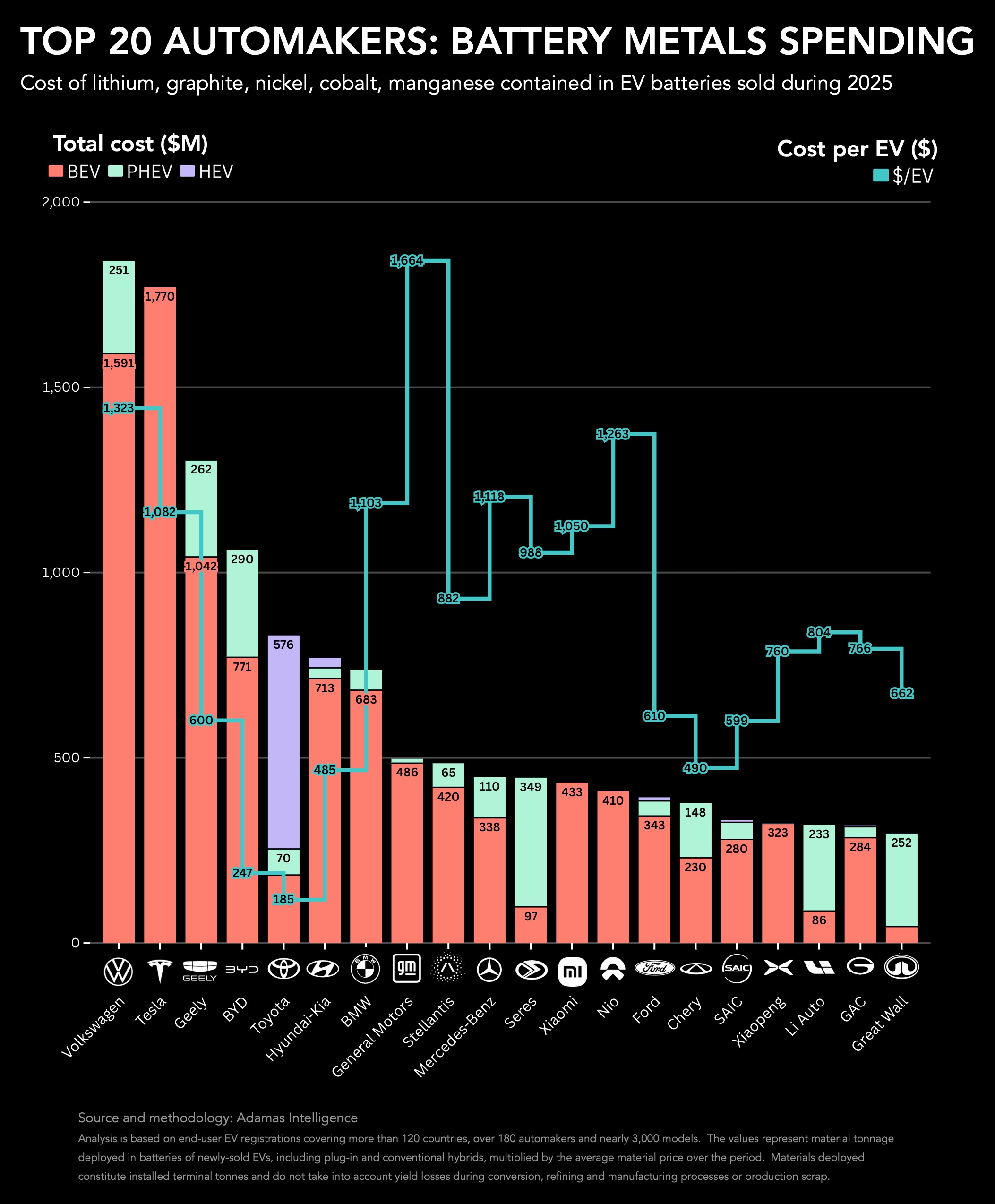
Global EV battery capacity deployment passed 1 TWh in 2025, nearly quadruple 2021 levels, yet the raw material bill for lithium, graphite, nickel, cobalt and manganese in passenger EVs reached only $15.6 billion, still about half the 2022 peak. BYD’s all‑LFP, lower‑end line-up and heavy plug‑in hybrid mix kept average battery metals spend to $247 per EV (US$366 per BEV), versus Tesla’s US$1,082 and Volkswagen’s US$1,624 per BEV, with VW now the largest battery metals spender. GM’s NCMA‑heavy Ultium strategy yields an average US$1,664 per EV and is being retooled towards LFP, while Toyota’s HEV‑dominated portfolio limits spend to US$185 per vehicle.
Federal Resources Minister Madeleine King is urging Australian miners to accelerate gender diversity, arguing that women must be central to the sector’s future workforce and leadership. Speaking as the first woman to hold the resources portfolio since her swearing-in on 1 June 2022, King is pushing for more women in site-based roles, technical disciplines and board positions across iron ore, coal and critical minerals operations. Her stance signals growing political pressure on miners to hard‑wire diversity targets into workforce planning, training pipelines and contractor procurement.
Anglo American is deploying environmental DNA (eDNA) sampling across its Bowen Basin coal operations, including Capcoal, to verify fauna using rehabilitated waste dumps and tailings areas. Environment teams collect air, water and soil samples to detect species such as microbats, small mammals and birds moving through reshaped and revegetated landforms, complementing traditional trapping and camera surveys. The approach gives mine planners finer-grained data on habitat use and succession, informing design of final landforms, drainage lines and vegetation communities for progressive rehabilitation sign-off.
Maronan Metals has secured a mineral development licence for its Maronan silver project in north‑west Queensland, moving the high‑grade silver‑lead‑copper deposit closer to potential production. The licence allows the company to progress detailed feasibility work, mine design and permitting beyond its existing exploration tenure, de‑risking future decisions on underground access, processing flowsheets and tailings storage. For engineers, the approval signals upcoming demand for geotechnical modelling of deep sulphide orebodies, underground infrastructure design and regional water and waste management studies.
Global lithium demand could more than double to around 13 million tonnes by 2050 if the energy transition accelerates, signalling a prolonged supply crunch that favours existing producers and advanced projects. Analysts point to constrained new supply, long lead times for hard-rock and brine developments, and permitting bottlenecks as key drivers, with spodumene operations in Western Australia and brine fields in South America central to near-term output. For miners and project developers, the outlook supports investment in resource expansion, downstream conversion capacity, and cost control to weather price volatility.
Exploration activity is ramping up across Australia, with Rincon Resources, Hillgrove Resources and Auravelle Metals each progressing new drilling and resource work. Hillgrove is streamlining its portfolio to focus capital and rigs on the Kanmantoo copper project in South Australia, where existing underground and open-pit infrastructure offers near-term restart potential. Rincon and Auravelle are advancing early-stage copper–gold targets, signalling continued appetite for brownfield extensions and greenfield discoveries that could feed future mill capacity.
Stadium Structures has been appointed pre-construction partner for AFC Bournemouth’s phased expansion of Vitality Stadium, replacing the existing south stand with a 7,000-seat grandstand and lifting total capacity from 11,286 to more than 20,000 to meet Premier League and UEFA standards. The scheme includes a 3,000-seat lower tier built first, infilled south-east and north-west corners, relocated turnstiles and ticket office to a new perimeter, and internal refurbishments to east and west stands with three new hospitality spaces plus upgraded media and broadcast facilities. Modular construction and precision-engineered components are intended to minimise disruption as upper tiers and further north and east stand extensions proceed through the 2026–27 season, subject to planning approval in May.
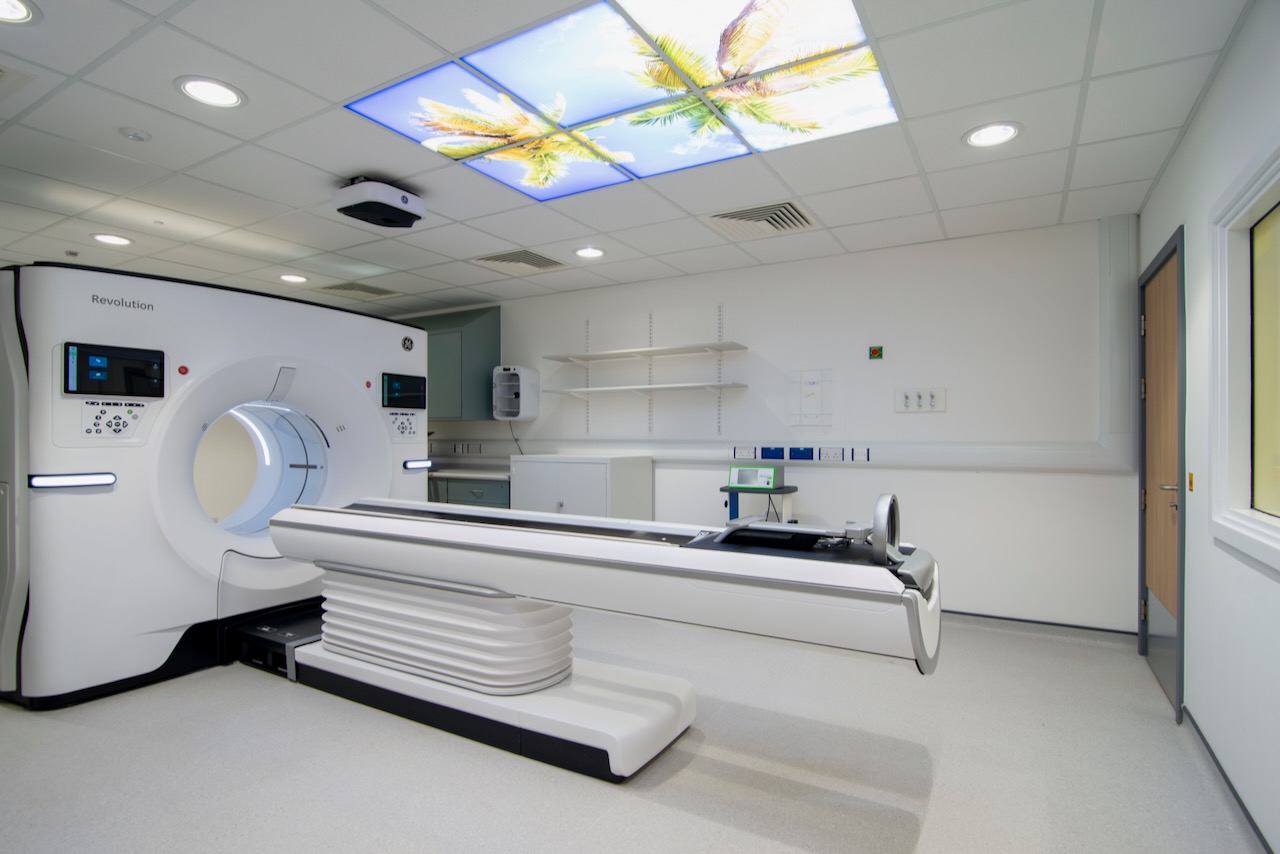
A £25m modular community diagnostic hub at Upton Hospital, Slough, has been delivered by Western in under a year, with pre-assembled modules made watertight within five days and internal fit out completed in a matter of days. Using BIM 3D modelling and full offsite fabrication, Western acted as turnkey contractor, also delivering external works including a reconfigured car park with EV charging infrastructure in a live hospital environment. The hub will operate 12 hours daily with capacity for 150,000 tests a year, including MRI, CT, ultrasound, respiratory and cardiology diagnostics.
Delivering the UK government’s £725bn, 10-year Infrastructure Strategy is being constrained by limited sector capacity, low productivity growth and fragmented delivery, the Institution of Civil Engineers warns. ICE points to the volume of concurrent major works—spanning rail upgrades, strategic roads, flood defences and energy transition assets—as exceeding current design, construction and regulatory bandwidth. The body calls for rapid scaling of skills, digital delivery methods such as BIM and common data environments, and more integrated client–contractor frameworks to avoid delays and cost escalation.
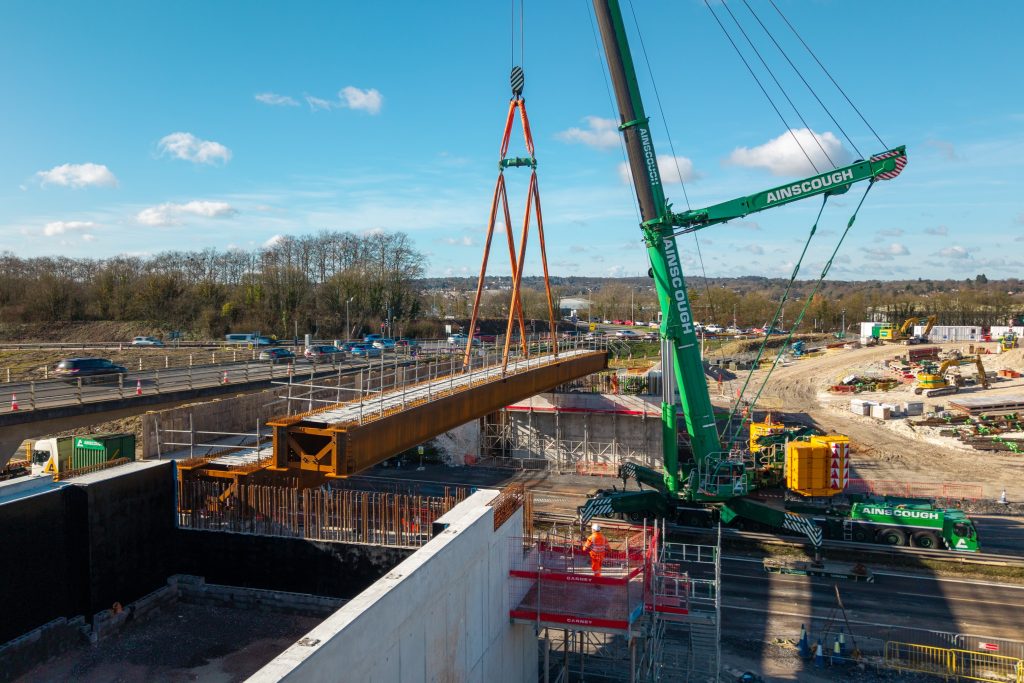
Engineers have installed two 48m-long steel bridge beams over the M3 during planned weekend closures as part of the £290M Junction 9 upgrade near Winchester, one of Hampshire’s busiest motorway interchanges. The beams form a key element of a new gyratory layout designed to improve traffic flow between the M3 and A34, requiring precision lifts over live carriageways within tight possession windows. The operation signals the start of major bridge superstructure works, with subsequent phases to complete deck construction and tie-ins to existing slip roads.
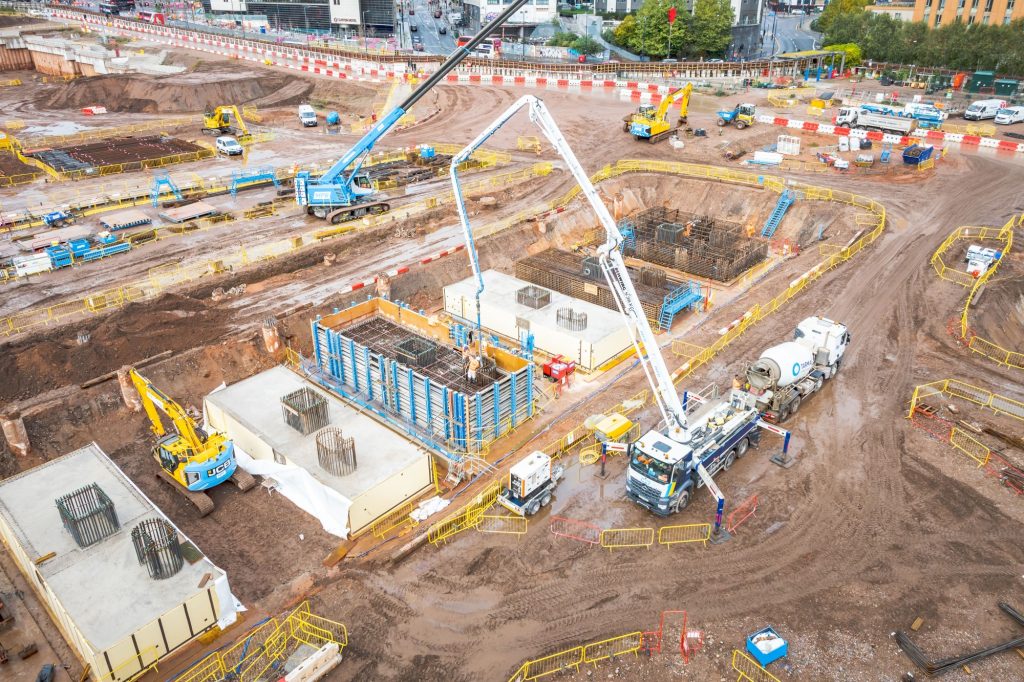
Completion of more than 2,000 concrete piles for HS2’s Curzon Street station in Birmingham marks the end of the main deep-foundation phase for the city-centre terminus. The piled foundations will carry the station’s multi-platform superstructure and associated over-track development, designed to accommodate high-speed rail loads and complex urban constraints. With piling finished, contractors can shift resources to pile caps, ground beams and station box works, compressing the programme’s critical path for structural and rail systems installation.
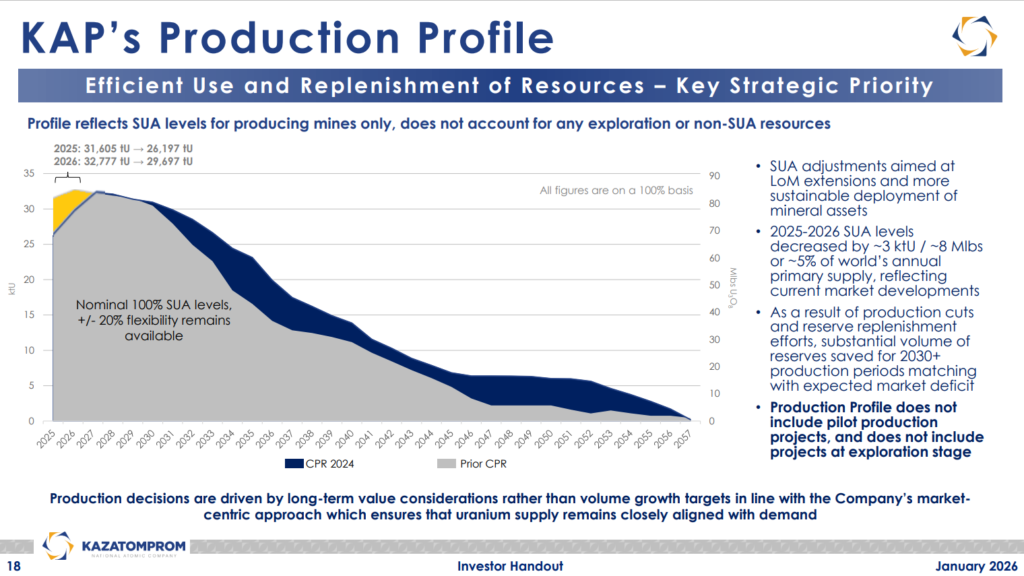
New Kazakh subsoil code amendments giving Kazatomprom priority rights and at least 75–90% stakes in new uranium joint ventures have prompted Laramide Resources to abandon a three‑year option over 5,500 sq. km in the Chu‑Sarysu Basin, where it had planned a 15,000‑metre drilling campaign with three rigs ready to mobilise. Existing JVs such as Cameco’s 40:60 Inkai and Orano’s 51:49 Katco are grandfathered until current subsoil agreements expire, but any extensions or production increases will require Kazatomprom to reach 90% ownership or receive conversion/enrichment technology. Analysts see a de facto nationalisation that could divert future Kazakh output towards Russian and Chinese buyers and support already‑elevated uranium prices above US$100/lb.