NexGen’s Rook I uranium mine: capex, schedule and output lens for mine planners
Reviewed by Joe Ashwell
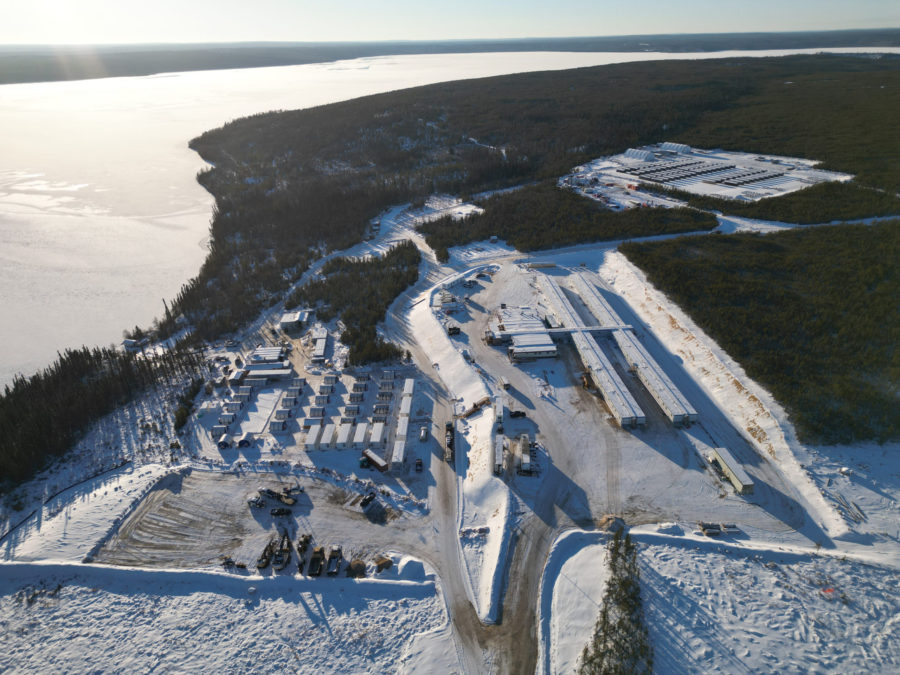
First reported on MINING.com
30 Second Briefing
NexGen Energy will begin construction this summer on the C$2.2 billion Rook I uranium mine in Saskatchewan’s southwest Athabasca Basin, after securing Canadian Nuclear Safety Commission approval for its environmental assessment and construction licence. The Arrow deposit hosts 4.57 million tonnes of probable reserves grading 2.37% U3O8, with feasibility work indicating output of almost 30 million lb. U3O8 per year over the first half of an 11-year mine life, making it the largest planned uranium producer in North America. At a US$95/lb uranium price, Rook I carries an NPV8 of C$6.32 billion and a 45% IRR, with a four-year build expected.
Technical Brief
- C$2.2 billion capex is tied to a four-year construction period, with detailed schedule pending.
- Canadian Nuclear Safety Commission approval followed a two-part hearing and what NexGen calls a “most rigorous” review.
- Rook I lies ~900 km northwest of Regina in the southwest Athabasca Basin uranium district.
- Arrow’s probable reserve totals 4.57 Mt at 2.37% U3O8, containing 240 Mlb U3O8.
- At US$95/lb U3O8, feasibility economics indicate NPV8 of C$6.32 billion and 45% IRR.
- NexGen’s Toronto-listed shares traded at C$16.77, implying a C$10.1 billion market capitalisation.
- Denison’s Phoenix ISR build and Paladin’s Patterson Lake South approvals position three Athabasca projects in the basin’s top-five by reserves.
- Comparison with Cameco’s McArthur River and Cigar Lake frames Rook I as a future regional production anchor.
Our Take
At a planned C$2.2 billion capex for Rook I, NexGen’s market value of about C$10.1 billion implies the company is already being priced more like an established Athabasca Basin producer such as Cameco than a single-asset developer, which may narrow the valuation uplift typically seen at construction de‑risking.
If Rook I reaches almost 30 million lb U3O8 per year against probable reserves of 240 million lb at Arrow, the indicated 11‑year mine life suggests a front‑loaded production profile that could tighten the supply picture later in the 2030s unless NexGen converts additional resources or pursues satellite feed.
The 45% IRR at an assumed US$95/lb uranium spot price highlights how sensitive Athabasca Basin projects like Rook I and Denison’s Phoenix mine are to price decks; if long‑term contracts clear materially below that level, operators may need to lean harder on grade, scheduling, and cost control to preserve economics.
Prepared by collating external sources, AI-assisted tools, and Geomechanics.io’s proprietary mining database, then reviewed for technical accuracy & edited by our geotechnical team.
Related Articles
Related Industries & Products
Mining
Geotechnical software solutions for mining operations including CMRR analysis, hydrogeological testing, and data management.
Construction
Quality control software for construction companies with material testing, batch tracking, and compliance management.
CMRR-io
Streamline coal mine roof stability assessments with our cloud-based CMRR software featuring automated calculations, multi-scenario analysis, and collaborative workflows.
HYDROGEO-io
Comprehensive hydrogeological testing platform for managing, analysing, and reporting on packer tests, lugeon values, and hydraulic conductivity assessments.
GEODB-io
Centralised geotechnical data management solution for storing, accessing, and analysing all your site investigation and material testing data.