Geomechanics, Streamlined.
© 2026 Geomechanics.io. All rights reserved.
Fisher German is expanding its infrastructure planning capability with the appointment of strategic planner Evie Poxon, formerly planning policy officer at Nottinghamshire County Council and later planning enforcement lead at Erewash Borough Council, and assistant planner Nick Wroe from Broxtowe Borough Council’s development management team. The hires target growing workloads linked to new government housing targets and planning reforms, particularly major infrastructure and strategic land projects. The firm is continuing to recruit, signalling increased demand for planning consultancy capacity on complex schemes.
The Northern Territory Government is launching a targeted investor roadshow in Japan and Korea to pitch major resources projects including the Nolans rare earths project, Beetaloo Basin gas and emerging critical minerals prospects. Officials will promote long-life rare earths, lithium and gas developments with established port access through Darwin and existing LNG export infrastructure to attract Japanese and Korean offtake and equity partners. For miners and engineers, the push signals potential acceleration of project financing, long-term offtake contracts and associated rail, port and processing plant expansions in the NT.
Whitehaven Coal has secured a new US$600 million (A$853 million) senior secured syndicated facility to support development of its metallurgical and thermal coal portfolio, including the Daunia and Blackwater operations acquired from BHP Mitsubishi Alliance in 2023. The multi-bank facility, which sits alongside Whitehaven’s existing cash reserves and strong recent free cash flow from its NSW open-cut mines, is structured to provide funding flexibility through the coal price cycle. For mine planners and project teams, the package signals continued capital availability for brownfield expansion, equipment upgrades and longer-life strip sequencing in Queensland and New South Wales.
Sandvik’s first MC431 continuous miner for Australia has been ordered as part of the company’s expansion of its mechanical cutting portfolio, targeting hard-rock and high-ash seams where drill-and-blast is constrained. The MC431 is designed for high cutting forces in confined headings, integrating a heavy-duty cutter boom, onboard bolting capability and advanced automation-ready controls compatible with Sandvik’s digital mining systems. For mine planners and geotechnical teams, the unit signals greater scope for continuous development in rock conditions previously considered marginal for mechanical miners, with potential impacts on support design, ventilation and scheduling.
SKF is pushing condition-based maintenance in Australian mines by combining bearing remanufacturing, vibration and temperature monitoring, and root-cause failure analysis on critical assets such as conveyors and grinding mills. Using connected sensors feeding into its cloud-based diagnostics platforms, SKF engineers can flag lubrication issues, misalignment and contamination early, then specify upgraded seals, housings or heat-treated bearing steels tailored to each duty. The approach extends bearing service life, cuts unplanned stoppages and allows mines to defer capex on large rotating equipment while maintaining throughput.
Regional Economic Development (RED) Grants from the West Australian Government are set to expand mining services businesses in the Pilbara, targeting local contractors and suppliers supporting iron ore and lithium operations. Funding typically covers equipment upgrades, workshop expansions and digital systems for fleet management and condition monitoring, enabling smaller firms to bid for larger maintenance and construction packages. For geotechnical and civil contractors, the grants can support new drilling rigs, materials testing equipment and remote monitoring tools suited to Pilbara heat, dust and long-haul logistics.
Miners are deploying larger rotary scrubbers, high-capacity screens and optimised tailings circuits to keep iron ore grades and plant throughput stable as feed becomes finer, stickier and more variable. McLanahan reports demand for heavy-duty scrubbing systems paired with multi-deck wet screens to break down clay-rich ore and split it into lump, fines and ultra-fines streams with tighter cut sizes. The shift places more emphasis on ore characterisation, water balance and wear-liner selection to avoid bottlenecks and unplanned downtime in dense media and wet screening sections.
Targeted filtration upgrades from Sefar are boosting throughput and lowering operating costs in alumina refineries by tailoring filter media to specific Bayer process stages. Custom-designed cloths and synthetic fabrics are being matched to caustic slurry chemistries, particle-size distributions and temperature profiles in security filtration, washer circuits and polishing filters to reduce blinding and extend change-out intervals. For process engineers, the approach offers a way to stabilise vacuum and pressure filter performance, cut reagent and energy use, and improve underflow/overflow clarity without major capital modifications.
Finalists for the GRX26 Industry Awards have been announced by AusIMM, spotlighting mining professionals and projects across categories such as digital transformation, ESG performance and emerging leadership. Shortlisted entries include initiatives using advanced orebody modelling, real-time fleet data analytics and low-emission processing circuits to improve mine productivity and environmental performance. Winners will be named at the GRX26 conference, giving operators and contractors a benchmark for current best practice in technology deployment, decarbonisation strategies and workforce development.
Banque de France has completed repatriation of all 2,437 tonnes of French sovereign gold to domestic vaults after 26 swap transactions replaced 129 tonnes of non-standard bars at the New York Fed with compliant European bullion, realising a €12.8 billion capital gain. Central bank buying stayed above 850 tonnes for a fourth year in 2025, led by Poland’s 102-tonne addition and China’s 16-month buying streak to 2,309 tonnes, while mine supply in 2025 rose only marginally to about 3,672 tonnes. For miners and refiners, provenance, LBMA-compliant refining capacity in allied jurisdictions, and direct relationships with sovereign buyers are becoming strategic infrastructure issues rather than routine commercial matters.
China Northern Rare Earth Group has lifted its Q2 2026 rare earth concentrate benchmark to 38,804 yuan/t (about $5,390) for 50% REO material, a 44.6% jump on Q1 and more than double the level a year ago, with a formula adjustment of 776.08 yuan/t for each 1% change in grade. The price was set under an existing concentrate-pricing formula with related-party supplier Inner Mongolia Baotou Steel Union Co., tying Q2 terms to Q1 oxide prices. The move coincides with China’s plan to block sulphuric acid exports from May, tightening leaching reagent supply for global rare earth processing.
Deep Sea Minerals (CNSX: SEAS), newly rebranded from Copperhead Resources, is seeking exploration licences in the Clarion-Clipperton Zone and the Cook Islands’ EEZ, backed by an oversubscribed C$4.22 million private placement and a fresh NOAA application under the US Deep Seabed Hard Mineral Resources Act. CEO James Deckelman plans an asset-light model, contracting vessels and nodule collection systems rather than owning hardware, with initial work targeted for late 2026–early 2027. The move challenges early CCZ mover The Metals Company, whose areas cover under 5% of the zone’s polymetallic nodule field.
BEML Ltd has unveiled the BH35-2 EV, India’s first indigenous all‑electric 35 t payload mining dump truck, at its Mysuru complex, signalling a domestic move away from diesel in the small–medium haul segment. The battery-electric platform targets opencast mines currently using 35 t mechanical trucks, cutting local emissions at loading and dumping points and reducing fuel logistics. For mine planners and maintenance teams, the shift implies new charging infrastructure, high‑voltage safety procedures, and revised haul profile optimisation to manage range and cycle times.
British Columbia has paused permitting for Seabridge Gold’s C$6.4 billion KSM twin tunnels, which would move ore from the Mitchell Valley pits to Treaty Valley processing facilities, until a court dispute with neighbouring Tudor Gold over Treaty Creek claims is resolved. The conflict centres on whether Seabridge’s 2012 conditional mineral reserve grants tunnel rights across Tudor’s Goldstorm and Perfectstorm areas, where Tudor is advancing a 10,000‑tonne‑per‑day underground PEA on a 24.9‑million‑oz indicated gold resource. KSM still holds a 2.3‑billion‑tonne reserve grading 0.64 g/t gold and 0.14% copper, with a planned 33‑year life and 1.03‑million‑oz/y gold output.
Metso has introduced the GFF Series flip-flow screens for fine dry screening of difficult, often moist ores and aggregates, targeting applications such as sand manufacturing and high-pressure grinding rolls (HPGR) closed circuits. The rugged screen design is aimed at maintaining stable classification under high wear and vibration, while delivering finer cut sizes than conventional dry screening equipment. For HPGR circuits, the tighter size control should improve recirculating load management and downstream grinding efficiency, particularly where water use is constrained.
Epiroc has secured a large order from Mopani Copper Mines PLC in Zambia for a fleet of Minetruck underground haulers and Scooptram loaders to be deployed at two deep-level copper operations. The diesel or electric-ready units are intended to raise production capacity while improving operator protection and traffic control in constrained headings. For mine planners and engineers, the deal signals continued investment in high-capacity load–haul fleets as Mopani ramps underground output rather than expanding surface infrastructure.
Mammoet has supported Ledcor in expanding the production and service headframes at BHP’s Jansen potash project in Saskatchewan, a greenfield mine targeting about 8.5 Mt/y of output from 2027 and expected to be among the world’s largest potash operations. The heavy-lift scope centred on installing large preassembled headframe modules and associated steelwork, reducing work at height and minimising crane reconfiguration on the constrained shaft collar area. For mine designers and contractors, the project shows how modular headframe construction and engineered lifting can compress schedules on deep-shaft developments in cold-climate greenfield sites.
TEC Container Solutions is expanding the use of its Mobile Equipped Storage Tank (MEST) units to handle bulk bitumen for road and highway projects, enabling on-site heated storage and pumping rather than relying solely on fixed terminals. The skid-mounted MEST systems are designed for rapid mobilisation, temperature-controlled storage and safe transfer of high-viscosity binders, reducing haul distances and dwell times for asphalt crews. For contractors, the approach offers more flexible staging of night works, remote jobs and short paving windows where conventional bitumen logistics are a bottleneck.
Early designs have been released for Sydney Metro West’s 24‑kilometre underground metro between Parramatta and the Sydney CBD, which is intended to roughly double current rail capacity on the corridor. The next‑generation stations, to be delivered by global contractor Gamuda and partners, are being planned as fully accessible, high‑frequency metro stops with platform‑screen doors and deep excavations typical of twin‑bore tunnelling. For geotechnical and civil teams, the scheme signals substantial underground works in dense urban ground conditions along multiple new station boxes.
Muscat Trailers is launching a new trailer product range aimed at a growing niche in Australia’s heavy industrial and road construction market, building on more than 10 decades of manufacturing experience. Managing Director Troy Azzopardi, son of founder Maurice, is steering the expansion with a strong emphasis on sustainable transport solutions, including lower tare weights and improved fuel efficiency. The move signals increased competition for high-spec haulage equipment on infrastructure projects, where fleet operators are seeking longer service life and reduced whole-of-life operating costs.
A $4.7bn (£3.7bn) contract with WeBuild to construct an artificial lake at Trojena, part of Saudi Arabia’s NEOM winter sports resort, has been cancelled with around 30% of the works already completed. The scheme included a major dam and high-altitude lake intended as the centrepiece of a year-round ski and leisure development in the desert mountains. The termination raises immediate questions over sunk costs, re-purposing of partially built hydraulic structures and long-term water resource planning for large-scale tourism projects in arid regions.
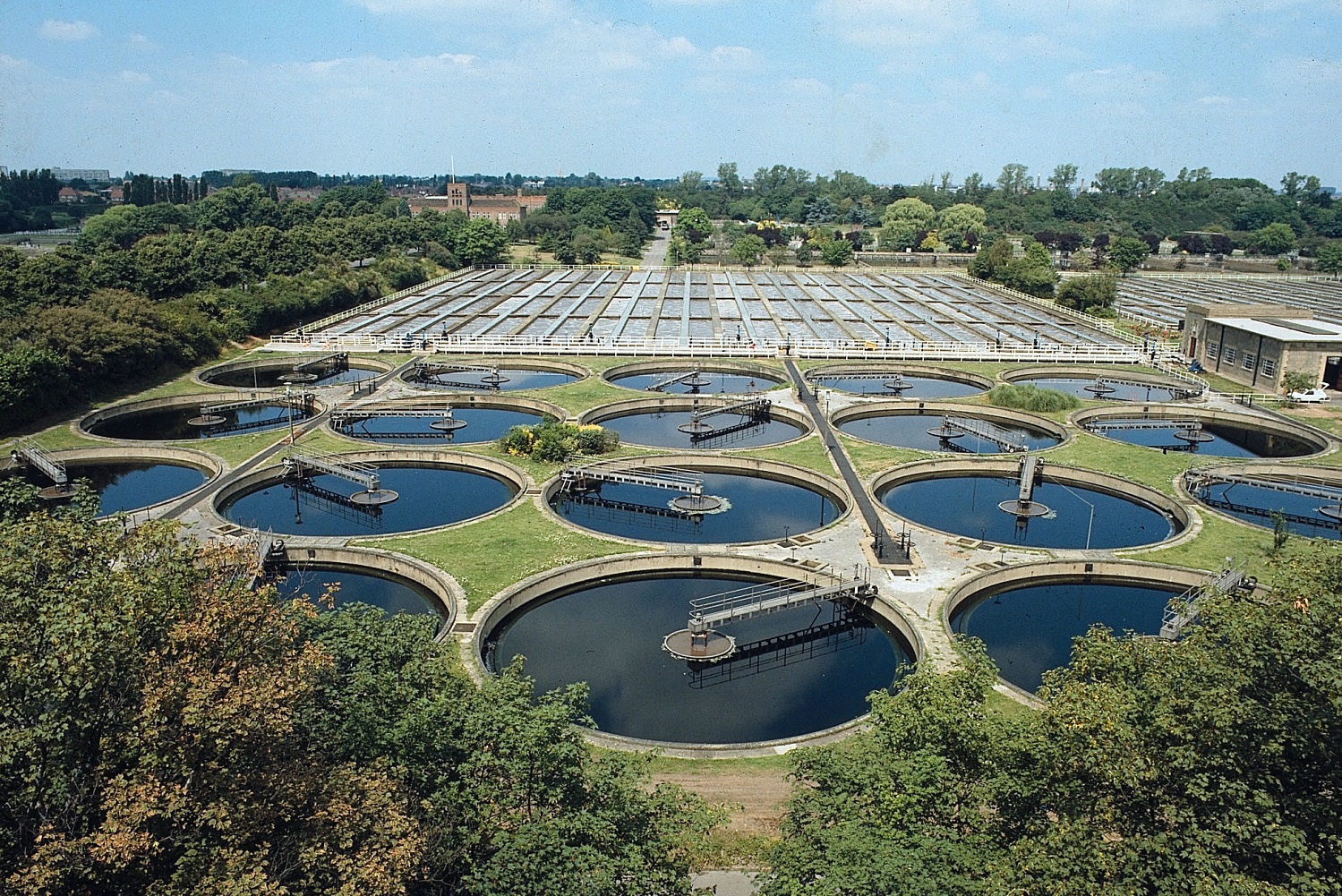
Calls for a national referendum on renationalising England’s privatised water and sewerage companies have intensified after 20,000 people signed a petition launched by a campaigner from Channel 4’s “Dirty Business” series. The move targets companies responsible for combined sewer overflows, long-term leakage issues and high storm discharge volumes into rivers and coastal waters. Any shift to public ownership would directly affect funding models for major wastewater upgrades, long-life pipeline renewals and resilience works on ageing treatment works and trunk mains.
OpenAI has paused plans for a multi‑billion‑pound UK hyperscale data centre that was to form part of its $500bn (£371bn) Stargate build‑out, citing high electricity prices and regulatory uncertainty. The shelved scheme would have required grid connections on the scale of a large industrial plant, with associated high‑capacity substations, cooling infrastructure and resilience measures. The move signals tougher economics for power‑intensive digital infrastructure in the UK, with implications for grid reinforcement projects and long‑term energy contracting for large data campuses.
Paladin Energy plans a final investment decision by end-2027 on the Patterson Lake South uranium project in Saskatchewan, centred on the high-grade Triple R deposit with 93.7 million lb U3O8 in probable reserves at 1.41% starting about 50 m below surface. A 2023 feasibility study outlines average output of 9.1 million lb U3O8 per year over 10 years, pre-production capex of $1.2 billion and life-of-mine cash costs of $11.7/lb, with first production targeted for 2031. Progress through FEED and Canadian Nuclear Safety Commission licensing runs alongside a judicial review filed by Métis Nation–Saskatchewan challenging the February 2025 provincial environmental approval.