Strabag and Arup’s 2.2km Fehmarn Sound tunnel: design and risk notes for engineers
Reviewed by Joe Ashwell
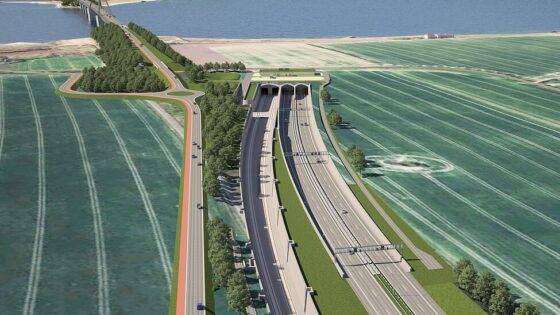
First reported on New Civil Engineer
30 Second Briefing
Strabag, Arup and partners have secured major construction and design packages for the 2.2km Fehmarn Sound immersed tunnel, the inland section linking Germany’s road and rail network to the Fehmarnbelt Fixed Link. The new tunnel will replace the existing Fehmarn Sound Bridge, removing a key capacity and clearance constraint on the corridor between Puttgarden and Denmark. For geotechnical and structural teams, the award signals imminent detailed design on immersed-tube foundations, marine-ground interfaces and transition structures tying into the main Fehmarnbelt tunnel.
Technical Brief
- Design teams now move from reference design to detailed design and constructability optimisation.
- Interfaces must align with Fehmarnbelt Fixed Link geometry, rail alignment and motorway cross-section standards.
- Transition structures will manage differential stiffness between immersed tunnel elements and land-based cut-and-cover.
- Experience gained will inform future immersed-tube replacements of ageing bridge crossings in shallow coastal waters.
Our Take
Strabag appears frequently in our Infrastructure coverage for complex underground works, so its role on the Fehmarn Sound Crossing suggests the client is prioritising contractors with deep experience in long marine-adjacent tunnels and challenging ground conditions.
Among the 166 tag-matched ‘Projects/Contract Award’ pieces in our database, only a small subset involve multi-asset corridors like the Fehmarnbelt Fixed Link plus connecting structures, indicating this 2.2 km tunnel is part of a relatively rare, corridor-scale procurement strategy rather than a standalone asset.
Arup’s presence on the Fehmarn Sound Crossing aligns with its recurring role in our coverage on large European transport links, which typically brings early-stage influence on alignment, geotechnical risk management and constructability that can materially shape downstream package scopes for other contractors.
Prepared by collating external sources, AI-assisted tools, and Geomechanics.io’s proprietary mining database, then reviewed for technical accuracy & edited by our geotechnical team.
Related Articles


Related Industries & Products
Construction
Quality control software for construction companies with material testing, batch tracking, and compliance management.
Mining
Geotechnical software solutions for mining operations including CMRR analysis, hydrogeological testing, and data management.
QCDB-io
Comprehensive quality control database for manufacturing, tunnelling, and civil construction with UCS testing, PSD analysis, and grout mix design management.